
The cliché is that supergroups are difficult. These coalitions of star names have a reputation of being combustive concoctions with a tendency to dissolve in clashing egos and acrimony. Think Cream, Audioslave. Crosby Stills Nash and Young…
But the corollary of that is the starriest, most super-group of all was by all accounts a breeze, with all five of its members getting what they wanted out of it. This was the Traveling Wilburys, the short-lived combo that contained one of the greatest voices of all time, one of the greatest lyricists, plus the guitarist in the most successful band. And Jeff Lynne and Tom Petty, who’d already enjoyed enormously successful careers themselves.
As befits a group whose five members adopted fictional identities as half-brothers, the story of the genesis of Traveling Wilburys is buried in myths and half-truths. But it seems to stem from the tail end of the campaign for George Harrison’s 1987 comeback album Cloud Nine. This had already provided Harrison with a US Number One in Got My Mind Set On You and a Top 30 follow-up, When We Was Fab. So the record company, Warners, decided that a third single – This Is Love - should be pulled from it.
But that required a B-side and, this being 1988, an extra track for the 12-inch. Harrison had no new songs left in his pile, so the only solution was to write and record another quickly. In a 1990 interview with Countdown, Harrison said that over dinner, he explained the situation to Lynne, his producer on Cloud Nine.
“I said tomorrow I’m going to go into the studio, find some place, make up a tune and make this record. So I said to Jeff ‘do you want to help?’ He said ‘yes, but the problem is where are we going to find a studio and an engineer so quickly?’ Roy Orbison was at the same dinner and mentioned that if Lynne and Harrison were doing something, to call him because he’d “like to come and watch”.
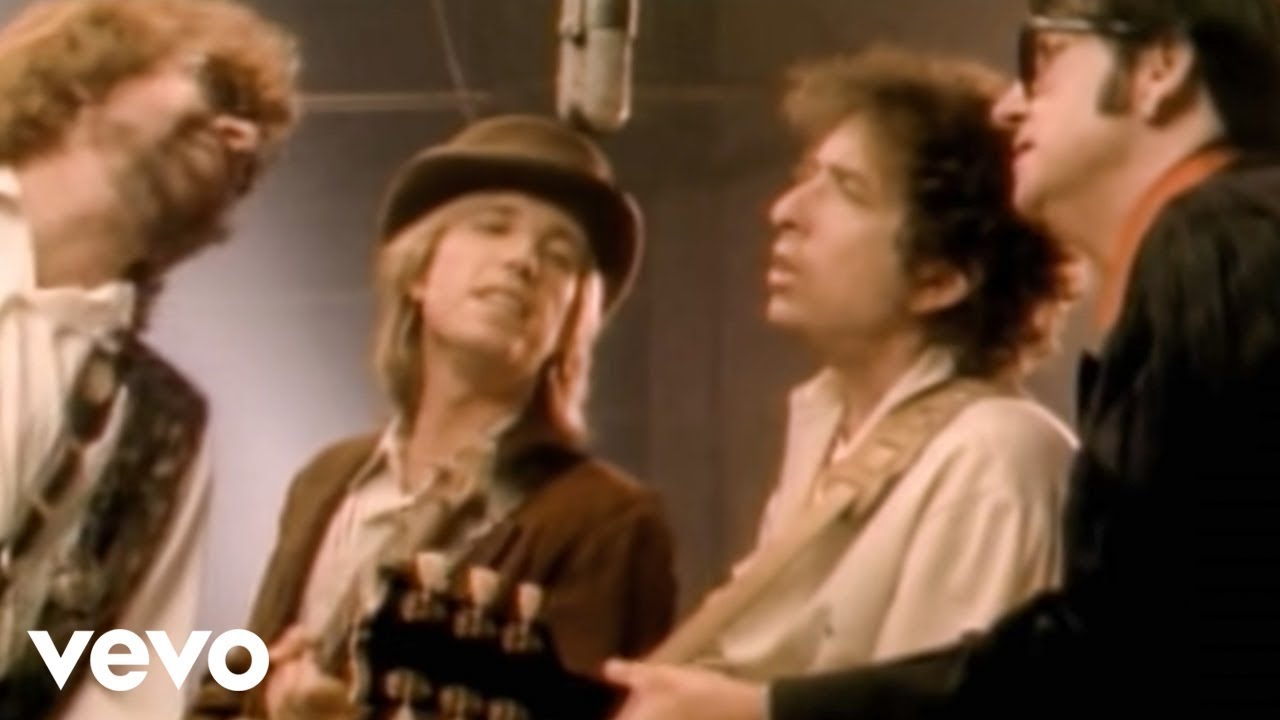
The only solution was to phone Bob Dylan who had a studio in his garage. Dylan was not at his busiest in April 1988 and assented to his friend’s last minute request. On the way to Dylan’s, Harrison had to pick up a guitar he’d left at Tom Petty’s house. Petty was already friends with Harrison and Lynne and he and the Heartbreakers had recently toured as Dylan’s backing group on the Temples In Flames tour. When he heard about the session, he quickly invited himself along too.
But there is another story in which Harrison and Lynne talked of convening this line up a few months beforehand, whilst they were still working on Cloud Nine. In a 2018 interview with Billboard, Lynne said: “We’d been working on it for a couple of months probably, and George said, ‘You know what? Me and you should have a group.’ And I said to him, ‘Oh, that’s a great idea.’ What a lovely thing to be asked to be in a group by George Harrison. And I said, ‘Who should we have in it?’ I don’t know what I was expecting, but he said, ‘Bob Dylan.’
“And then I said, ‘Can we have Roy Orbison in it as well?’ ‘Cause it was still a fantasy, really, at the time for me. I didn’t realise that this was about to happen. And luckily, we both said ‘Tom Petty,’ because we both loved Tom, and it all came together just like that.”
The name ‘Wilburys’ had come to Harrison during the Cloud Nine sessions. According to Jeff Lynne, whenever there had been an error during the album’s recording, Harrison had joked to his producer “we’ll bury ‘em in the mix”.
He first mentioned the name in a radio interview with Rockline in February 1988. When asked by the host Bob Coburn about how he intended to follow up Cloud Nine, Harrison replied: “What I’d like to do is an album with me and some of my mates.” He said it would be a “one-off thing... maybe The Traveling Wilburys? This new group I’ve got. I’d like to do an album with them.”
A couple of months later, Harrison’s dreams became reality. He and Lynne finished off the music, with a bridge part that could accommodate Orbison’s vocal. Inspiration for the lyric struck when Harrison spotted a box in Dylan’s garage. “It said ‘handle with care’. So I wrote the lyrics around that,” he explained. “And because I’d written the part for Roy, I might as well get Bob and Tom and Jeff, everybody singing the middle part.”
Harrison took the track to his record label, Warners, who said it was “too good” to waste on an extra track on a 12-inch (in the end, they elected to add his 1981 hit All Those Years Ago to the 12-inch). “I just kept the tape in my pocket, and the only thing I could think of doing is if we did that one song in one day, all we need is nine days with Bob and Roy and everybody and we can make an album.”
And so those initial sessions – in Dave Stewart’s studio in LA - took place, as planned, across ten days in May 1988. It was, according to Lynne in a 1989 Rolling Stone interview, very simple. "We would arrive about twelve or one o'clock and have some coffee. Somebody would say, 'What about this?' and start on a riff. Then we'd all join in, and it'd turn into something.
"We'd finish around midnight and just sit for a bit while Roy would tell us fabulous stories about Sun Records or hanging out with Elvis. Then we'd come back the next day to work on another one.”
“Usually the guy who had the most to do with the lyrics would sing most of it.,” remembered Lynne in 2017. “And other people would get choruses or a bridge to sing. We’d do different parts that would suit their voices. It was just a matter of trial and error, really.”
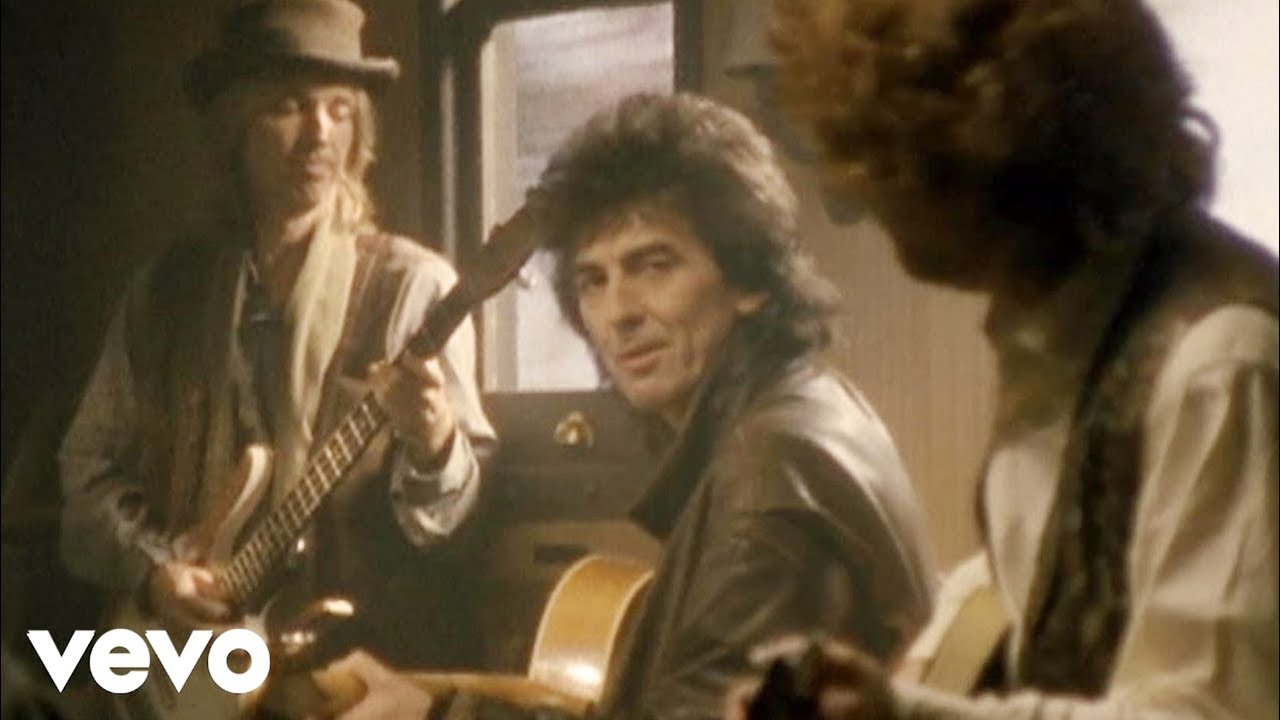
Later, Lynne and Harrison overdubbed bass and other instruments, whilst the ELO man added his customary production touches. And Warners had a record they could sell.
Whereas previous supergroups had strained to create something to justify the accumulated status of the respective members, the Wilburys revelled in the lack of pressure. All five men, with the possible exception of Petty, were on the other side of stardom’s peak.
The Wilburys gave them an excuse to return to their earliest days as musicians when everyone was doing it for fun. Dylan didn’t have to live up to being whatever people expected Bob Dylan to be 1988. According to Lynne, the same went for Petty: “Tom loved not having to be the big front guy.”
For Harrison, the motivation was slightly different. Talking to Paul Zollo in the book Conversations, Tom Petty admitted: “George was our leader and our manager… He wanted to be in a band. But he wanted to avoid all the pitfalls that a band has. He didn’t want it to be so overtly serious that it became a chore.” In the Beatles, he had always been third in the pecking order, patronised and looked down on by Lennon and McCartney. But here he was first among equals, in a relaxed environment, playing music with his friends. What could be better?
It was he who came up with the idea of taking on alternative personae. In the past, when he had been producing other artists, Harrison had often used the pseudonym Harri Georgeson. And then there was Sgt Pepper – indeed Harrison has recently donned his Pepper suit once more for the nostalgic When We Was Fab video. And so he became ‘Nelson’ Wilbury, Lynne was ‘Otis’ Wilbury, Orbison ‘Lefty’, Dylan ‘Lucky’ and Petty was 'Charlie T Wilbury Jr’.
(Incidentally, there is a sixth Wilbury. Session drummer extraordinaire Jim Keltner was behind the kit in this band of guitarists, and so he assumed the persona of Buster Sidebury.)
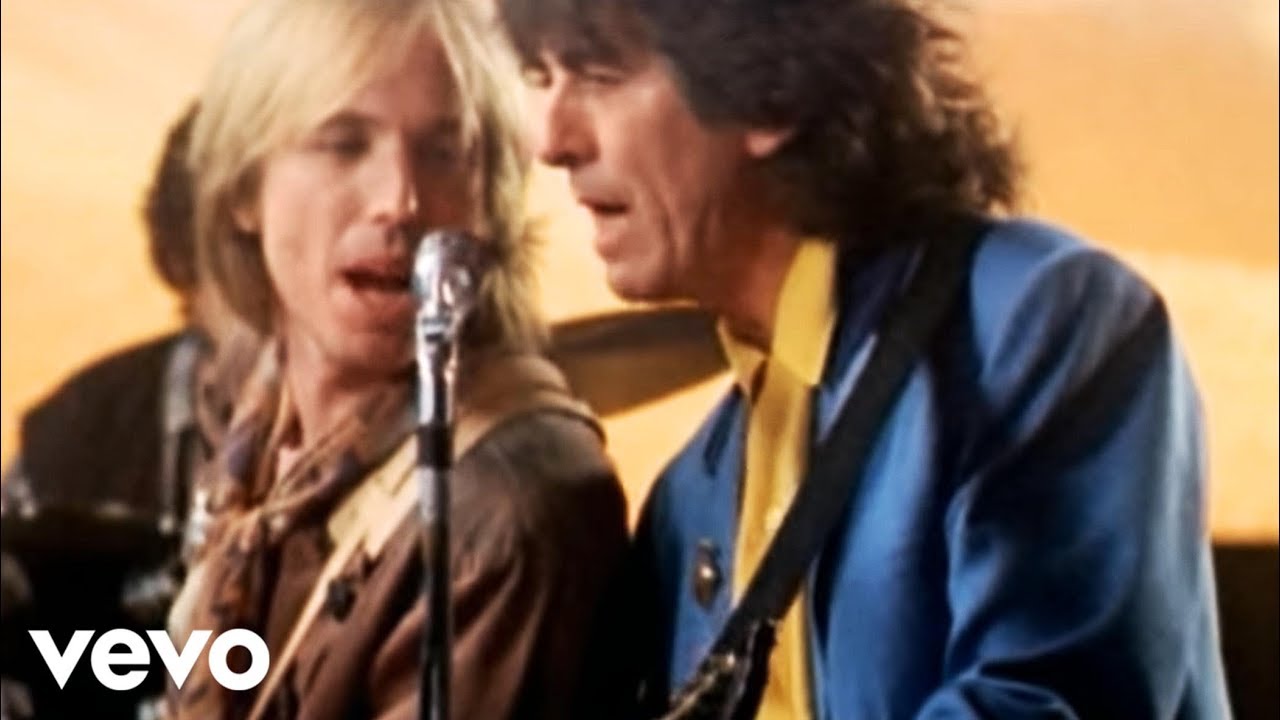
The album was released in October 1988 and after the identity of its makers became clear, it rose to Number Three on the Billboard chart, selling two million in its first six months. Handle With Care went Top 30 in the UK and reached 45 on Billboard. For Dylan, Lynne and Orbison it was their first significant commercial success for some time. Critics were generally positive – how could they not be given the light-hearted bonhomie that was the project’s central component?
Tragically, Roy Orbison died in December 1988 and so wasn’t fully able to savour the warmth with which his role in the band, and his posthumously-released comeback album Mystery Girl, was greeted. But the remaining four members found a gap in each other’s schedules to record another album in 1990, chortlingly-titled Volume 3 (there is no Volume 2, you see).
After that, the group was placed gently to one side. In the early 1990s, Harrison talked of a possible Wilburys tour, but nothing ever came of it. “I don't think anybody ever took it seriously,” Petty later said to Paul Zorro. “I think it would ruin it in a way. Then you're obligated to be responsible and it's not in the character of that group. It would make it very formal and that would be the wrong spirit.”
Whatever, those two albums are enough; a reminder that star-studded aggregations and side projects can actually be good and even for living legends, music making should – in the final analysis – be about having fun.
