


Every great artist has their golden era, the period in which they reach their creative zenith, surpass even their own expectations and produce a catalogue of work that is as sublime as it is timeless. Such was the case with the artist born Reginald Kenneth Dwight, better known to the world as Elton John.
It’s now almost 60 years since the classically-trained session pianist from Pinner in Middlesex met Lincolnshire-born lyricist Bernie Taupin, after they both answered the same Liberty Records’ advertisement in the NME for songwriters, forging what would become one of the most successful songwriting partnerships in music history.
Since then, Elton John has sold over 300 million records worldwide, making him one of the best-selling artists of all time.
There have been standout songs across all six decades, but his golden era of critical and commercial success was from 1970 to 1976, when he released iconic albums such as Goodbye Yellow Brick Road, achieved seven consecutive No 1 albums in the US and recorded the vast majority of his classic hits.
His breakthrough hit was Your Song, from his self-titled second studio album in 1970. But the song that cemented his success and helped transform him from a respected artist into a global superstar was Rocket Man (I Think It’s Going To Be A Long, Long Time) in 1972.
Rocket Man is a gloriously emotive and melancholic masterpiece on which Taupin’s theme of intergalactic isolation is melded with John’s sublime melodic prowess and top-tier production. It’s arguably Elton John’s best-loved song and one that has become a timeless and enduring classic.
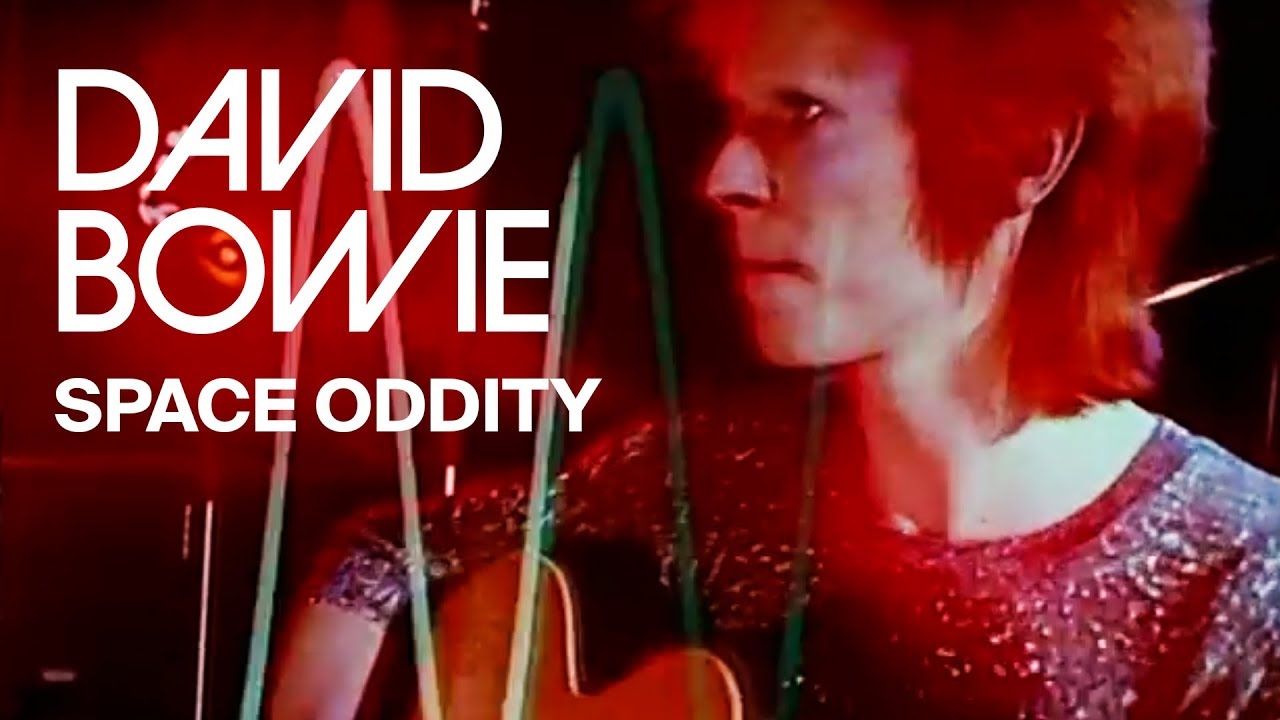
The song was assumed to be directly influenced by David Bowie’s 1969 hit single Space Oddity. But whereas Bowie placed his character Major Tom floating in space, Bernie Taupin added an extra element of humanity, looking to a future world where inter-galactic travel would become commonplace and envisaging his Mars-bound astronaut’s mission as a regular, run-of-the-mill business trip.
In a 2023 interview with Elton John and Bernie Taupin, the latter explained what first inspired the song.
“The interesting thing about Rocket Man is people identify it unfortunately with David Bowie’s Space Oddity,” he said, “and it actually wasn’t inspired by that at all.
“It was actually inspired by a story by Ray Bradbury from his book of science fiction short stories called The Illustrated Man and in that book there was a story called The Rocket Man, which was about how astronauts in the future would become sort of an everyday job, so I took that idea and ran with it.”
All of which came as a surprise to Elton John. ”I never knew that,” said John, while sitting next to Taupin.
In an earlier interview with the Wall Street Journal in 2018, Taupin expounded on the backstory of the song.
“In mid-1971, I was in England driving north to visit my parents in Lincolnshire. I had moved to the States a year earlier and hadn’t been home in a while. After exiting the M1 motorway, I had to take back roads to my parents’ village. By then, the sun had set and it was pitch black. I remember the stars were out.”
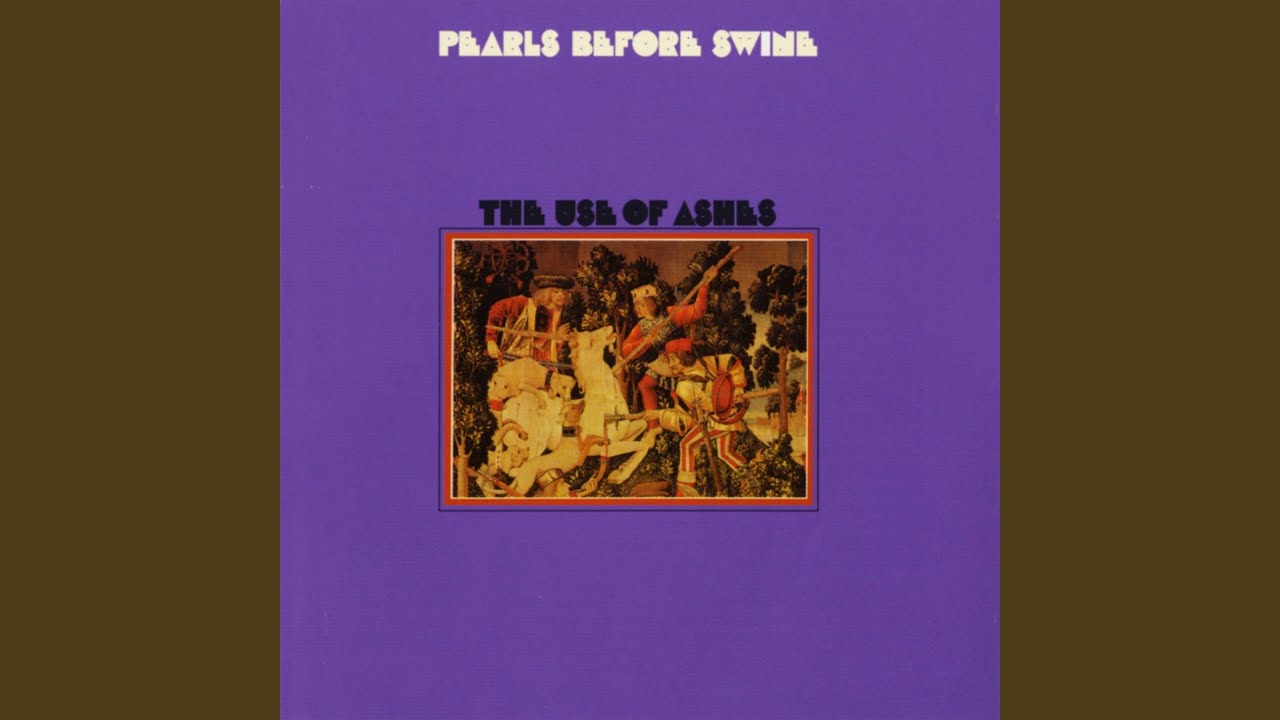
Taupin said that during the drive he thought about the Bradbury story and the 1970 song Rocket Man, written and recorded by American singer-songwriter Tom Rapp for his band Pearls Before Swine, which was a literal retelling of the Bradbury story.
Taupin recalled: “Driving the back roads, I began writing a song in my head about the drudgery of being an astronaut. As I thought about how to start the song, the first verse came to me at once: ‘She packed my bags last night pre-flight/Zero hour 9 am/And I’m gonna be high as a kite by then.’”
Unfortunately, Taupin didn’t have a pen or paper in the car to write the words down.
“So, I repeated the lyrics over and over. I was trying not to lose my train of thought as I raced to my parents’ house. When I arrived, I rushed in without saying hello. I was hunting for a pen and paper.
“I had never written that way before. Usually, I’d come up with a line and build from there. In this case, words to an entire verse fell out of my mind and onto the page. The words had such a rhythmic cadence.”
While Taupin has detailed memories of writing the lyrics, John’s recollections of then writing the music are less revealing. “It was a pretty easy song to write the melody to,” he said in the 2023 interview with Taupin, as reported by NME, “because it’s a song about space, so it’s quite a spacious song.”
Rocket Man is an absolute masterclass in the craft of songwriting. It’s also a beautifully-realised vocal performance from John, one of his best, because it perfectly balances theatricality with raw vulnerability and emotional depth. It also steers well clear of any melodrama or bombast, opting instead for intimate phrasing and controlled drama.
The timbre of his voice is compelling. When he sings, “And I’m going to be high as a kite by then”, there’s a nice rasp at the start of the word “high” before he glides effortlessly up to falsetto and back down again.
His piano playing is rich and mellifluous, with large, flowing arpeggios which evoke the spacey, drifting atmosphere of the lyrics.
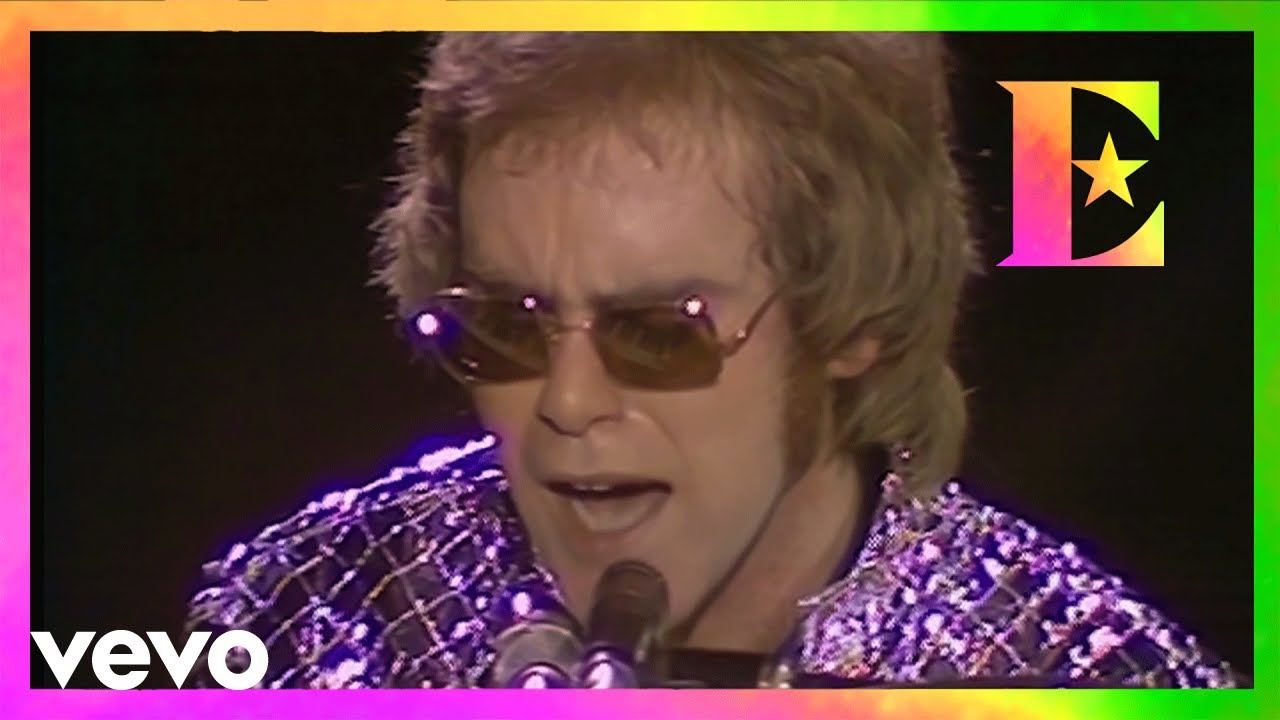
Rocket Man was the lead single from John’s 1972 album Honky Chateau, his first No 1 album in the US and a record so-named because it was recorded in the lush environs of Chateau d’Hérouville, a residential recording studio in an 18th century mansion, situated just north of Paris.
While Rocket Man may not have been directly inspired by Bowie’s Space Oddity, there is little doubt that it had an influence. Producer Gus Dudgeon had produced Bowie’s Space Oddity and both songs shared themes of intergalactic isolation and loneliness.
By the time John began work on the Honky Chateau album in early 1972, his stock was high with his record company and the first thing he did was to ditch the session players the label had insisted he use up to that point.
He replaced them with his touring band: Davey Johnstone on guitar, Dee Murray on bass and Nigel Olsson on drums. The effect was transformative. This band breathed fresh life to his songs in the studio and the spacious, perceptive production of Gus Dudgeon also reaped rewards.
Rocket Man was recorded on 16 January 1972 and was notable for being one of the few Elton John songs to begin with vocals from the start, rather than a piano intro. The first verse features only John’s vocal and piano, which gives the track real intimacy.
At 0:30, on the first bar of the line, “I miss the Earth so much/I miss my wife”, a bass enters the mix, a high G, followed by some beautifully melodic inflections from bassist Dee Murray.
45 seconds in, a single hi-hat appears. At 0:52, this shifts into double-time as Murray’s bass guitar ascends and then drops down into the first chorus as the acoustic guitars and drums enter and the whole glorious composition opens up.
“And I think it's gonna be a long, long time/’til touchdown brings me ’round again to find…”
At 1:14, as John sings “I’m a rocket man”, one of the song’s defining elements makes itself known – a slow ascending electric slide guitar from guitarist Davey Johnstone. The slide appears throughout each chorus on that phrase and at 2:06 a new, other-worldly, sound appears for the first time, adding to the song’s interstellar atmosphere. It’s a swooping, space-type effect, played on an ARP 2500 synthesiser by recording engineer and musician David Hentschel.
In addition to their instrumental skills, the three musicians in John’s touring band also contributed impressive backing vocals, and Rocket Man is believed to be the first composition they all sang on. Their vocals were a revelation for producer Gus Dudgeon, who called them “the best in-house backing vocalists that anybody’s ever had on record”.
Elton allegedly came in for a listen, realised it was good and simply said “get on with it”, before leaving Dudgeon and the band the complete freedom to create the backing vocal arrangements.
Davey Johnstone, Dee Murray and Nigel Olsson’s rich and precise backing vocals quickly became a staple of future live and studio performances.
Rocket Man was released on 17 April 1972 and reached No 2 in the UK and No 6 in the US.
It was critically acclaimed. A review in Record World concluded that “Elton John explores the outer limits of the possibilities of pop music”, adding that the song “should be a huge hit; it’s one of his best”.
Rocket Man duly became John’s biggest hit to date and as writer David Cheal noted in a piece on the song in the Financial Times in 2020: “Its lyrics came to serve as a metaphor for his stratospheric career and troubled life.”
Elton John would go on to personify Rocket Man and it would steadily grow to become his brand, eventually inspiring the 2019 biographical musical drama of the same name starring Taron Egerton.
The song has been covered by numerous artists, most notably Kate Bush in 1991.
There was also a spoken-word version by William Shatner from 1978, which has become something of a cult classic.
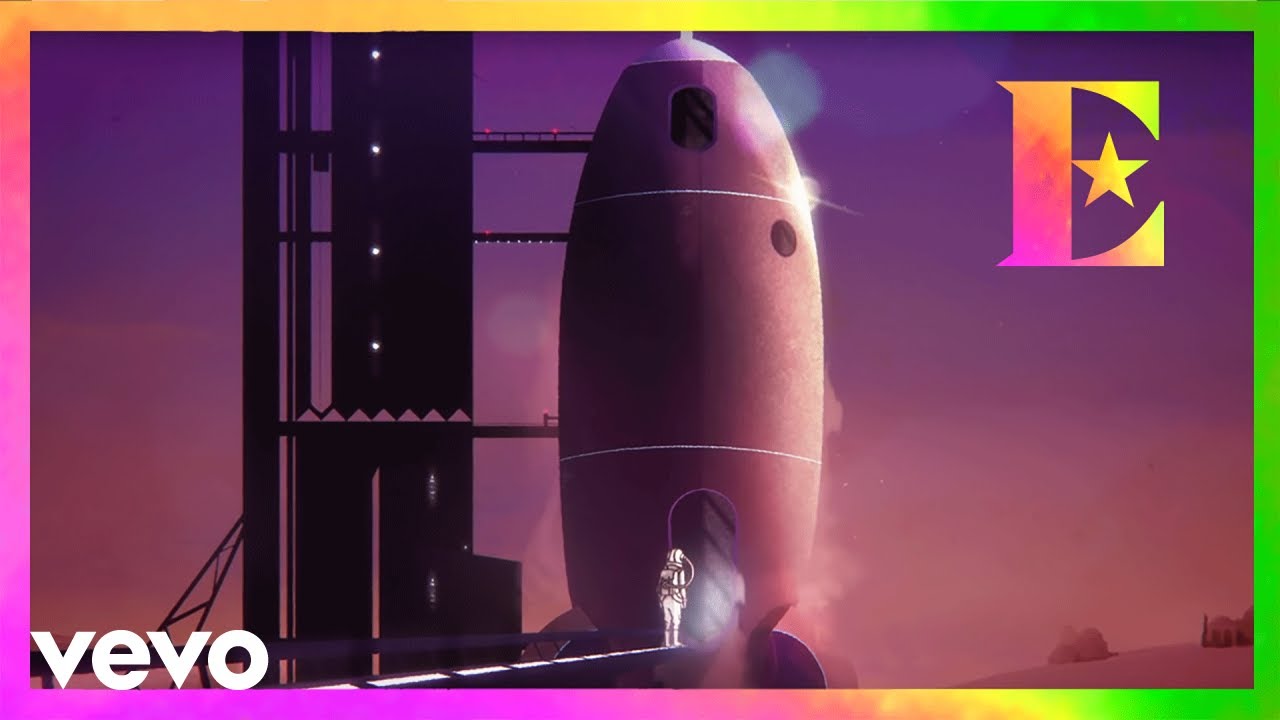
In May 2017, an official music video for Rocket Man premiered at the Cannes Film Festival. The video was one of three winners in a competition called The Cut, organised by John and Taupin in partnership with YouTube.
The competition called upon independent filmmakers to submit video treatments for three Elton John songs – Rocket Man, Tiny Dancer and Bennie And The Jets – to reimagine these songs from the 1970s, which were released before the music video age. The winning video for Rocket Man was an animated video co-directed by Iranian refugee Majid Adin, an artist and animator, and Irish animation director Stephen McNally.
The video was inspired by Adin's own experiences of a long and dangerous journey as a refugee, fleeing from Iran to England, and it features a character who makes a similarly perilous journey from Syria. The character envisages himself as an astronaut, drawing parallels between the song's lyrics and the experiences of a refugee.
John and Taupin invited Adin to the premiere of his video at the 2017 Cannes Film Festival.
Sitting beside Adin on a balcony overlooking the sun-drenched city of Nice, the clearly moved John and Taupin watched the video that Adin had created, on his laptop.
“That’s beautiful,” says John. “You’ve made it so personal to you. It tells of your story and your journey. It’s just fantastic… thank you so much… so brilliantly done.”
“Very, very moving,” adds Taupin.
Adin’s video reinforces the timeless emotive power of the song and echoes its themes of isolation and hope.
John went on to tell Rolling Stone that all three of the winning videos – for Rocket Man, Tiny Dancer and Bennie and the Jets – had left him feeling “moved and amazed”.
