





MusicRadar Verdict
There are maybe one or two button pushes more than we'd like, but if you want in-your-face electronic music productions, Tonverk has the flexibility to be whatever you want it to be, and is easily one of the most inspirational and accessible Elektrons we've used.
Reasons to buy
- +
Astonishing level of depth and flexibility.
- +
Fantastic, dirty sound and new effects.
- +
Clear concept and execution.
- +
Sturdy and well built.
- +
Subtracks add huge flexibility.
Reasons to avoid
- -
Learning curve can be 'Elektron'.
MusicRadar's got your back Our team of expert musicians and producers spends hours testing products to help you choose the best music-making gear for you. Find out more about how we test.
What is it?
Elektron's music machines are not always obvious devices, marrying synths, drum machines, grooveboxes and sampling together in pretty much whichever way you wish, focusing on everything from dynamic processing (Analogue Heat + FX) to grooves (Model:Cycles), analogue drums (Analog Rytm MkII) to analogue synths (Analog Four MkII).
Tonverk is the company's latest and most-anticipated music box, a polyphonic sampler, sequencer, granular machine, audio interface and effects processor all-in-one. You might be thinking 'sampling groovebox' and you wouldn't be too far off, but there's a not-so-hidden depth to this machine that takes it up a few levels as a sound design tool, with a character that can evolve, twist and shout more than most.
It's dirty, fun, and importantly to us, straightforward to grasp. We've not always enjoyed – sometimes endured – the Elektron user experience, having owned and used many a device over the last three decades. But this time around, Tonverk's larger form factor, extra keyboard and effects give it an edge over other Elektron devices, so while we came for some dirty beats, we went away with a lot more, including a new-found respect for this particular 'sound factory'.

Performance
There's a lot to get across with Tonverk and inevitably we're not going to be able to cover everything here. The modulation alone is worth its own chapter, as is an extraordinary set of sequencing and dynamic features, but focusing on Tonverk's tracks, new effects and architecture – basically how to make a tune – will give you a flavour of what it is capable of.
Tonverk has a total of 16 tracks. The first eight are audio, each with eight voices of polyphony. Tracks 9 to 12 are bus tracks, with tracks 13 to 15 acting as effect sends and track 16 the overall mix. All tracks can also be used as standard MIDI tracks for use with external gear.
Typically Tonverk works by layering up the audio tracks with either preset samples (from a supplied 64GB SD card) or your own. Select a track by holding the Track button – top-left above the very welcome mini keyboard – and one of the first eight track buttons along the bottom. Then you select a 'Source Machine' from the Setup options for the chosen audio track. These determine how the audio is played back and, at the time of writing – they can and have been expanded with system updates – include five options.
Single Player is an eight-voice polyphonic single sample player where the audio is mapped across the keyboard. Multiplayer mode acts like a multisample or soundfont player, able to load in more detailed, velocity-layered sample setups. Subtracks are a huge addition as they are like kits of sounds, up to eight together per track, split across the keyboard.
Think of Subtracks as tracks within tracks, with Tonverk able to play up to 64 sounds simultaneously across its eight tracks, with each block of eight able to access a very comprehensive effects section. However you think of them, they are a big Tonverk highlight, especially given that each Subtrack has its own two filters, an envelope and modulation.
Finally, in addition to the aforementioned MIDI tracks, the last of the Source Machines is the all-new Grainer, Elektron's first granular engine, so an important update that gives Tonverk a lot of its sonic bite, smashing, as it does, a sample into manipulatable grains.

Effect madness
Tonverk's other effects are, quite simply, stunning. You get two insert effects per audio track plus three send effects, with around a dozen types to choose from. These include the usual Elektron compressor, reverb, delay and chorus, plus all-new mostly filter and lo-fi style effects like Degrader, which should be heard to be believed. Its eight assigned parameters can truly smash a sound to pieces which, along with others like Chrono Pitch, prove that Tonverk, while clean if you want it to be, excels at proper filth with some outstanding, dirty options.
You can easily layer two of these effects per audio track, with the flexibility to add up to three more via send effects, found by dialling up each of tracks 13 to 15, and with the level of each adjusted via the main FX page. Tracks 9 to 12, meanwhile, offer four bus tracks for setting up even more flexible routing – like you think you must be needing it at this point – as each also has two more insert effect slots.
All of the main parameters within Tonverk's effects have been mapped to the eight function dials on the top-right of Tonverk, which change function according to what mode you are in, so it's dead simple to tweak each one, and you can quickly set up very complex layered insert and send effects right across your song or parts of it.


Layering more icing onto an already sweet cake, you can also add an Effects Machine to the overall mix of a pattern by selecting track 16 and hitting Func>FX to select – it's basically an effect to add to the entire track. While we're on Track 16, the Mix track, here you can also set your mixer up, adjusting settings across the audio tracks, and also those for Tonverk's two audio inputs.
You can get an overview of Tonverk's potentially complex routing setup by hitting the Shift and Routing/Mute button which offers a simpler view of your setup and allows you to set up the routing for everything. Here, for example, you can set the audio destinations for multiple tracks to the main Mix, four busses or direct out, and you can even send the audio from one of the three send effects to an external effects box, and route the effected signal back into Tonverk's input, which obviously opens the box up to processing with a mountain of external modular or other studio gear.
Other features worth noting are that each track has a sequencer, and effects can be (quite) easily automated to create incredibly moving and dynamic sequences; set sequencer steps, for example, to route to certain effects and levels. You can also control effects in real time using hands-on performance options like freeze and stutter via the function knobs to liven up any live performance.

Sequencing is often where we used to fall down with some Elektrons – here you get Projects with up to 16 songs, each with up to 128 patterns for the 16 tracks. You might struggle with some of the terminology, with sequencing rows and suchlike, but seasoned Elektron users will be at home, and it's probably (OK, likely) more logical than our brain realises. Certainly the recording options – step and real-time plus Grid recording to add trigs – fulfil those composition requirements, and the real-time editing options are endless.
Add in that modulation we mentioned, including a filter, two LFOs per track, effects bus and mix plus a modulation envelope per voice, and you have an almost overwhelming number of options – Tonverk really is just on the right side of 'doing too much'. Yes, some processes can seem convoluted on occasion – mostly because there are just so many options – but it is by no means as complex as it could be for such a flexible beast.
We should also touch on the sampling – this is a sampler at heart, after all – and here you can load in samples from an extensive and high-quality Elektron library (from the SD card). There are 80 multisampled synths here, for example, plus kits, basses, single samples and projects.
Sampling yourself is easy. We touched on how you can route to external hardware earlier, but standard sampling includes an Auto Sampler that makes creating multisamples easy. Select audio via USB or physical inputs, set a number of velocity layers and notes, record and Tonverk maps and layers for you. Finally, an on-board arpeggiator and chord mode add even more creative possibilities should you tire of the rest of the machine's extensive features (you won't).

Verdict
Tonverk has certainly opened our eyes up to 'the Elektron way'. While it follows a similar Elektron path to other Elektron devices, it gels better as a product to us, possibly because its larger format makes everything more approachable. The point of the machine also seems more obvious and a happy compromise between what we expect a device to do while keeping some of Elektron's rather exclusive clubby feel – basically, we've been invited to the VIP area of a bar and are actually enjoying it.
Tonverk, then, is a bit of a triumph to our eyes and ears. We're not surprised that it is so deep – Elektron will always prioritise flexibility and sonic mayhem, while rewarding your time spent diving in – but the fact that we actually get the message and can use it is the real joy.
With an emphasis on the dirtier side of music production – the Grainer machine alone here will suffice – and with a range of effects and routing flexibility that can back this up in any situation, Tonverk has surpassed our expectations in many ways. We started out wanting a box to add some filthy beats to some way-too-nice tracks we've been working on, but ended up pretty much getting this particular sound factory to supply most of the actual tracks.
Tonverk isn't cheap but a) it does cost less than two of our alternatives and b) it's not 2024 anymore. Yes, it's not quite as mobile as it could be, and there are maybe one or two extra button pushes over what we'd like, but if you want in-your-face electronic music productions, Tonverk has the flexibility to be whatever you want it to be, and is easily one of the most inspirational and accessible Elektrons we've used.

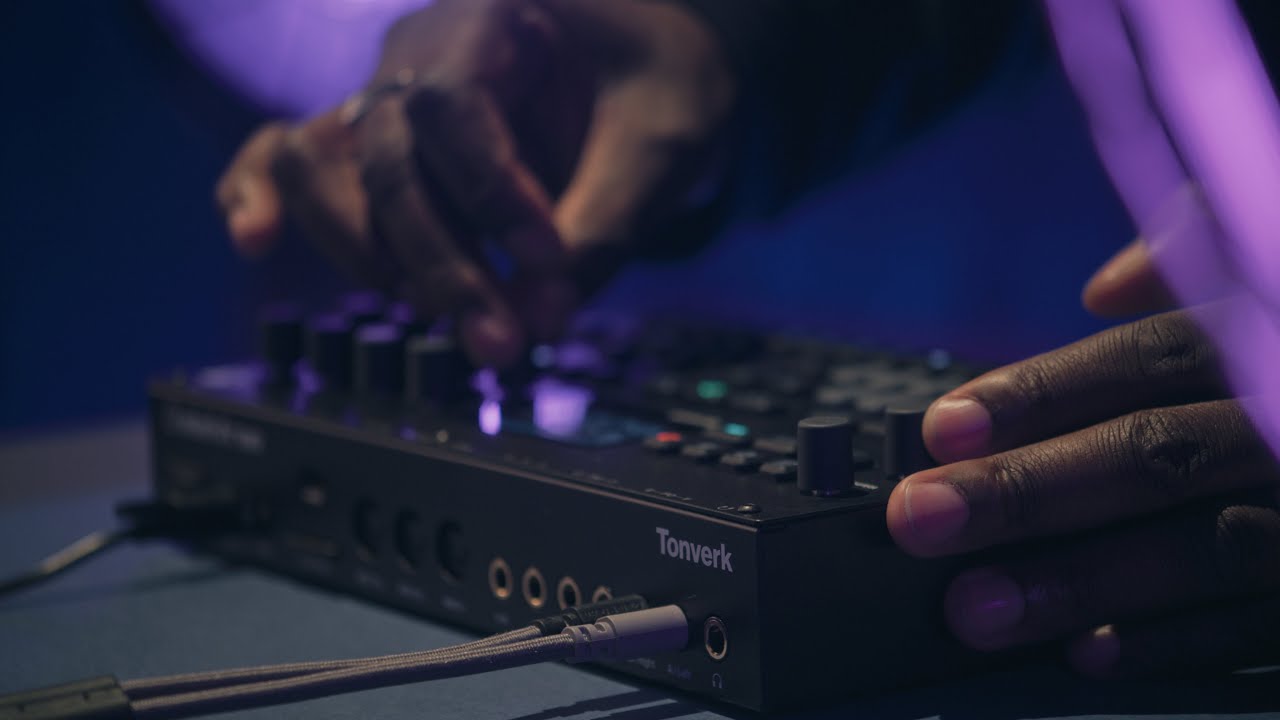
Hands-on demos
Elektron
Alternatives
Specifications
Price |
$1,599 / £1,199 / €1,399 |
Key features |
Polyphonic sampler, sequencer, and effects box 16 tracks: 8 audio, 4 bus, 3 send, 1 mix 8 voices of polyphony per audio track 5 selectable machines per audio track (Single, Multi Player, Subtracks, Grainer, MIDI) |
Modulation
|
1 digital filter per track/Subtrack; 2 assignable LFOs per track; 1 assignable modulation envelope per voice; 2 assignable FX LFOs per audio track; 2 assignable LFOs per effect bus, send effect, and mix; modulation setup per track for pitch bend, mod wheel, breath control, aftertouch
|
Polyphonic sequencer
|
Up to 256 steps per pattern and track; arpeggiator per audio and MIDI track with parameter locks, trigger conditions and chance, retrig and sequencer lanes
|
Effects
|
19 including Rumsklang Reverb, Daisy Delay, Dirtshaper, Degrader, Chrono Pitch, Frequency Warper, Infinite Flanger, Phase 98, Filterbank, Comb +/-, Steel Box Reverb, and Filter Folder
|
Screen |
128 × 64 pixel OLED screen
|
Connections
|
4 audio out, 2 audio in and headphone on ¼-inch jacks; 2 USB-C ports; MIDI in/uut/thru, SD Card slot
|
Power
|
Adaptor required and supplied (not fully USB powered)
|
Dimensions
|
W x D x H 286 ×176 × 63mm
|
Weight
|
1.85kg
|
Contact |
