MusicRadar Verdict
Overall, I think this is a good guitar for the money. Stick some better pickups in it and give it a good setup, and you could definitely have something on your hands that competes with guitars in the $1,000+ range. The fretboard colour may be a shock to some, and it is a little one-dimensional in terms of tone, but the playability is the real standout here.
Reasons to buy
- +
Neck is super playable and excels at technical playing.
- +
Humbuckers deliver very high output tones, great for heavier genres.
- +
It’s a very good spec for the money, with some serious modding potential.
Reasons to avoid
- -
Oiled, nyatoh neck feels weird at first.
- -
Some won’t dig the red/purple colour of the fretboard.
- -
Lightweight body means it neck dives on a strap and in your lap.
MusicRadar's got your back Our team of expert musicians and producers spends hours testing products to help you choose the best music-making gear for you. Find out more about how we test.
What is it?
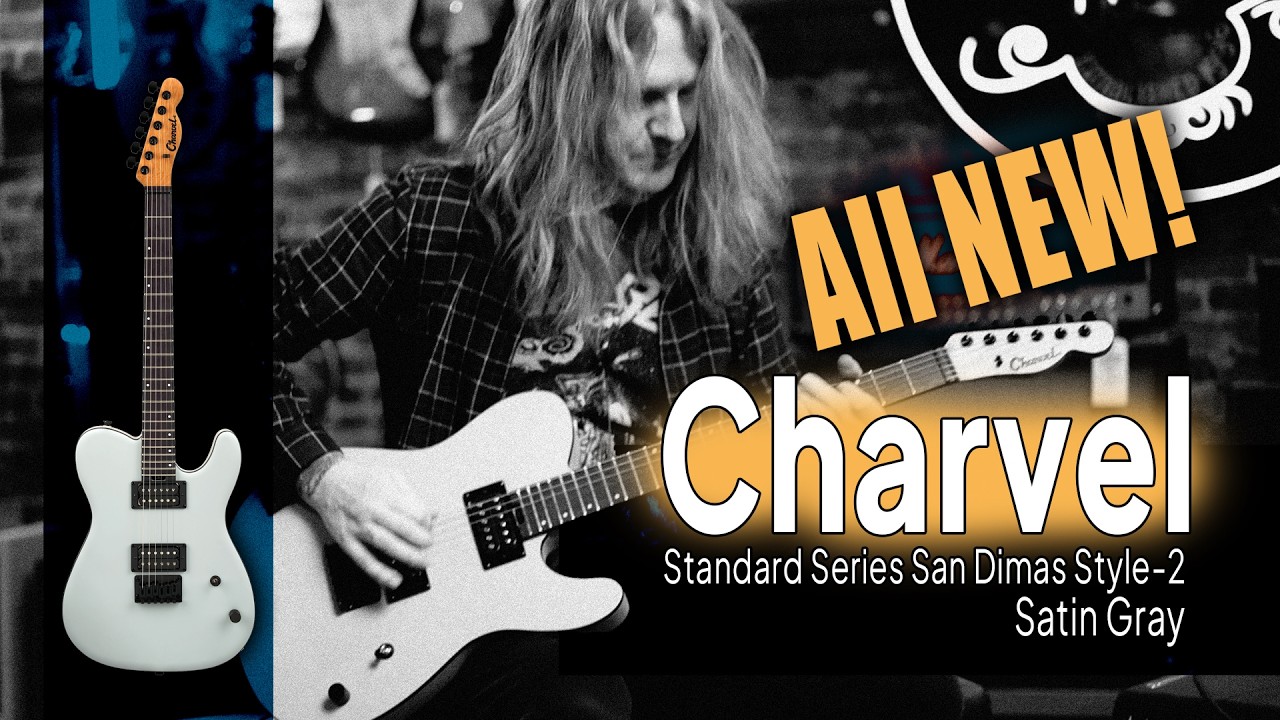
The new Charvel represents a bit of a departure from the norm for the company. Typically, the home of high-end, hot-rodded guitars, the new Charvel Standard Series San Dimas Style 2 SD2 HH HT has the potential to bring the brand to a totally new audience, thanks to its price point hitting just above the $550 mark.
Promising professional performance at a much lower price, it’s interesting that the company, owned by Fender, is looking to enter the incredibly busy $500-$750 price point. In researching for this review, I had a look at how many guitars were available at this price point, and just on Sweetwater alone, there are well over 300 guitars.
There’s also the question that it might step on the toes of the Squier guitars with more modern appointments, but perhaps it’s going to be the line that replaces the now-discontinued Squier Contemporary series.

The Standard Series San Dimas has some very appealing specs, like rolled fingerboard edges, a compound-radius fretboard, locking tuners, and a heel-mounted truss rod adjustment, all of which are found on the company's higher-end guitars. It also has an unusual 25.1” scale length, closer to a PRS guitar than a Fender or Gibson.
It’s a very simple guitar, with two of Charvel’s own humbuckers controlled by just a single volume knob and a three-way pickup selector. There are some less high-end features to help keep the cost down, with the obvious ones being the nyatoh wood used for the body and neck, as well as an amaranth (aka purpleheart) fretboard.
A Charvel hardtail bridge strung through the body rounds out the hardware offering, and it comes in Satin Gray or Gloss Black, and both options have a painted faux-binding in black or white, respectively.
Specs

- Launch price: $569.99 | £449 | €489
- Made: Indonesia
- Type: Six-string electric guitar
- Body: Nyatoh
- Neck: Nyatoh / speed neck profile
- Fingerboard / radius: Amaranth with rolled edges / 12"-16" compound radius
- Scale length: 25.1”/638mm
- Nut/width: Black plastic / 42.86mm
- Frets: 22, jumbo
- Hardware: Charvel die-cast locking tuners, Charvel HT6 string through body bridge
- String spacing at bridge: 52.4mm
- Electrics: Charvel Custom Humbucking pickups, master volume, three-position toggle switch
- Weight: 6.39lbs / 2.9kg
- Left-handed options: No
- Finishes: Satin Gray (as reviewed), Gloss Black
- Case: No
- Contact: Charvel
Build quality

Build quality rating: ★★★★½
It’s a bit of a shock to see something so radically different from the usual fretboard fare
There’s something that immediately screams out as soon as I unbox the Standard Series San Dimas, and it’s the amaranth fretboard. It’s decidedly red/purple in appearance, and a far cry from the typical dark woods or light maple I’m used to seeing. Amaranth is also known as purpleheart, thus the colour, but it’s a bit of a shock to see something so radically different from the usual fretboard fare.
The other side of the nyatoh neck is interesting too. It’s an oiled finish, which to my hand feels very dry at first. Running my hand up and down the neck, I can feel the texture of the wood grain; it’s a very slight feeling, but noticeable coming straight from my regular Telecaster neck with its satin urethane finish.

The neck is attached to a nyatoh body via four bolts, with a lightly sculpted neck heel for better upper fret access. The lower horn features a cut on the back side of the body to assist here, while a belly cut and forearm rest offer additional comfort features. The painted binding of the body is very nicely applied in razor-straight lines, although I do spot it going ever so slightly skewiff near the neck join.
The hardware is very nicely applied, with the single knob and pickup toggle switch offering a firm operation. The bridge has four screws attaching it to the body, while the locking tuners feel very robust and offer a similarly firm and reassuring travel.
Playability

Playability rating: ★★★★½
Sitting down to play, the neck immediately feels ready for fast playing thanks to the slim, ‘Speed Neck’ profile and the very flat feeling 12-inch radius, which evolves to 16 inches as I get further up the fretboard. Despite the weird colour of the fretboard, it doesn’t really feel any different to any dark wood ‘board I’ve played, and naturally I’m drawn to speedy licks and chunky power chords thanks to the overall feel.
I’m playing unplugged, and it’s here I notice there’s a bit of chorusing effect going on whenever I hit the ‘D’ string open, caused by either the cut of the nut slot itself or the break angle going over the nut. It’s not noticeable when I plug in later on, but something to note with regard to the overall setup of the instrument. There’s also some serious neck dive as soon as I take my right arm off the guitar body.
The action is just north of the 1mm point at the 12th fret on the low ‘E’ with my finger on the first fret, helping aid that speedy feel and overall gearing towards more technical playing. The 25.1” scale length also aids that slinky overall feel. The jumbo frets offer plenty to bend against, and with a relatively light gauge set of strings on it from the factory, it’s very easy to achieve full tone and more bends even without a supporting finger.

However, when I do this on the ‘B’ string, I somehow manage to pull the ‘G’ string out of the slot in the locking tuner, presumably as it wasn’t clamped down with enough force. I also notice that it doesn’t seem to hold its tune as well as my other guitars with locking tuners. I have to retune relatively frequently during the initial playtesting session, and it’s the same when I take the guitar to practice with my band.
I don’t feel like I need to do much adjustment to my playing style despite the very different feel from my usual instrument
In the rehearsal room, we play our set front to back twice in a row, and I use my normal Player Plus Tele for one and the Standard Series San Dimas Style 2 for the second playthrough. The neck dive when I put it on a strap is even more noticeable than it was when I had it in my lap, with it diving as soon as I take my hands off the guitar.
It’s a really comfortable feeling guitar overall in terms of playability once I get going, and I don’t feel like I need to do much adjustment to my playing style despite the very different feel from my usual instrument. The neck dive disappears with both hands on the guitar, but it could probably benefit from a leather strap if you’re really sensitive to that kind of thing.
Everything from the chugging power chords to measured lead playing feels easy, and now that I’ve played in the neck a bit, that raw feeling is gone, leaving a very fast playing instrument in its wake. It’s really interesting because I wanted to write it off after seeing the fretboard and feeling the back of the neck initially, but it won me over with its overall phenomenal playability.
Sounds

Sounds rating: ★★★★☆
In the rehearsal room I play the Standard Series San Dimas through my pedalboard and Orange Rocker 32 tube amp, and there is a noticeable jump in volume from the Noiseless single coil pickups on my Fender, so much so that I have to drop the master volume on my amp a touch. They’re seriously high-output humbuckers, and my initial assessment is that they sound great considering it’s a relatively cheap guitar.
Charging through our set, the bridge humbucker dealt with oodles of gain via multi-stacked overdrive pedals and still remained articulate, even when I start adding in a phase-shifted overdrive, as well as some tube echo and spring reverb via my HX Stomp. I do find it lacking a bit of sophistication during a clean interlude, though, sounding a little bit sterile and dull versus my usual, sparkly single coils, particularly as I move higher up the neck.

It’s a much more pleasing sound as I get higher up the neck versus the bridge position
Switching to the neck pickup for the clean stuff takes away a bit of the edginess from the bridge position, but it’s not an overly warm or dark sound in general. There’s a decent bit of bite to it when I start digging in, and I unlock some warm, round tones in the lower registers when striking the strings more gently. It’s a much more pleasing sound as I get higher up the neck versus the bridge position, taming a bit of that harshness.
Moving back to the overdrive channel, it’s not quite sludgy doom territory with the neck humbucker, but for single note riffing it offers a very satisfying, thick tone. It’s a guitar that definitely excels more in high-gain stuff, sounding great with metalcore riffs and ripping leads. When I try to do some more soft touch bluesy stuff, it just lacks the sophistication, sounding a bit brittle at times.
Verdict

I was pretty excited when Charvel announced these guitars. The idea of more high-end inspired instruments at a lower price is definitely something that will appeal to a lot of players, and in terms of playability, the Charvel Standard Series San Dimas Style 2 definitely delivers. The rolled fingerboard edges, compound radius fretboard, and oiled neck make for a heavenly playing experience.
It does lack a bit of sophistication for clean and mid-gain stuff
The humbuckers also delivered, provided you like things heavy. For rockers and metalheads, I can see you getting along very well with the dual Charvel pickups, but it does lack a bit of sophistication for clean and mid-gain stuff. I doubt beginner players would notice this, but those more experienced players wanting a cheaper guitar or a backup definitely will.
There are also some questions around the setup, which is unfortunately a feature of a lot of guitars at this price point, and I do think a lot of guitarists might be surprised at the fretboard colour. It was enough to make me do a double-take, and I’ve had a lot of guitars pass through my hands in the past few years. Those looking for a classic, dark fretboard wood may find it a bit too garish for their tastes.
MusicRadar verdict: Overall, I think this is a good guitar for the money. Stick some better pickups in it and give it a good setup, and you could definitely have something on your hands that competes with guitars in the $1,000+ range. The fretboard colour may be a shock to some, and it is a little one-dimensional in terms of tone, but the playability is the real standout here.
Test |
Results |
Score |
|---|---|---|
Build quality |
Overall well put together, with a couple of setup niggles. |
★★★★☆ |
Playability |
A phenomenally great playing guitar, despite the initially strange look and feel. |
★★★★½ |
Sounds |
Excels at rock and metal, but struggles with other styles |
★★★★☆ |
Overall |
A great value guitar for beginners or upgrade platform |
★★★★☆ |
Also try
Hands-on videos
Tapestry Music
Jamie Slays