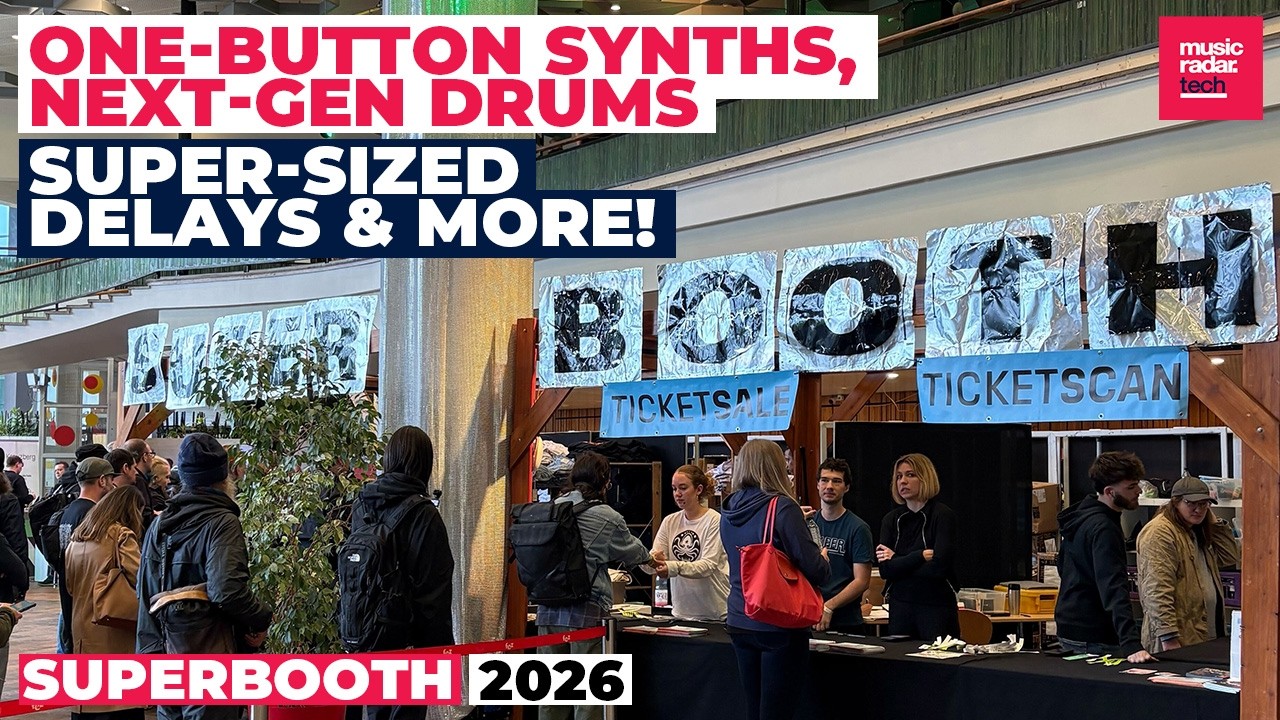
Europe's biggest annual convention for electronic music gear, Superbooth brings brands, musicians, producers, influencers and journalists together at Berlin's FEZ complex to spend three days collectively salivating over the latest and greatest in music technology.
Much more than just a trade show, Superbooth is mecca for synth nerds: it's open to the public, there are workshops, demonstrations and performances, and the vibe is a little more laid-back than more corporate events like NAMM.
Attracting manufacturers of all shapes and sizes, Superbooth typically hosts everyone from indie synth-makers, boutique brands and DIY modular outfits to established names like Roland, Elektron and Korg, who set the show alight with speculation this year by placing its secretive, as-yet-unannounced major synth release in the centre of the entrance lobby, hidden beneath a sheet of translucent plastic.
Most of the major players were in attendance, with a handful of notable absences: the inMusic family, which includes Moog and Akai, chose not to exhibit – a decision made all the more surprising after news broke during the event that the music tech behemoth will be acquiring Native Instruments. Also swerving the show this year was Teenage Engineering, despite the fact the Swedish brand unexpectedly dropped its EP-137 KO Sidekick mixer and effects unit over the weekend.
No-shows aside, Superbooth 2026 was heaving with gear-heads and as busy as we've ever seen it, its lengthy list of exhibitors packed with leading manufacturers unveiling innovative and exciting new products just in time for the show.
So many new products, in fact, that we would've needed twice the time and thrice the manpower to check out every single piece of kit worth spotlighting. Instead, we've curated a list of 10 things that caught our eyes and our ears, a rundown of essential releases we had so much fun with that we wished we could've taken them home with us. In no particular order, here are our highlights from Superbooth 2026.
(We've stuck to non-modular gear in this round-up, but if you want to check out our favourite Eurorack releases from this year's show, click here.)
Polyend Drums
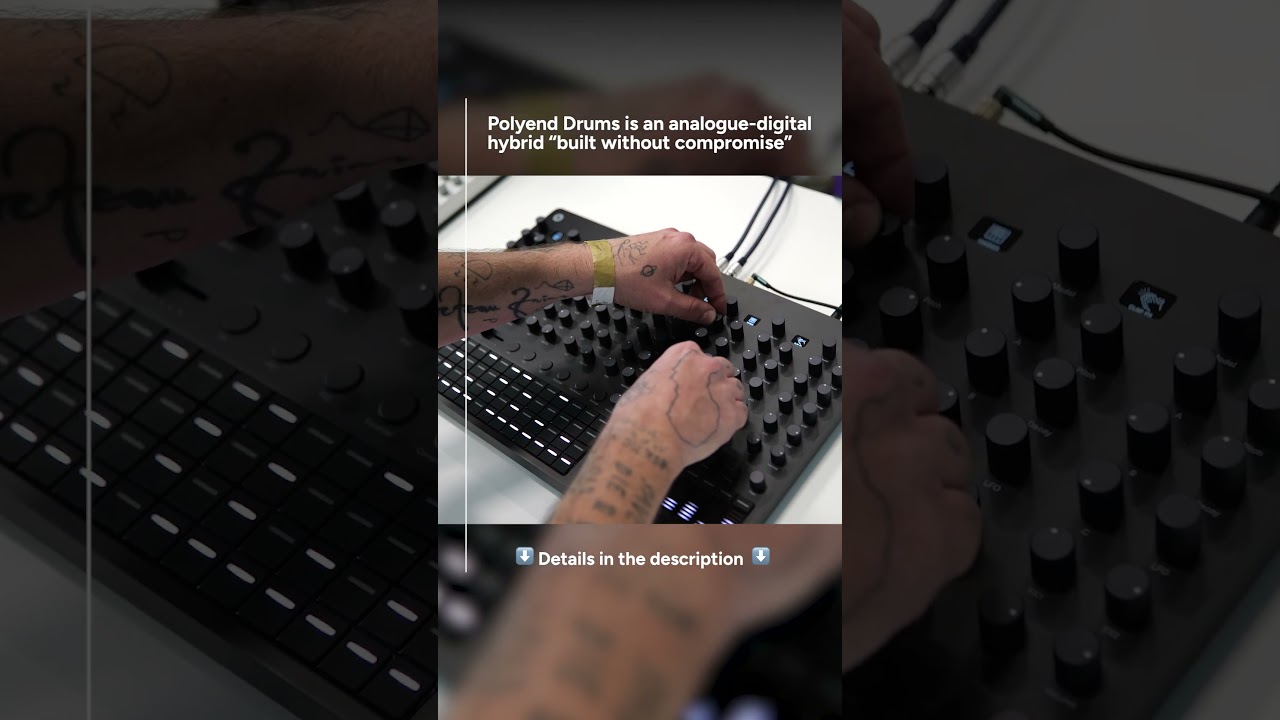
Polyend says Drums is the biggest project it's ever worked on, a hybrid analogue/digital drum machine that’s “built without compromise”, and that’s evident from the moment you lay your hands on it – this is a premium piece of kit with a premium price tag, and at $2,699, it’ll be competing with flagship instruments like Roland’s TR-1000 at the very top end of the market.
Though its sleek design is stylish and eye-catching, Drums’ distinctive interface had us in two minds. Dialling in patterns on its 4x16 grid of backlit pads is fast and fun, the per-track level meters are a nice touch, and we’re big fans of the instrument’s X0Y fader, which lets you morph between kits and patterns on-the-fly, opening up possibilities for creative transitions.
The instrument’s knob-heavy top half looked a little crowded, though, with key parameters spread across multiple displays that are a touch on the small side, and a grand total of 96 rotaries jostling for position across the front panel. Though this means more hands-on control and less menu-diving – something most users will appreciate – the interface might take some getting used to.
Workflow aside, though, Drums’ sound is impressive. Though the pre-production unit we tested didn’t yet incorporate the four dual-VCO analogue voices you’ll find in the finished product, the digital and sample-based voices still displayed a diverse tonal palette, delivering everything from room-shaking kicks, biting snares and crisp hi-hats to more unconventional tones accessible via the sub-mode mutations.
This is a drum machine we could get lost in for days, and we get the sense that we hardly even scratched the surface in the time that we had with it – we're looking forward to digging deeper into the sequencer, which the company tells us is the “most advanced and intuitive” it’s designed yet, with fills, probability, micro-timing, parameter locks, pattern chaining, generative tools and multiple track play modes.
Price: $2699
Release date: Pre-order now, ships in 3-4 months
Sonicware Deconstruct Minimal
Japanese brand Sonicware has become a firm favourite among budget-conscious beatmakers in recent years thanks to its Liven series, an affordably priced series of grooveboxes and synths each themed on a specific concept.
At Superbooth 2026, the company introduced an entirely new range to sit alongside the Liven line: Deconstruct. Where Liven was focused on “sound itself”, Sonicware says, Deconstruct explores “musical structure, analyzing and reconstructing it to enable deeper musical expression”.

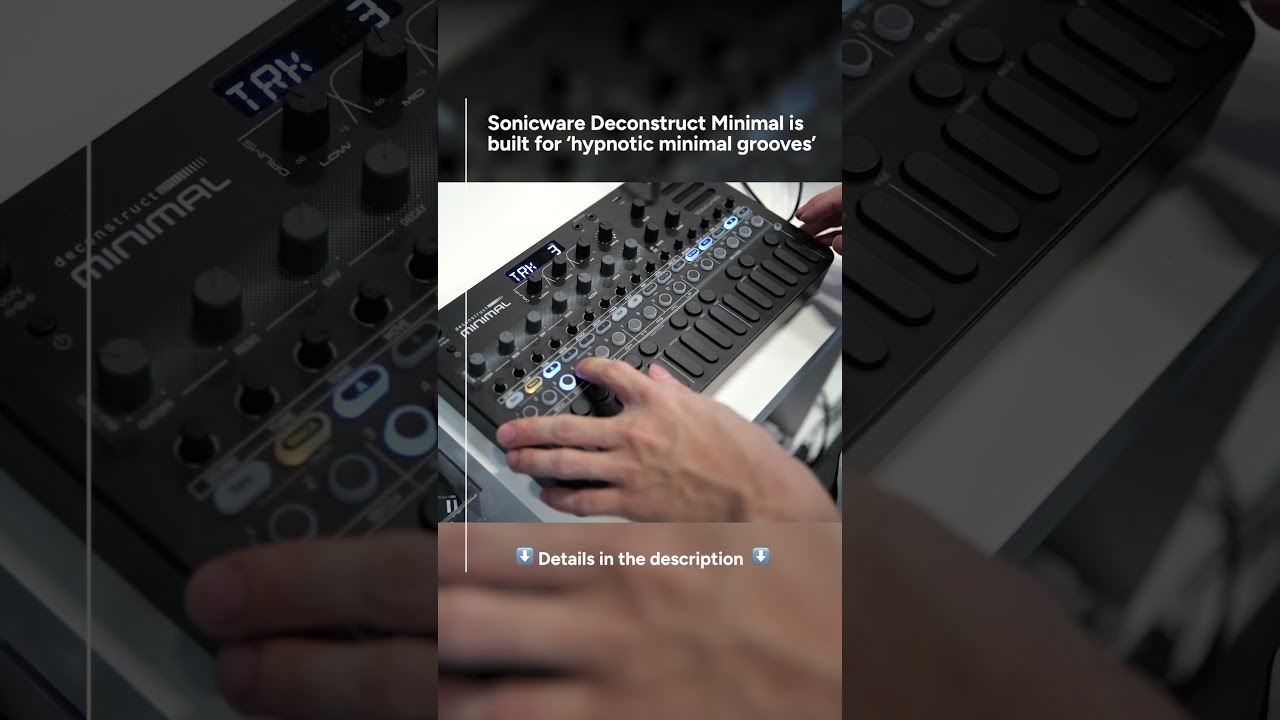
The inaugural instrument in the Deconstruct series is Minimal, a battery-powered groovebox that combines a sampler, drum machine and bass synth, built to create the “hypnotic grooves” of minimal techno and house. It’s inspired by vintage drum machines we all know and love, but rather than simply mimicking their sounds, Sonicware has attempted to recreate their “groove DNA”, the subtle rhythmic and pitch drift behind the distinctive character of greats like the TR-808 and TR-909.
Sounds are primarily sample-based, though you get a dedicated synth engine for kick and snare, and the drum tracks are joined by a digital bass synth that sounds brilliantly squelchy and acidic and really packs a punch when you crank the drive up. The sequencer is decent, with parameter lock, per-track accents, sub-steps, randomised velocity, swing and phrase rotation, and though the build quality is a little flimsy, it’s hard to complain at this price point.
Any qualms we had were immediately forgotten once we began building up some fast-paced minimal grooves and tweaking the master effects and three-band DJ-style Isolator EQ on-the-fly. Minimal had us channelling our inner Ricardo Villalobos in no time, and for only $299, this is not only a respectably versatile groovebox, it’s also just a whole lot of fun.
Price: $299
Release date: Out now
Bastl Instruments Kalimba
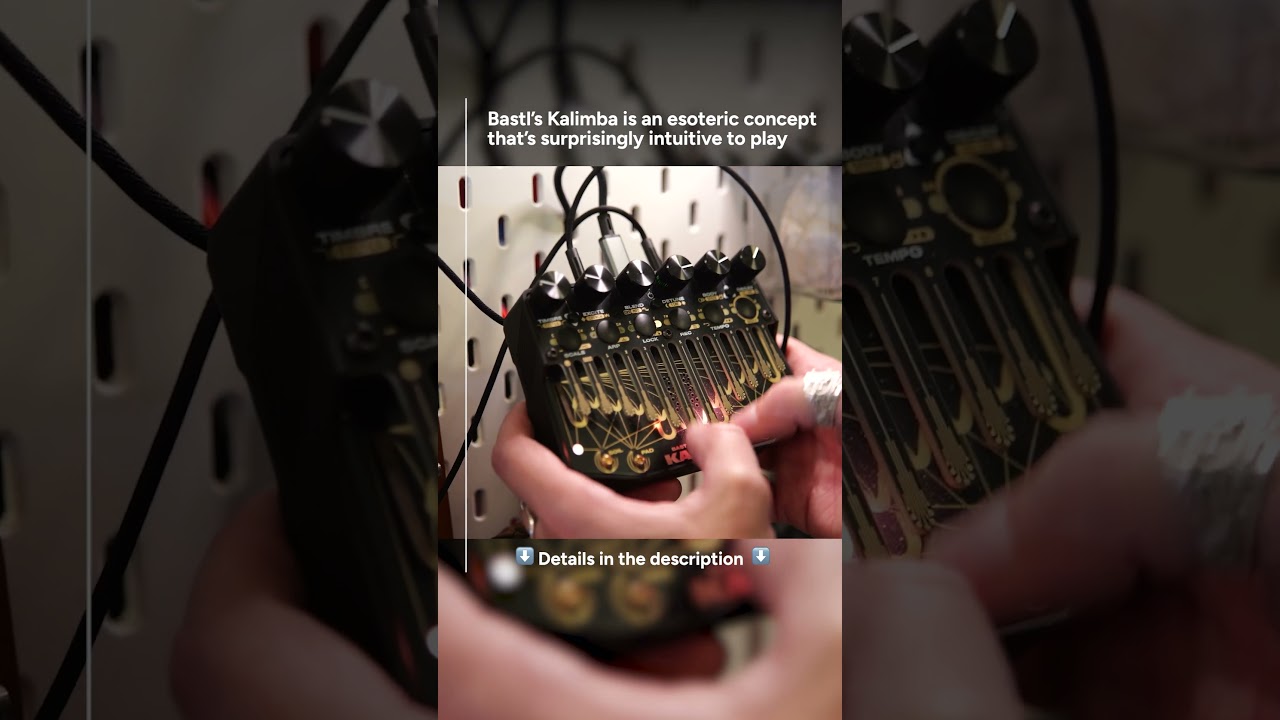
A hybrid of kalimba and synth, Bastl Instruments' Kalimba brought our minds back to Korg Berlin’s Phase8 when we first heard about it – an instrument fundamentally based on the same combination – but the two are actually very different, both in the way that they're operated and how they produce sound. (Bastl's Kalimba is also half the price and twice as fun to play – sorry, Korg.)
Kalimba has twelve playable tines that, when plucked or tapped, are picked up by the instrument's internal microphones and touch sensors on the tines. These signals act as exciters for the internal synth engines, which combine physical modelling and FM synthesis. There are also touch plates on the back that can be mapped to various parameters for additional control, and an internal accelerometer that’s hooked up to both synth engines, so you’re able to manipulate Kalimba's sound by rotating the device.
It’s a pretty wild concept, but for such an esoteric instrument, it’s not difficult to dive into and begin creating interesting sounds straight away. We found so much to explore in such a compact synth, cycling through the scales, messing around with the arpeggiator and running loops through the bitcrusher and distortion to create fuzzy, broken textures.
The real kalimba is a sweet-sounding instrument, but Bastl’s Kalimba can go very far in the opposite direction, its destructive looper layering, time-stretching and reversing audio to produce glitchy and unrecognizable results. It might be inspired by the kalimba, but Bastl’s version is so much more than an electronic recreation of an acoustic instrument – it's a brilliantly imaginative synth that’s one of the most ambitious designs we spotted at this year’s show.
Bastl's Kalimba has launched on Kickstarter and you can have until June 6th to back it if you want to grab one at the early bird price of €389.
Price: €389-€500
Release date: December 2026
Cyma Forma RND
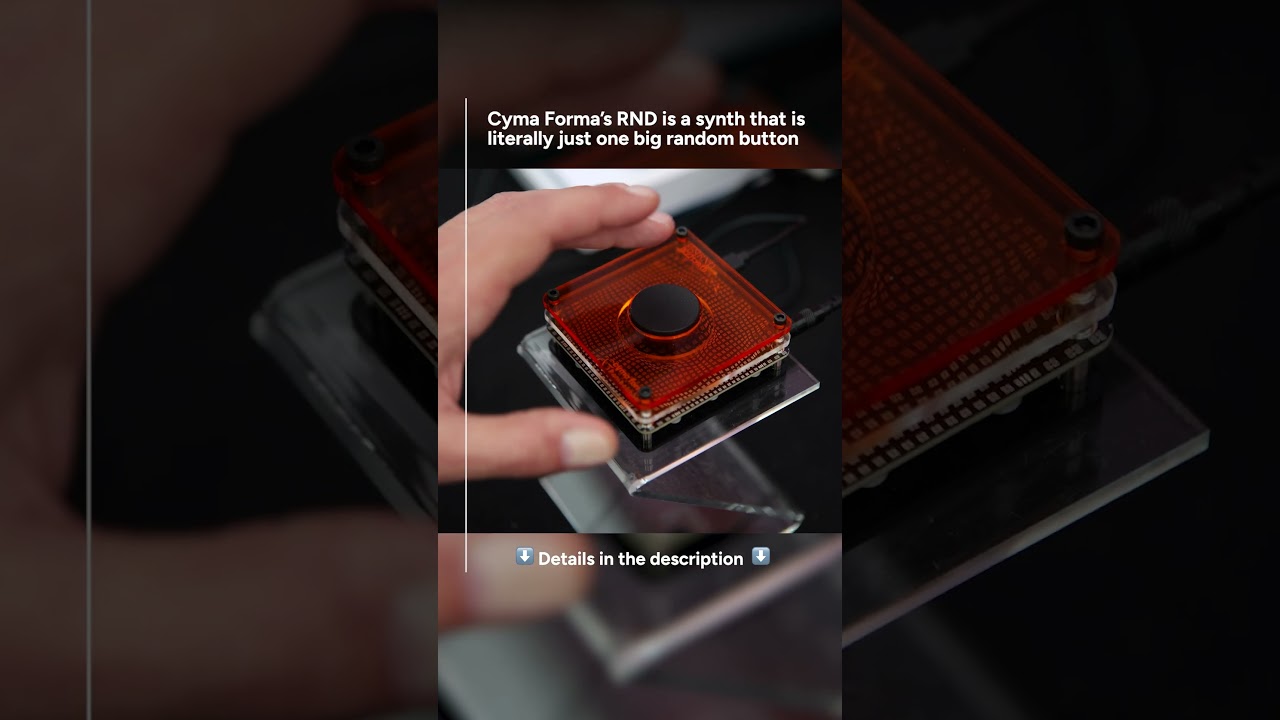
Pushing minimalist synth design further than anything we've seen before, Cyma Forma’s RND is a compact instrument with an interface made up of a single button. That’s it. No keys, no knobs, no faders, and no display, just one button that generates a randomised musical idea with every press.
Hit that button and all of RND's parameters across every feature are assigned weighted random values. Once you’ve hit it a second time, you erase the current idea and create a new one, and those sounds are gone forever.
Based on an idea dreamed up by French producer/DJ Bambounou, RND is a digital synth equipped with eight sound engines covering multiple styles of synthesis, along with five styles of filter and a reverb effect. Each randomly generated idea is made up of four instrument tracks populated with a unique patch, and each track gets its own sequence, with melodies, rhythms, tempo and scale all randomised.
It’s a concept that’s likely to divide audiences with its extreme simplicity, but after spending some time hitting RND’s big black button and speaking to its creators, we’re on board. The ideas we heard RND produce were varied, ranging from minimal ambient soundscapes to uptempo chiptune bangers, and you admittedly have to cycle through a few duds to get something you'd want to sample for a track – it’s an unpredictable machine, but that’s the whole point.
Time signatures are randomised across each of its four sequences, so you can get some funky polyrhythms going, and thanks to the 4-channel MIDI output over USB, it could also act as a generative sequencer for a broader set-up, if you want to explore beyond RND’s internal sound engines.
RND obviously won’t replace your go-to synthesizer, and it’s not intended to. Instead, it’s a fun, easy way to spark instant inspiration, an emergency button for those days in the studio when your creativity needs a jumpstart. Cyma Forma tells us that if all goes well, they’re considering applying the same one-button concept to an effects unit and a drum machine, so watch this space.
Price: €125
Release date: Out now
Making Sound Machines Plinky 12
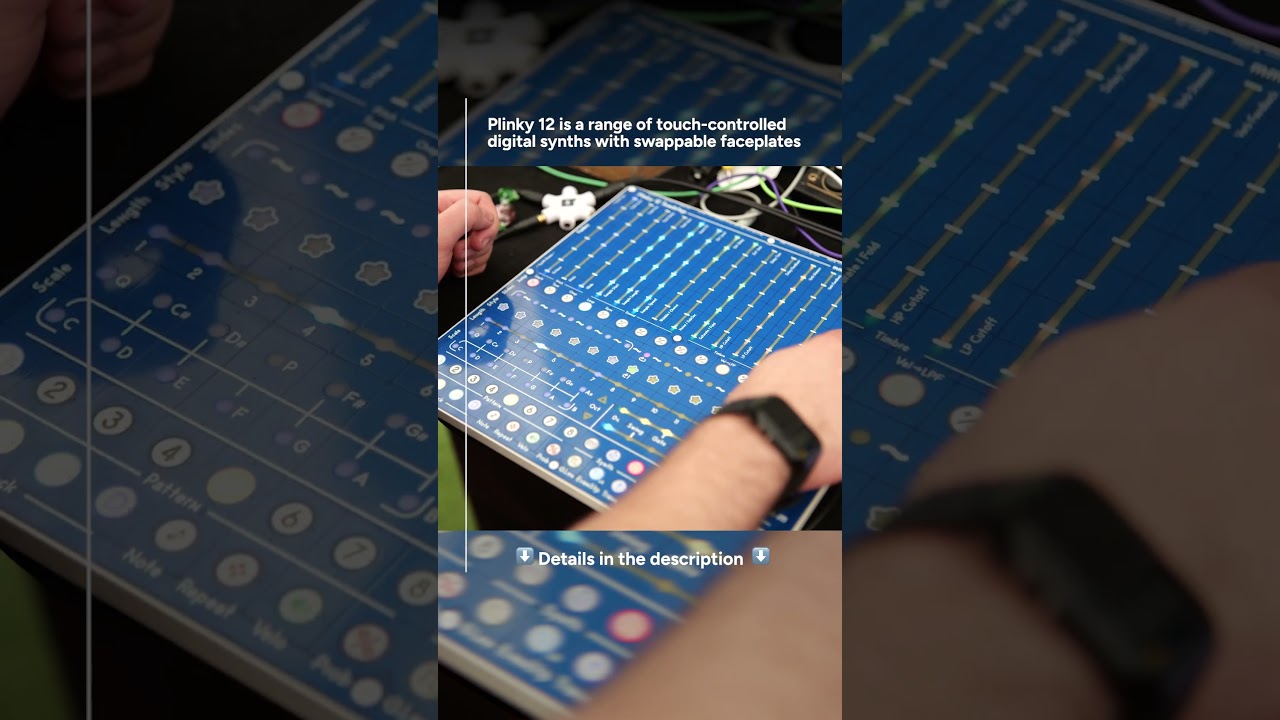
Plinky 12 is a touch synthesizer built around a clever concept: you can take its faceplate off and swap it with a different one that reconfigures the device with an entirely new workflow, effectively transforming it into a new instrument.
Each configuration uses the same underlying 16x16 grid of pressure-sensitive capacitive touch sensors, but the layout and behaviour change depending on the panel. The firmware supports multiple panel modes, and Plinky 12 automatically detects which faceplate is attached, so there's no need to manually change software when swapping over.
Each panel was developed in collaboration with a different designer, and they all encourage different styles of composition and performance. Designed by mmalex, Blocks is the most immediate of the three, featuring a performance grid alongside an Ableton-style clip launcher and an XY control area. It can also function as a MIDI and CV controller.
Chords is more of a songwriting tool, and you can assign custom chords to the pads at the bottom and play melodies at the top. Toadstool Tech's Toadstep (heard in the demo above) has more of a groovebox-style workflow, featuring a deep 4-track sequencer with probability, randomization, per-step slides, step repeats, ratcheting and more, inspired by the Intellijel Metropolix.
Plinky 12's synth engine is shared across all panels: it's a polyphonic sample-based engine that the developer says can "turn samples from simple sounds into frozen wavetables". Presets, LFOs, envelopes are also shared, so there's not too steep a learning curve when you switch over.
The best thing about Plinky 12 is that it’s an open platform, so technically inclined users can customize existing panels or even prototype their own in a browser-based code editor, imagining new ways to utilize the instrument’s synth engine, effects, MIDI, CV, and touch controls that suit their own workflow.
Price: TBC (likely around $500)
Release date: Summer 2026
Auxy Svensson 49
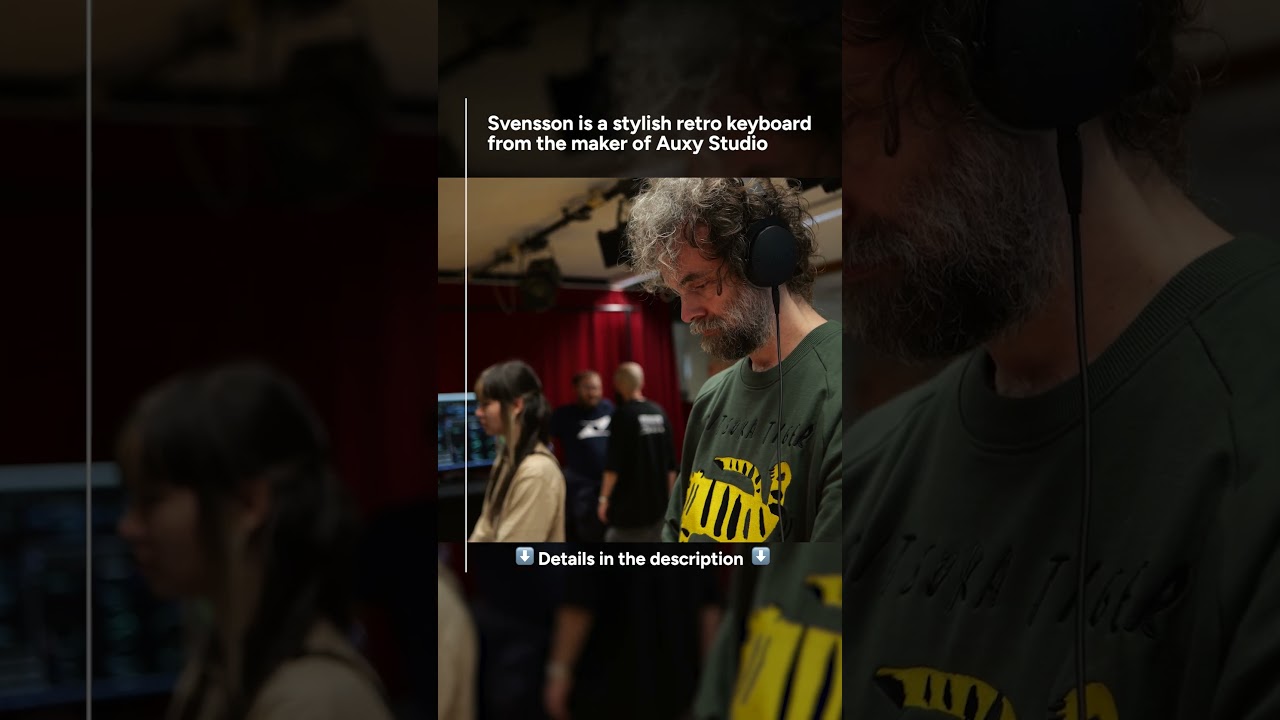
At this year’s show, Auxy – the Swedish developer behind the popular music-making app Auxy Studio – showcased its debut hardware instrument, a keyboard stocked with sounds designed by content creator and musician Andreas Paleologos, better known as Cuckoo. A 49-key home keyboard designed with an emphasis on accessibility, simplicity and ease-of-use, it’s equipped with a built-in speaker and a semi-weighted Fatar TP/9S keybed.
Svensson also features a multi-track MIDI looper that can play four different sounds at the same time, and each of those sounds can be looped in multiple layers, with no limit on length. Svensson’s looper is triggered when you start playing, and can be used to go back and retrieve ideas you just played without hitting record, a bit like Ableton's Capture MIDI feature.
Cuckoo himself gave us a demo of Svensson’s sounds, which are our favourite thing about the keyboard: with an organic and expressive quality, they have a touch more personality and character than the presets you’ll find in the average home keyboard. The looper is loads of fun, too, and we got a great-sounding layered sequence going super quickly.
Superbooth is a show packed with complex modular gear and feature-laden synths, and while they have their place, it was nice to take a little break with an approachable instrument that you can get acquainted and craft a new idea with in minutes. Combining retro aesthetics and carefully considered sound design with an accessible interface and premium build, Svensson is a real winner. The only downside is the price: at $999, it may seem a bit steep to some.
Price: $999
Release date: Autumn 2026
Expressive E Osmose CE
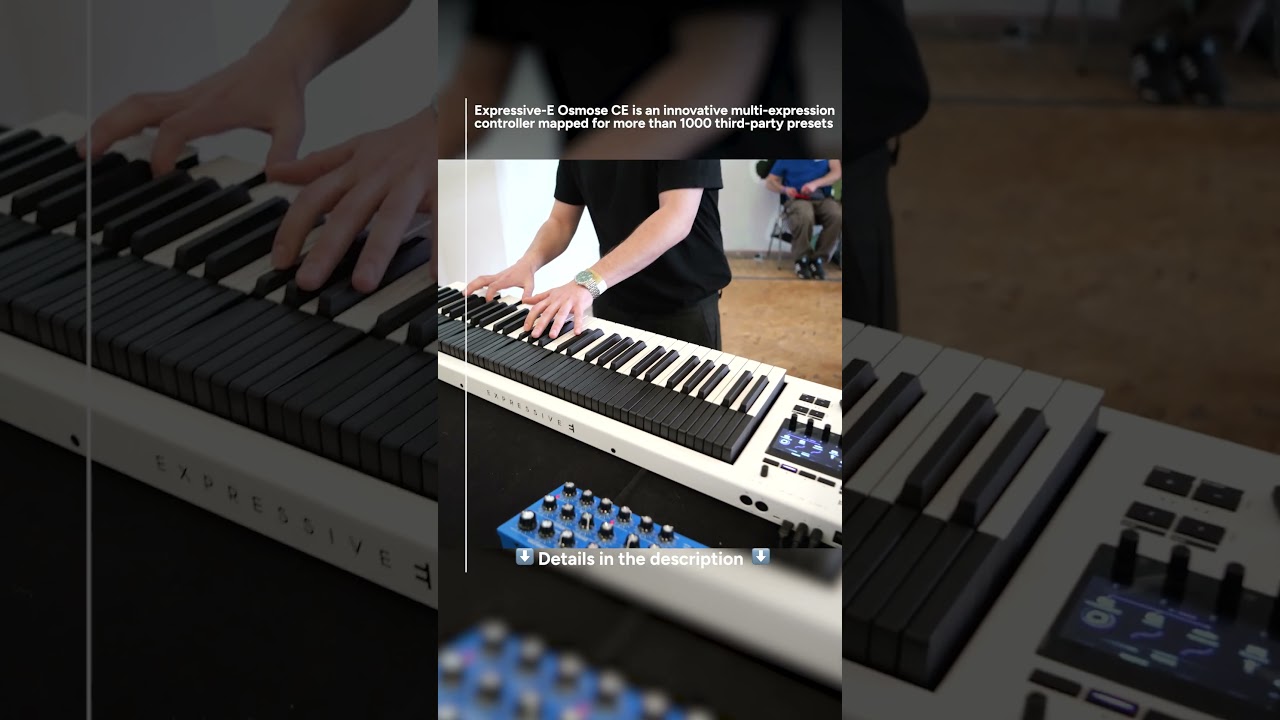
Released in 2023, the original Osmose put MPE-level expression into a traditional piano-style form factor, its full-size keys offering three-dimensional control over its internal EaganMatrix synth engine, with per-note pitch bend, polyphonic aftertouch and specialized keybed gestures opening up a host of new performative possibilities.
At Superbooth 2026, Expressive E unveiled the Osmose CE, a MIDI controller available in 49- and 61-key models that's based on the same keybed as the original Osmose synth, but without the internal synth engine.
You could use the original Osmose as a MIDI controller, but taking advantage of its MPE capabilities with plugins and software instruments in a DAW often required additional setup and configuration that wasn't as straightforward as the standard MIDI workflow. Expressive E has addressed this by developing a new plugin, Ctrl-E, that has almost 1000 presets from third-party developers (Kilohearts, G-Force, Vital and more) that are are directly mapped to Osmose’s MPE control straight out of the box. (Ctrl-E is free with Osmose CE.)

Custom-built to respond to Osmose CE's seven expressive gestures (Tap, Press, Pitch Bend, Vibrato, Shake, Strum, and Note-Off), Ctrl-e's presets can be browsed directly from the hardware when used with supported DAWs, and eight pre-mapped macros are available per preset.
Expressive E's talented keyboardist Tomasz Bura gave us a dazzling demo of what Osmose CE can do when paired up with Ctrl-E's diverse library of optimized presets. As you can see in the video above, an experienced player that's taken the time to get acquainted with Osmose's unique keybed and its expressive gestures can go far beyond the scope of a traditional keyboard, and the introduction of Ctrl-E takes that creativity even further.
Price: $999 (49-key), $1,199 (61-key)
Release date: Out now
Chase Bliss Big Time
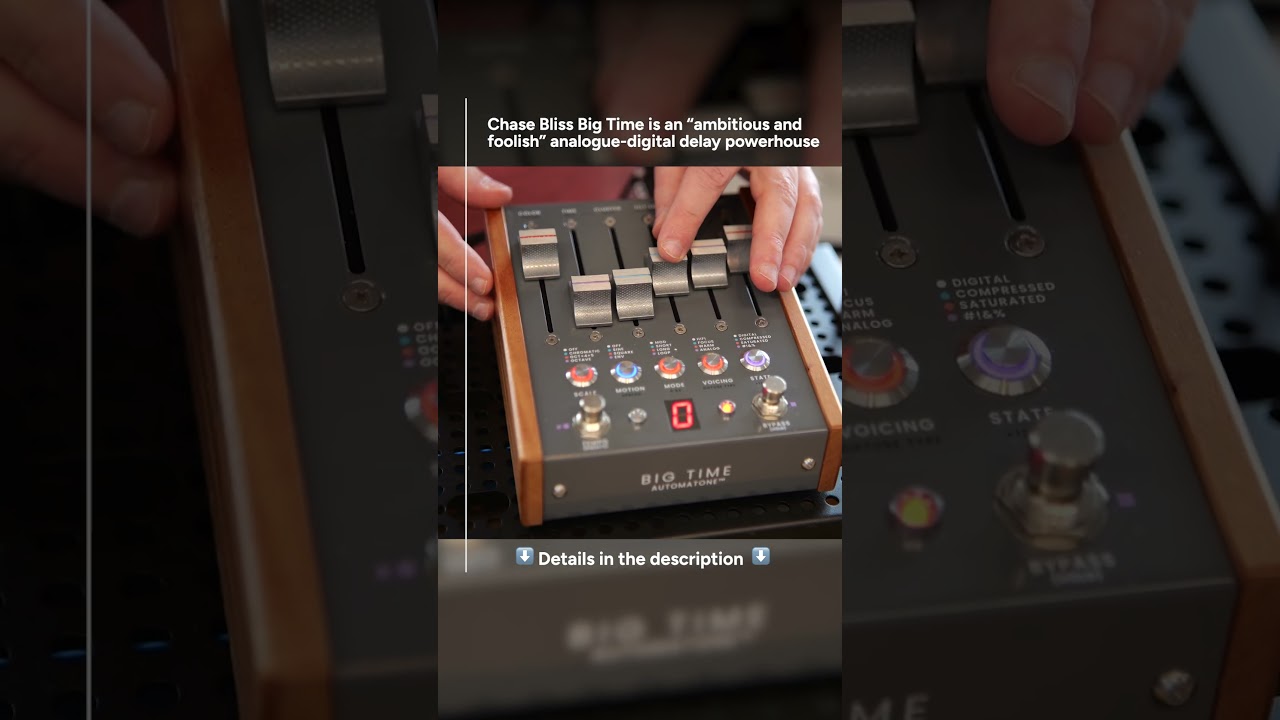
Described by Chase Bliss as “the most ambitious and foolish thing” the Minneapolis-based pedal specialists have ever created, Big Time is one of the most talked-about effects units at this year’s show, a supersized echo pedal with motorized faders that draws inspiration from early ‘80s hybrid rackmount delays, combining the “anything-is-possible of digital” with the “everything-sounds-good of analogue”, according to its makers.
Pairing a versatile digital delay with a vintage-inspired analogue signal path, Big Time has two stages of analogue colouration to add character to its echoes: a preamp at the front of the signal chain and a clipping limiter in the feedback path, duplicated across both channels in true stereo and designed by John Snyder of Electronic Audio Experiments.
The digital engine has the ability to introduce aliasing and drop the sample rate and bit-depth – combining this with the pedal’s “%&#$ Mode”, which progressively degrades the feedback on each repeat through the deliberately misbiased limiter, allowed us to get into some seriously mangled sonic territory that got even messier as the delays went on.
It’s not all about the grit and grime, though, and the pedal can handle a broad spectrum of delay styles, from long and hypnotic echoes to clean, precise repeats, and there’s potential for even more exploration through modulation, pitch-shifting, tone-shaping and more. Much more than your average delay pedal, Big Time is a powerful tool for creative sound design, and could become another classic in Chase Bliss’s well-loved product catalogue.
Price: $999
Release date: June 2026
Buchla Ziggy
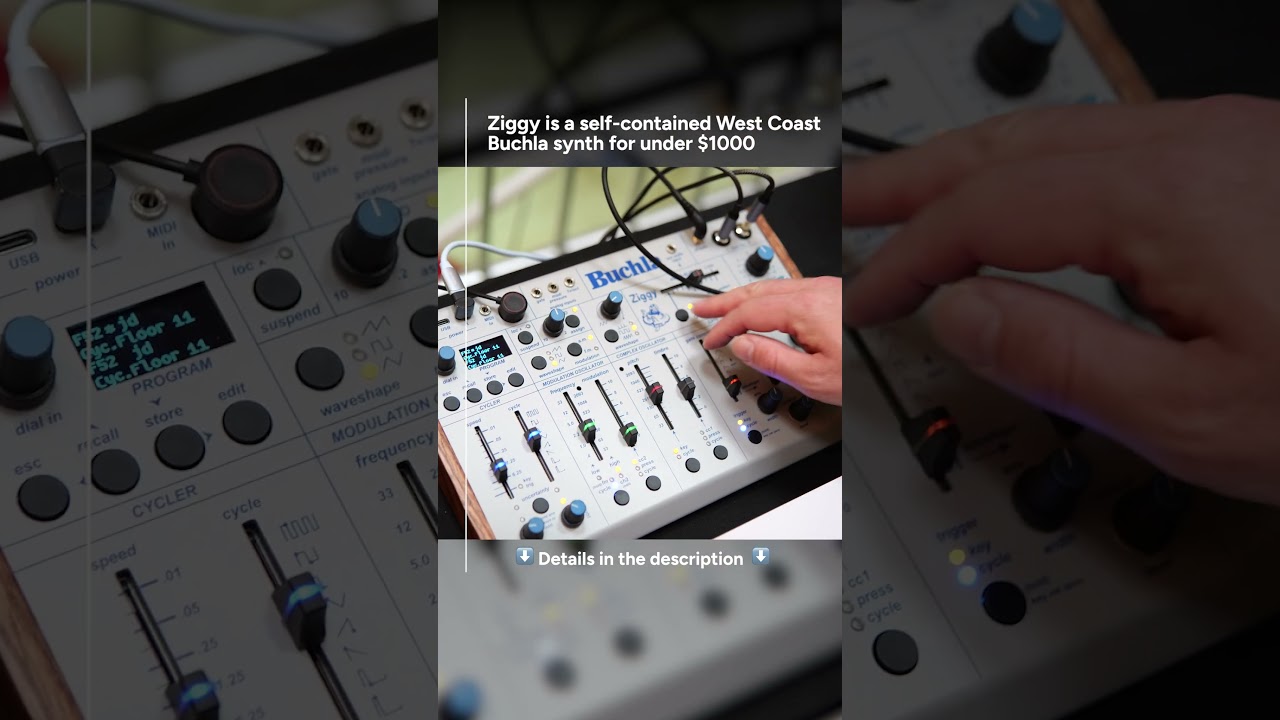
Buchla’s Ziggy monosynth aims to bring the brand’s singular style of West Coast synthesis to a wider audience, both by dropping the price – at $999, Ziggy is a fifth of the price of the company’s Music Easel – and repackaging the sound engine in a non-modular, self-contained desktop instrument that’s intended to be more modern and accessible than its previous designs.
The format may have changed, but Ziggy still has the digitally-controlled analogue architecture of a classic Buchla: a complex oscillator with wavefolding, a modulation oscillator for FM and AM, and a low-pass gate in place of a conventional filter and VCA, inviting the kind of unconventional sound design that has earned the brand a place in the hearts of those looking for an experimental alternative to the traditional East Coast approach.
What makes Ziggy different, though, are additions like browser-managed patch storage, digital effects, and extensive connectivity: alongside CV inputs for pitch, gate and modulation, you get an external audio input and 5-pin MIDI and USB-C connections, which allow for the kind of external control via the KeyStep that you can see here.
It’s fair to say that most music-makers won’t have had the chance to experiment with a Buchla before, and with Ziggy, the company is hoping to change that. While it’s clearly more approachable than a Music Easel or a Skylab, designing sounds with Ziggy will still take some getting used to, as we found out over at Buchla’s booth – but cycling through the instrument’s presets, which showcase the unique, often chaotic timbres that West Coast synthesis is known for, left us eager to dive deeper into the Buchla universe. Mission accomplished.
Price: $999
Release date: August 2026
Elektron Outbox 8

One of the most common gripes with Elektron instruments like the Digitone and Digitakt has been the lack of individual hardware outputs for separate tracks, meaning mixing and recording options are limited unless you’re using the Overbridge app. The new Outbox 8 is a solution to that problem that Elektron is describing as “Overbridge in a box”.
Outbox 8 is an audio and CV breakout box with eight mono balanced 1/4" outputs or four stereo pairs. So if you're working with any Overbridge-enabled Elektron machine, you can now route individual tracks and groups of tracks to an external mixer or use the outputs as sends for external effects.
You’re able to choose which tracks from your Elektron device are routed to which output on the Outbox and which stay on the device’s main stereo outputs, and Elektron says latency will be matched across both, making multitrack recording hassle-free. Each output can be configured as audio or CV, with built-in MIDI-to-CV conversion, so you’ll be able to sequence your Eurorack or any other CV-compatible gear via your Elektron instruments.
It may not be the flashiest release at this year's show, but Outbox 8 is something Elektron fanboys have been lusting after for years. The most enthusiastic reaction to any piece of gear we witnessed at the entire show was over at Elektron's booth, when one attendee pointed at Outbox 8 and said to the product rep with audible delight: "you finally did it!"
Price: TBC
Release date: TBC (but Elektron says "within weeks")
