Berlin’s Superbooth is probably the most significant date in the modular synth calendar. Seemingly every Eurorack developer and their CV-toting mother had some sort of presence at the Fez Centre this past weekend, most of whom had something new and exciting to show.
There was so much modular action, in fact, that it’s hard to cover it in any way that even comes close to being comprehensive. So in lieu of a definitive list, here is a loose collection of our modular highlights – a few of the new releases that turned our heads and had our patch cables twitching on the Superbooth show floor…
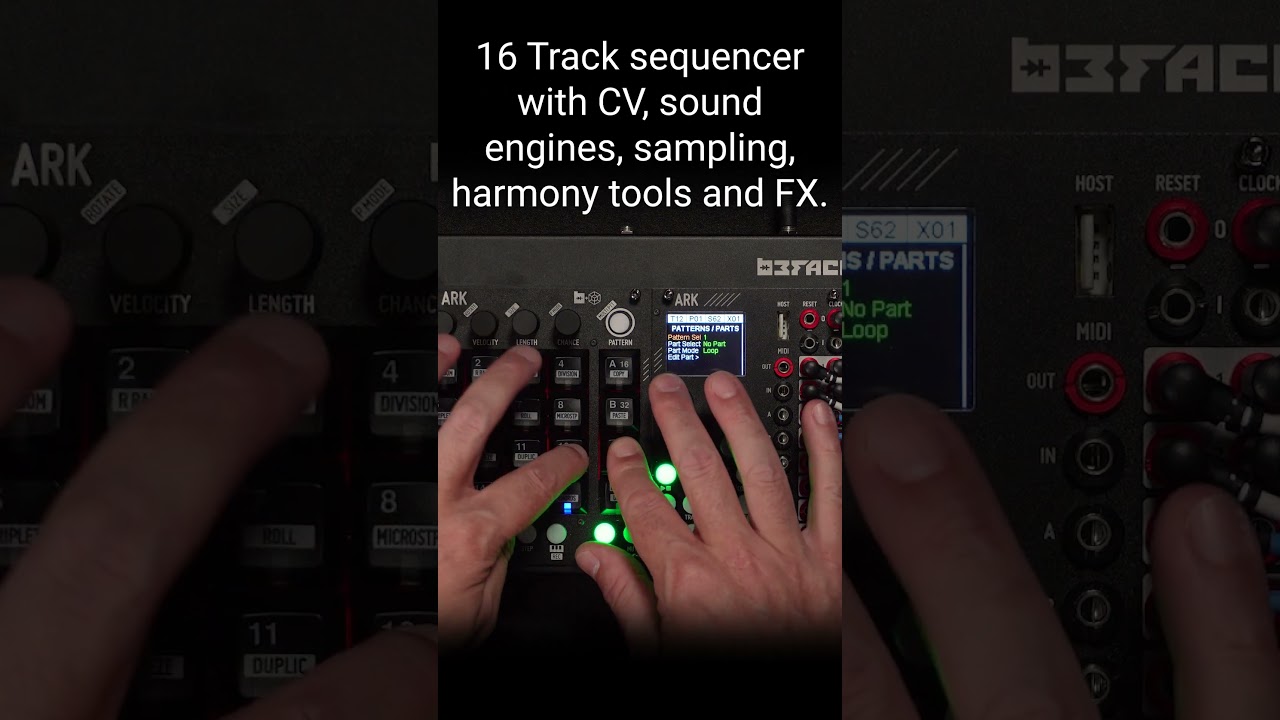
Befaco / Tesseract ARK

Modular systems are a great environment for experimenting with chance-based sequencing and generative systems. This new 16-track instrument looks like an excellent tool for precisely those kinds of sonic adventures.
Created by Befaco in collaboration with Tesseract Modular, ARK is described as “a compositional system where algorithms, chance, and signal share the same space.”
Each of ARK’s tracks can make use of deterministic, stochastic & Euclidean sequencing tools, with 16 internal modulation sources for adding movement.
ARK can be used as a fairly self-contained instrument, with per-track internal sound engines and samplers. It also looks handy for driving other sound sources though. ARK can output CV and audio as well as MIDI. It also features internal harmonic tools based around scales and chord progressions.
Oh, and there are onboard effects too. Basically, it looks like an all-in-one experimental powerhouse.
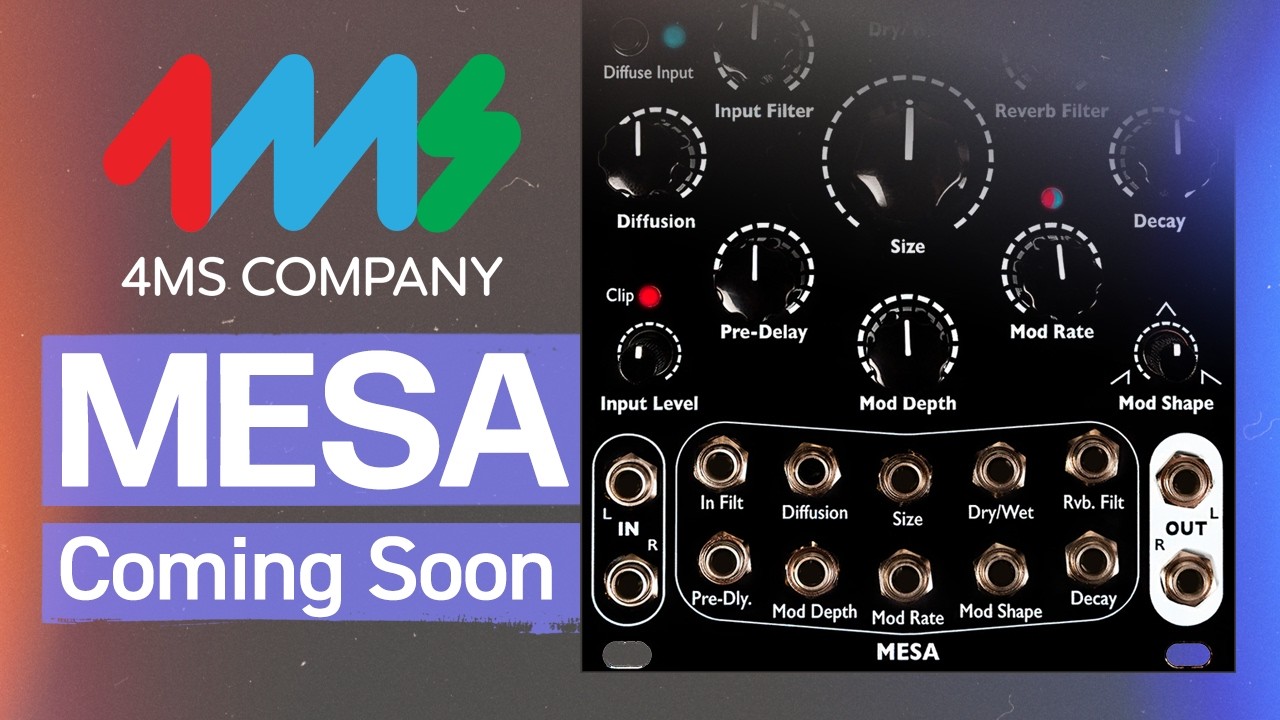
4ms / Valley Audio Mesa

4ms’s new reverb module began life in the digital realm. Mesa is based on Valley Audio’s Plateau, a popular third-party add-on for the virtual Eurorack environment VCV Rack, itself based on a renowned plate reverb algorithm developed in the ‘90s by Jon Dattorro.
According to 4ms: “Mesa brings the Plateau sound into hardware with no compromises on quality. Running at 96 kHz with 64-bit double-precision processing, Mesa is among the finest-sounding reverbs available at any price point.”
Aside from the reverb algorithm itself, Mesa is equipped with four LFOs for modulation, a pre-delay buffer, a freeze function and dual filters.
Make Noise / Soundhack Plexiphon

We can always rely on Make Noise to turn up to Superbooth with something interesting to show, and this year saw the debut of Plexiphon, a creative spatial effect that once again sees the US brand teaming up with developer Tom Erbe of Soundhack.
Described as a “spatial texturizer”, Plexiphon’s big selling point is the fact it is ‘modeless’, allowing for continuous morphing between different forms of spatial effect. This means to can seamlessly go from, say, washed out reverb to multi-tap delay lines,
This is controlled by a combination of the Plexus parameter, which alters the algorithm’s the routing and entanglement of the feedback loops, and the Size control, which changes the temporal relationship between the feedback paths, acting like a delay time or room size control. Both parameters can be controlled by both front panel knobs or an associated CV input.
Befaco / Mylar Melodies Random8

Another Befaco collaboration, this time with musician/podcaster/YouTuber and all-round modular fiend Mylar Melodies.
Befitting of its name, Random8 features eight random voltage generators packed into just 8HP of space. Each generator has a trigger input, per-track loop button and attenuator.
According to Mylar Melodies: “Random8 is designed to provide a huge level of animation for its size, yet remain interactive and jammable, by tapping dedicated buttons to loop or 'evolve'. Using stepped randomness, it makes every step of your sequence sound different, alive and interesting – so you can play live more easily and for longer.
“It also has scale quantisation built in so it can drive VCOs, making it a pitch sequencer (where you let chance determine the steps) too - In fact, it's eight! And it has slide, making stepped looping voltages into complex looping LFOs.”

WMD Cosmic Debris

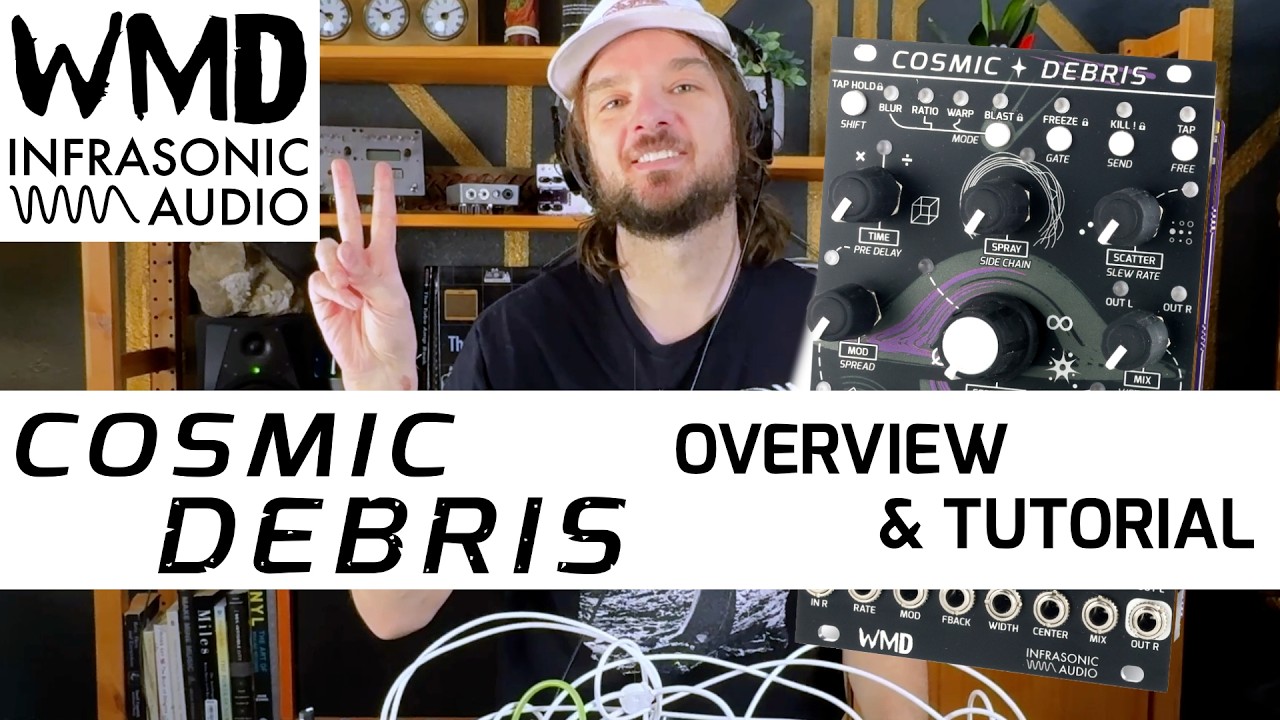
Launched just ahead of this year’s show, Cosmic Debris is a stereo delay and reverb processor with 16 interacting delay lines. What makes Cosmic Debris interesting is that it’s designed specifically as a live performance effect, meaning that it’s particularly well-suited to manipulating sounds on the fly.
The module has three modes of operation, designed to create tight rhythmically synced delays, washes of ambience or pitch-shifted shimmer.
A Slew function allows users to create slowly morphing effect sweeps with a single turn of a control, while the Snapshot function can save and recall parameter configurations.
Doepfer 1U modules

Dieter Doepfer is the developer that first introduced the Eurorack format, so it's always interesting to see what Doepfer is up to.
New for this year’s Superbooth is a range of modules in horizontal 1U format (ie, arranged to be long, rather than tall) with a new 1U-compatible case to fit them in.
There are six 1U modules in this first batch, with more adaptations to follow. The initial run includes a dual VCA, dual LFO, AD/LFO, 6-in-2 mixer, MIDI-to-CV converter and Doepfer’s Miniature Ratcheting Sequencer.
The new P7 case, meanwhile, takes the same form as Doepfer’s existing P6 powered case, with an additional 1U row along the centre, giving a total of three module rows of 84HP.
Knobula Drum Farm

Knobula has made some of our favourite modules of recent years, including the Poly Cinematic and Monumatic synth voices, which bring a welcome touch of polyphony to your modular rig.
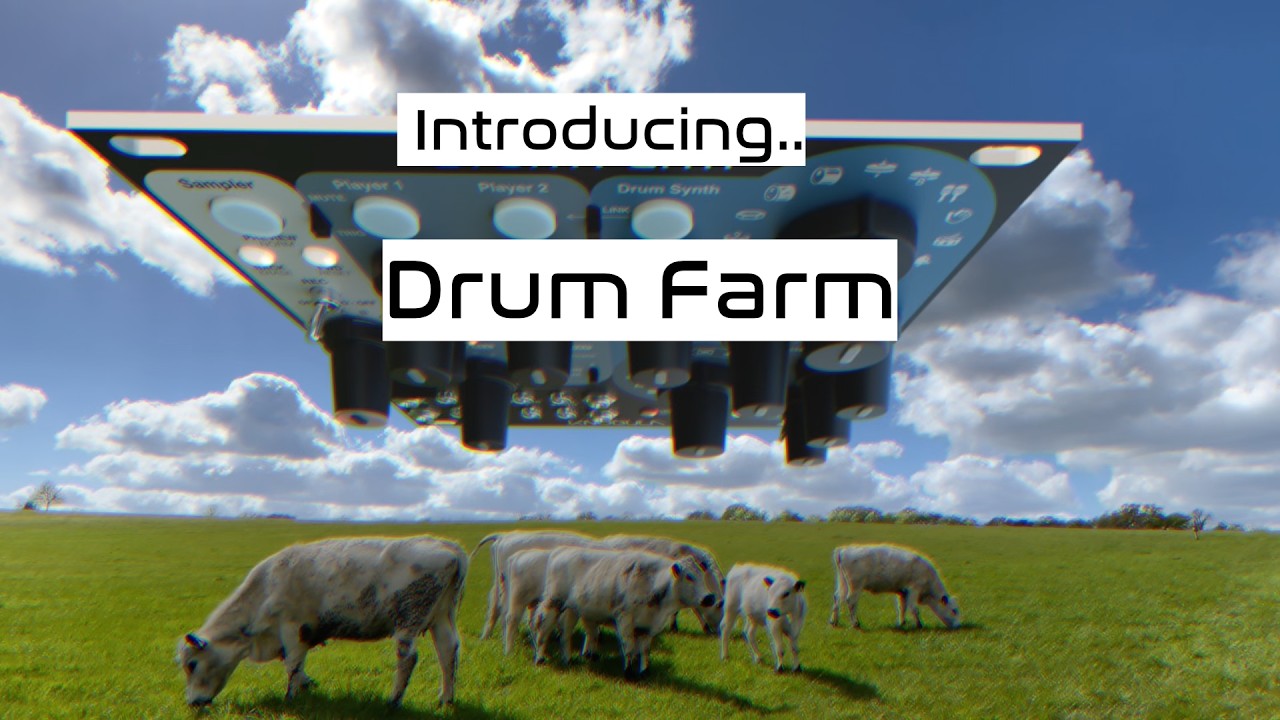
Drum Farm is said to be “inspired by Knobula Technical Director Jason Mayo’s background in computer animation, where vast ‘render farms’ generated thousands of realistic images with minimal human input.”
That has resulted in a 16-sound percussion generator that combines elements of virtual analogue and physical modelling synthesis, sampling and real-time effects. These elements are designed to interact with one another, so that users can shape drum sounds in synthesis, process them with effects and then resample the results for further manipulation and layering.
Designed to be fast and intuitive, Drum Farm is said to be capable of quickly generating adventurous drum sounds through experimentation or generative programming. From the demos we’ve seen it looks like a whole lot of fun.
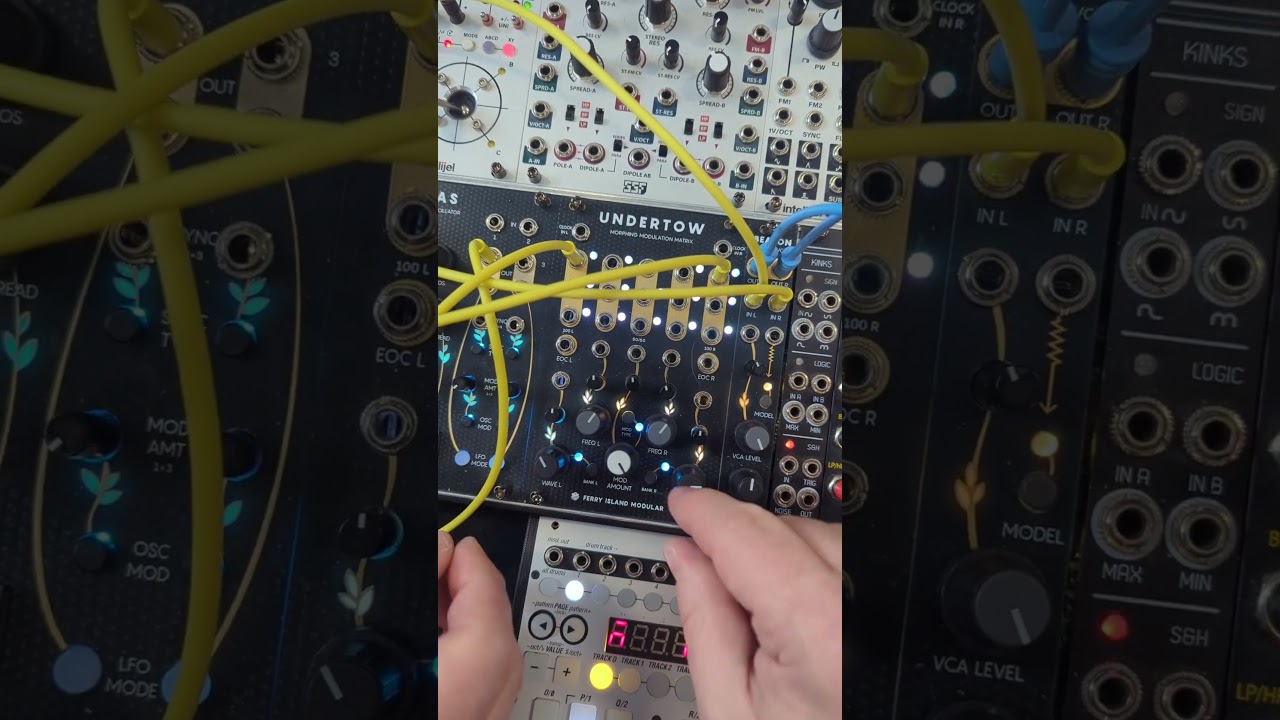
Ferry Island Modular Undertow

Ferry Island is a relatively new brand from Helsinki. Following the release of its debut Four Seas oscillator last year, the company came to Superbooth with a pair of new modules, a VCA/LPG named Beacon and Undertow, a powerful-looking wavetable VCO-come-LFO.
Undertow is described as a ‘two dimensional’ wavetable generator. According to Ferry Island: “instead of one VCO/LFO waveform, it gives you fifteen simultaneous outputs, each a unique position between two wavetable LFOs.”
Users can morph the output across two axes, with the horizontal axis altering the wave and frequency and the vertical axis shifting from clean to turbulent modulation.
According to Ferry Island “there's no such thing as too much modulation” – which is a statement we’re happy to endorse.