


When it was released on 21st November 1980, Steely Dan’s seventh studio album Gaucho was reported to be the most expensive album ever recorded. Over a two-year period, the band's fastidious co-leads, Walter Becker and Donald Fagen, pushed perfection to its very limit, with a revolving door studio policy that resulted in the absolute elite of the American musical fraternity being called upon to record each song, before the next set of equally masterful musicians turned up the next day to do it all again… and again…and again!
There were some major bumps in the road on a technical level during the process though. Gaucho was released as a seven-track album, with several additional tracks being dropped along the way.
One song (The Second Arrangement) was accidentally erased by the engineer, wiping out several months of work in the process. Alternative versions of the same song were deemed to be inferior, so the track was consigned to the Steely bin!
Despite these issues, the world was finally presented with a musically dense record that many would eventually hold as the gold standard of audio engineering.
Opening many an audio (and muso-) phile's favourite LP is the track that's receiving our analysis today, Babylon Sisters.
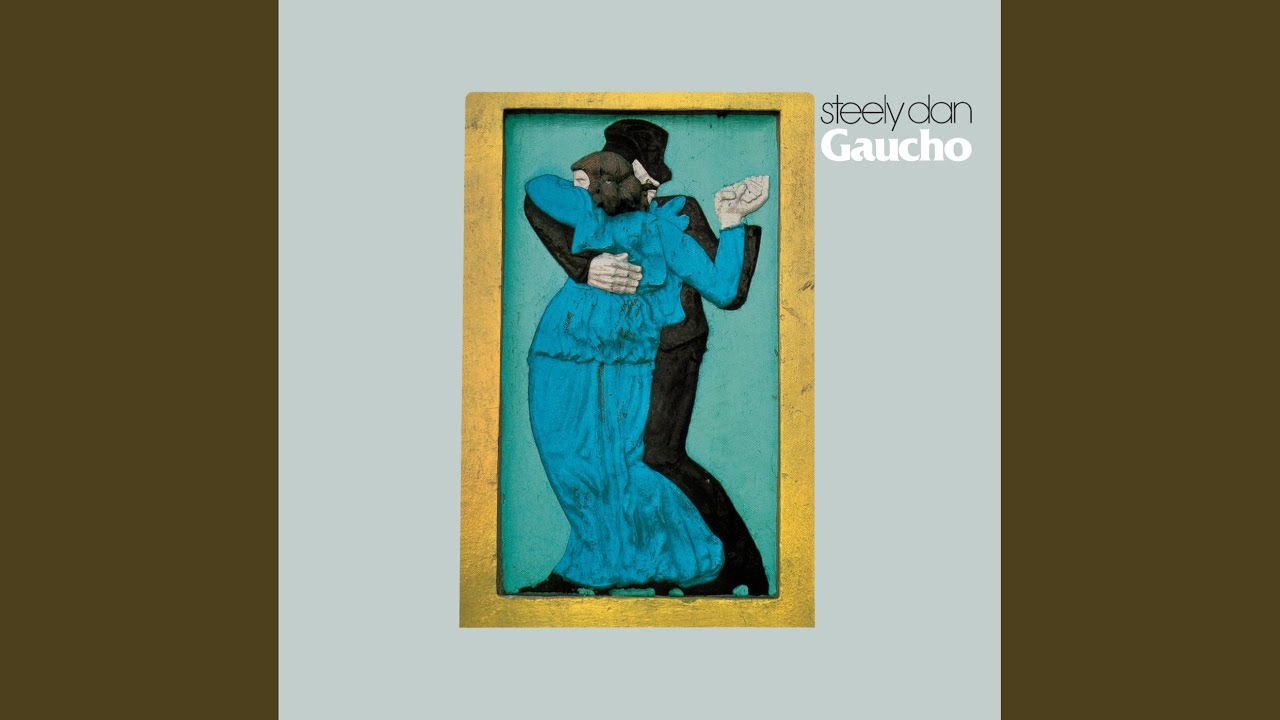
As if to endorse its perfectionist’s charter, Babylon Sisters was mixed 274 times before Fagen decided that he was happy - and that’s not before the prolonged 50-second fade-out took more than 55 attempts to get just right. (Mixes back then were manual affairs, with all hands on desk!)
The infectious groove and beautiful drumming that defines the track, begins with a legendary half-time shuffle. Also known as the ‘Purdie Shuffle’, it was the trademark of venerated kit-legend Bernard ‘Pretty’ Purdie, he would often arrive at sessions with two banners, which he placed either side of his kit while recording. One of which read, 'You done it!' and the other stated ‘You done hired the hit-maker’ - playing on his storied career which had been replete with success.
The concept behind a half-time shuffle, is as the name suggests; the kick and snare effectively play at half speed, employing the primary elements of kick on beat one and snare on beat 3.
Meanwhile, the hats shuffle, much as they might play under normal circumstances, but with the addition of numerous snare drop-sticks. The tempo remains the same, but the half-time groove makes the pace feel half-as-slow.
"The way a locomotive kind of pushes and pulls, that's what I was feeling," Bernard told us back in 2019. "I played it for my music teacher, Mr Leonard Haywood, when I was a kid, and he tried to stop me. 'That's not the way to play a shuffle,' he said. But I heard what I heard - whoosh, whoosh, whoosh - so I kept it. Eventually, he said, ‘OK, you work on that. It could be something… but not today.’ [laughs] That’s all right. I knew I’d get my chance.”
Purdie embellishes his shuffle continually, particularly in the intricate hi-hat part, providing a beautiful blend of open and closed placements.
After just two stellar takes, Purdie was done.
“We did two takes, and after the second one, he put on his overcoat, and he walked in the control room and said to everyone, ‘Well fellas, that's it!' And he left! It was amazing,” remembered guitarist Steve Khan in an interview on his own website. “We were all relieved, because we knew we had played great.”

With Steely Dan sifting through their Rolodex of L.A.'s finest musicians to make Gaucho, we have to highlight some of the other key luminaries that brought the final version of the track to life.
Chuck Rainey played bass guitar, having worked with Don and Walt on previous projects, most notably the beautifully playing on the track Peg, where Rainey apparently hid his playing technique from the duo.
They didn't want any hint of slapping, yet that's exactly what they got. Somehow, Chuck got away with it!
On Fender Rhodes and Clavinet, jazz legend Don Grolnick rustled up a host of classic lines, which may or may not have been improvised.
The point is, he made them sound so laid-back in performance that they sound utterly effortless. It's a similar story with the aforementioned Steve Khan on guitar, whose contribution feels smooth and chilled, yet laden with detail.
Leading the horn section, Randy Brecker, who supplied the notable trumpet solo, while playing alongside Tom Scott on alto and tenor sax.
Apart from being another stellar player, Scott is also the composer and performer of the best known of the Starsky and Hutch themes. (There were three themes across multiple seasons).
Bizarrely, two bass clarinets are employed, adding a darker colour to the chorus section, played by George Marge and Walter Kane.
The all important thick, textural backing vocals were supplied by Lesley Miller, Toni Wine, Lani Groves, Diva Gray, Gordon Grody, and renowned R&B and jazz vocalist Patti Austin, with percussion supplied by Errol Bennett.
Donald Fagen notably supplies the lead vocal, with Walter Becker taking a backseat from playing duties. This is not a stance that continued throughout the album, where Becker made contributions on guitar and bass, with Fagen also playing Rhodes and synth on several other tracks.

Despite having the crème de la crème of musical talent on-hand, Don and Walt were continually frustrated by players not hitting precisely what was directed.
Many musicians were disappointed and upset that their contributions did not make it to the final cut of the album. One such musician was the Dire Straits' guitar hero Mark Knopfler, who was recruited to help lay down licks for Time Out of Mind.
After recording 10 hours of material, his contributions did not satisfy the pedantic pair.
“It was a strange experience," Knopfler said in Brian Sweet's Steely Dan: Reelin' in the Years."It was like getting into a swimming pool with lead weights tied to your boot.”
Back to Babylon Sisters, and the track has to be one of the most complex pop songs (if we can call it pop) that has ever been written and produced.
It is well known that Fagen had been listening to plenty of jazz around this time, notably artists such as Keith Jarrett, and this influence is pretty overt across Gaucho.
Jarrett himself was fully aware, and sued the pair over copyright infringement for the album’s title track. It was settled out of court, with Jarrett later being credited as one of the composers.
On the one hand, the structure of Babylon Sisters could be considered fairly conventional - containing introduction, verse and chorus - but many of the section lengths have been mutated. The introduction runs to 22 bars - not your usual 4 or 8 bars and away!
It's a difficult task to dissect every harmonic twist and turn of this song in a single article, in fact it has been the topic of lengthy analysis over the years, with its heavy use of chordal extensions. So we're going to zoom in on two elements, beginning with the introduction.
One trait which presents itself for the most part of the song, is the presence of the bass part, doubled on the Rhodes. The Rhodes is continuously played in an interval of a perfect 5th.

Trying to identify exactly which key could be regarded as Babylon Sisters' home key, is quite a challenge, as there are various modulations which muddy the waters.
However, the first intro chord is Gb5, which plays for two bars, before shifting to Cb5 and Ab5 for a bar each. This then shifts to Fb5 (E5 if thinking enharmonically), Abm7 and Ebm9(11).
What makes this more complicated, is that the open 5th element and specified chord alters, with the presence of the meandering Rhodes melody which is played over the top.
This changes certain chords, I.E. Ab5 becomes Ab Major, with the addition of the note C, which is also embellished with a turn.
Without getting too hung up on the complex nature of the intervening harmony in the verse, we're going to skip over it to talk about the chorus, and think about the chords used alongside the lyric, ‘Babylon sisters, shake it’.
This motivational line is slightly less complicated, presumably so not to overcomplicate the chorus element. By this stage, we are rooted in D minor, having modulated!
The classic vocal line rises up from the note A, taking in the notes C, D and F. These are the notes found in a chord of Dm7, all the time accompanied by the open 5th lower part in the bass and Rhodes.
In the second bar of the chorus, the lower part rises a semi-tone to Eb5, with the upper part of the Rhodes and the vocal, employing the chord Eb, followed by F/Eb. This creates a very strong rising movement, which is particularly effective when backed by the thick vocal texture.

In order to fully grasp the harmonic complexity of this track, you will probably need a fairly good understanding of how to work with jazz harmony, and particularly the use of chordal extensions.
It's one of the reasons why Steely Dan have always been held in such high regard by so many musicians. Much like jazz, their output is not to everyone's taste, but if you’re looking for an artist that works far beyond the frontier of conventional music theory, then you should really listen to Steely Dan.
For our money, Babylon Sisters (and the Gaucho album as a whole, for that matter) is undoubtedly one of the first places you could go when diving headlong into the Dan-verse.
