Whenever an artist achieves what appears to be overnight success, you’ll find someone on the internet telling you that they’re either an ‘industry plant’, or that there’s something else about them that renders their rise ‘inauthentic’.
And so it was with US band Geese and their frontman Cameron Winter. It was actually Winter who broke through first, following the release of his debut solo album, Heavy Metal, in 2024. By that point, Geese had already released three albums of their own, but it was 2025’s Getting Killed that made them arguably the buzziest band in the world.
Inevitably, the conspiracy theories started, and cynics crowed when Wired ran a story on the band earlier this year. It revealed that they and Winter had benefited from the services of Chaotic Good, a digital marketing agency specialises in creating thousands of ‘fake’ social media accounts that are used to disrupt the algorithm and push artists into people’s feeds, a process that Chaotic Good’s Andrew Spelman describes as “trend simulation”, and critics called a ‘psyop’ (psychological operation).
Debate about the legitimacy of these tactics has raged ever since, with some fans feeling that they’ve been duped and others just happy that they’ve been introduced to a band whose music they actually want to listen to. Speaking to Billboard, Tim Putnam of Partisan Records, Geese and Winter’s label, says that their joint rise was fully deserved.
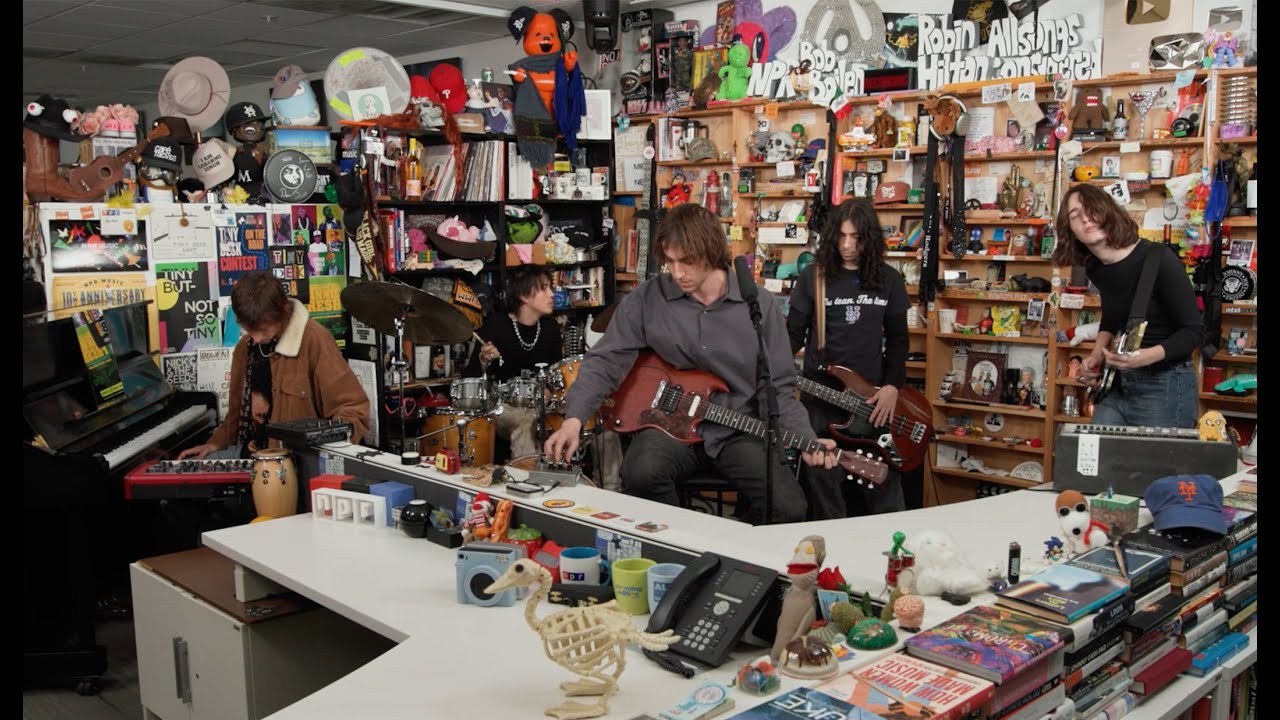
Putnam first heard Geese in 2020, when he was sent the rough mixes of the songs that ended up on Projecter, their major label debut. “Beyond their talent at such a young age, the songs had something uniquely special,” he remembers. “I spent a lot of the pandemic driving around, listening to their music.”
Of their more recent rise, he says: “It was more of a relief than a surprise. It didn’t catch us off guard because internally, Geese’s rise wasn’t fast … When Getting Killed was delivered, we knew the band had made something special.
“Also, the success of Heavy Metal primed the pump and extended into the release of Getting Killed. One fed into the other, and now both are feeding each other.”
Partisan’s Zena White, meanwhile, seems unmoved by any accusation that Geese and Winter’s success was in any way contrived.
“The way that they caught fire and caught people’s ears honestly gives me hope for the musical era that we’re in,” she says. “People are rejecting the algorithm. They want to think and feel. They don’t want to be fed things.”
While some will point out that irony of this statement, given that many people almost certainly did get to know Geese and Winter’s music because they were fed it by – yep – the algorithm (albeit one that had been disrupted), the fact remains that you can’t force people to keep listening to an artist’s music and go to their shows if they don’t like what they’re hearing.
What’s more, we’ve had anonymous industry ‘pluggers’ trying to get certain records played on radio, TV and streaming services for years – should it really come as a surprise that artists are now seeking to gain an advantage on social media, too?