


![[L-R] Khemmis' Phil Pendergast and Ben Hutcherson [inset] A Behringer Super Fuzz](https://cdn.mos.cms.futurecdn.net/iHZMti6MNfGkUXXpDcEADb-1920-80.jpg.webp)
We are truly living in an age of abundance when it comes to guitar gear. We live in the golden era of guitar effects pedals, a digital era of amp modellers and hybrid designs, and with that we have all kinds of tones available at our fingertips.
We also have never been better informed about gear, about which pedal does what, and how to find the perfect overdrive pedal. And in this online information eco-system, it is only natural that some items of gear attain a certain cachet – especially when the gear in question happens to be rare. In short, there is a lot of cork-sniffing going on.
But the lesson from Khemmis’ bravura new album, a self-titled capital H, capital M heavy metal epic with an über-metal concept (complete with a full-on story arc, demons, madness and all that cool stuff), is that you don’t need to break the bank in search of a tone that inspires you.
The Denver-based doomsters’ sound could be attributed to the Orange Rockerverb tube amps that both Phil Pendergast and Ben Hutcherson play through. It could be attributed to their Dunable electric guitars, and the Bare Knuckle humbuckers they use.
But Pendergast reveals that the secret sauce in his rhythm guitar tone on the record was a pedal so cheap that you could go into a guitar store and buy a round of them for your friends. You have probably paid more for a takeaway pizza.
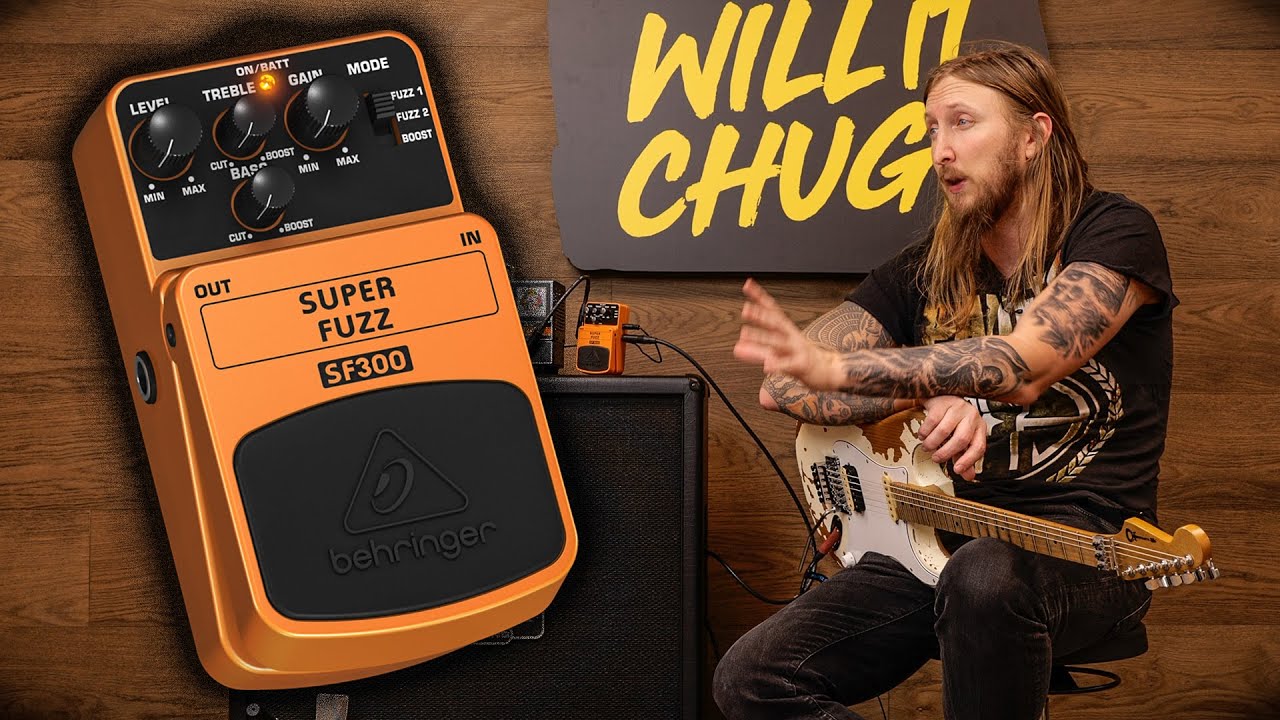
“My secret weapon for this record was the cheapest possible guitar pedal that you can buy, the Behringer SF300 fuzz pedal,” says Pendergast, joining MusicRadar over Zoom. And what he finds especially amusing is that he doesn’t even use the SF300 as a fuzz.
“In the Boost mode, it is the entirety of the guitar tone for my main rhythm tones on the record,” he explains.

The Behringer SF300 Super Fuzz is one of those cult classic pedals, loved for its super-cheap retail price – Pendergast's was $28 and you can literally pick one up for just over 20 quid (currently £21.30 at Thomann or $28.90 from Sweetwater) – and mocked for its plastic enclosure.
I mean, I bought that pedal just so I could play Electric Wizard-esque riffs, just to try it out, ‘cos it was $28
Phil Pendergast
But it's pedal whose tones speak for themselves, offering players two fuzz modes and a boost, and a fuzz circuit that performs very much like a Boss FZ-2 Hyper Fuzz.
Pendergast only bought it because he wanted to sound like Jus Oborn and Liz Buckingham, then realised that, actually, this was doing a job for him.
“I mean, I bought that pedal just so I could play Electric Wizard-esque riffs, just to try it out, ‘cos it was $28 or something,” he says. “Then I just went to the Boost mode and I was like, ‘That sounds pretty damn good.’ It’s just a really good pedal for preserving the sound of the pickups that you’re using, and then letting you sweeten it a little, and you have quite a bit of control over how, because there is an EQ. There’s a low and higher mid-range tone knob on it. It just worked. I mean, it just was the right fit.”
Pendergast had been using an Xotic Effects EP Booster. That’s what we hear on 2021’s Deceiver. And there are no complaints to be had about that. It’s a single-knob boost pedal inspired by the preamp in an EP-3 tape echo machine, and as such it has become an industry standard tone-sweetener. Pendergast had plenty of options in the studio, too, and yet none could beat the Behringer.
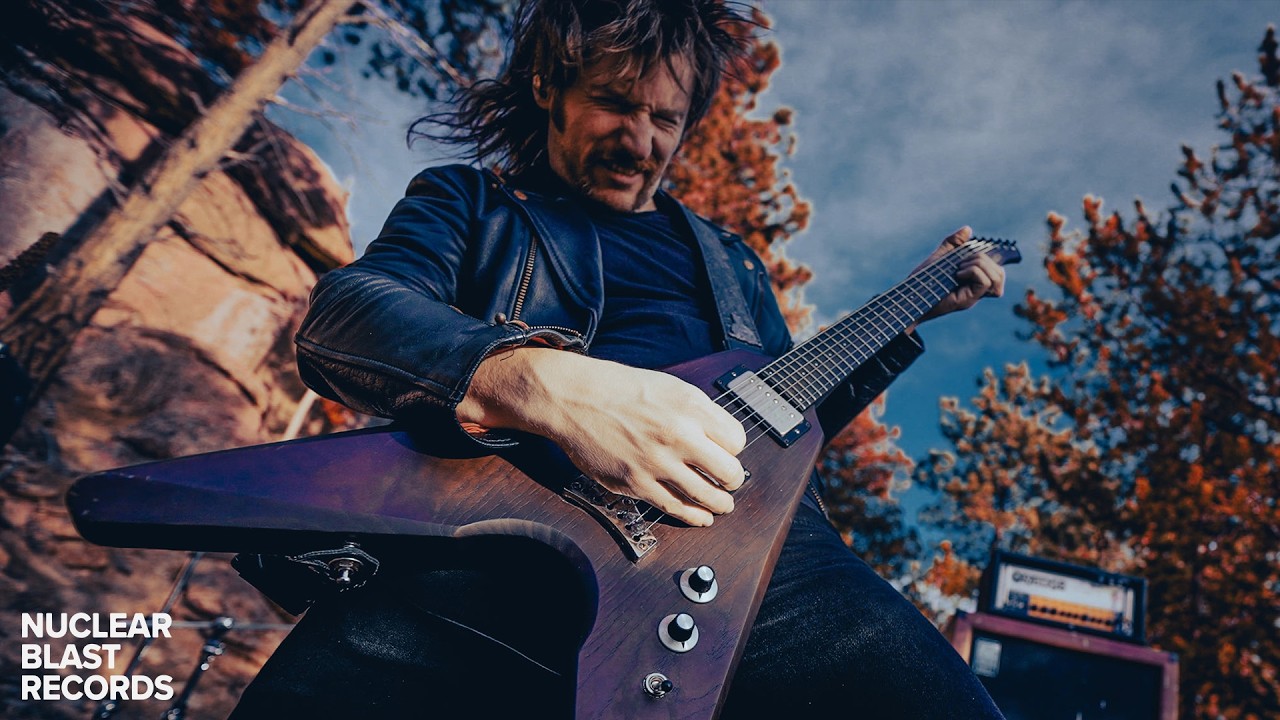
“We had, probably, at least close to a hundred different drive pedals that we brought to the studio [laughs], and we tried a lot of them,” he says. “This was the first pedal that I tried, because I was like, ‘I think it’s gonna be this.’ And then we were like, ‘There’s no way it’s gonna be that. Let’s try other things.’ And then we were like, ‘Yeah, it's that.’
“It just worked really well for what we were going for on this record. So there’s this cheap-ass plastic fucking fuzz pedal that we’re playing – not in fuzz mode – that is all over the record and I just think it’s hilarious. That is very funny to me.”
Hutcherson used The King In Yellow, a parallel blending overdrive from Lichtlaerm Audio that’s inspired by a Tube Screamer, and the two tones mixed worked gangbusters, each offering a slightly different midrange response.
Hutcherson says there is a lesson to be had in all this, and its one that some in the doom scene needs to learn.
Find gear that opens up creative possibilities for you, rather than chasing some imagined tonal perfection
Ben Hutcherson
“I mean, gear fetishism exists in every genre,” he says. “But anything remotely doomed related – or adjacent – suffers from it in a particularly nauseating way, where people think, ‘Oh, you have to have a first-generation [Sunn] Model T. You have to have this…’”
This is not how Khemmis got their sound on any of their albums.
“Dude, some of the best tones we got in this band – until we started working with Orange – was with a Carvin X-100B and a dirt pedal in front of it, an amp that you can still get that amp for, like, 400 or 500 bucks,” explains Hutcherson. “Phil and I, at one point, we each had two! We paid 200 bucks per head. They’re incredible amps. They take pedals great. The graphic EQ is the secret.
“But at the end of the day, it’s like there is so much totally fine gear, and you hit the point of diminishing returns so quickly.”

All that time spend gear hunting could be spend practising, or better still jamming, and writing. Hutcherson and Pendergast get it; they understand the gear obsession. C’mon, Hutcherson’s Zoom mise en scène finds him sitting next to a Peavey 6505 (just because he likes having it around) and a holy grail Ampeg V4 head. But you don’t need to go overboard.
“Find gear that opens up creative possibilities for you, rather than chasing some imagined tonal perfection,” says Hutcherson. “I guess, find joy in that hunt for the new exciting piece of gear – to a reasonable extent – but a new pedal won’t make you a better player. It won’t make you a better songwriter.
“The ideal, for me, is to have gear that gets as many roadblocks out of the way between getting the ideas from up here [taps head] and then out my fingertips. Like, whatever that needs to be. It doesn’t have to be the most sought-after whatever. It just needs to be something that you play through and you feel electrified when you play it.”
Khemmis’ self-titled LP is available to preorder via Nuclear Blast, dropping 12 June. You can read more from Pendergast and Hutcherson – including about that gnarly concept – coming soon to MusicRadar.
