


The official record states that Allan Holdsworth was born on 6 August 1946 in Bradford, England, but that can’t be quite right. Allan Holdsworth was not of this Earth.
The jazz-fusion virtuoso’s approach to the electric guitar speaks to an extra-terrestrial provenance. There was something alien about Allan. Just consider his distaste for the stock building blocks of our earthly guitar chord vocabulary.
“The basic major 7 chord – the first one you probably learn on the guitar – is absolutely offensive to me,” he said, speaking to MusicRadar’s Neville Marten in 1987. “It’s horrible and I’ve always felt that about chords even before I started playing and knew what they were.”
Present Holdsworth with a beginner’s chord chart and he would scarcely have been able to disguise his disgust. Campfire chords were ipecac to Holdsworth. “I’d hear a certain chord and go, ‘Yuck!’” he said. Instead of making nice with these humanistic confections, or affecting the stoic bewilderment of David Bowie’s Man Who Fell To Earth, Holdsworth constructed his own chordal language. No way he was swallowing a major 7.
“I just started experimenting by taking three or four notes and I’d take a triad and go through all the inversions I could get on the lower three strings, then do the same on the next three, and so on,” he explained. “Then I’d take a four-note chord and do the same thing, and then I’d take a five-note chord and so on. Obviously, when you get to six-note chords there are not too many six-note chords for guitar…”
Reprogramming his chord vocabulary was one of the first steps in establishing a sound that had hitherto been unregistered in popular music. Maybe Holdsworth really did hitch a ride here with Kal-El in a big lump of Krypton rock.
But there are other competing theories to explain what made Holdsworth so different from his peers. He approached guitar from an angle having been “turned upside down” by the discovery of John Coltrane as a teenager. He grew up with jazz in the house. The building blocks of pop were alien to him.
Coltrane had an improvisational liquidity that spoke to Holdsworth and showed him a new path. If he could do something similar on guitar, then that would be something, and so he developed a sort of fundamentalism about legato.
Many of us see the word legato and read it as not using a guitar pick for the whole phrase, using hammer-ons and pull-offs, and maybe some tapping too, but Holdsworth adhered to the original meaning of legato as “tied together,” notes seamless running together, and so he decided that pull-offs were out.
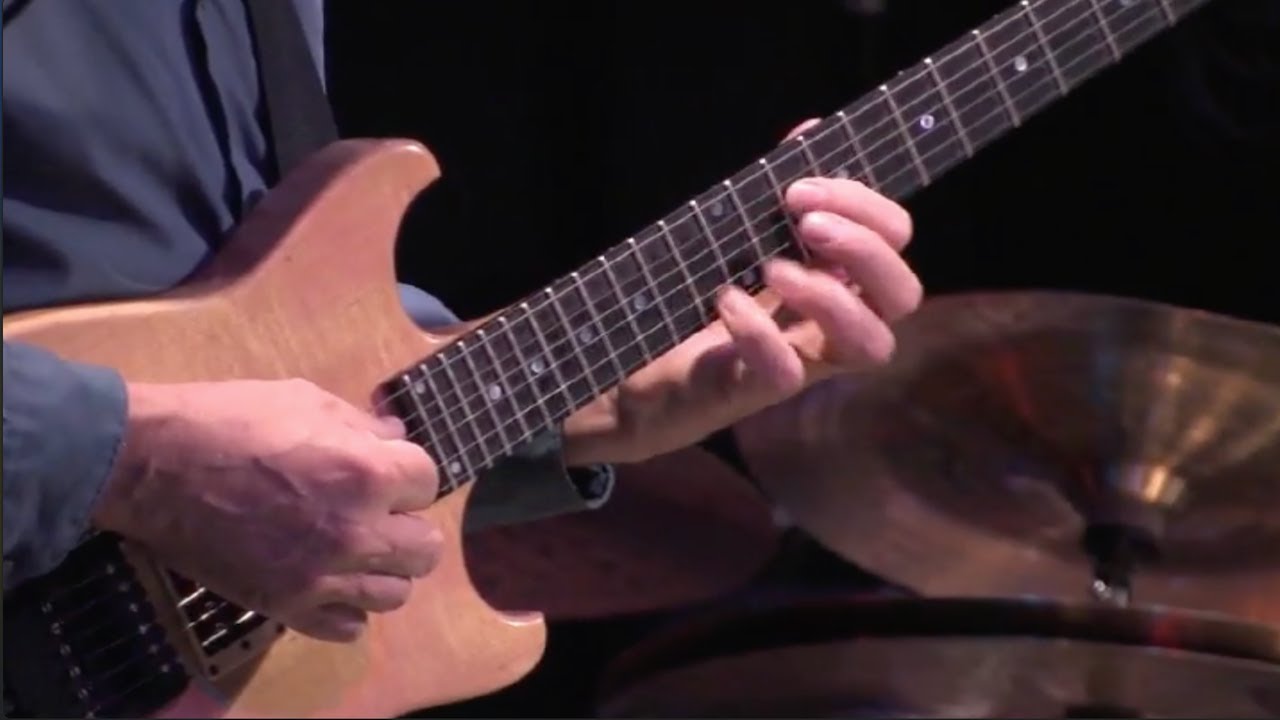
He wanted to even out all of the dynamics, as though there was a Dyna Comp circuit in the knuckles of his left hand. That he was a violinist, too, might explain his appetite for the unorthodox.
“I never use pull-offs because I don’t like the sort of ‘meow’ sound they make with the string being deflected sideways,” he explained. “So I kind of tap the finger on and lift it directly off the string. I practise trying to make all the notes play the same volume or even some of the notes I’ve hammered, louder than the notes I’ve picked. So you can place an accent anywhere you normally would if you were using a pick.
“I’ve got better at it now and when I listen to it I can pick up what’s going on and I think it’s harder to tell now what’s picked and what isn’t. But basically I wanted to make a note I’d hammered louder than a note I’d picked.”

This approach, combined with his ferocious appetite for off-road chordal and scalar note choices, made Holdsworth a lodestar for adventurous players.
If his earlier work on albums such as Soft Machine’s Bundles (1975) was more accessible, conventionally structured, three minutes in to Hazard Profile Pt 1 nonetheless foreshadows what was to come when he was left to his own devices.
By the mid ‘80s, Holdsworth’s musical vocabulary and technical virtuosity had reached critical mass; he was ready to articulate something completely different, with Metal Fatigue becoming one of the foundational releases for all fusion guitar that was to follow – and to generations of progressive metal and shred players for whom listening to Devil Take The Hindmost was like a bona-fide close encounter.
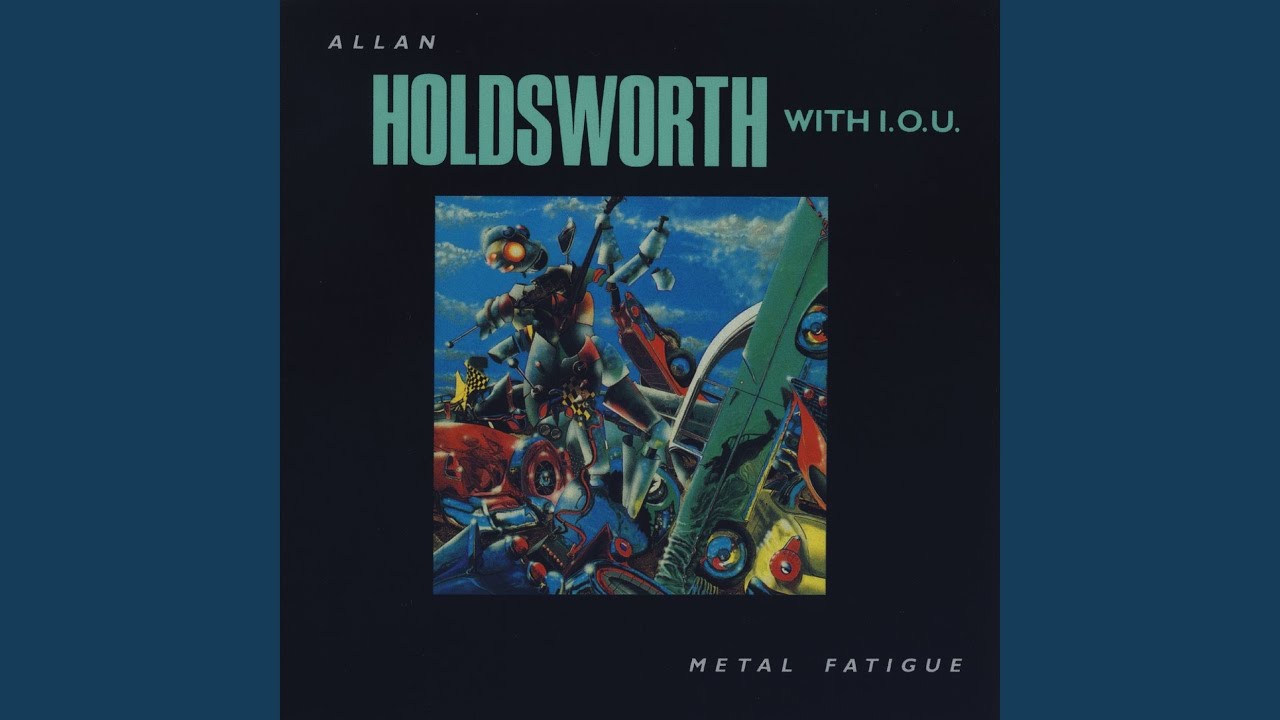
And in the ‘80s, players were really listening. If Jeff Beck was the archetypical guitar player’s guitar player, then Holdsworth was the virtuoso’s virtuoso – guitar's true frontiersman.
Eddie Van Halen was chief among the Allan Holdsworth fan club. In 1981, when Guitar World asked Van Halen if he considered himself a quote/unquote great player he demurred. He had someone else in mind.
“I’d just like people to like what I play,” he said. “I don’t want people to say, ‘You’re Number One.’ It’s a matter of taste. To me Allan Holdsworth is Number One. Other kids might listen to him and not even understand what he’s doing. Older people might think I suck.”
EVH was wrong on the older people. He was bang on about people not understanding what Holdsworth was doing. Mainstream success would elude him. Record companies would beseech his management for more commercial fare.

It didn’t stop players such as Van Halen listening to Holdsworth and incorporating some of his ideas in more blockbuster contexts. Van Halen's third albums Women And Children First opens with a track that bears all the hallmarks of Holdsworth’s influence.
“The solo on [And The] Cradle Will Rock is different. One guitar player who I respect and think is the baddest, is Allan Holdsworth,” said Van Halen. “I do one short lick on Cradle which is very spontaneous. That came out because I’ve been listening to this guy.”
And when Eddie Van Halen says something, other players listen. This was how Paul Gilbert got turned onto Holdsworth. Speaking to MusicRadar in 2019, Gilbert credited Holdsworth as the player who opened his mind up to jazz guitar, describing his style as “incredibly fluid, athletic” and wholly unique.
“I’m not a jazz expert but I don’t know anyone who writes like Allan,” said Gilbert. “His writing is so unique. It took me a long time to be comfortable with what I was hearing, but I could tell every time I listened to it I liked it a little more to the point that I really liked it.”
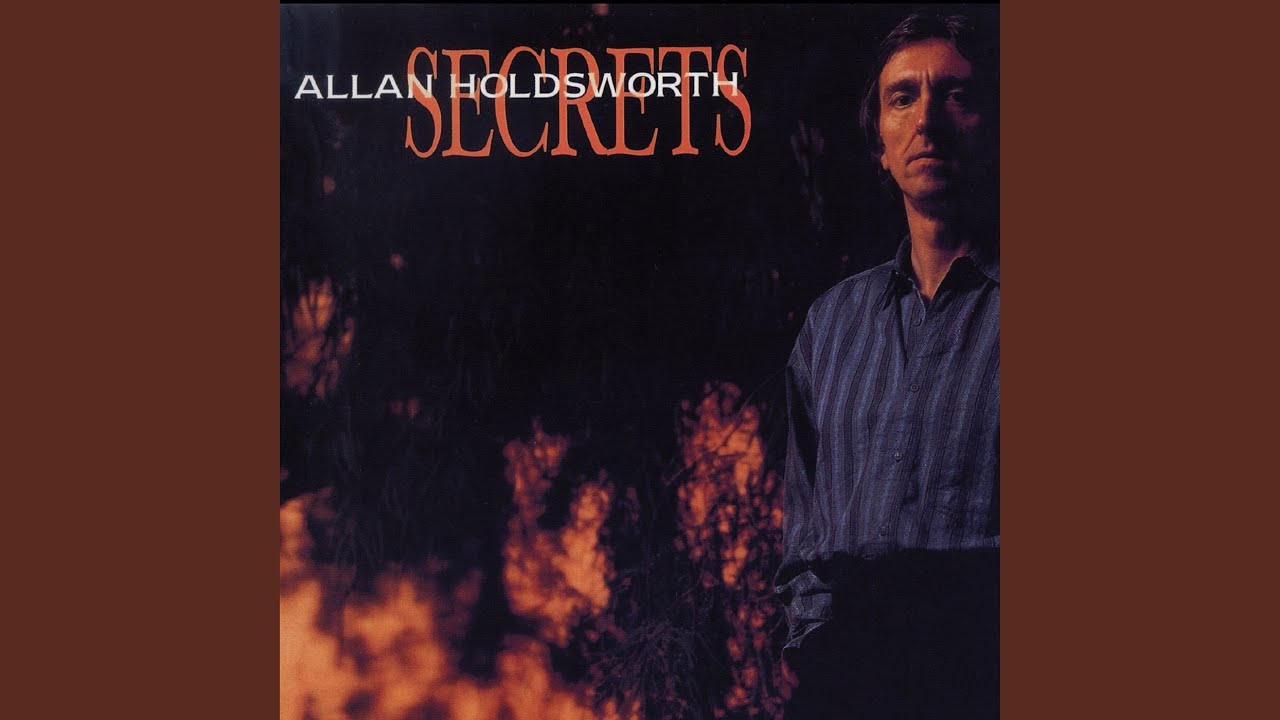
Gilbert had what the record-buying public – and the executives who courted their dollar – lacked, patience. He understood that Holdsworth was an acquired taste, who, upon repeated listens, would reveal more and more of himself. There was just so much musical information in each composition.
“After about three songs he was able to put everything in and you’d be satisfied,” said Gilbert. “Your musical stomach would be full! ‘I want more but I can’t fit anything more in!’”
Eddie Van Halen, Paul Gilbert, who else? Well, there was Frank Zappa, who said that Holdsworth “single-handedly reinvented the electric guitar”. And Steve Vai is of the opinion that, if there has to be a best guitar player (and such honorifics really are worthless when it comes to art), then Holdsworth would be the one, the GOAT.
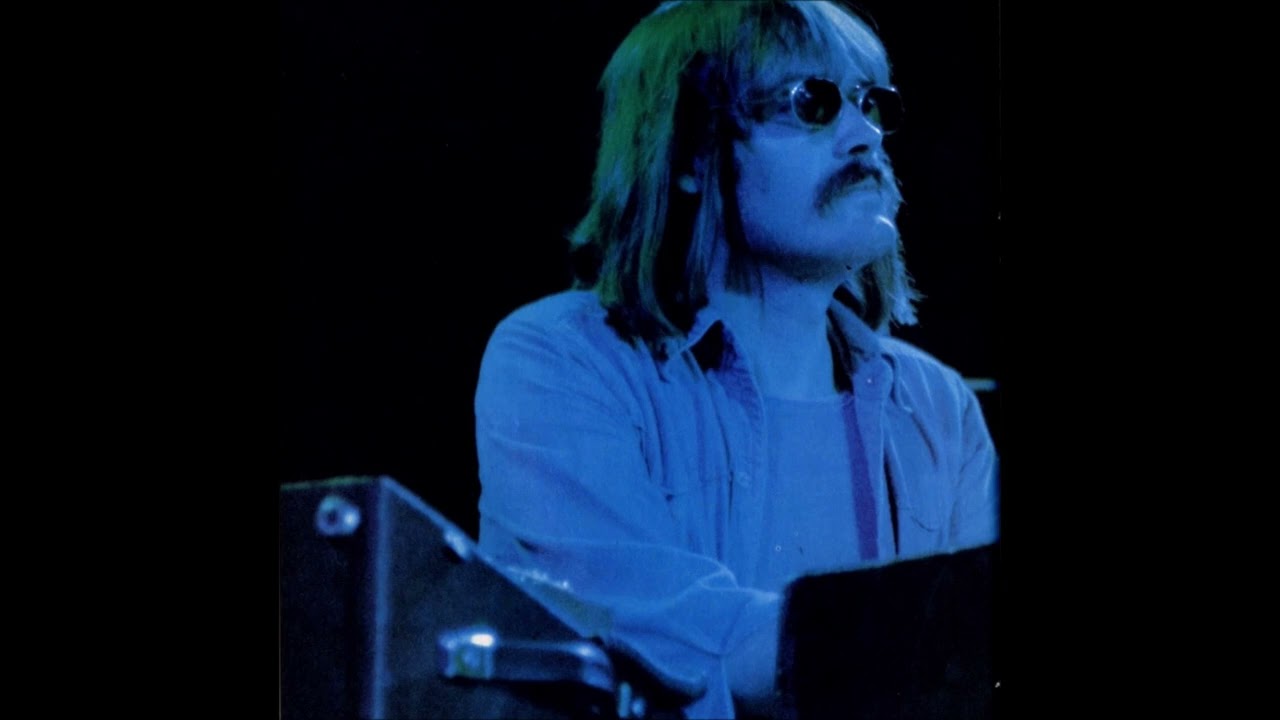
Again, what Vai has to say about Holdsworth explains why commercial success eluded him; he was simply too advanced for his era’s tastes.
“It just seems so obscene to put something so subjective into a best category. But if I had to say there was one, I would pick Allan Holdsworth,” said Vai, speaking to MusicRadar in 2017. “He was unique in ways that I don’t think have been discovered yet. Many musicians can be considered ahead of their time, but usually… they’re not. They’re mainly ahead of everyone else at that time.
“For example, Jimi Hendrix wasn’t ahead of his time; he was perfect for his time and ahead of everyone else. Allan Holdsworth was definitely ahead of his time because it’s hard to realise how great he is – not many people actually understand. It takes time for us to catch up with those that are ahead of their time.”
And we might be waiting quite some time before popular culture’s tastes have acclimitised to the Allan Holdsworth discography...
“I would not be surprised if in 100 years from now, if people are still even listening to guitar – which I suspect they will be – he’ll be singled out as ‘the one’ alone, so to speak,” said Vai, who admitted that what what Holdsworth was doing with the guitar was beyond even him. “The way he uses the whole tone scale is like his own baby shoes – it’s so easy for him. His thought process was phenomenal.
“I can hear any guitar player and I know what they’re doing – I might not be able to play it – but I can see it in my mind’s eye. But I do not know what the fuck Holdsworth was doing at all…”

Zappa was right; Holdsworth was reinventing guitar. He made his own chords. He made his own scales, too, documenting them in his “phonebook of hell”. He even constructed a DIY unit to control the output level of his amps.
As Milton Mermikides explains in his superlative 2024 Allan Holdsworth lesson for MusicRadar, he would use the entire range of the guitar for the scale. No trad BS like root notes and modes here, thanks. Holdsworth’s four-notes-per string approach would help him transcend the limitations of guitar and phrase in the manner of a jazz saxophonist.
It’s one thing to harmonically create something and it’s another thing to blow like crazy over it
Allan Holdsworth
He was a phenomenological player, his approach led by the ear, and how his complex constructions would actually feel and sound. In doing so, he created his own obstacles. He admitted that there are some of his pieces that he struggles to solo over.
“You’d assume that because I’ve written the thing it would be easier for me but it’s not,” he said. “In actual fact, some of the tunes that I’ve written I find incredibly difficult to solo over, and sometimes I have to sit down for a long time. Because it’s one thing to harmonically create something and it’s another thing to blow like crazy over it.”
Maybe Gilbert, Vai et al shouldn’t feel so bad then. They are in good company. But players don’t need to nail another’s style to take something valuable from them. Van Halen applied that Holdsworthian magic to And The Cradle Will Rock. Gilbert used him as a reference for legato excellence.
“I tried to play his stuff a little bit but I really didn’t have the ear to figure it out,” said Gilbert. “I did try to copy the fluid legato playing. He had a certain way of making the notes sag with the whammy that was really unique to him. He had such a distinctive flavour.”
Holdsworth likened the whammy bar to a stompbox, and was almost dismissive of it as a passing fad – “a superficial thing” was how he described it. But this is symptomatic of Holdsworth’s brutal self-reflective criticism.
To me, Allan’s playing is a rare example of a guitar player exhibiting no kind of ‘family tree’ whatsoever
Guthrie Govan
He was notoriously difficult on himself, for perceived failures in his performance. Maybe he was hearing things only he was equipped to hear. Everyone else was just trying to catch up, trying to get a bead on what this man was listening to, where he fit in the evolutionary sweep of guitar playing.
Guthrie Govan advises us to not waste our time with all that; the “criminally underrated” Holdsworth existed outside of that lineage. He was something unique.
“I consider his work to be every bit as revolutionary as that of jazz legends such as Charlie Parker and John Coltrane,” said Govan, in a MusicRadar interview from 2021. “Evidently not content with redefining what was technically possible on the guitar, he also managed to rewrite pretty much the whole of music theory, coming up with all manner of chord voicings which had never been heard before and then concocting brand-new scales to complement them.”
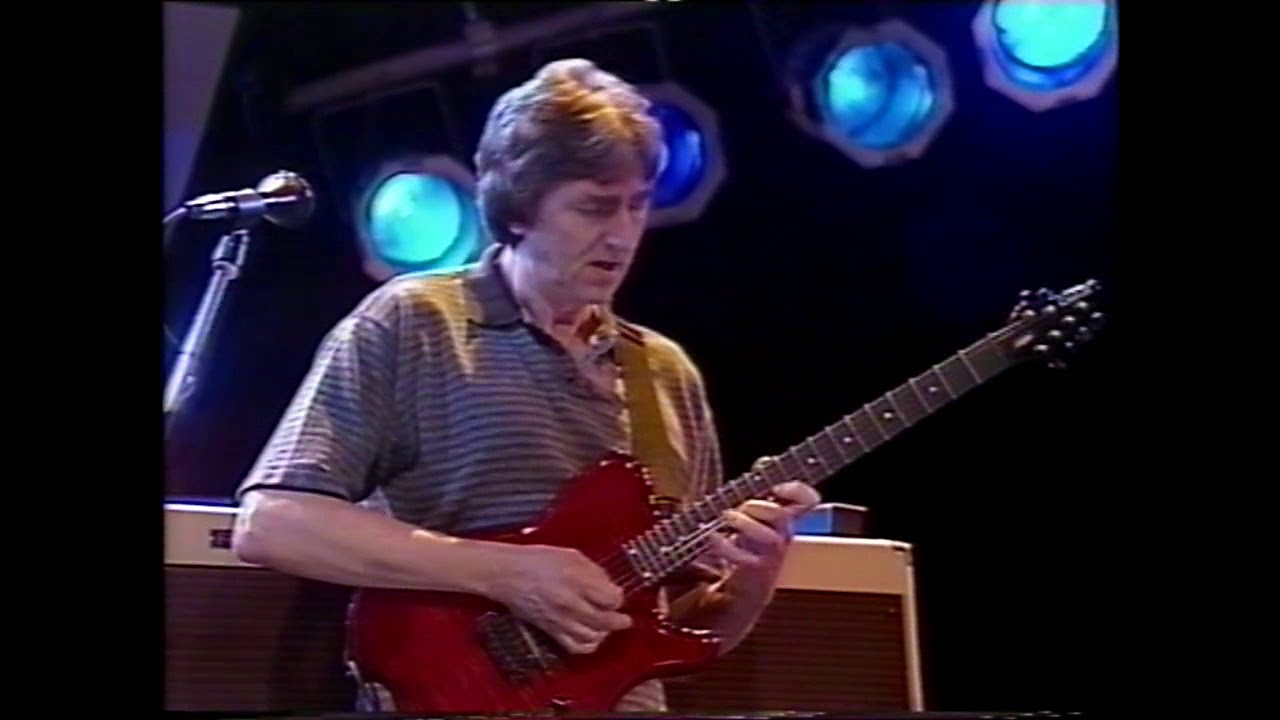
Govan described Holdsworth’s approach to guitar as less as a player in thrall to his instrument than one who viewed it as a “problem to be solved”, that somehow he arrived at guitar not so much by choice but fate.
This, says Govan, might explain Holdsworth’s unique tone, too. But then, ultimately, Govan is all out of explanations when it comes to Holdsworth.
Like us, he, too, resorts to sci-fi theorising. Maybe it’s those headless guitars he used, or the chords, the scales, or all this weird, brilliant sound coming from a man who looked like a physics professor wracked by the demands of quantum theory, but there really is something alien about Allan.
“To me, Allan’s playing is a rare example of a guitar player exhibiting no kind of ‘family tree’ whatsoever,” said Govan. “When you listen to most players, you can hear at least some evidence of their early influences, and yet with Allan, the most logical explanation for what you’re hearing is that the this guy must have arrived very abruptly and unexpectedly – if not from another planet then, at the very least, from the future!”
