
David Bowie’s classic, Hunky Dory was released 54 years ago this week. It represents the moment that Bowie – a previously wannabe popstar with potential, but little else – finally proved his worth and began his ascent to superstardom.
Hunky Dory is the combination of Bowie’s newfound confidence, his ability to pick and surround himself with a brilliant band and the level of trust he placed in a keen, new co-producer, encouraging him to find his feet and take the group’s combined work to the next level.
That engineer-turned-producer was Ken Scott and speaking to the Red Bull Music Academy in 2013, he recalled his first meeting with Bowie. Certainly Bowie at the time was yet to prove his worth and, at the suggestion that Bowie circa 1971 was perhaps a little green, Scott pulled no punches.
“You didn’t think this guy had what it takes?” suggests his interviewer. “No,” laughs Scott. “I first met David Bowie when he’d recorded Space Oddity as a single and it had done fairly well, so at that point the record company, Mercury, decided they wanted to do an album with him. I had recently moved to Trident Studios and they put me on some of the sessions with Tony Visconti. He was producing, I was engineering. And we did the album and, yeah, yeah, David was a nice guy, he was very pleasant, obviously had a certain amount of talent, but superstar? Nah. No way.”
Nevertheless the album – his second after the Love You Til Tuesday-toting self-titled album stiffed at number 125 two years earlier – was a hit, reaching number 16 in the UK in 1969, doubtless fuelled by the presence of top five hit Space Oddity on board.
Sufficiently buoyed, Scott, alongside Visconti also worked together on Bowie’s next, The Man Who Sold The World but it was to fare slightly worse, reaching number 24.
“David was a nice guy, obviously with a certain amount of talent, but never a superstar,” recalled Scott. “The album didn’t do very well at all, so David took some time off and he started studying with a mime artist called Lindsay Kemp. And he came in again after that, obviously been writing, still had the music bug in him.”
And this time things were to go rather differently.
“I had decided I wanted to make the change to have more of the artistic say and move into production,” says Scott. “I happened to voice my feelings to David about wanting to move into production and David said, “Well, I’ve just signed a new management deal.
"They want to put me into the studio to record an album. I don’t know that I’m capable of doing it all on my own. Will you co-produce it with me?”
The opportunity was too good to pass up. Allowing Scott to polish his producer skills and flex his creative muscle while working on an album that, perhaps, wouldn’t attract the full glare of publicity.
“I can make all the mistakes in the world because no one’s going to hear this record because he’s never going to be a superstar,” remembers Scott.
However, the quality of Bowie’s new output soon put Scott’s plan into question. “A few weeks later, David and his wife Angie come around to my house and we’re going through material for the album and suddenly the light bulb goes off:
"There is every possibility that a lot of people will hear every single mistake I make on the production of the album,” recalls Scott.
"I went to the States for three months to promote The Man Who Sold the World and when I returned I had a whole new perception on songwriting,” Bowie remembers in an interview with Beat Instrumental in 1972.
“My songs began changing immediately. Secondly, by the time I came back I had a new record label, RCA, and also a new band. America was an incredible adrenaline trip. I got very sharp and very quick. Somehow or other I became very prolific. I wanted to write things that were more immediate.”
And Bowie’s turnaround would come equally as quickly. Following new manager Tony Defries disappointment at not signing the world-class Stevie Wonder at the time, Defries heaped his attention on Bowie and along with Bob Grace, Bowie’s publisher, had successfully put one of his songs – Oh! You Pretty Things – into the hands of top producer Micky Most.
Most declared the song “a smash” and soon Peter Noone (solo, and red hot from his spot fronting Herman’s Hermits) would make it a hit in April 1971.
Similar subterfuge was to follow with the entirely fictitious band The Arnold Corns fronting the release of both Bowie’s Moonage Daydream and Hang on to Yourself (songs that would later reappear on Bowie’s own Ziggy Stardust) with Bowie’s buddy Freddi Burretti (a.k.a. Rudi Valentino) miming to Bowie’s vocals.
It appeared that Bowie – as a frontman – was very much on the back burner, a star whose progress following the stellar Space Oddity in 1969 had only ever been in decline.
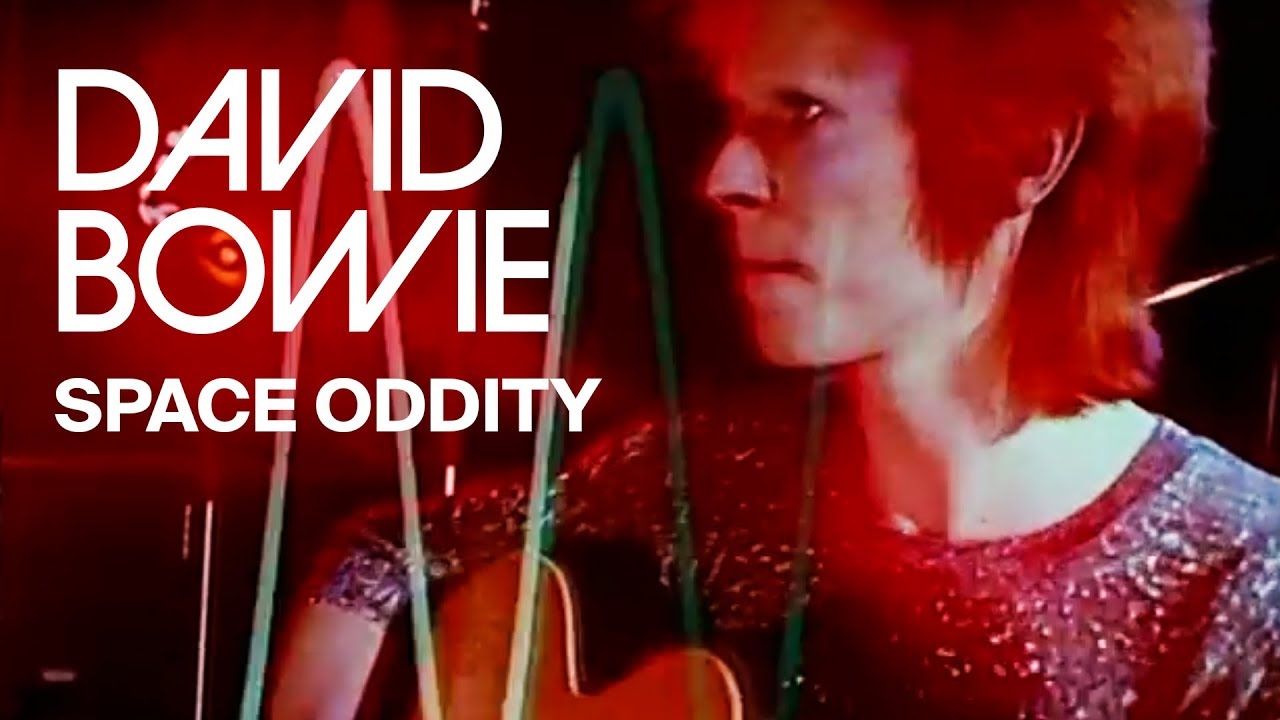
Nevertheless the sessions for what would become Bowie’s own Hunky Dory, with Scott at the production helm, would begin at Trident Studios on 8 June 1971.
And this time, the team that Bowie and Scott had put together meant business. After parting company, now Mick Ronson was back on guitar, Woody Woodmansey was back on drums. Trevor Bolder joined on bass. And Space Oddity innovator Rick Wakeman was back on piano – and what a piano…
“It was the same piano used on Hey Jude, the early Elton John albums, Nilsson, Genesis and Supertramp, among many others,” A 1898 Bechstein, reveals Scott. “That was one of Trident’s claims to fame – the piano sound. It was an amazing instrument.”
And that band were, in a word, dynamite, audibly having a great time in the studio. From the boxy, kick-ass rock of Queen Bitch to the lighthearted way in which Bowie needlessly corrects Scott’s pronunciation of Andy Warhol during the song’s intro. “It’s Andy War-hol actually…” “What did I say?” asks Scott. “Andy War-hole… As in ‘holes’…” he laughs. And they kept it all there on the tape.
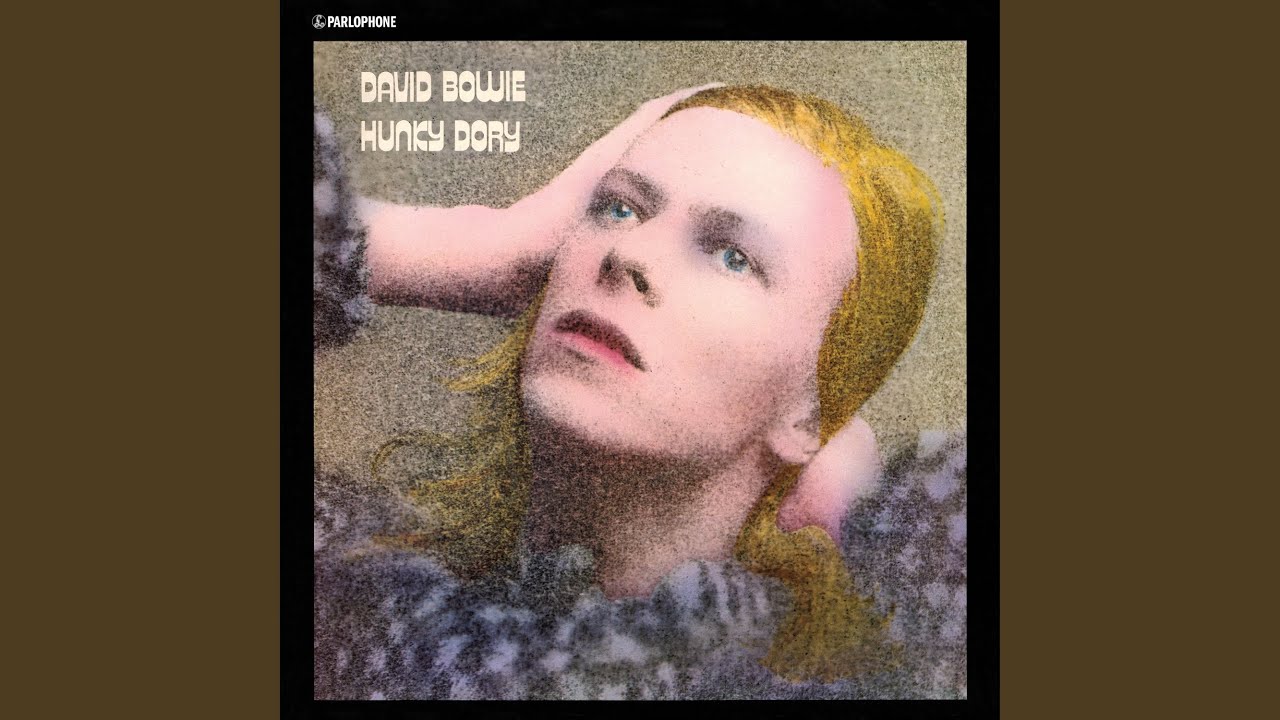
Meanwhile Bowie’s writing was never more original. Having acquired an old grand piano for £50 he’d put aside his acoustic guitar and began composing on keys – one of which was stuck, leading to unique creative workarounds. Take for example the arresting chord progression that opens the album, featuring Bowie’s Changes. It’s a sequence that seems to herald the arrival of Bowie’s new powers and resolution to break new ground: Cmaj7 to D♭6 to Dm7 to E♭7. Try unearthing that on a guitar…
![David Bowie - Changes [Official Lyric Video] - YouTube](https://img.youtube.com/vi/4BgF7Y3q-as/maxresdefault.jpg)
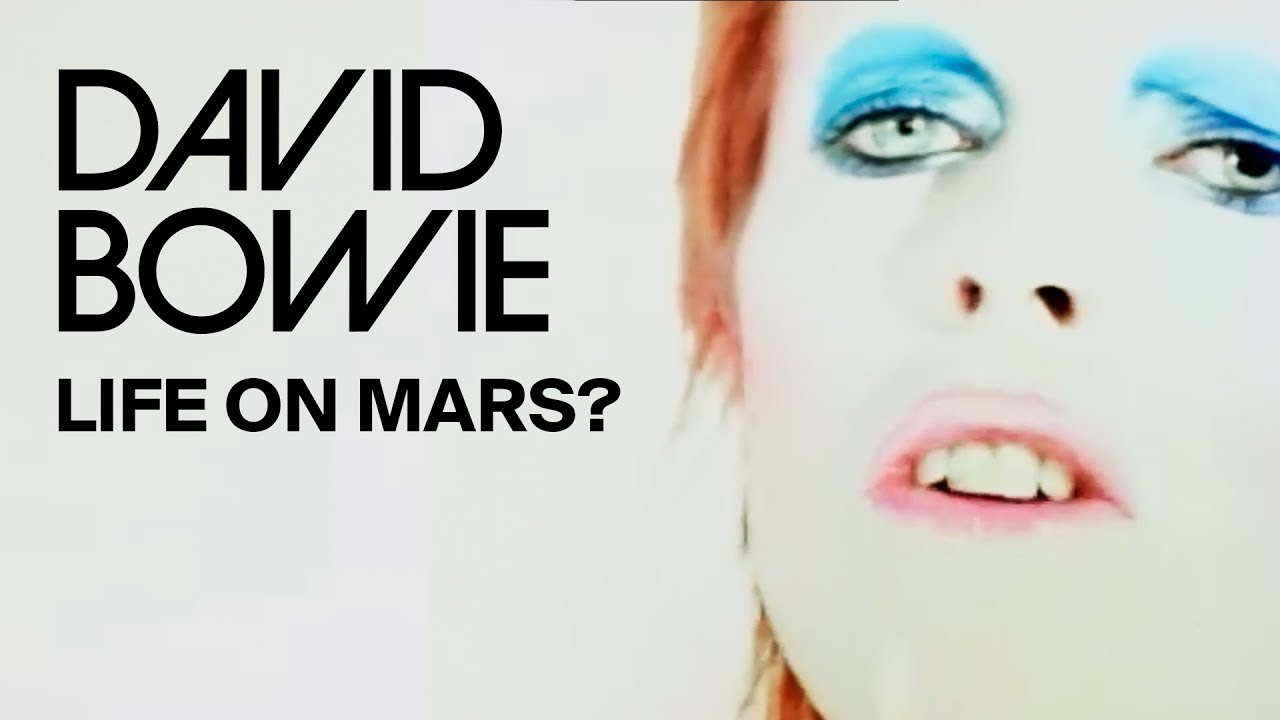
And as for career highlight and future hit single, Life on Mars, it seemed that Bowie had been hell bent on creating a classic from the outset. “There was a sense of revenge in that, because I was so angry that Paul Anka had done My Way,” he said to the NME at the time. “I thought I’d do my own version. There are clutches of melody in that that were definite parodies.”
Indeed, the album's sleeve notes that the song was “Inspired by Frankie”.
Following the album’s release however, lead-off single Changes inexplicably wasn’t a hit, failing to make the chart but nevertheless leading promo for an album that would reach number three in the UK.
From there, Bowie’s only way was up. The Rise and Fall of Ziggy Stardust and the Spiders from Mars would follow just six short months later. And, intriguingly, Hunky Dory’s Life on Mars would return as a single release in 1973, reaching number 13 on the UK charts, and setting right, Changes’ poor performance the year earlier.
The rest – Bowie’s reputation as an innovator with an ability to perpetually invent and reinvent – is, as they say, history.
So what is it that imbues Hunky Dory with such magic and enduring respect today? One of Scott’s fondest memories of the four albums that he worked on with Bowie was the fact that they captured the new, empowered Bowie’s performance so emotively.
“I would say that 95% of the vocals that we did were first takes, from beginning to end,” he recalls. “I would get the level, take the tape back, we’d go through, and that’s the vocal you hear. They’re not perfect, they’re sometimes slightly out of tune, sometimes slightly out of time, but they’re real. They are emotional from him.
“It wouldn’t be allowed today. It would have to be auto-tuned. It would have to be moved around. But I think that’s one of the reasons that we’re still talking about these albums after all this time. They’re real, they’re human, and they reach you here [points to his gut] more than they do up here. [points to his head]”.
