


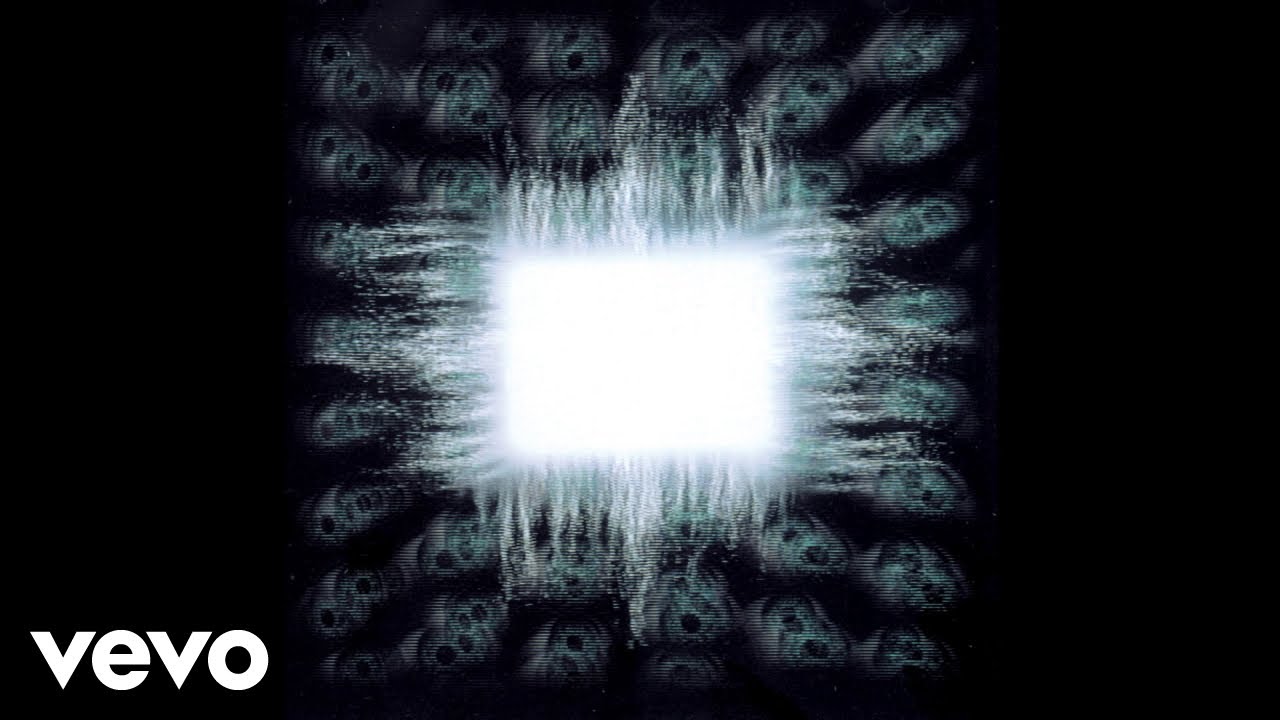
The fifth track from Tool’s second studio full-length Ænima sits amongst the progressive metal quartet’s most beloved recordings.
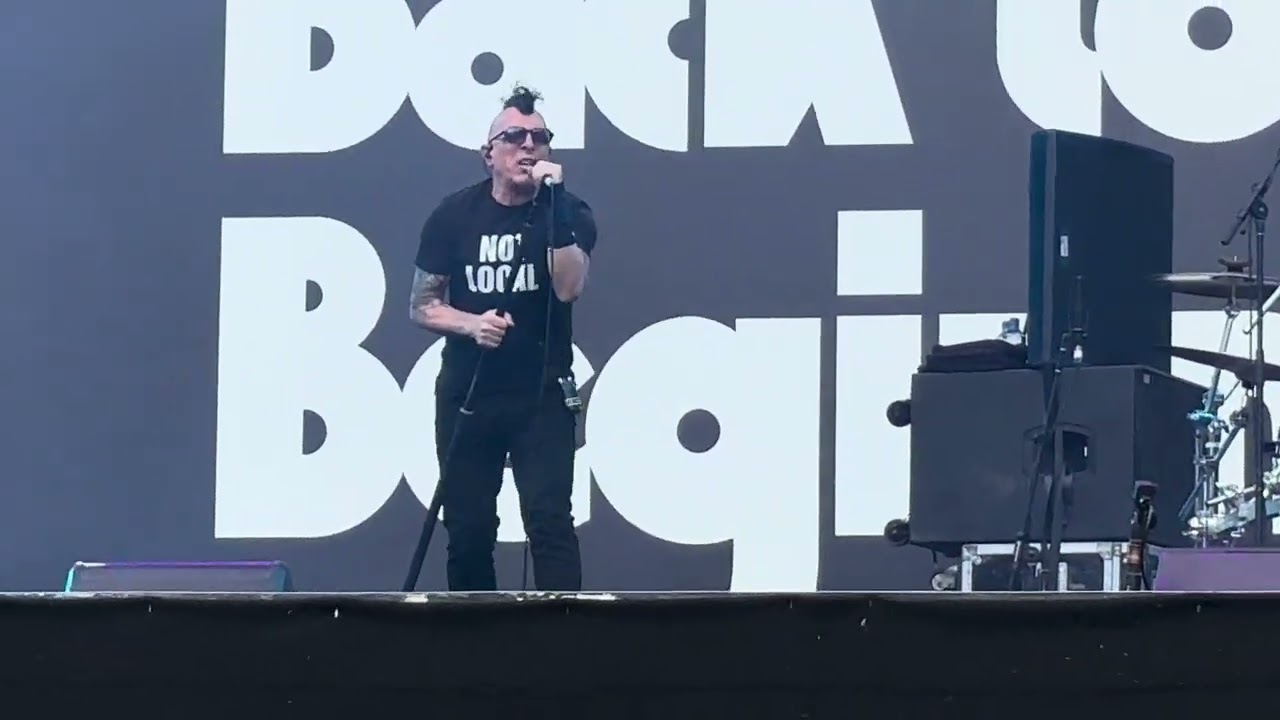
Although it dates all the way back to 1996, Forty Six & 2 remains one of Tool’s most performed songs and appeared on the setlist when they played the Back To The Beginning show at Birmingham’s Villa Park in 2025, which made history for being Ozzy Osbourne’s final performance.
Forty Six & 2 begins with Justin Chancellor’s earth-rumbling bass before guitarist Adam Jones joins in with some palm-muted staccato notes to accentuate the minor tonality of the main riff. The intervals in that motif around the D root are the minor second, the minor sixth, the minor seventh as well as the perfect fifth and major third, which are the ingredients for the D Phrygian Dominant scale. This can also be looked at as the fifth mode of G Harmonic Minor.
As with nearly all of Tool’s music, the guitars and bass are tuned to Drop D with the lowest string detuned a whole tone.
The time signature is mainly 4/4, though there are sections of 7/8 and even moments where every one of the instrumentalists is working to a different meter.
“The proggy parts are great – I enjoy them,” Adam Jones once told this writer. “But you can’t make music in a test tube and do math. There has to be spontaneity with a little planning and a lot of mistakes – that’s how you get good results.”
Drummer Danny Carey echoed these sentiments in a 2009 interview with Modern Drummer magazine.
“Well, good riffs are good riffs, and good beats or whatever,” he explained. “Usually those are the building blocks. The parts that we come up with on top of them are all our own. Very seldom are we playing in unison.”
He added: “The resulting sound – there’s not much of us playing the same thing at the same time. We find parts that are complementary. There’s more of a counterpoint situation, so it leaves it open for us to express ourselves with each other.”
Notorious for being cryptic and elusive when it comes explanations of their lyrics, the four members of Tool tend to keep their cards close to their chests when it comes to the meaning behind the music.
It is, however, generally understood that the title of Forty Six & 2 is a reference to an idea first conceived by American spiritualist and new age author Drunvalo Melchizedek, writer of books such as The Ancient Secret of the Flower of Life Volumes I & II, Living In The Heart: How To Enter Into A Sacred Space Within The Heart and The Serpent of Light: Beyond 2012.
The concept is centred around the possibility of human evolution when the body has two more than the normal 46 total chromosomes, made up of 44 autosomes and two sex chromosomes. The addition of two more autosomes into human DNA would therefore drastically alter how the body develops.
On the Salival webcast recorded in 2000, singer Maynard James Keenan was able to confirm this interpretation was in fact correct.
“It’s actually about 46 chromosomes and then [the two sex chromosomes], that’s what the 2 is about, not necessarily 48 chromosomes,” he commented.
He was joined by Carey who clarified that “48 and then the other two would be a horrible mutation”, with Keenan contemplating such a scenario could result in a creature “bordering on hermaphrodite” – something which can occur in plants and animals but not humans.
The song’s lyrics also touch on concepts by ground-breaking Swiss psychologist Carl Jung, with lyrics like “change is coming” and “I want to feel the metamorphosis” referring to the “shadow” – the element of ourselves which we fear and repress.
Speaking to this writer in 2015, Adam Jones elaborated on why the group have often delved deep into the metaphysical and philosophical, adding concepts like sacred geometry and golden ratios into their musical furnace of brain-bursting alternative rock.
“It came from trying to relate to those things in life or nature we all have in common,” he told me. “It’s something that people have been studying since the beginning of time. So we wanted to apply that to our music, that’s why we got more into the idea behind series, science, metaphysics and the myth of communication.”
He continued: “There are things that we don’t understand about the planet that affects us. Everyone knows the colour red, people use their eyes… but how would you describe the colour red without using that word or pointing at something?
“That’s kinda what we do through music – finding themes that create something. Maybe it leads to a shape or colour or vibration.”
