
SYNTH WEEK 2026: ‘One man’s trash is another man’s treasure’ is a well-worn phrase but it rings true for artist, producer, film composer and Italians Do It Better leader Johnny Jewel, whose initial dalliances with synthesizers originated in the pawn shops of Texas in the '90s.
It was within these junk-filled wonderlands that his younger self discovered his first pieces of gear - machines that have since accompanied him on a wild and magical musical ride.
“I remember finding the miniKORG 700 next to a rifle and a lawnmower in this shop,” Johnny laughs. “I immediately felt this connection with it. They wanted $50 but I told them it was broken and offered $20. They let me take it for that and it was my first analogue synth. That’s the primary synth I used on the After Dark compilation, Night Drive, Beatbox, Under Your Spell, all those classic miniKORG tracks stemmed from that trip to Kansas.”
The success of Johnny’s label, Italians Do It Better has resulted in Jewel being involved with numerous bands, collaborators, film scores and soundtracks. The most famous perhaps being the late David Lynch’s incredible Twin Peaks: The Return which recaptured the pop cultural zeitgeist back in 2017, some 25 years since the show's original finale.
He and his band, Chromatics performed during the first of the show's Roadhouse music performance sections, with the sublime Shadow becoming irrevocably linked to Twin Peaks from that moment on. And you can really tell why, can't you?
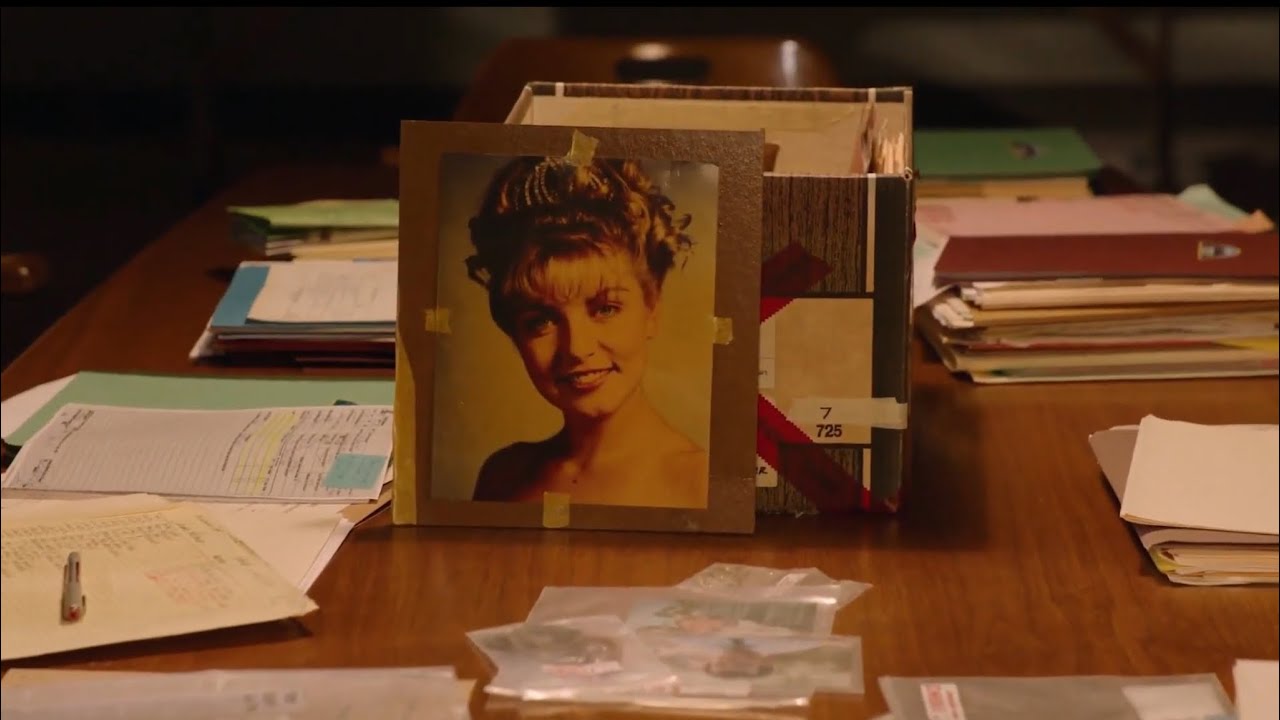
Beyond Chromatics presence within Twin Peaks - and his track Windswept being used during a particularly emotive scene - Johnny's career has seen him steering well left of centre yet land an enormous success with his remix of the Weeknd’s huge hit, Blinding Lights.
But it was in the wilds of South American states where it started.
It almost sounds like a Lynchian movie, one man and his bid to find perfectly imperfect electronic sounds.

“When I got back to Austin, I’d heard about the Robert Rodriguez film, El Mariachi and how he funded it through experimental medical trials,” Johnny says. “You submit yourself as a lab rat and they test medicine on you so I went and did it, raised enough money to buy a Moog Opus 3. I borrowed a Roland SH-7 and used this with the miniKORG to make my first real tracks around 1993-94.
“I was coming from a place of Star Trek, the original Hawaii Five-0, and sci-fi films. I knew of Brian Eno and Kraftwerk but I wasn’t thinking of them as the same thing. I was looking for noises rather than synth musicality.”
Speaking from LA, Johnny is in the midst of preparing for a tour with his band Desire (who are accompanying industrial rockers Health on a US live jaunt) and what he calls the ‘craziness’ of his schedule.
He might be operating on limited sleep but he’s careful and considered when exploring what has become a lifelong obsession with synth sounds.
From Johnny’s work as a composer for television and film, his solo material, or with bands like Desire, Glass Candy, and the Chromatics, his ambition has been to capture sonic textures.
His experiments have shaped cultural landmarks including Nicolas Winding Refn’s Drive (although most of his music went unused in the finished film) and the aforementioned Twin Peaks: The Return which switched many on to both him the Chromatics.
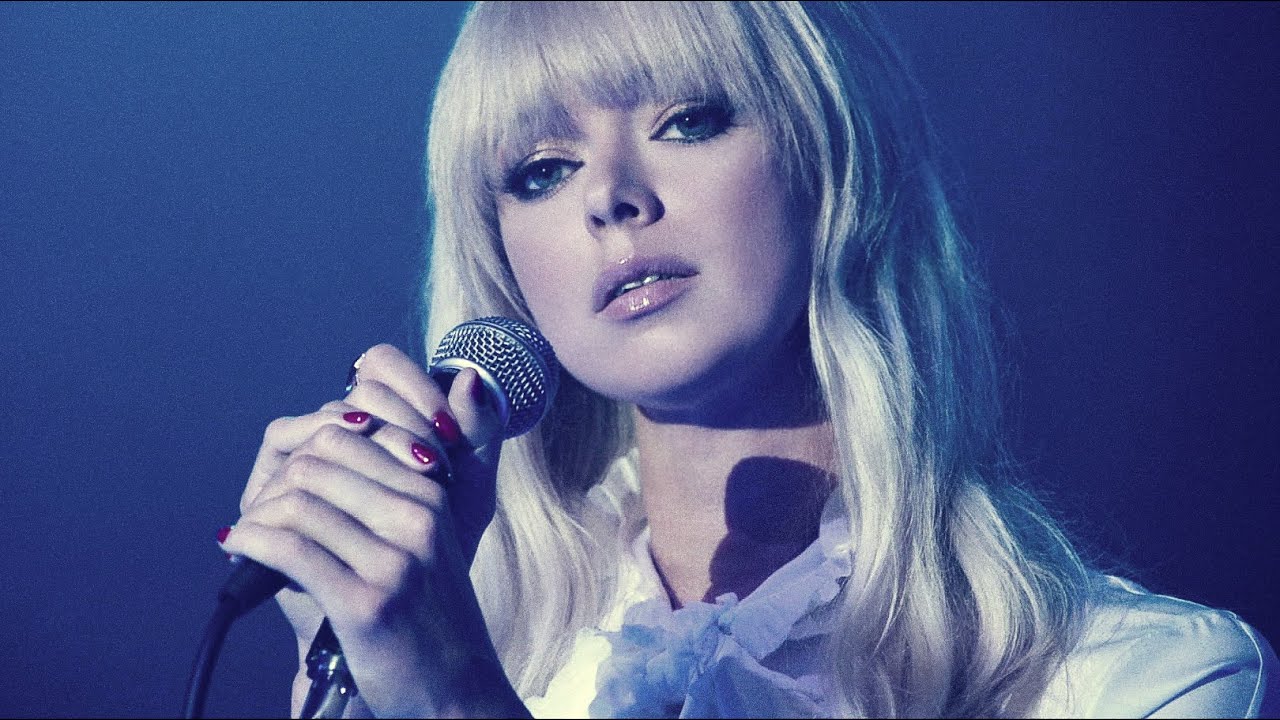
This questing for musical atmosphere stems from his early experiences as a skater in Houston, Texas.
“There were a lot of skaters at the time that were designing skateboard graphics that were very post-expressionist in style,” Johnny says. “I got really into painting through them, then into the Velvet Underground, then Andy Warhol through that which led to Nico, John Cale and experimental music.”
Initially, Johnny’s recording came via cassettes and experimenting with multi-tracking using two boomboxes.
Without any formal training, he continued to explore sounds via a four-track as he moved up to high school.
“I was into field recordings, noise and musique concrète and could barely play anything,” Johnny says. “I was mainly interested in texture and sound, I was coming at it from a visual perspective of painting and modernist music rather than trying to make pop songs or anything with a structure.”
After Houston, Johnny moved to Austin where he discovered a huge amount of experimental music, labels like Kranky and acts including Labradford and Stereolab. Johnny remembers an early nineties indie music scene removed from any association with dance music’s rich culture of production.
“In our indie noise underground world, artists were not really using synths as sequencers to come up with the complex type of programming that is so normal today,” he says. “There was a cut off between indie rock and bedroom recording and synth tech so people were using it like a piano or a guitar.
“A lot of the gear was in disrepair or broken too, so the idea of vintage gear at that point was almost as absurd as the idea of a vintage laptop now. I found my first synth by going on this road trip through Texas and visiting these pawn shops where all this broken gear had just been dumped.”

Johnny’s creative fingerprints can be found all over myriad album projects and scores with Italians Do It Better, which is the home for a multitude of acts such as Sally Shapiro and Orion, all operating under this pulsing umbrella of neon synth sounds.
In Johnny’s distinct musical world, the future and the past come together in a dreamy noir space of his own making.
Desire is currently a key focus while he’s also recently worked on the score for a Karl Lagerfeld documentary having soundtracked the late fashion designer’s catwalks.
Johnny's typical creative approach is to let instinct lead the way, often recording hours upon hours of improvisation.
“I sit alone with one synth and work through its various tonalities, I have banks and banks of libraries, tens of thousands of recordings,” he explains. “I’m constantly exploring and testing my gear, then archiving what I’ve come up with. When I come back to these recordings, it’s almost like hearing someone else play, it’s a form of collaborating with myself with naivety and open-mindedness. It allows your mind to drift so you don’t remember what you did, particularly when you’re burning two or three 80 minute CDs in a day.”
Part of Johnny’s mission as a producer is to retain a fresh perspective on his machines in a bid to come up with sounds or ideas that are as unique as he can make them.
“I’m not a gear-head or a technician,” he says. “I’m like someone who loves vintage cars but doesn’t know anything about the motor. I’m really interested in the beauty of a synth sound but not curious about what makes it tick - I like to protect my ignorance.”
The miniKORG is a synth that has always been in his armoury since he secured it in Texas. The Prophet-5 is a relatively new addition to his workflow that will feature on a new Desire album.
Elsewhere, Johnny has also been utilising the Jupiter-8 for his film work alongside cartridge era-synths like Roland’s D-50.
“I’ve also been using the cartridges with the M1, the presets are cool and classic but you can also find a lot of strange cartridges, they are not online, they haven’t been digitised so they are really interesting for pads,” he says. “I only buy things as I need them or when I start a new film project, partly as a reward for myself for taking the project on as they are usually so brutal. It’s also a guarantee that I will 100% find something that I’ve never done before - and that will be augmented with an arsenal of things I’m very familiar with."

If you’ve only recently landed in the orbit of Johnny Jewel, his catalogue of electronica is sprawling with a vast array of musical highlights. As we speak, he chooses certain releases as some of his most expressive when using synths, including his 2018 solo record, Digital Rain. Its 19 tracks are drumless and, what he describes as, ‘a montage of solo improvisation’.
“Some of them were collaged in post production but most of the music is linear improvisation and, as something I set out to do and what it became, it really makes me happy,” Johnny states. “It’s an accurate view of the pure recording experience for myself and my relationship with my synthesizers.”
Windswept was released the year before, a striking 14-track solo record written for David Lynch and featured throughout Twin Peaks: The Return, particularly the evocative title track.
It wasn't just a soundtrack, Johnny and the Chromatics appeared as themselves at a pair of the Roadhouse live music scenes (where each episode, live performers including Nine Inch Nails, Au Revoir Simone and Eddie Vedder played a song).
Jewel and the Chromatics performed Shadow and, later in the series an instrumental cover of Desire's Saturday.
“I wasn’t sure what was going to happen in the run up to the filming so I prepared some different things, then I became inspired to write an original score,” Johnny says. “I was even a bit shy to send it as it was unsolicited - the reason I mention that is because there was a pureness to working on it and having not seen anything, I just really felt compelled to record that as my perception of Twin Peaks, obviously based on Angelo [Badalamenti]’s work and the whole world David had created. I was working within my parameters of what they had done but I was also in the dark, it became a very interesting record in that way.”
It’s the only piece of work that Johnny has ever pitched without being commissioned. Usually, throughout his career, projects and producers come knocking at his door but this evocative work almost fell out of him.
“It was the strangest thing, I felt completely compelled to do it,” he says. “It’s the only time I ever sent in something totally cold and had this self-doubt yet knew it was what I had to record. I asked myself why I was doing it and if it was presumptuous of me. Turns out it wasn’t, but I had to push through.”
Outside of synths, there are a huge amount of software and music-making platforms shaping the world of music production. Johnny is aware of the online discourse and ethical questions surrounding Artificial Intelligence (AI) but this has little to do with his musical reality.
“I’m still finding new ways to use my gear, I still use the same mixer I got in 2003 that I’ve made all my records on and I'm still finding ways to improve how I work,” he says. “Outside of all moral dilemmas and existential issues with AI, I don’t see a reason to pick it up until you hit a wall - and I haven’t yet.
“I feel very lucky," Johnny says. "I wake up everyday with gratitude and excitement to start making music. There’s never enough time to do what I want to do which is frustrating but is so much better than feeling lost or directionless, you can think of 100 more ideas but you can only make one at a time.”
This is part of his advice for producers or aspiring artists - rather than attempting to keep up with any new or trending equipment, Johnny suggests focusing on a limited set up and reinforcing the quality of any ideas instead.
“There’s so much that can be done with synths, I know so many people, so many great producers, who have only scratched the surface of their own gear and they’re always adding more,” he says. “That’s cool if you have endless amounts of resources but I would say to young producers or those who don’t, don’t over fixate, just start creating. Don’t worry about the gear or infinite possibilities. It’s more about the idea and its soul.”

Johnny also believes producers shouldn’t cling to initial concepts at the expense of others coming through. Instead, be prepared to come up with something, then move onto the next idea or track.
“David Lynch used to refer to it as firewood, how ideas are just fuel and if they’re getting in your way, then burn them,” he states. “Don’t be precious about it, use the idea to get to the next step, then let go of it, what at one point was a great idea can become a creative burden.”
There’s a purity to Johnny’s creativity and an obsession with making things that has sustained him since the early nineties and shows no signs of slowing.
While he’s gearing up to go on the road with Desire, other projects with Kid Cudi and Bryan Ferry saxophonist Jorja Chalmers are in the works alongside his own film too.
“I often get asked, how did you know how to do that with a piece of music and I always say that I didn’t know - I just followed my instinct and I knew when I was working on it that I was either going towards or moving away from it,” he says.
“The most important thing behind unique work is how creators have to trust their instincts,” Johnny continues.
“We all have a different sonic language based on all our experiences with sound and music from our entire lives - and no two people have the same experiences in terms of music they heard or the different pieces of equipment they came across. It’s so infinite and everyone has the chance to do something unique - you just need to trust yourself and what you come up with.”
