


“I never felt I was destined to be a rock ’n’ roll star,” said Andrew Eldritch in 2012. But as the frontman and leader of the Sisters Of Mercy, Eldritch rose to fame in the ’80s as a goth rock icon.
His band’s influence has spread far and wide – not least among metal musicians. As he related in an interview with Classic Rock: “I was at a System Of A Down concert in Australia. I was watching from the side of the stage, and suddenly they launched into one of our songs – they did half of Marian – as a way of saying hello to me.”
He added: “I thought that was nice. I can’t hear our influence in their music, but stuff like that happens, whether it’s Guns N’ Roses wearing our t-shirts or Metallica standing up and fighting your corner for you.”
Eldritch formed the Sisters Of Mercy in Leeds in 1980 and has remained the group’s sole constant and figurehead ever since.
With the albums First And Last And Always (1985) and Floodland (1987), the Sisters became known as the definitive goth rock band – a term Eldritch loathes.
But in the early ’90s, when he believed that his singular artistic vision was being compromised by music industry politics, Eldritch declared that the Sisters Of Mercy were “on strike” against their record company. And at that point he simply stopped making records.
Vision Thing was the last album from the Sisters Of Mercy – and it was released in 1990!
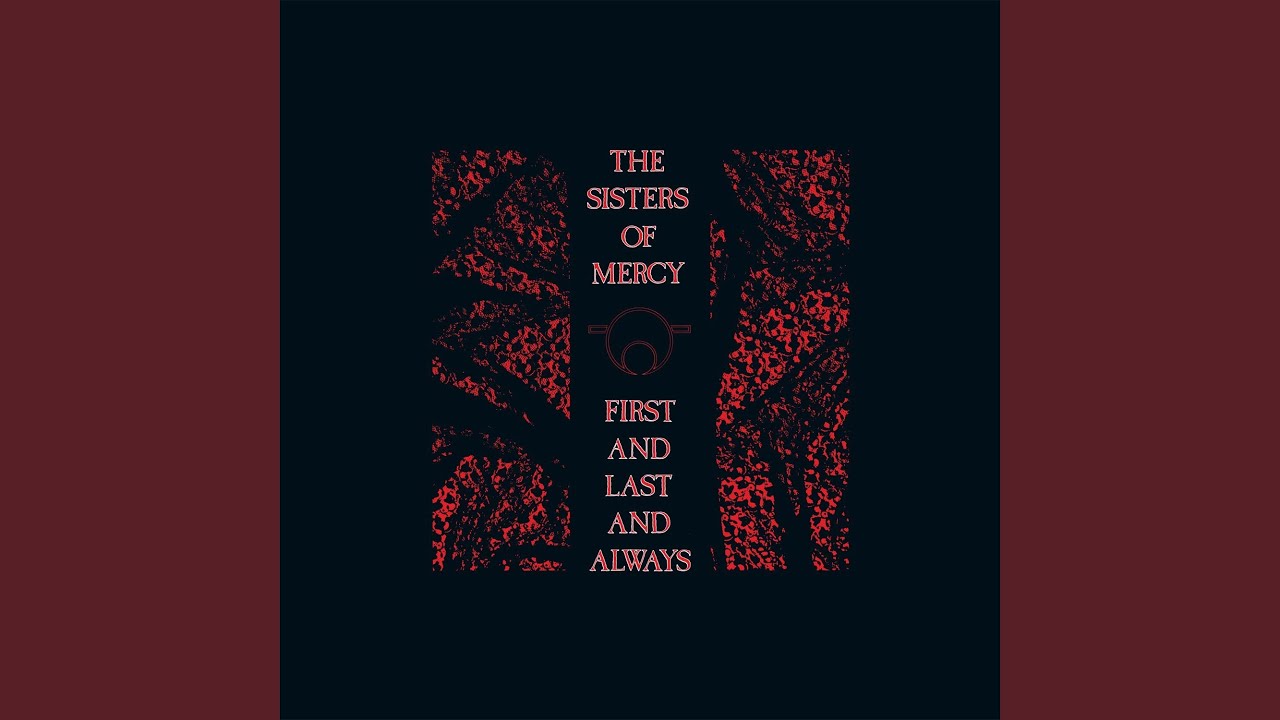
In his 2012 interview with Classic Rock, Eldritch discussed the highlights of his brief recording career, beginning with the Sisters’ debut First And Last And Always.
“I like some of the songs on the first album,” he said. “I’m just not keen on the production or the style of playing or my singing – particularly my singing.”
Eldritch wrote the lyrics for that album but very little of the music. He explained: “It made sense at the time. If someone has written something and I like it, I’m happy to sing it.”
![Sisters of Mercy - Walk Away (Official Music Video) [HD] - YouTube](https://img.youtube.com/vi/nQA5SwYrFjY/maxresdefault.jpg)
After that album’s release, guitarist Wayne Hussey and bassist Craig Adams exited to form rival group The Mission. Hussey had written some of the key early Sisters songs including Black Planet and Walk Away, but Eldritch was dismissive of the guitarist’s contribution to the Sisters.
“He was only in the band for a year,” Eldritch said. “We’ve been going for 30 years. Draw your own conclusions from that.”
Floodland was the Sisters Of Mercy’s most successful album. Eldritch wrote all of the songs alone and effectively operated as a one-man band, playing virtually all the instruments, including a drum machine he named Doktor Avalanche, and providing all lead vocals.
Additional vocals for two tracks – Dominion/Mother Russia and This Corrosion – were provided by the New York Choral Society.
Recording sessions began in New York City at the Power Station and continued in the UK at Strawberry Studios in Stockport and The Wool Hall in Bath.
Most of the the album was produced by Eldritch with Larry Alexander, who had previously worked with a wide variety of artists including Bruce Springsteen, Bon Jovi and Diana Ross.
But Eldritch also turned to a famous name to help with production – Jim Steinman, the mastermind of one of the biggest selling albums of all time, Meat Loaf’s Bat Out Of Hell.
Steinman wrote the songs for Bat Out Of Hell, although it was Todd Rundgren who produced that album.
Dominion/Mother Russia, the opening track on Floodland, was produced by Eldritch and Steinman. This Corrosion, the lead single, was produced by Steinman alone.
![Sisters of Mercy - This Corrosion (Official Music Video) [HD] - YouTube](https://img.youtube.com/vi/aArkIaPqV3c/maxresdefault.jpg)
Eldritch told Classic Rock: “People thought that with the second album we were completely Steinman-ised, but it’s untrue. This Corrosion is ridiculous. It’s supposed to be ridiculous. It’s a song about ridiculousness. So I called Jim Steinman and explained that we needed something that sounded like a disco party run by the Borgias. And that’s what we got.”
Eldritch also claimed that he had never heard the Bat Out Of Hell album in full.
“I’ve never listened to it,” he said. “I know the song Bat Out Of Hell. It’s OK. But it’s not as good as Golden Earring’s Radar Love, is it? It’s not as good as (Don’t Fear) The Reaper by Blue Öyster Cult, or Edge Of Seventeen by Stevie Nicks, or Aerosmith’s Dream On.”
This Corrosion was the Sisters Of Mercy’s biggest hit, peaking at No 7 in the UK. Floodland also made the UK top 10.
Eldritch and Steinman joined forces again for the song More on the Vision Thing album. Then track was co-written and co-produced by Steinman, and as the album’s lead single it gained heavy airplay on US rock radio.
![Sisters of Mercy - More (Official Music Video) [HD] - YouTube](https://img.youtube.com/vi/BlVcdXowPvQ/maxresdefault.jpg)
Vision Thing turned out to be the Sisters’ swan song.
“I’m very fond of that album,” Eldritch said. “I know it’s a bit 2D, but I wanted to make a 2D rock record. Something that was very flatly in your face.”
This also drew an unlikely comparison.
As Eldritch recalled: “At the time everybody said, ‘Oh, you’re just trying to be Def Leppard – and you’re not doing it very well!’
“To be honest, Def Leppard sound better. So that didn’t work.”
