


There can't be many conservatory-trained pianists to successfully transition into hip-hop production, but Grammy-nominated producer and songwriter Rogét Chahayed has done exactly that, turning a childhood behind the keys into a career spent behind the boards, crafting some of the genre's most memorable records.
After beginning his career working as a music director, session musician and piano teacher, Chahayed reoriented his skills towards hip-hop production under the mentorship of Dr Dre and legendary producer Mel-Man. Building a reputation as an ideas man, he became well-known for generating loops and musical sketches that then found new life in the hands of other producers and artists.
It’s a track record that's not only earned him several chart-topping hits, but recognition as one of the industry's most dependable "hit machines", with production credits spanning some of the biggest records of the past decade, including Travis Scott's Sicko Mode, Doja Cat's Kiss Me More and Drake's recent No 1 single Janice STFU.
We sat down with Chahayed to trace his journey from conservatory pianist to hip-hop hitmaker, and he opened up about landing a coveted spot in Dre’s studio at such an pivotal stage of his career. “I initially got in touch with one of his right-hand guys, a legendary producer called Mel-Man who had a very important role behind 2001 and The Marshall Mathers LP,” Chahayed recalls.
“He took me under his wing in 2013 and after six months of working together, surprised me by taking me to Dre's studio one day. Dre already knew about what I was able to do, and put me to the test that night by asking me to put keys on a track that had nothing but a drum beat and a hook. After that, he wanted me to continue working with him.”
At this point in his career, Chahayed had yet to work on any major commercial projects, but Dre saw potential in the young producer. “I hadn’t done anything notable at that point. I'd been in a few cool rooms with people, but nothing had been released. I was still finding my way, but I knew that I had a different approach to keys, chord progressions, beatmaking and trying to make music a more integral part of a song.
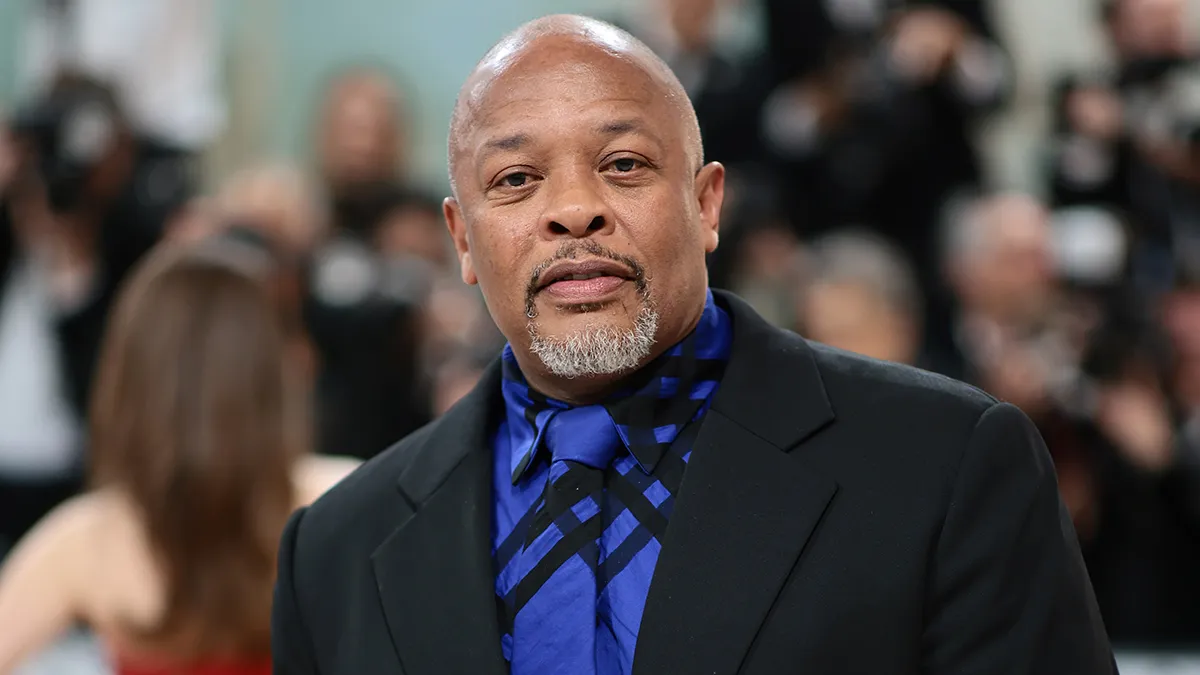
“Back in 2013, I didn’t feel like there was a lot of great rap music,” Chahayed continues. “It wasn’t very riff or keyboard-driven, like a lot of the music I grew up listening to, where those elements were the nucleus of a song. Dre was able to see that I had a solid technical foundation, and because I was running keyboards through guitar pedals and had a more complex knowledge of chord progressions, there were more possibilities.”
Under Dre’s tutelage, Chahayed says he learned that survival in hip-hop meant standing out from the crowd and always bringing “something different to the table”, whether that meant having the “hottest drums” or “some kind of weird, rare sample”.
“Dre was constantly flexing and thinking about what you had to do to be different to everybody else,” he says. “One day you'd be playing a riff or making a beat and it would be his favourite in the world, but a week later it would be like it never existed. The most important thing is his ability to see things in other people and put a room together correctly.
He’s like a conductor with an orchestra
“He’s like a conductor with an orchestra; he may not be touching anything on the computer or the keyboard, but he'll be pointing things out and bringing the best out of people until some amazing piece of music comes together. I've worked with some of the best artists in the world, but to this day, working with Dre is like nothing I've ever experienced - it’s like watching Fantasia!”
For Chahayed, the most vital lesson that he learned from his mentor was to broaden his perspective and look beyond the minor details and technical decisions that make up a song’s production, which he says – important though they are – can often distract from the overall vision behind a project.
“My specialty is the keyboards, sound design, structuring a track and seeing it through all the way, but I'm not a great engineer or the best drum programmer in the world – I have people that do that for me,” he says. “All those technicalities can take you away from your vision for a song, and Dre taught me a lot about that.”
“For him, all of his biggest songs, including stuff like 2001, were about the art of collaboration – putting great musical minds together. He’s very much the Quincy Jones of the rap world, and that's when you really know you're a great producer.”