


“I work on music all the time, even when I’m not in the studio,” says Grammy Award-winning producer Tyler Spry on his creative approach.
“I recently got this sampler app on my phone so I can chop up ideas when walking around the neighbourhood or at the beach,” Spry continues. “I have a journal full of song ideas, I take walks where I listen to music and make notes of inspiring sounds or chords - I’m either always making or thinking about music.”
Tyler is speaking to us from his home studio at the top of the Silverlake Hills in Los Angeles, and our conversation comes in the wake of some staggering success.
His recent credits include Bad Bunny’s Debí Tirar Más Fotos , a Grammy Award–winning record from 2025 where Tyler co-produced and co-wrote album highlights DTMF and Kloufrens.
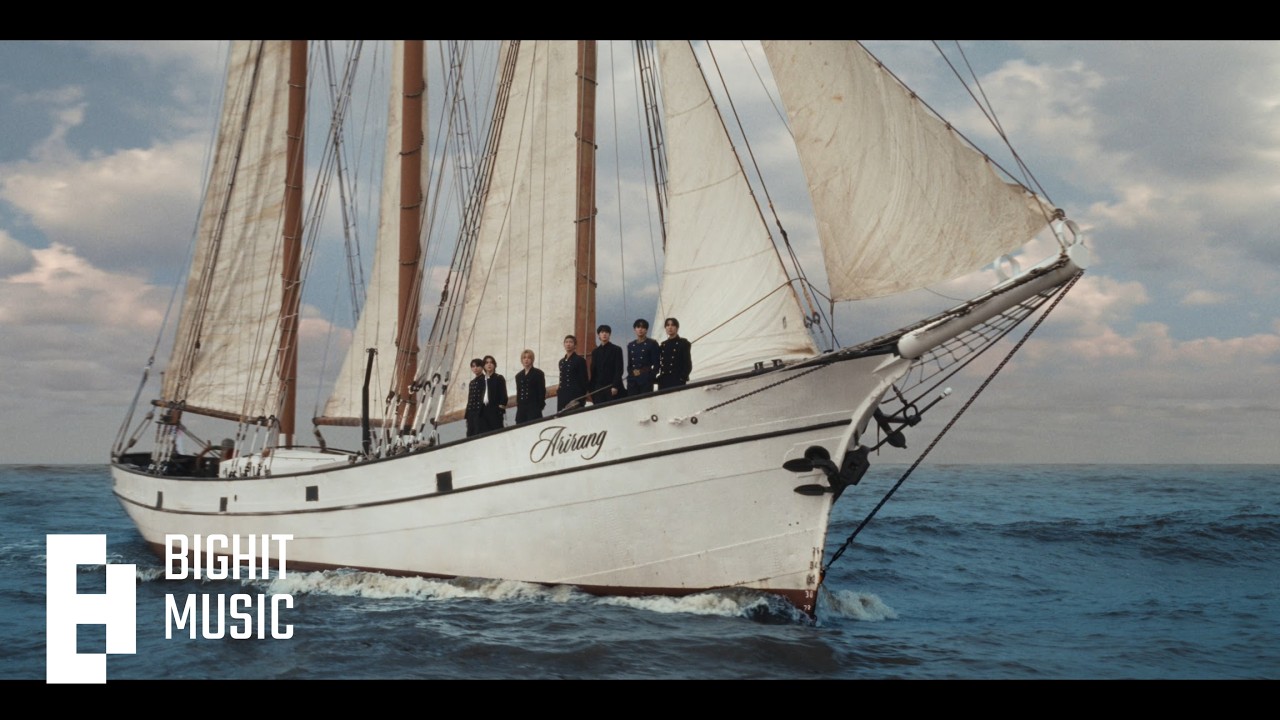
Other production work has been with Tate McRae, OneRepublic, Karol G, Rauw Alejandro, Omar Apollo, and Latin Mafia alongside lead single, Swim, for BTS’ 2026 comeback album, Arirang.
While Tyler is guiding some of the world’s biggest stars on their journeys to the top of the Billboard charts, his outlook on the mechanics of music-making is pragmatic and contemporary.
“Half the time I’m working from home as I prefer being creative here to anywhere else,” says Tyler on his process. “But I like being outside a traditional recording space too. I’m one of those producers who would rather write a song in a hotel room on headphones than in an old studio with a huge console.”
Tyler began his career as a musician and engineer, initially hooking up with producers, songwriters and OneRepublic bandmates Ryan Tedder and Brent Kutzle. Via their partnership, Tyler found himself increasingly embedded in the mechanics of music-making, contributing songwriting and production to nine tracks on the 2021 OneRepublic album, Human.
“I stumbled into music production out of necessity,” Tyler laughs. “I had a MacBook with Logic on it, a couple of SM7s that I was using to record my band’s rehearsals, and I pretty quickly realised that I could make songs on my laptop.”

Tyler was playing guitar with different groups before meeting Brent. Before long, he had started to work as his assistant engineer.
“My first projects that people heard were songs with OneRepublic and I just began by supporting studio sessions, this was more dog sitting and getting coffees than recording,” Tyler explains. “But it was a foot in the door, we went on to make this album together and that is how I won OneRepublic’s creative trust. It gave me a real shot at making more opportunities happen.”
Establishing a rapport with artists is a key part of the producer’s role and something Tyler has always kept in mind when crafting music. Since those first projects, he’s focused on establishing a safe and comfortable space for his collaborators to feel creative within.
“I’m fortunate to work with a lot of people who I’m friends with, we have a great rapport and mutual respect for each other and everyday, we’re trying to meet in the middle and make the best song possible,” he says. “Everyone has different takes, opinions and of course creative people are bound to come at an idea from their own angle. But when this happens, it’s one of the most exciting moments and can lead to special ideas.
“When everyone in the studio, whether it’s an artist, songwriter or co-producer, is able to get their ideas out, that’s when you’re able to make the song that no one else could make.”
The home studio is an important space for Tyler and he’s poured energy into its development and refinement. There are some essential items in his workflow, including the Eventide H3000.
“A few years ago I picked one up and it’s probably been on every song I’ve made since,” he says. “There’s something about an outboard chorus reverb or flanger that sounds perfectly imperfect. Sending a vocal or drum loop through metal or electricity always degrades sound but in a way that can work well for me and my music.”

New software and gear are an ongoing preoccupation but Tyler has reached a point where he wants to ensure he knows the potential of what he already has before investigating anything else.
“Like every other producer in Los Angeles, I am constantly downloading new plugins that I forget I have,” Tyler laughs. “But lately I’ve been trying to master the things that are here, and not have a wandering eye for new tech or gear. I have a vintage synth collection, I just got this Jupiter-8 a few months ago, and it’s hands down the most inspiring keyboard I’ve ever owned. I’m trying to excel at sound designing on it before I pick up something new and flashy.”
It’s an apt purchase, as Tyler’s first synth was a Roland Juno-6 - a piece of kit he spent hours searching for on Craigslist. He’s now had it for more than a decade and has influenced his love for the Jupiter.
“I paid $200 for a Roland Juno-106 with broken voice chips, and I know it really well,” he says. “The Jupiter has a really similar design and approach in terms of how you programme a sound on it. It just feels like the big brother of the Roland Juno-6.”

Tyler is unable to talk about his contribution to Bad Bunny’s album - what we do know is he worked on stand-out tracks, DTMF and Kloufrens. However, he can share more about becoming involved with South Korean megastars, BTS. The group, featuring Jin, Suga, J-Hope, RM, Jimin, V, and Jung Kook, have been on hiatus due to solo projects and their mandatory military service but have since come back with a bang in 2026.
“We ended up working with the band at Conway Studios in Los Angeles,” says Tyler. “I spent a few weeks with them writing and workshopping ideas, they were the nicest guys with great taste and they assembled some inspiring rooms for us to work in. One of those was the room that Swim was born in with James Essian, Sean Foreman and my co-producer Leclair.”
Tyler would prepare for a session by building a template with any song ingredients he might require from drum loops to chords and soft synth sounds. The aim was to ensure that he was ready to respond to whatever direction flows through the room.
“You never know what someone is going to be inspired by,” Tyler explains. “There might be a day when I walk in thinking we need to do an uptempo radio song or someone is really going through it and they want to pour their heart out on a Wurlitzer. I have to be prepared for anything.”
Alongside Swim, Tyler was also credited on the album track, Please. Although there are different songwriting and production teams involved in the making of the BTS album, the only thing that matters among the army of contributors is the song itself.

“In the initial moment of a creative spark, you have to believe what you’re doing is the best thing in the world and you have to encourage everyone who is in the room with you to dive in headfirst,” he says. “Then you can assess afterwards - with both Swim and Please, after the initial hour or two of writing, I took a step outside, listened to them and they felt special - not every song feels like that.”
Another part of the production process is to ensure the foundations of the song work as hard as possible. So if the production isn’t cutting it, Tyler is always will to clean the slate and start an idea from scratch.
“I’m happy to reimagine something, drop the vocals into a new session and start from there,” he says. “I’ll do this as many times as I need to find what works for the song. It’s my responsibility as producer to leave no stone uncovered in the search for the best version.”
Tate McRae is a Canadian pop star who has worked with Tyler and OneRepublic’s Ryan Tedder. The pair helped write and produce major hits on her albums, including the 2023 smash single Exes and 2025's Just Keep Watching.

“Tate has a clear and distinct vision so I always leave a session with her feeling like a better producer and songwriter,” Tyler states. “Ryan knows when something feels right and when it doesn’t, we will rework the drums, the arrangements, the vocal parts, the sound design, we could end up with 47 versions of a song.”
I Don’t Wanna Wait was a collaboration between OneRepublic and producer David Guetta, a dance music crossover that became a global hit. For Tyler, the challenge was to anchor the song, which was based on the melody of Dragostea Din Tei by the Moldovan Eurodance group O-Zone, within the OneRepublic universe.
“Ryan came on and really put more of his sound and story in the verses and pre-choruses, we did a lot of sound design, guitars and textures to try and bring it more into the world that people know OneRepublic for,” Tyler says.
“It’s always interesting to rework an existing song or new interpolation, to find a way to contextualise it in a new sound setting and for a new audience.”
Tyler has achieved remarkable success within the music industry during the last few years. He cites finding his people and team alongside an ongoing love for discovering new sounds as the reasons for his rise to the top.
“Aspiring producers need to surround themselves with people that inspire them, challenge them but are also those you want to spend eight hours a day in the studio with,” Tyler states.
“I’ve also never stopped listening to new music or at least music that is new to me. Your output is a fraction of what you put in - if you’re not staying inspired then the well will eventually run dry, so I listen to music every day, I go for walks with my dog, I spend time with friends, all those things matter, not just for your mental health but also because they make you a more prolific songwriter.”

Growing up, Tyler was a fan of bands like The Smiths, Radiohead and The Cure and had no time for pop music. Now, he’s front and centre of this musical universe, working with some of the world’s biggest stars in what could be seen as an unlikely destination from where he started.
“You have to stay open-minded,” Tyler says. “You might find a creative home where you least expect it and most artists are coming to you to shape them. One of the most exciting aspects of what we do is bringing our influences into the projects we work on.”
In 2026, musically anything is possible with creative boundaries blurred and genres being pulled into myriad new and exciting shapes. Tyler is among those producers whose music is helping to push the global pop universe forward.
“I think I just have to keep showing up and making music,” Tyler explains. “There is a unique kind of feeling when a song you made or a guitar part you created is out and being heard by people all around the world, affecting culture. I’m really happy to be part of this musical world.”
