


There’s music that paints a picture in your mind, and then there’s the vivid hyper-neon futurism of The Midnight. Oft-cited as the purveyors of perfect night-drive music (particularly if you live on the outskirts of a Blade Runner-esque metropolis… well, you might), the band’s core duo - vocalist/guitarist Tyler Lyle and producer/keys and percussionist Tim McEwan have been dropping their brand of synth and guitar-driven future-pop for well over a decade now - and have amassed a sizeable audience as a result.
Slap bang in the middle of their globe-trotting Time Machines tour - and in the wake of their blinding sixth studio album Syndicate’s recently expanded re-release, we caught up with the pair to discuss how they’ve managed to maintain their obsessive future-nostalgia-loving crowd, how they keep fresh ideas coming, the zoo hypothesis (why not?) and also, why they’ve decided to - MusicRadar can exclusively reveal - team up with cassette player brand We Are Rewind to bring out their own Midnight-branded player!
MusicRadar: Firstly, let’s talk about this upcoming The Midnight-branded cassette player you’ve made with We Are Rewind. Obviously you guys are known for the 80s-leaning synthwave aesthetic, so was this wholehearted embrace of a classic analogue format a no-brainer?
Tyler Lyle: “Absolutely yeah. When we were on our recent Time Machines tour, we were also thinking of other bits of ephemera. Kind of what sparked it was Analogue Pocket - it’s like a new type of Nintendo Game Boy. It’s a company that’s doing things [with a very] high bar. So we started thinking about watches and cassette players and video games.
“There's something called an M8 tracker [from Dirtywave, Ed]. It looks like a little Game Boy, but it's a synthesizer. There are people who will put a whole record out as a file to be played on the tracker.
“Thinking about these bits of kind of ephemera from childhood that have grown up over the past 30 or 40 years, and have become a little higher fidelity was something us synth dads can get behind
“So yeah, the [We Are Rewind] cassette player is awesome. They have a boombox that I first saw a couple of years ago and it’s just awesome. They're keeping the dream alive in a way that's not dissimilar from what we're trying to do."
Tim McEwan: “It’s a really good idea to partner up with brands or artists and blend those things. It seems like an obvious thing to do, but they're doing in the right way. I think.”

MR: Are you guys fans of the cassette format, did you grow up with them?
TM: “Totally, I made my own mixtapes. I had one of those boomboxes with double tape cassette players, and I would record from the radio and then I would record from other tapes and make my own mixtapes from one tape to the other. That was what I was doing in the ‘80s, for sure.”
TL: “Hard same!”
MR: Do you think that today, with the constant deluge of music everywhere via streaming platforms, that old-school cassette format kind of adds something more tactile and ‘living’ back to the listening experience for young listeners especially?
TM: “Yeah, I certainly think we're missing something tactile, I think that's why the younger generation that didn't necessarily grow up with cassette tapes [love them]. If you were born in you know the late '90s, perhaps or the 2000s even - you find that it’s that generation that is seeking out vinyl and cassette tapes, and I think there's a reason for that.”
TL: “The ‘tech’ part of music was what really led the format shift. When there was no recorded music, you just printed the notes on a sheet. That was music publishing 100 years ago. The format has driven the form of the music for so long, and now files are streamable. They're downloadable. You can put them on a vinyl record or a cassette tape or whatever. Really the question is, ‘How do you prefer to listen to it?’
“We're kind of at the end of music technology, in this evolutionary ladder kind of way. We’ve kind of reached the end of history for musical formats.”

MR: Last year you released the epic Syndicate, which you’ve referred to as being the denouement of your well-regarded Kids/Monsters/Heroes trilogy - what aspects of the record did you think made it feel a denouement?
TL: “Thematically, I feel like we answered the question of self-becoming, if you want to call it that, from like a psychological way. A child becomes an adolescent, then becomes an adult.
“The leaps that are happening [in that transition] - self-discovery as a child becomes self-love as an adolescent, and hopefully, if you do it right, it becomes empathy as an adult. I feel like for me, writing into this sort of like dialectical evolution, the ‘hero’ dissolves. You know, the narrator - who was one single individual - kind of dissolves, and it becomes everybody's story.
“Everybody is a hero trying to kind of cross their own personal threshold and slay their own personal dragon. I feel like in a thematic way that [the album Heroes] answered the hero's loop for me.
“But my wife was diagnosed with cancer right after that album came out. In Hindu, the struggle of life and death is called samsara. The question being; ‘How do you break the endless loop of eternal return to reach nirvana and go to another plane?’ - that’s what this record is about. We solved the problem of identity, now how do you solve the problem of samsara and eternal returning to the same problems and cravings that you always had? How do you actually learn? How do you break through? How do you transcend that story?
“So yeah, that seemed like the denouement for that [theme]. I'm tired of writing songs about life and death, I think it's time to put on our our boat shoes and sunglasses and enjoy like a little departure from these big heavy themes that I felt like I needed to struggle through.”

MR: Was that big thematic resolution an objective from the outset of the writing process or did it manifest as you were making the record?
TL: “Tim came up with the the video game reference early on, and then [we discussed] the ‘zoo hypothesis’, which is this kind of like seed of a lot of like mid-century science fiction. The idea of it is that all universes have solved the problems of existence and [have become] this one unified being. They create this one planet as kind of a zoo to see if we can start these humans with the necessary means to transcend, and then watch them - like [they’re in] a zoo and see if they do.
“That was an interesting place to be thinking about when the cancer diagnosis came. Really our answer to that was, how do you cross over the threshold when you've lived a thousand lives and you've got one more. You have to take the moment. And you have to you have to kind of embrace the time as it's passing. And there there is no other sort of metaphysical answer out there. The answer is here and now.”
MR: Tim, you produced the record across a range of different studios. Would you say your production approach has changed over the course of making these last few albums?
TM: “It hasn’t actually, I think the studios are just usually where we recorded the vocals, or [we did some of the songwriting] but that’s normally not where I do my production. [The studio] is usually where we throw stuff at the wall and record sometimes final vocals or just demos.
“Where my work comes in is after the fact - I sit with it. I can kind of zoom out and shape the songs and mould the production around the songs.
“I have to chip away at it in my own little world for a while - and that process remains the same.
“But if you compare it to our previous album Heroes - which was me leaning into a lot more into vintage analogue synthesizers and trying to go for a bigger anthemic feel - Syndicate was a return to form in terms of how I approached it. It was a return to the first 3 or 4 records - the Days of Thunder (EP), Endless Summer, Nocturnal, and Kids.
“I realised early on once I got into production of this album that I’d found a lane that just felt very much like familiar territory. It was like looking at a similar thing but from a different angle.
“We've both been through a bunch of life stuff in the last kind of five to six years, as the whole world has, but also personally, and so you grow and you’re able to approach things from a broader perspective.
“It felt in a way of going back to the early days of The Midnight where I sat up until the early hours of the morning, nerding out over a synth solo or something. It felt like I was right in lane between Endless Summer and Nocturnal.
“So, for me, it was very much like letting go of the oars and just creating with complete bliss, which was just so fun. I’ve had so much fun making Syndicate - it has been an absolute blissful experience.
“Tyler's always been the sort of guy that focuses on thematics and story and that kind of bigger picture. Where he goes granular on the lyrics and the text, I'll go granular on the elements for the production and the colours and that stuff. It’s a broader story but it harkens back to the earlier days of The Midnight. We’ve come full circle in a sense, it felt very much like home to me.”

MR: Which tracks are key on the record - and which are your favourites?
TM: “Oh my God, I have so many favourites, without sounding too conceited! Usually it's the ones that I feel like I did what I set out to do on the production front. A song like Afterglow (Parts One and Two) Digital Dreams, Sanctuary and Quiet Earth, even though they have slightly different textures and colours than maybe the earlier [production approach] of The Midnight which was a bit more naive maybe and more young in approach, it still feels like it’s same brush I'm painting with.
“We can't forget to mention NEST Acoustics [the pseudonym of sound designer and producer Jack Dangers], who did a lot of additional production and co-production on Syndicate. He’s a huge part of providing the additional textures that he was able to imbue my tracks with.”
MR: We’re particularly keen on Runaways, especially that astounding sax section and Bonnie McKee’s impactful vocals - how was the process of working with her?
TL: “I’ve known about Bonnie for many, many years. We shared studio space at Pulse Recording back in Silver Lake when she was in her Katy Perry-A-list-songwriter-pop era. When the opportunity came to get in the same room with her, I think we both jumped at it. It was really wonderful working with a songwriter whose strengths are not my strengths. It was a great education for me. Yeah, we love Bonnie. We'd love to make more with her.
TM: “I’ve been aware of Bonnie since Katy Perry's album Teenage Dream, she basically co-wrote all those huge hits. We’ve been following each other on Instagram for a number of years. I remember seeing her at a Christmas party for our old label Ninja Tune that we were signed to back in 2019. I went up to her and just introduced myself. I knew that she followed us on Instagram, but I didn't know how aware of us she was. It kind of came together there or four years later, kind of organically. She had a manager that used to work with me back almost 15 years ago, so we knew each other peripherally. It was just one of those like, ‘Hey, we should do a session together’ conversations and that led to Runaways.”
MR Was that track something that was developed in that session with Bonnie?
TM: “Oh, that was way later. We wrote that song then I went away and tried a million different things on the track. That was really probably the one that had the longest journey. I was in a period of my life and of my career where I was trying to ‘reinvent’ producing The Midnight a little bit. I wanted to try new things - rather than going with the obvious rolling bass and the four to the floor [beat]. Then you get to a point where you try all the other things, and you realise. ‘It kind of just calls for this’.
“That’s what I mean when I talk about letting go of the oars and letting the stream carry you. If it ain't broke, don't fix it. And, it feels good.
“Once I got my head out of my behind, so to speak, it was so obvious to me, and I had so much fun.
“Tyler had the brilliant idea of having not a sax solo - but a sax duel. That was an obvious YES for me. We were able to bring back Thomas Edinger, who's the fantastic saxophone player who played on a lot of our early stuff, alongside our sax player that tours with us, Justin Klunk, who's just an immense talent as well. Having them play together - that was just pure joy for me.
“It was a really fun opportunity to go balls to the wall with the aesthetic. The song is called Runaways, so you want something that feels like running away, into a kind of fantasy world, as it were.”

MR: Recently you released the deluxe version of Syndicate which featured the Chromeo remix of Love Is an Ocean and Last Night in Paris with Carpenter Brut. Did these additional tracks come after the album sessions or during?
TM: The Carpenter Brut one had a long journey as well. We came up with the initial bassline - I threw that bassline at the wall in a session with Tyler, and that whole rap and vocal version was initially going to be the main version. It was really just a last minute pivot from us, choosing to make it an instrumental. We put out the vocal version as a sort additional version. It’s nice that the world gets to experience both versions of that song.
“We’ve toured with Chromeo and they’ve been collaborators, they're just lovely guys. And we've obviously been aware of them for many years because they came on the scene way before we did, so that was also a really fun collaboration and experience.
MR: You’re regarded as key players in the synthwave genre - is this still the main domain that you guys want to operate in the future? Or would you become a ‘different band’ if you kind of deviated too much?
TM: “I think we have [deviated]. We've always dipped in and out. I think that's the beauty of The Midnight - that weird kind of chemistry. Tyler and I come from such disparate worlds and different cultures. I grew up in Scandinavia, Tyler came from the South and from America. There's always this been this sort of ‘one foot in and one foot out’ dimension because it's fun to venture out, but then it's fun to come back and cement the genre we came out of.
“I can't speak for Tyler, but for me, it's always been part of the journey - exploring things that are a little bit on the fringes and and a little bit outside, whether that’s [where we record] but also collaborations like the Magik*Magik Orchestra, where we did the symphony versions of the songs during the pandemic. There's always been a little bit of a foot planted in the synthwave world, but the other is venturing out and seeing what else you can experience, for me at least.”
TL: “Tim is the producer, so he's kind of the filter at the end to make sure it sounds like The Midnight. My sort of creative aperture is always open, I don't know what a Midnight song is in terms of lyric writing. It's a ton of different things - in my mind it's all rock and roll! But the thing that makes it sound the way that it does is on Tim.
“I would love to take a summer vacation and just remix a record with my own kind of loud, angry, noisy proclivities and see how that turns out. But no, Tim is our secret sauce that is kind of like the lense before before production.”

MR: You mentioned that you used a lot of analogue hardware on Heroes. What's the current arsenal in terms of gear? Do you have a set roster of Midnight-tech that you call upon?
TM: “I have my go-to synths that I like to work in, then there’s always the extra additional things that you discover on the way. I love - as many producers in the electronic and pop space love - Serum and Serum 2. I just did a Serum pack for Splice and I’m working on another preset pack for Serum 2. Other than that it’s like Spire, U-He’s Diva and I love TAL-U-No-62 - a Juno emulation - by TAL Software.
“I’ve used some of the Roland Cloud emulations. Sometimes I prefer to keep it in the box because there's more control, and you can do more with plugins than you can with outboard analogue synths in general.
“That being said, you do get a superior sound quality from analogue synths, but I think it also depends on how you treat those synths and how you mix it. It’s all in the sound choices and being able to blend them.
“I’m not the most technical guy, especially when compared to NEST Acoustics. Ben is an absolute mad scientist, and that's what I love. I'm not built like that, that’s why I enjoy working with people that can bring that side of it when I can just focus on the composition-based music-making, rather than all sound design.”
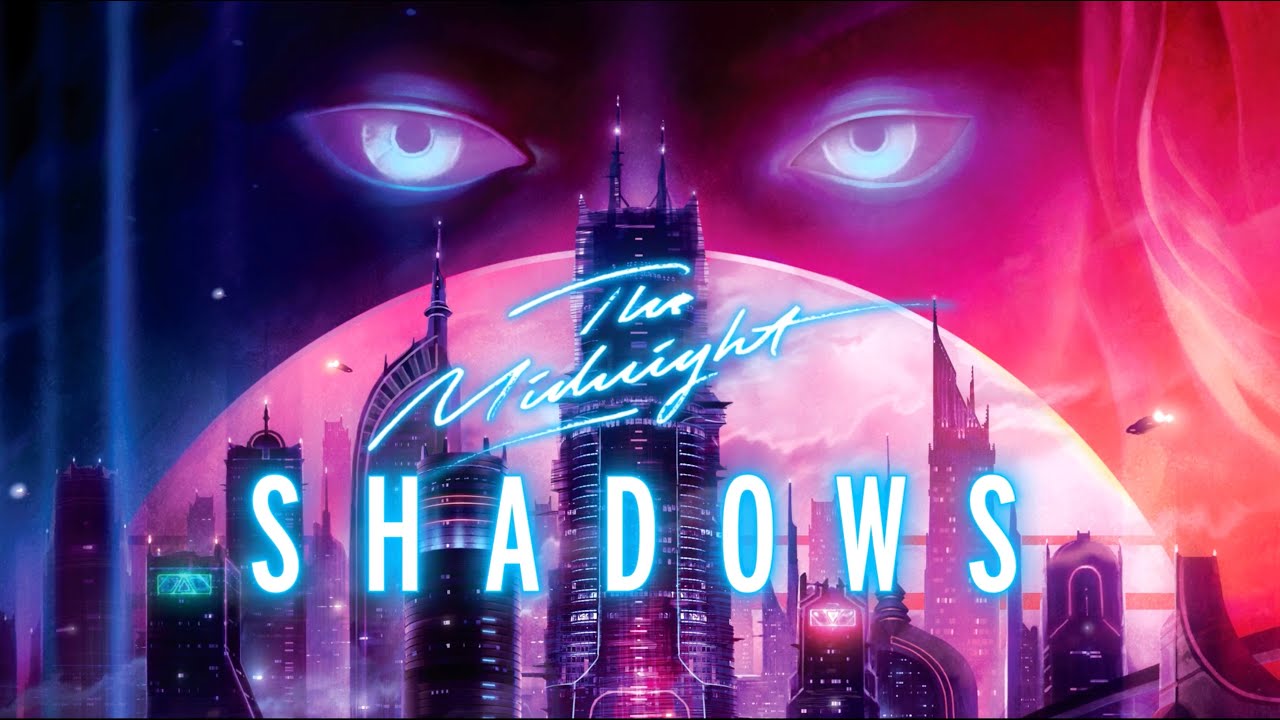
MR: Beyond the We Are Rewind collaboration, you’ve also released the graphic novel The Midnight: Shadows and recently, you soundtracked the Neon Odyssey D&D expansion. You guys obviously have a big expanded universe beyond your music, do you think that kind of world-building is a recommended practice for artists to maintain an engaged audience in this day and age?
TL: “Well it’s been a slow build. It really took a long time for us to flesh out this imaginary world that we lived in. When Tim and I started writing I came from the kind of folk/Americana world, so this was a departure for me. The Midnight is not Tim's name or my name. It's kind of this third thing, so we get to wear it like a mask. It. can become a little bit more theatrical, and it can become a little bit more of an experiment. I think the world-building kind of came from that. Like, well, if this is make believe, let's make believe!”
MR: Your fanbase is pretty massive, and they obviously all buy into the wider world of The Midnight, how important was audience development to you in the early days - did you pore over stats and sales figures, or did the fanbase just grow organically?
TM: “Stats and sales figures are not our strong side! That's why we have people that do that for us. I don't know. I just think we followed what felt fun to us in general.”
TL: “Yeah, we keep doing this because people keep filling our gas tanks, and that's true. [At the start] Tim was living in L.A. I was living in New York, and it was like, ‘Well, do we continue doing this?’ And when we put out Endless Summer, there was enough response to go, ‘Oh yeah, we're gonna keep doing this.’”
TM: “It's been amazing to have a fanbase that's been cultivated over such a long period of time. It's grown and grown, and it feels very organic and very sincere in the way people connect to our music. That is something you cannot plan for. It has grown way beyond what I could have ever imagined when I sat in a little studio in North Hollywood in 2013, messing around with these little 80s tracks that I was just kind of dipping my foot into, It’s just an amazing place to be at this point.
MR: How different is what you do on record vs The Midnight’s live experience? Do you kind of have to adjust the arrangements to make them work in a live context?
TL: “It was an interesting question early on. We didn't know quite how we would skin the live project. I come from playing in a rock band and playing solo on stage, whereas Tim has always been primarily in the production chair, so he kind of let me build a little band - so that it didn't feel like I was singing Midnight karaoke to a DJ set!
“It’s been lovely to build that story out over the past eight years, I think that we proved that as a form. When we started working with Syndicate we realised it can become a little more electronic. The question was ‘How do we take the best moments from the rock band and also figure out how to build in this like very electronic heart that has a lot of DNA in the dance music world?’. It has a lot in the MPC and the turntables. I feel like it was only after that eight years of trying and failing to get the experiment off the ground that it's was like ‘I think we can return to a few things that I was afraid to try in the beginning.’”

MR: Where do you guys prefer to be, in the studio or the stage?
TM: “Well I no longer tour so I’m a studio man. It was stretching me too thin. It’s not my natural habitat. I don't find as much joy in the execution of the thing live, but I had to do it to learn that. You never know until you do it.
“Being a producer and a songwriter - that's what I derived my joy from. And so, touring was an added strain at a certain point. I just got to a point where I realised I had to step back because it ultimately wasn't serving me or the projects. I’m a studio cat for sure, and always will be. That’s always where I find my bliss. It’s been a huge gift that Tyler could keep on touring with our band and keep the thing going, because that is a huge part of it.”
TL: “I like writing songs a lot, but I’m a hermit by nature. I think Tim is too a little bit. I love the feeling of when an idea just fits. It just lights up my brain, Tim. I think is very project-oriented. He sees the details and the fine tweaks. I write every day, all the time, in all sorts of different ways. I'm writing prose. I'm working on a DJ set - I'm just very creatively curious, which is probably why I haven't got better at a lot of these things!
"[Time pressure] can be a good thing, you know the tour’s coming up in a couple months, or the record deadline is coming up. So, I think both are necessary for me to kind of not take it too seriously and enjoy the process, knowing that it'l be something else soon.”
MR: What’s next on the agenda for you guys?
TM: “Well, we're working on the next record right now and I'm working on a couple of tracks for us. There’s an upcoming collab with a metal band….
“There's lots of stuff that I've been tinkering with, and as I said, I'm doing a Serum pack that will be out at some point, whether it's later this year or next. I don't know yet. For now, the main focus is the next Midnight record, and obviously we have the full tour happening as well. So you know we're staying busy. There's always something!”
TL: “Oh and we’ve also contributed to a Smashing Pumpkins tribute album -[Sending Hearts To All My Dearies] we’ve covered Tonight, Tonight. That’s out on August 4th!
“We also toured China for this first time this year, we played in India. We went back to Australia. Hopefully next year in the summer we'll get back to that side of the pond, and breathe a little easier. We're halfway through our Time Machines tour [which restarts again on September 9th in New Orleans]. Tim's brother Oliver has been our musical director, and we toured with a big video projector and have a ton of video content for the first time to accompany our rock band show. We’ve been very proud of that, and the next leg of that will kick off in less than two months.”
Head over to The Midnight’s official website for more info on tour dates and upcoming releases, and keep your eyes peeled on We Are Rewind for further news of The Midnight’s officially branded cassette player, which will be dropping soon…
