When, earlier this year, Questlove was asked by Rolling Stone to rank his 100 top Prince songs, his number one was a track that a lot of people have probably never even heard.
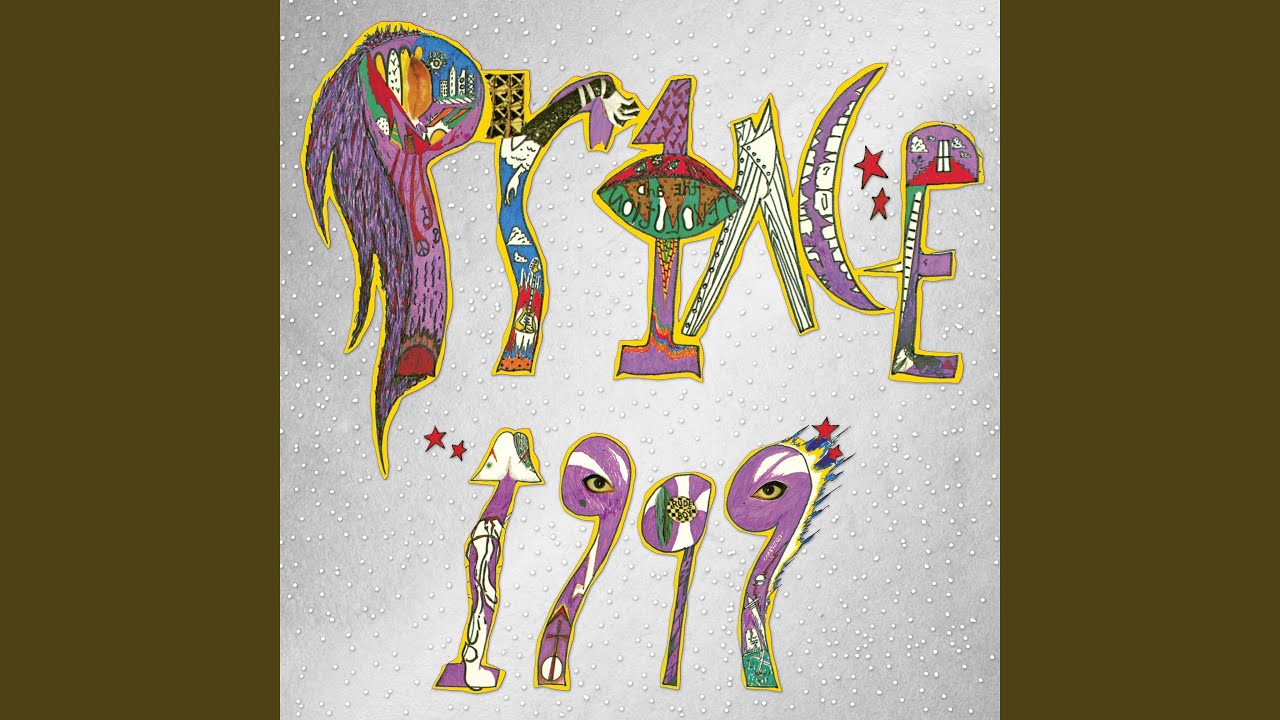
We’re talking about the Special Dance Mix of Little Red Corvette, a song that originally appeared on Prince’s 1999 album, from 1992, but was released as a single the following year. It gave Prince his first Billboard US Top 10 hit, but for Questlove, it was the extended, eight and a half minute version that really hit the spot.
The Roots’ drummer has now expanded on just why he loves the song so much in the Song Exploder podcast, revealing that, when he first heard the 1999 album – a record that he had to keep hidden from his mother because she disapproved of Prince and his music (Questlove says that he ended up buying it “about six times” over multiple years because it kept being discovered and confiscated) – Little Red Corvette didn’t really make much of an impression on him.
“1999 is a triple record, and the highlights of 1999 to me happen on like side three and side four, in which all the experimental filler stuff was,” says Questlove. “Because, like Stevie Wonder, like Earth Wind and Fire, a sign of a true artist is where your filler is. I never listened or looked for the hits. That's for mere mortals and laymen. Even at 11, I knew that. So I wasn't focused on like the Captain Obvious single, you know?”
All that changed when, in April 1983, Questlove was in his basement practising drums.
“Little Red Corvette comes on. It was on the radio, and of course, I know the song, I'm gonna turn it off. But I was like, ‘Wait a minute, I don't remember the kick drum being that loud,’ and so something's instantly different. I'm like, ‘I think the album version there's less kick drum or it's lower, but here it's like louder and more, like.. oh, I'm bopping my head a little bit.’ So I'm playing along with it, and then somewhere at, like the two minute mark, there's a part of the song I don't know, there's a breakdown.”
As the young Questlove (or Ahmir Khalib Thompson, as he was known then) had noticed, there is indeed “a breakdown in the song in which [Prince is] individually playing each part that you would otherwise miss in the regular version of the song.” But, in terms of impact, that was nothing compared to what happens later on.
“At the five minute 18 second part of the song, Prince transforms this song, and at the time, I didn't realise what he was doing,” says Questlove. “I dropped my drumsticks and was like, ‘What the hell is happening? This is not the Little Red Corvette that I know. He's singing Little Red Corvette, but the music is different,’ and I couldn't quite fathom it.”
Now, of course, he can: “At that five minute and 18 second part of Little Red Corvette when he yells, ‘The ride is so smooth, you must be a limousine,’ he changes the bassline, and he goes to the relative minor, which is B flat, and then it becomes the funkiest thing ever. I never knew that, for every song that exists, you can facelift it and give it a new key, like plastic surgery.”
Questlove argues that this was Prince telling his black audience that, even though he’d scored his first big crossover hit – with a song in a major key – he hadn’t sold out.
“He already had his pop success with white people, but not to be outdone, he wants to remind black people, ‘I'm still black, and here's the proof.’”
What’s more, Questlove says that, on top of blowing his mind, it also opened it: “When I heard that, my mind exploded because I thought I knew how music worked. And wow – now I'm listening to every song to see ‘What's the counterbalance to that song? Like, what's the the relative major or the relative minor of that song?’ Now it's just endless possibilities.”
It’s a trick that Prince would use on other 12-inch remixes – check out the Raspberry Beret extended version – and is one that’s informed Questlove’s own songwriting and musical choices, including when The Roots were working on their debut album with producer Scott Storch.
“When we would have jam sessions, I would always yell to Scott, ‘Scott, play the relative minor of that,’ and he had to figure it out and move this chord, and then he'd do it, and then be like, "Whoa, oh my God! That's the song!”