


Emerging from the DIY underground with little more than a few vintage synths, a relentless determination and Samuel T. Herring's unmistakable voice (and those unmistakable moves, Ed) indie electronic band Future Islands built their reputation slowly and surely before exploding into the wider public consciousness with the 2014 single Seasons (Waiting on You) and that performance on The Late Show with David Letterman.
Seasons was widely hailed as one of the defining songs of the year, propelled by Herring's meme-invoking performance - while their fourth album, Singles, would later become the breakthrough they'd spent nearly a decade trying to earn. From that moment, Future Islands were transformed from cult favourites into an internationally recognised force as the world finally started to play catch-up.
Two decades on, rather than celebrate their longevity with a conventional greatest-hits package, they’ve assembled From a Hole in the Floor to a Fountain of Youth - a collection of rarities, B-sides and overlooked gems that fill the spaces between the milestones. We speak to keyboard player Gerrit Welmers and bassist/guitarist William Cashion about Future Islands' two-decade journey that, remarkably, continues to build momentum.

MusicRadar: When the group got together initially, you were more into hip-hop, punk and metal. How did that mutate into an affinity for electronic pop?
Gerrit Welmers: “It was just about what we were able to do with the instruments that we had, which were all new to us at the time. I was a guitarist who had an interest in heavier music, but I didn't know how to play keyboards unless it was two fingers here, three fingers there. The idea to make something simple didn’t just come from the influence of certain ‘80s bands, but from learning what we were able to do with these things.”
William Cashion: “When I first met Sam he really wanted to start a hip-hop project. In high school, I was more into this weird electronic music that was influenced by Aphex Twin… but way harder. I was like, ‘Could you rap to this?’ And Sam would say, ‘I can't, but let's do something similar’.
“We met in the middle liking hiphop artists like Afrika Bambaataa who sampled Kraftwerk. That led me to bring keyboards into the band, so when Gerrit first came to play his guitar we said, ‘No, try this toy keyboard’. I wanted to play keyboards too, but there was a bass at the house so I ended up playing that on a song or two and everyone said, ‘That's the sound!’ The three of us really learnt our language together.”
MR: Do you feel it's quite reductive to refer to Future Islands as a synth-pop band?
WC: “We've always referred to ourselves as a post-wave band. On the early stuff, we leaned heavily on backing tracks using programmed drums, but over the last 12 or 13 years Mike has been playing with us live and there has been more of a punk spirit to what we do.
“It's a lot more noisy and intense, and a lot more screaming than most synth-pop bands. Don't get me wrong, I love synth-pop, I just don't know if I would put us in that section at the record store.”

MR: Future Islands didn't really come to public awareness until the fourth album, Singles. What kept you so committed when there were no obvious signs of success?
WC: “We were definitely seeing a gradual growth. Around the time of On the Water (2011) we’d started making enough money from touring to be able to quit our jobs, and at that point it really felt like we’d made it. When Singles hit, everybody thought we were a new band, but it felt like we'd already hit the jackpot.
“Our whole career has been a series of magic wand moments and little boosts that have kept pushing us along the path, from getting signed to Upset the Rhythm for our first album Wave Like Home to signing with Thrill Jockey, which gave us a much larger platform for our music to exist. Every time, we found a larger and more diverse audience.”
MR: Seasons (Waiting on You) was a defining record that seemed to ignite your success. Did you know you had something special when you wrote the song?
GW: “When we wrote it, Sam felt that we’d stumbled upon something great and it would be a hit, but I personally thought we hadn't [laughs]. I don't know about William, but I typically choose songs that other people don’t love as much. Like many of the songs that we’ve written, Seasons just felt very strange.”
WC: “We came up with it in the practice space one day and Sam took the cassette home, wrote the lyrics and came back saying “I think this is the best song we've ever written”. I know it's gonna sound weird, but to me it has a country vibe in the same way that Fleetwood Mac’s Time sounds country. Like Gerrit said, I thought it was a good song, but didn't think it was the best we'd ever written.”
MR: The bassline is almost as memorable as the vocal melody…
WC: “I appreciate that, thank you. I just try to keep the basslines interesting and moving rather than playing the root note. On Seasons, I was just playing around with the harmonics, but when we first tested the song live, the chorus wasn’t as big and distorted. We realised that we needed to step it up and make it sound bigger, but it's also about me trying to find new ways to draw lines through and around the keyboards that Gerrit's playing.”
MR: Many artists have a breakthrough song that ends up overshadowing the rest of their catalogue. Have you found ways to embrace the success of Seasons without being resentful of it?
WC: “We're very grateful for the impact that song’s had, so we'll definitely continue to play it live. It's given us so much, but at the same time we're not trying to write songs like Seasons if that's what you're asking. We try to approach songwriting in all kinds of different ways. On the next record, we're coming at it from all angles and trying to push different perspectives through the prism of Future Islands.”
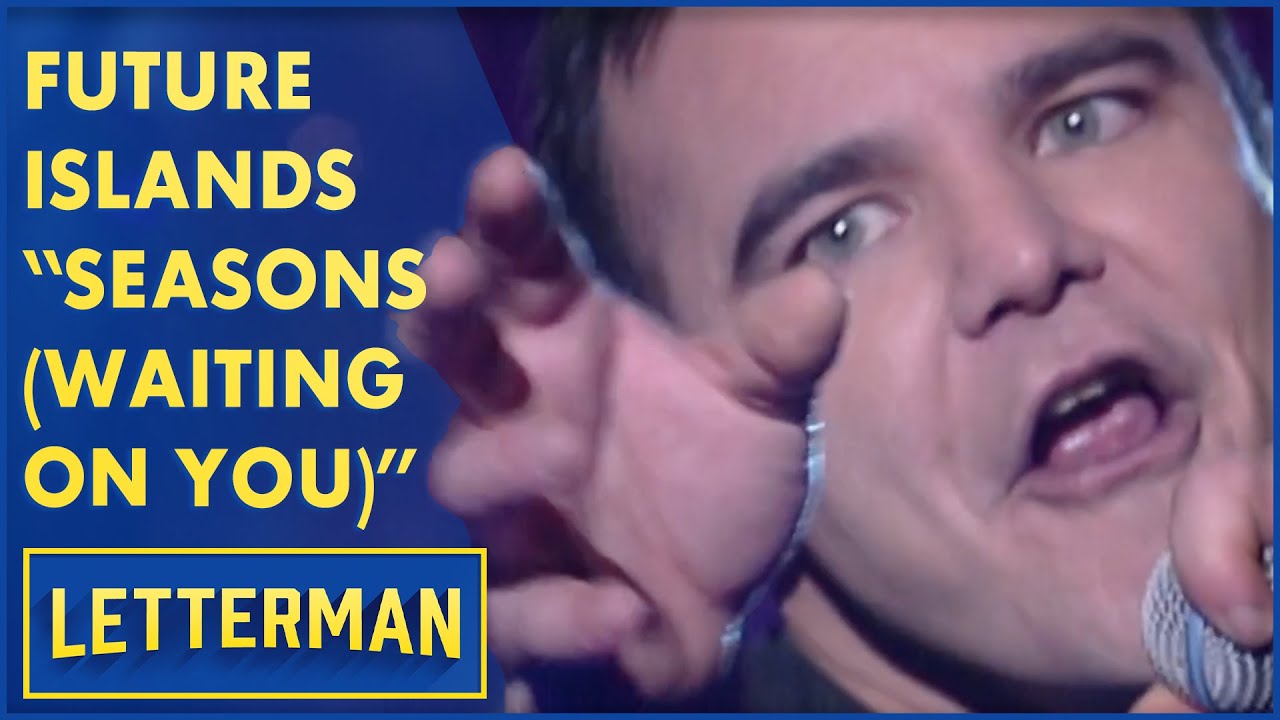
MR: A lot has been said about Sam's eccentric performance on Letterman, and he seemed to struggle for a while with the mixed reaction. For the rest of the band, was it Sam just being Sam?
GW: “To us, it wasn’t anything unusual at all - if anything, it was tamed down. We found the reaction to be over the top because he wasn't at 100% - that was maybe 60%. It was also during an interesting time with the whole meme culture and Sam becoming a meme. Things got out of hand in that new world of whatever the internet was, but it took us up a couple of levels really quickly.
“The part that got out of hand was the touring. Playing so many shows really burnt us out and was a hard thing to come back from when it came to making the next record. We were on cloud nine for a long time and had to come down from that and refocus.”
MR: We loved the performance, but do you think we live in an age of conformity where artists want to be people pleasers rather than have a sense of uniqueness?
WC: “I feel like we're in an era where there are a lot of really interesting performers and the visuals are front and centre. There’s a band from Quebec that’s everywhere right now called Angine de Poitrine who have a really unique performance style and we often used to play with bands that would dress up and wear crazy outfits.
“There was one called Nuclear Power Pants who had these pyramid-shaped heads that were black light reactive and the singer was a two-headed man, which was actually two brothers wearing an oversized sports coat.
“I don't want to say anything about the state of the music industry because it’s all confusing and fickle to me. When we had our moment with Seasons, I remember a journalist told Sam that we weren’t supposed to have a moment that year. In other words, Future Islands were not what the people who decided these things had intended to focus on. They weren’t saying it in a negative way; it was more like ‘you broke the system’”.

MR: Can you remember the first piece of equipment that felt genuinely transformative or opened up musical possibilities?
WC: “In the late ‘90s/early ‘00s we were in a band called Art Lord & The Self-Portraits and had a Yamaha DJX keyboard that was like the brain of all of our early drum break programming. It was marketed as a ‘you can do everything a DJ does’ - type keyboard and was pretty special for us at that time.”
GW: “Back then, we used various keyboards that were lying around. I ended up with my dad's cheap Yamaha practice keyboard from Radio Shack, but then Korg had just released the microKORG, which was my affordable intro to synthesisers. That really opened up a lot of doors and was very influential to Future Islands’ synth sounds at the beginning.
“I don’t know if it's considered an actual instrument, but I also got a cracked version of Reason from Sam's brother and I’m still using the same software today. Suddenly, I could layer things and it became a tool that allowed us to programme drums and play them live. It definitely changed our sound, but we were careful not to go over the top because we still wanted to sound like a band.”
MR: When writing material, does one of you bring demos to the table or do you jam together in a space?
WC: “For the first couple of albums we’d basically have a drum machine beat that would play forever and Gerrit and I would jam on top of it looking for chords, bass lines and melodies. Sam would just sit there with a notebook, find something that resonated and say, ‘Go back and do that thing again’.
“Like Gerrit said, after our drummer left, programming drums became a part of the songwriting process. At that point, it kind of shifted to Sam and me sitting on the floor with Gerrit at his computer, and that was the vibe for writing In Evening Air.
“We don't really go into that hypnotic, long-form writing style these days, but we still get together when we can to jam in a room because it's important to our process. We'll often share ideas back and forth or write a demo of an idea, and if anyone's feeling it Sam will write to that and we’ll take it to the rehearsal space, but we're always down to explore different ways to approach what we do without abandoning the old ways.”
MR: Future Islands have always combined upbeat music with a sense of melancholy. Do you write songs with Sam’s unique presentation of them in mind?
WC: “That aspect of our music is something that we struck upon quite early and has been part of how we work together when we're writing. Sometimes we'll have an instrumental that we like and Sam will hear it but can't write to it, and sometimes he chooses a song and I’m like, ‘Really, this is the one?’
“The songs that resonate with Sam still surprise me. Sometimes, he'll say that he found some old demo from seven years ago that's been sitting in the background and he finally wrote to it. About the melancholy… that's just something that’s always been there. It's not just in Sam’s vocal melody, there's a melancholy quality to the music too, but we don’t really talk about it when we’re making a record; it’s just understood.”

MR: Most bands will mark a milestone anniversary with a Greatest Hits collection, so why was it important for you to celebrate 20 years through a collection of rarities, B-sides and alternate tracks?
WC: “We've been meaning to release a collection of non-album B-sides, rarities and seven-inch songs for over 10 years, but our management would always say ‘Now's not the time’. This year, the stars finally aligned and we're super-excited about how it’s turned out. We all love the artwork our friend Nolan came up with and only had to leave out a couple of songs, but I guess those will come out on the deluxe versions of whatever album era they came from.”
MR: You once said that you won't give an album a chance if you don't like the artwork. Looking back, can you think of LPs that rewarded you by studying the artwork?
WC: “I don't remember saying that, but I believe you if you read it. I'm definitely very adventurous and what I like about shooting down to a physical store is that you’re not just being shown what the algorithm thinks I should listen to.”
GW: “Sometimes I’ll buy a record that has an interesting cover and find that I almost have to love the music because of that, but I do like quite a few of the covers to old Krautrock records produced by Conny Plank. Actually, I bought a Heaven 17 album a few months ago that I liked the look of. I think it’s a comp, but the music’s really over the top in an amazing kind of way. Their songwriting is so interesting.”
WC “When I was a kid in the ‘90s there was this minor league baseball team close to where I grew up called the Carolina Mudcats. For whatever reason, they held a local radio thing at the stadium and were giving away free cassettes. I guess they were old promotional copies, but I picked up Kraftwerk’s The Mix because I thought the robot mannequin on the cover looked cool. I had no idea who Kraftwerk were at that time, but that was my introduction and I was stoked... It's a great record!”

MR: Has assembling the songs for From a Hole in the Floor to a Fountain of Youth given you the chance to step back and reassess your history as a band?
WC: “When I first listened back to the vinyl test pressing, I was really proud of what we’d created. The tracks are mostly in chronological order and you can really hear the evolution of the band right up to where we are now. It's kind of crazy, because to us these were songs that we dropped along the path, but the cumulative effect of hearing them all together has certainly made me think about the passage of time.”
GW: “Listening back, I don’t think we made a mistake by not putting any of them on records. Sometimes, they just didn't fit the entirety of a record, but they shine now that they’re all together and finally have a home. Pinnochio is the one that’s really grown on me. We just did a tour celebrating 20 years and that went over better than any of the other songs - I think it was the last one we wrote with the Yamaha DJX.”
MR: You mentioned that the next album is on the way. What elements of Future Islands’ sound do you typically look to progress from album to album?
WC: “We’d all answer that question differently. I'm thinking a lot about texture and atmosphere, but I'm not sure what that's going to end up sounding like in practice. We have way more than an album's worth of songs written, but we're just trying to figure out where, when and who we're going to record with.
“We co-produced our last two records and we’re curious about what the right producer might bring in terms of finding our blind spots and what could be better, although at this point in our career we feel really confident in what we want to sound like.”
Future Islands’ From a Hole in the Floor to a Fountain of Youth is out now on 4AD. For more information, click here.
