
It’s been 30 years since British singer/songwriter Beth Orton’s debut album, Trailer Park - the astounding 1996 record which made her name. Mixing ‘60s and ‘70s folk influences with electronic beats, it saw Orton labelled as ‘the comedown queen’ by the music press.
Underlining her fearlessness when it comes to exploring new genres, Beth has collaborated with a wide variety of artists including William Orbit, Andrew Weatherall and the Chemical Brothers to Johnny Marr and Emmylou Harris amongst numerous others.
A decade on from that first album, Orton’s 2006 album Comfort of Strangers saw her swap folktronica for Americana.
And, a decade on from that, seventh studio album Kidsticks was something of a homecoming, rekindling some of those ‘90s electronica roots, albeit with a then-modern twist.
Ten years on from Kidsticks, and Orton's 2026 record binds the threads of her colourful career most elegantly.
Self-produced in London, New York and LA, her latest album, The Ground Above, feels like a companion piece to 2022’s Weather Alive, which brought to mind the dreamlike soundscapes of Talk Talk’s Spirit of Eden and John Martyn’s Bless the Weather, as well as the jazzy textures of Van Morrison’s Astral Weeks - but with a few vintage synths thrown in for good measure.
On The Ground Above, there’s also traces of ‘70s singer-songwriters like Laura Nyro and Carole King, and a touch of late ‘60s Beatles. To our well-travelled ear at least…
The new record also features an impressive assemblage of musicians. As well as American multi-instrumentalist Shahzad Ismaily, bassist Tom Herbert (The Invisible and Polar Bear) and drummer Tom Skinner (Sons of Kemet, The Smile), Orton is joined by guests including Portishead’s Adrian Utley, Grammy-nominated Paul Butler (The Bees, Michael Kiwanuka), trumpet player Christos Stylianides, pianist Sam Beste (The Vernon Spring), guitarists Dave Okumu (The Invisible) and Grey McMurray, and drummer Chris Vatalaro (Antibalas, Radiohead).
To mark the record’s release later this week, we caught up with Orton to discuss the writing and recording process, her wide pool of collaborators, and how she’s managed to maintain a successful career that’s lasted for more than three decades.

MusicRadar: Congratulations on the new album - it’s a brilliant record. It’s been four years since Weather Alive, which we understand came about after you’d bought a second-hand upright piano in Camden Market for £300 and began writing songs on it inside a shed at the bottom of your garden. That’s quite a singular starting point - did you have a similar starting point for this new album?
Beth Orton: “I feel like it’s a sister record to Weather Alive. I was so excited and I just felt propelled to make another record, and I did, so, here we are. It was finished a year ago, and it was recorded a year before that. The entirety of making the record was a year. The last two records were built around that piano that I found.”
MR: What musical influences fed into the new album?
BO: “Before I went into the studio with the band, I made a compilation tape and I sent it to them. There was everything from Terry Callier’s Ordinary Joe to Nina Simone - a lot of different influences, but you never really know where they’re going to land. I put pointers there, but I choose the musicians that I work with because they’re so incredible at what they do. I’m not going to dictate what everyone does.”
MR: The Ground Above feels like an album of two parts - the first few songs are quite raw and loose, whereas the latter half of the record is warmer and more melodic. Was that intentional?
BO: “It wasn’t, but that’s what happened. There are other songs that didn’t make it onto the record. As the record went along, there was a story that started to tell itself - which songs made it, and which songs didn’t.”
MR: The title track, which opens the record and was released as the first single, is an eight-and-a-half-minute epic. Your voice sounds raw and cracked on it. It’s a big start to the album…
BO: “I’d been writing it over a number of years and trying to find a way to make it work musically, as I wasn’t quite sure about it. I had some cornerstone lyrics and the melody was there, but the lyrics took a while to be as good as the ones that just came out unconsciously. It took a while to grow, and the eight and a half minutes… I guess that’s the thing of me being the producer. If you leave me in charge, I won’t notice that it’s eight and a half minutes. Someone else might be like, ‘I think we probably need to rein it in’. I just didn’t even consider it.
“I handed it in to the label and said, ‘Here’s my pop-art-soul [record],’ and they were like, ‘No - you’ve made something way more challenging than that.’ I was like, ‘Oh, shit,’ but they were like, ‘No - that’s a good thing, but it’s not an easy record…’”
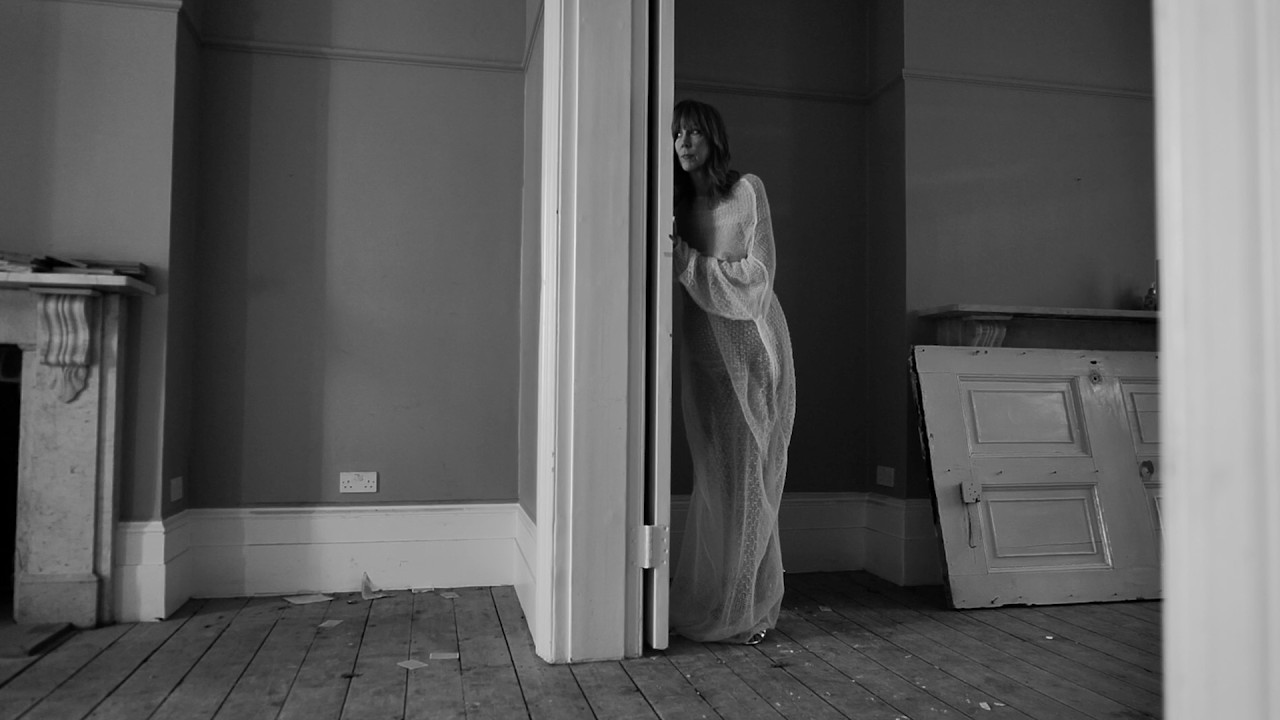
MR: That title track feels like a dark song, with its lyrics about grief, loss and love. There’s a great lyric in it: ‘I′m euphoric as a war, when I know who it is I'm fighting for…’
BO: ‘I’m euphoric as a war’ is one of the key lyrics. In the world that we live in, that just spoke to me. We have to watch what we’re fighting for.
MR: In the latter section of the song Cigarette Curls, didn’t your band create a live hip-hop beat in the studio?
BO: “Yeah - basically they were playing the song and then Sam Beste, Tom Herbert and Chris Vatalaro just moved into this groove, and I was keeping up with them. It was beautiful and it wasn’t entirely clear what was happening until I got home and listened to it.
“I was like, ‘How do we maintain that and build on it?’ Leo Abrahams did a beautiful and bizarre little [electric guitar] solo midway through the song and there’s also a cracking fuzz guitar solo [by Adrian Utley] at the end. It’s all these little moments that you don’t necessarily hear when you’re in the room, but when you get home, you have an incredible surprise.”
MR: The final song on the album, Otherside, is an uplifting, defiant and epic anthem about survival - making it through the night. It has some great gospel horns and strings, and it manages to sound like both Dusty In Memphis and Hey Jude, which is a neat trick to pull off…
BO: “That is such a compliment - you couldn’t have said a nicer thing. It came about as a little piano piece, and I was like, ‘Oh - this is going to be simple; nothing to see here…
“And then… I was working with Shahzad Ismaily, and he was playing along with a little bassline and then it opened the song up and I could see it going massive. So, I took it into the studio and by then I’d had this whole kind of Mott the Hoople revelation…”
MR: It does have a little something of All the Young Dudes about it…
BO: “I was like, ‘Bring that in - we could play with that…’ And there is Hey Jude, too…”
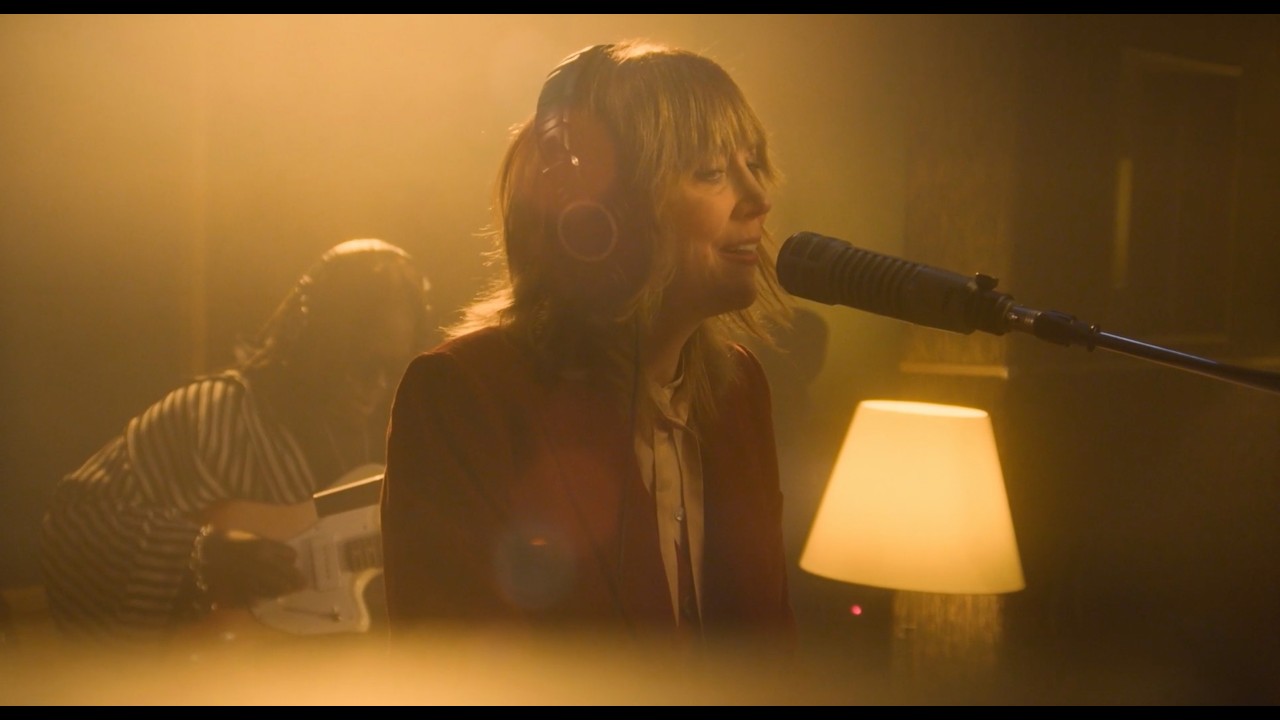
MR: The strings towards the end have an I Am the Walrus feel…
BO: “Exactly. That’s one of my favourite parts of the entire record. That was Paul Butler. I kept turning it up in the mix. I love that part.’’
MR: Let’s talk about some of the musicians on the new album. Tom Skinner and Tom Herbert both played on Weather Alive too - how did you first hook up with them?
BO: “I met Tom Skinner on tour 20 years ago, when I was touring Comfort of Strangers. He was in a band with Ted Barnes, who was my great collaborator for many years, and they were my support. We became great friends, and we’d tried to do various things over the years, but it didn’t happen.
“Then when I had the songs for Weather Alive, I reached out to him and said, ‘I think this could be something we could do together’.
“We started working remotely - I would send him a song, and he’d send me bits and pieces, and I would cut them up. He brought in Tom Herbert and Sam Beste for the recording sessions, and that whole record developed like a dream and in a beautiful kind of way, so I wanted to pull those musicians back [for the new record].
“Tom Skinner didn’t play on the record so much in the end, but Chris Vatalaro, who I’ve been touring with, did, and he’s an incredible musician. In America, I pulled together some musicians that I love and have worked with loads.”

MR: You also worked with guitarist Adrian Utley from Portishead…
BO: “He’s become a good friend. He just came in for a couple of days or maybe a day… It wasn’t always clear what was going on, but when I got home, I’d pull up the takes and I’d listen, and I’d be like f***ing hell, that’s incredible!’ or ‘My God - that’s beautiful’. There were these key moments that he created.”
MR: Like Weather Alive, the new record was self-produced. Do you like being in charge in the studio, or do you miss working with a producer?
BO: “On the first record, it just happened that way because of going into lockdown, and the results were good.
“Craig Silvey mixes the records, and that’s a huge deal. [With The Ground Above], my label was like, ‘Well, try it again - you have the songs, so give it a go’.
“I wrestled a bit with my intention around that - I didn’t want to make it an ego move and to be the big I am - but I wanted to try it again, to see if it was a fluke the first time around.
“It was a big task, but I enjoy the fact that I know what happens when I’m left to my own devices and I get to see the ideas through. If I was pushing for a certain sound or a drum part, or there was something that wasn’t quite right, if there was a producer in the room, they might be like, ‘It’s good enough’, and I would acquiesce, but because I put myself at the helm, I keep pushing for what I want.”
MR: The new album was recorded in London, New York and LA. After making most of Weather Alive remotely due to lockdown, how was it being back in the studio with musicians?
BO: “I had more freedom to skip around a bit and find other places to work - there was less remote recording, but I still did some work remotely. There was definitively more freedom. So, if I wanted to hear percussion, I could find Mauro Refosco in New York, and so on.”
MR: Paul Butler, who was in The Bees and has produced Michael Kiwanuka, recorded some horns, strings and woodwind for you in LA, right?
BO: “Yes - we worked remotely on that. I love Paul - he was wonderful. I took some photos of him, where he’s surrounded by all his instruments, in a circle.
“We’d have these wonderful phone calls and Zoom sessions where we’d just chat at different hours of the night and day. He sent me stuff, which I would sift through and pull out - it was a whole other dimension.”
MR: There are vintage synths on some of the tracks on the new album - Sam Beste plays a Synthex and Shahzad Ismaily is on a Juno…
BO: “In Shahzad’s studio, Figure 8 Recording, in Brooklyn, New York, he has a room of wild synths. I brought Sam there with me because I knew it would be a meeting of minds. I wanted to bring him and Shahzad together in a room, with this incredible selection of keyboards. I didn’t play them; I put Sam in the room with them and said, ‘just do your thing’.”

MR: You did play Fender Rhodes and Wurlitzer electric pianos on some of the new songs, though, right? How did that compare with playing your £300 upright piano from Camden Market?
BO: “My piano is incredible! It’s got a beautiful, warm tone - I’ve had felt built into it… The Rhodes is very different, and it has a different resonance. I love playing a Wurlitzer - in some ways, I would prefer to play it over a Rhodes, but, on this album, it was a Rhodes that was in the studio. I left the piano open to Sam as much as possible, so he could do his thing for the recording. I expected to go back on the piano more, but I ended up loving the Rhodes and staying with that.”
MR: As well as recording in various studios, you also record in your home studio, using a laptop. What’s your setup like?
BO: “I record demos and the albums in the same way. I have an [audio] interface, which I use to record when I work remotely, at night. That’s what I use to build the tracks.”
MR: Earlier, we talked about Otherside being a song about survival. It’s been 30 years since your debut album, Trailer Park. Do you feel like a survivor?
BO: “Yeah - there’s a lyric on Trailer Park that I can’t remember now, but it’s about wanting to do more than survive.
“I feel like it’s been a very twisty turny road, and I didn’t see me [still] being here making music. I didn’t see it as my life’s work, but it has become that, and I’m chuffed to pieces.
“Until this record [and the one before it], I found it quite hard to understand the me that made those [older] records, and the person I am now.
“In some ways, these two records have integrated me into all those [former] selves. The artwork on the new record is like ghost or spirit photography and with the video I made [for the single The Ground Above] it’s like the spirit of my younger self has joined me in this endeavour and that’s come through in the video and the photographs.”

MR: What keeps you pushing in new directions and taking risks? You’ve reinvented yourself a few times over the years…
BO: Had I been smart, I would’ve just done the one thing, like the bands who just do one thing over and over again and do it well. But, because I didn’t, I think, to some degree, I kind of sabotaged my earlier success. I couldn’t quite manage the whole pop thing - I wasn’t good with it.”
MR: After your third album, Daybreaker, you could’ve easily made another record that was in that mould, but instead you went to New York to work with producer and musician Jim O’Rourke and made Comfort of Strangers in two weeks, which was a left-field move…
BO: “Yeah. I think I got interested in the art of what I do. I just wanted to know about music, and I was more curious about the process of doing it than I was about the success of the process. I think that record was ahead of its time, and it confused people.
“At a certain point I realised that I wasn’t going to have that level of success [again] so I might as well just play with what I have, and I took a curious path, but it's been much more fulfilling.”
MR: Over the years, you’ve had so many collaborators. Do any of them stand out as favourites?
BO: “Definitely Jim O’Rourke - I loved working with him. Andrew Weatherall, Terry Callier and Dr. John too, and my bandmates - all those wonderful musicians I’ve worked with throughout my career who aren’t necessarily big names but have been life-changing experiences.”
MR: You had guitar lessons from Bert Jansch right?
BO: “Yeah - there was that; the old guitar lessons from Bert Jansch…”
MR: Is there anyone you’d like to collaborate with but haven’t had the chance? Have you got a wish list?
BO: “I’ve never had a wish list. It’s always been spontaneous. I guess Andrew Weatherall would’ve been on my wish list, but then I met him and it happened."

MR: With Weather Alive and The Ground Above, I think you’ve made the two best albums of your career. You can’t say that about many artists who’ve been recording for 30 years or more…
BO: “Thanks very much - that means a lot to me.”
Beth Orton’s The Ground Above is out on June 26 on Partisan Records. For more info and for live dates see Beth's official website
