


From the metropolitan cityscape of South London to the caves and coastlines of Cornwall, Laura Misch is channelling her environment into adventurously experimental music with saxophone, electronics and field recordings as her tools.
Rarely content to stay still – literally or sonically – the London-born composer, producer and saxophonist has spent close to a decade emulsifying jazz, electronica and ambient into a sound that’s entirely her own, pushing this singular vision further into uncharted terrain with every release and rapidly becoming one of contemporary music's most distinctive voices.
On Misch’s acclaimed albums Sample the Sky and Sample the Earth, she worked with wind-inspired saxophone, vocals and synths to create leftfield pop songs that reflected a deeply personal connection with the natural world. Her live process, meanwhile, was augmented by workshops and guided sound walks across Europe, where Misch invited participants to listen to the world microscopically through parabolic microphones, hydrophones and geophones.
On Misch's latest project, Lithic, she descends even deeper, journeying into caves, quarries and coastal edges to sculpt a record shaped by stone, water, lightning and wind. Produced alongside Matt Karmil, Lithic draws on deep listening practices, eco-acoustics and geology to treat sound itself as an ancient, living material.
When did you first encounter the saxophone and why pick that as your primary instrument?
“I was inspired by Lisa Simpson from The Simpsons because she was the only female saxophonist I really knew at the time, but I'd have to credit my saxophone teacher Simon Clark who used to run a horn section called the Kick Horns.
“They used to do horns for a lot of my favourite ‘90s pop bands like Sugababes, Kylie Minogue and S Club 7. They even did the kick horn on Beyonce’s Green Light. So my entry to saxophone was through a pop lineage where the horns were underneath and rising up to these big choral vocal moments. I wanted to go out and play saxophone and sing songs, but I knew that I had to use electronics, unless I went to some cave with a 20-second reverb.”
Talking of reverb, you explored using reverb pedals with saxophone quite early in your live shows?
“Before using a reverb pedal, I’d use a loop pedal - then I built an effects chain in Ableton using a reverb plugin. There's something I like about breathy wind instruments expanding through electronics, and I wanted to play a physical instrument and hear it morph and transform.
“Turning up the reverb and hearing the sound expand in my ears was magical. Then, of course, I got into pedals like the Strymon Big Sky, which sounds amazing when you play the saxophone through it; you can use your breath to get so many nuances and almost play it like a synthesizer in terms of the attack, sustain and decay.”
You broke through with your Sample the Sky LP in 2023. Not only did you complement saxophone with electronic beats and textures, but also the sound of nature…
“At that point, I was very much working from a home studio, so although field recordings were brought into the production, Sample the Sky was more of a studio album in that sense. My desire to connect with nature is a primal thing – some people absolutely love being in the city and don't have a need for that, but humans have only lived in cities for a tiny slice of their existence. Research shows that when we hear birdsong or have a 180-degree perception of what’s in front of us, we feel safe, because it signals to us that there are no predators nearby.
“As someone that’s struggled with anxiety and mental health, that’s always appealed to me and I love discovering pockets of nature in London along our railway lines or little community gardens. At the same time, I’m still drawn to the city and love the people and culture. I'm in the music industry and haven't left to live in a mountain, but I am interested in ecosystems, whether they’re wild or concrete jungles.”

When touring, you’ve striven to get closer to the communities you visit - why was that?
“There's a lot of questioning in my music. I practice using electronics, pedals, effects chains and programming mics to create ecosystems that I can play saxophone to and sing within, but I'm also curious about creating a sense of community.
“I was finding that touring wasn't a very enriching experience. I’d make an album, go on tour and play the shows, but I also wanted to absorb the different cultures that I was visiting. I got quite burned out from my previous tours, so I got some government funding to tour internationally, and instead of doing loads of dates I only did five and set up workshops in-between to ground and connect with the audiences.
“For me, music is a bit like cooking food – it’s a human necessity that enriches my life, but I'm curious about how that can be ignited or demystified in other people - especially in electronic music where people are like, ‘Oh, what's in that box?’ We live in a time where people are addicted to their phones and real-life music communities are suffering because so much is pushed online. The internet's incredible, but I think you also need to invest in people.”
How do these community workshops operate in a practical sense?
“We went to Paris, Amsterdam, Copenhagen and Berlin, so I’d book to play a show and the next day we’d host a workshop, usually in the venue we played at or another space. After having severe burnout from touring, I was curious about this idea of slowness, sound, our natural environment and how we can retune. So we’d set up these sound walks inspired by the experimental musician Pauline Oliveros, who developed a form of listening that was almost like a meditation.
“The idea is that you do different listening exercises that are tuned to the sounds around you. For example, in a city you're bombarded with sirens and I find that can really overstimulate my brain, so I'll start humming along and improvising with the sirens. For me, that disarms their power. It’s about finding techniques to exist within a sonically intense industrial city.
“It connects back to this idea of how we can reconnect with nature through listening and sound, which veers into an acoustic ecology practice. I'd say that a lot of the lyricism on this new album was inspired by conversations that happened in those workshops too. When you host a workshop about slowness and sound, most people have a story about being burnt out, so encouraging people to share ideas and listen through creativity feels really exciting to me.”
Can you give an example of a typical sound walk?
“I'd read this book by David George Haskell about the evolution of sound called Sounds Wild and Broken. He talks about the beginning of earth and how before you had creatures, flora and fauna there was just the sound of air, water and stone to soundtrack the history of evolution.

Best field recorders 2026: Top portable recorders for capturing sound on-the-go
“I’d start with this very condensed and deep time journey for about 20 minutes and try to get everyone to think about sound on earth, before going forward to the first instrument that we have records of, which are bone flutes. When I'm playing with an Akai MIDI controller, Strymon pedal, laptop interface and a microphone, those metal alloys are still fossil energy. The materials produce air vibrations and it's all interconnected, so everyone would just lie back and relax into the space.
“Then we'd go on a sound walk and I’d bring a parabolic microphone, which is often used for recording birds, but it's a big shield that allows people to hear high frequencies and examine the world microscopically. For people who've never heard the world through a microscope, it's really quite altering because you can hear things that the human ear can't necessarily detect.
“I also take other mics, like geophones and hydrophones that you put in the water and soil to measure vibrations and I'm interested in getting people to use those tools while talking about my improvisational process or how a track came to be inspired by a walk I did.”

These experiences naturally led to the creation of your latest LP, Lithic, and the collation of various field recordings at caves and coastal edges. What were you using to record and what were you looking for – or was part of the fun not knowing?
“I borrowed some friends' gear, which is all quite expensive. It was a geophone, a hydrophone and then just a stereo mic and a parabolic mic. I went to Cornwall and told my label I was going to make a rock album – as in made of rocks. I wanted to go to a slate quarry and collect all these isolated slate noises, like the polyrhythmic percussion of a rock rolling down a hill. Then I thought about hanging a chime in a tree and recording the wind blowing it or playing my saxophone in caves or in response to tree rustle.
“These ways of improvising with the elements are really fun when you let yourself do them, but if I'm honest the weather was really horrendous a lot of the time and I had to surrender to it and get bashed about by storms!”
Were you inspired by the field recordings at the point of capturing them or was it more about sample collecting with a vague idea of what those sounds might later be used for?
“Sometimes I go out with something in mind and collect them, but you often can't because the weather's doing its own thing or you'd be recording a waterfall and a bird sound would suddenly become more interesting. There’s a song on the album called Kairos where the outro is just an improvisation that I recorded. I was playing a Shruti drone and my saxophone, sitting in a tree house hearing the leaves rustle and just used the raw recording.”
Field recordings are only part of your sound. Tell us about the electronic component of your music?
“Sometimes a field recording sounds amazing, but when you listen back it's not as good as your human experience of it. That's where I feel like electronics are really useful, because you can take things to their edges and even go into the surreal, beyond perceptible reverb, and pitch things way below how we can sing them.
“That sense of freedom is quite psychedelic and that's what I love about electronics. Sometimes I'm playing in a natural cave and you can hear the reverb of the space, but I’ll later imitate that through a Strymon pedal because it’s more accurate to the actual feeling.”

Does the saxophone take more of a back seat on Lithic, or are you simply processing it in a more subtle or textural way?
“I'm really processing it, so a lot of the time the saxophone is running through an effects chain of delays until it starts to drone, essentially. The beginning of Kairos sounds like a tremolating synth, but it's just layers of saxophone. In many ways, the saxophone became a synth on this record. People like to go out and play guitar and sing, but I just want to be able to go out and play saxophone and sing, so I'm desperate to make my saxophone sound like a synth! [laughs].
“A big part of why I'm moving towards this way of creating is because it gives me all these memories and lived experiences. It took a lot more time, was probably more expensive and took way more energy, but I feel like Lithic’s full of life experience, and a slow way of crafting something that I really cherish. I made a project before Sample the Sky called Lone City, which was all done in-the-box, where I was just foraging online for sounds and using Splice, but I didn't have any connected memories with those sounds.”
Does Ableton play a central role in your organisation and arrangement of audio?
“I started using Ableton because of the live integration and I like to play with pre-programmed mics, but I find Logic more pleasing to the eye. It's more tactile, whereas Ableton feels a bit like a spreadsheet. What I love about Ableton is that you can create your own effects chains and reorganise things in different ways. I can essentially build a custom pedalboard in it, although I do love hardware too.
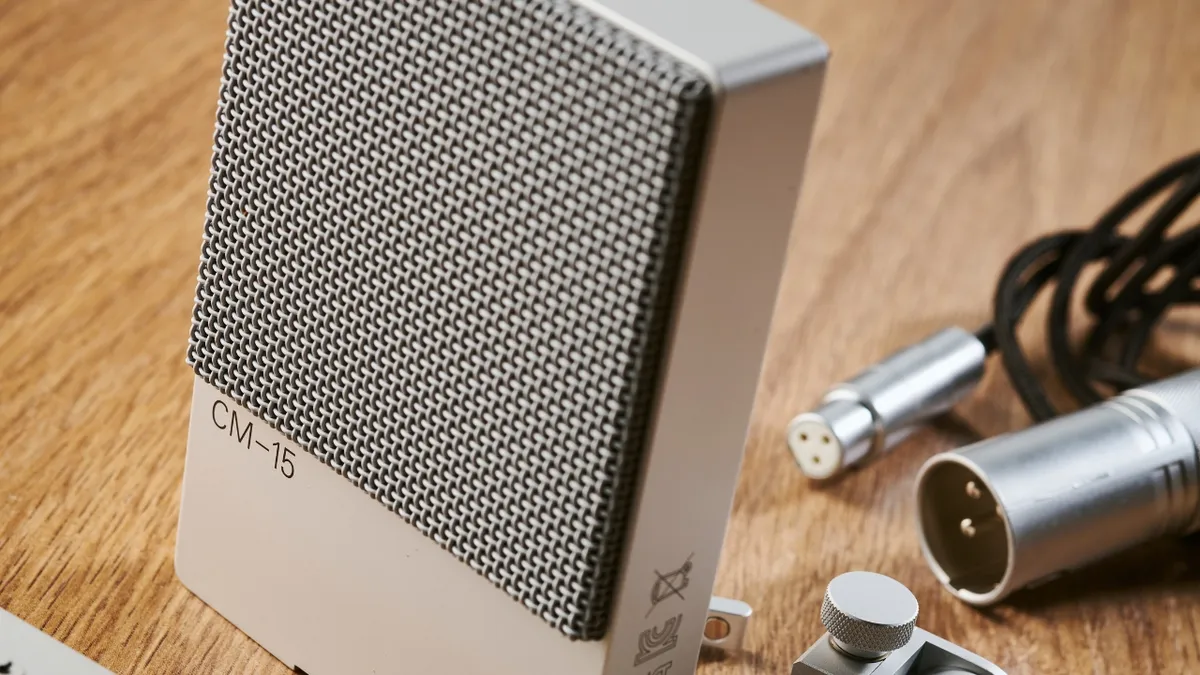
“A lot of what I'm considering going forward relates to how mobile these setups can be and whether I can go up a mountain with them. Ableton has a lot of customisable power, but I appreciate the craftsmanship of a Strymon pedal and I'm very curious about the Teenage Engineering field kit stuff like the TP-7 or CM-15, which I believe is the world's first microphone with a built-in preamp and its own power supply. They’re really expensive, but I can imagine mounting them in a jacket and using them with just a saxophone, a speaker and a laptop in a backpack.”
Are you using any sound design or third-party plugins to add effects or transform the material in some way?
“I use a lot of Soundtoys plugins because they have really exciting possibilities. For example, I love Crystallizer because it makes my sax sound like birds are chirping and their Tremolator plugin is another really exciting toolbox. I really love using Life by XLN Audio as a quickfire tool. It’s a generative beat maker, so you can put in a field recording and it will bring up very interesting patterns.
“I use Valhalla on my vocals and really like it as a reverb and I’ve recently been getting more into experimental electronics, like the KOMA Elektronik Chromaplane, which is an electromagnetic instrument with two pickups that you play a bit like a theremin. I'm really interested in gestural performance, especially as I don't always want to be glued to a screen. I love Imogen Heap’s Mimu gloves – she's a big inspiration who’s paved the way for such interesting forms of expression.”

When you're modifying the samples that you’ve collected, you presumably need to be careful not to let them lose their essence?
“Yeah, that's a brilliant point. I’d collected all these field recordings of rocks and was trying to make ‘rock’ beats, but the processing was making them lose their tonal quality. I ended up working with a live drummer called Matt Davies who tracked over the field recording samples to retain their innate organic rhythm.
“I just thought, ‘what this needs is someone playing a goat-skin drum’, and that’s another aspect that I feel really curious to keep exploring. I'm a real geek, as you can see!”
Were you running individual sounds through tape or using it to give the whole recording some form of saturation?
“The album was mixed by Matt Karmil at Brewery Studios in Berlin. He has this big tape machine so we could mix individual stems, but we ran the whole album through the master tape as well. Since then, I found an old Nagra E on eBay that people use for reporting in the field. It's mono and has very few features, but I've been recording saxophone straight into that and it sounds amazing.”
We understand the track Echoes is based on the sound of female lemurs and We Will Rock You by Queen?
“I was basically soundtracking a Radio 4 documentary about lemurs – particularly the female lemur’s song because, unlike the males, they improvise rather than directly communicate. Scientists were analysing them and their voices are very complex and polyrhythmic and one sounded like We Will Rock You, so I was imitating them on the saxophone and using the keys as percussion to the song’s theme. I loved it so much that I translated that into the album.”
You worked with an eco-social design studio, Holobiont, to plant your music back into the environments that inspire you. What did that involve?
“That was for the Sample the Sky album. I’d been walking a lot in these very small pockets of woodland in South London and wanted to take people back into the forest to hear the music. So instead of doing traditional marketing, we did a walk where I'd play saxophone, lead people through the forest and my friend Maria would sit playing the harp and I'd improvise with her. Basically, everyone would sit around and we'd play these acoustic versions of the album in the middle of the forest - that's what I mean by ‘planting’.”