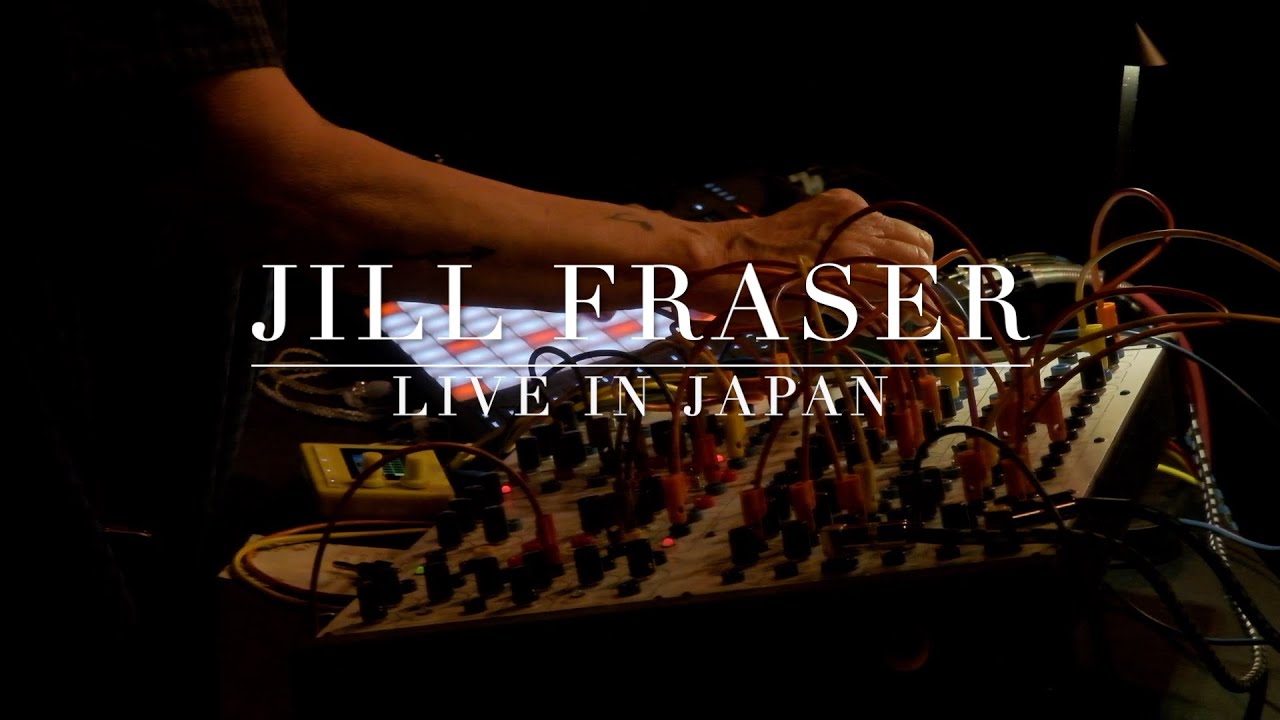
SYNTH WEEK 2026: Since the seventies, American composer and electronics aficionado Jill Fraser has created her own lane of musical experimentation and creativity.
Mentored by Morton Subotnick, the synth polymath behind Silver Apples to the Moon, Jill also studied with Mel Powell and Earle Brown at CalArts and attended masterclasses with a variety of auteurs, including John Cage and Lou Harrison.
Her experiences with synthesis led to the development of a unique modular system at Hollywood’s Serge Modular Music before working within film scores, soundtracks and live performances.
Jill’s CV is an eclectic one, taking her synthesizers to punk shows with Henry Rollins and Minutemen alongside composing music for films including Paul Schrader’s Hardcore.
While Jill has created music for hundreds of television ads, most recently she released the album, Earthly Pleasures, and took herself onto the live stage.
The album finds her utilising a custom-built Serge synthesiser, a Prism Modular, and Ableton Push 3 to reinterpret hymns and choruses of the late 19th and early 20th century.
In our new interview, to mark MusicRadar’s Synth Week 2026, Jill shares how her musical journey has been informed by a singular obsession with synthesizers, goes into multiple career highlights and details how she has carved out a creative space in a male-dominated space

MusicRadar: To begin with, how did you start your musical journey? Who were the first contemporary music makers and composers you came across?
Jill Fraser: “When I was little my mom was taking piano lessons. Apparently I made a big fuss because I wanted to play too, I was annoying.
“Her piano teacher, who had been a piano player for the silent movies, brought me colouring books with musical notes to try and keep me busy and they decided to give me piano lessons when I was five years old. This teacher started me writing out notes right away so composing was as natural as playing. The first time I was aware of contemporary music was when another teacher showed me Henry Cowell. Using your whole forearm on the piano to play clusters was the gateway to contemporary music for me.
“Later, one of the music professors at the university where my father taught allowed me to sit in his classes where I heard Varese, Legeti, Schoenberg and many more.”
MR: When did you first hear Morton Subotnick? And what was it about him and his music that you found so interesting?
JF: “I first heard Silver Apples of the Moon probably around 1970 and I was completely smitten - first of all the panning and the movement of the sound was something I had never really thought about before, and the gestures - so musical and elegant.
“I thought it was amazing and then tried to hear him whenever he came to the East Coast and I could find a way there. I made little tapes and would ask him to listen to them, he was very kind and suggested I consider CalArts.”
MR: So he was your tutor at CalArts?
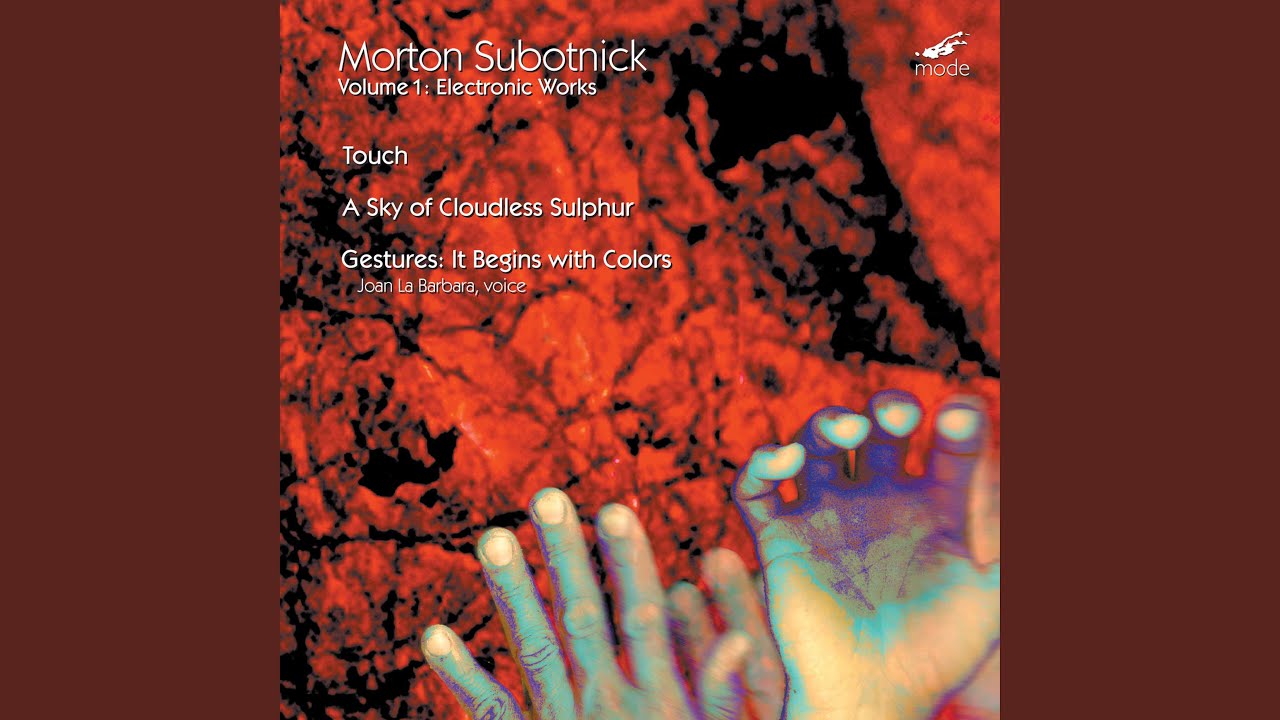
JF: “Yes, he was my mentor. Still is. He made it possible for me to attend CalArts (setting up financial aid) and I was his teaching assistant. Also he helped get me my first studio gig when I graduated. In those days it was CalArts policy that the faculty had to be working artists and the idea was that you not only had classes but learned by observing how they worked. It was certainly true for me studying with Mort, I worked for him after graduation and did some of the first control tracks for his piece, A Sky of Cloudless Sulphur."
MR: I’d love to know about your time at Serge Modular Music - how did you get the job there?
JF: “After graduating from CalArts some of us worked at Serge’s in Hollywood. I can’t remember who actually told me about it or how I contacted Serge, but I worked there for a couple of years. It was a wonderful experience, not just for the opportunity to build my first modular but the camaraderie that we had working together. We talked about music as we worked all day every day, everyone had their own music projects going on and were completely immersed in that world. It was certainly the salad days of electronic music.”
MR: Could you talk about how you built your first modular synth set up there? What was the inspiration to do this? And how did you find the process? What were the challenges with it?
JF: “The inspiration was that it was a necessity to have my own equipment and that stuff was really expensive. Serge allowed us to take our pay in money or in modules, so I took as little as I could to live on and the rest in modules. My system evolved over the time I was there, partially by what modules interested me at the moment and also what was available.
“At the same time I was continually cold calling producers and film studios trying to get a foot in the door and also other session players who would occasionally send me in as a sub. I worked for one keyboard player patching his modular for his sessions.”

MR: You've worked on scores like Cruisin' and Hardcore alongside many other film and TV projects, what was your process like on these films? How has this process evolved today?
JF: “My first sessions were with composer Jack Nitzsche. On Hardcore, which was 1979, he had called CalArts and wanted Mort to do electronic music, but Mort was busy and asked me if I wanted to do it instead.
“I did not have much gear at that point but it was summer and school was not in session so I rented the Buchla from CalArts and brought it down to the Warner Bros lot in Burbank.
“Later on other films, I had my own Serge system among other synths and we would talk about what sounds he wanted, then I’d patch up my Serge and move into whatever studio we were working at for several days or a week or so. I did this on many sessions for years. When I started to do more composing independently it was more prep time in advance, sending my sketches on cassette to the producer ahead of time and then a final session in a studio. Now it’s all about personal studios and although I love mine, I do miss going out to big studios with multiple rooms and a staff, not to mention the cool people you’d bump into in the hall.”
MR: Do you have a different process when approaching an ad when compared with a film?
JF: “Advertising is fast. Movies can take months to score and it’s a different kind of commitment. Also, the attention to detail in commercials is insane, I might ‘hit’ 10-15 different actions on the screen in 0:30 seconds in a commercial, whereas in a movie you are looking to create a mood over a much longer time.
“I enjoy the technical challenge of closely scoring the action in commercials, I did mostly car spots so there were lots of opportunities for drama, but in a very compressed timeframe. But with movies, you delve into the characters so deeply and really develop their musical personalities and they can transform over time in the story. In all the mediums, the music’s job is to create the audience’s emotional response and direct the audience’s transformation as the story unfolds.”

MR: Are there any scores that you see as creative highlights?
JF: “Some of the early commercials I did for Porsche and then later for Lexus I feel like I was really able to do some music that stretched the normal idea of commercial music.
“Sometimes advertising allows for experimentation because they are looking to catch the audience's attention. When I was working on Personal Best, they rented a Fairlight for me and I made some cues out of samples of Redwood trees creaking in the wind that Jack Nitzsche had recorded, unfortunately a lot of that didn’t make it into the film - another story, but the sounds were so good.
MR: Do you have a favourite synth? And if so, what is it and why do you love it?
JF: “I’d have to say my Serge that I built back in 1978-79ish because I’ve used it continuously since then, and I really love the new two panel Serge system that Skyler King at Prism built for me that I’m performing with now.
“It’s basically a reissue/reinterpretation of the 1973 Serge modules. That machine is really sounding fantastic. I still also really love my Yamaha TX816 rack - the bells and plucks are unmatched. I have a 1010music Lemondrop that I’m having a lot of fun with and is part of my live rig. It does granular synthesis and I load it up with my own samples, mostly vocals or odd things like the sound of the New York Stock Exchange.
MR: How did your album Earthly Pleasures come about? What was the impetus behind this collection of music?
JF: “I had this idea that what if some far distant future civilisation or AI or computer found an old hymnal. Looking at this simple music language what would they make of the five lines with all the dots? How would they interpret this very simple data language that we call music notation? Would the end result of their interpretation retain any of the intention that created the original hymns?
“Would there still be a sense of hope, resolve, love, salvation? That’s the fantasy I started with in my mind and I looked for hymns from the late 1800s-early 1900s, and when I could I used hymns by women. Sometimes I slowed them way down, sometimes I picked one note, then two notes, then three notes or sometimes the computer hops around trying to decide which note is which.
“Then from there, I tweaked and pushed notes around until I was happy with the sound. I think, because I’m an old film composer, I like to have some kind of scenario or fantasy I’ve made up in my head to propel the creative process.

MR: What kind of gear did you use on the record? I believe you used Ableton Live as part of the production process?
JF: “Yes, I used Ableton Live and a Push 3, my Serge systems, Yamaha TX816 and sound effects I recorded and sampled."
MR: The studio world has long been one dominated by men - has this gender imbalance changed over the years?
JF: “One thing that has changed is that there are more women in positions of power and they are becoming more likely to hire and trust other women. You have to remember that when I started, it was considered a fair conversation whether a woman actually could compose music at all!
“One of the biggest hurdles was that composing requires trust from your employer and as a woman that could be very very difficult. I might have a really great idea, something that was beautiful and clearly worked with the picture, but if someone on the team is going to second guess me then it’s likely not to happen.
"So, first you have to get the job and then they have to trust you enough to let you do it before you can really create something great. I think that is easier now than it was when I started out. In advertising there were always more women in creative positions of power and there were several who hired me and trusted me and we were able to do very good work together.
“It’s a complex situation for women with composing and for me, synthesizers and electronics allowed me to have a huge colour palette that was not dependent on convincing an orchestra to play my music."

MR: Do you have any thoughts on AI in music-making? Have you experimented with it at all?
JF: “I’ve checked out some of the LLMs and Suno but haven’t actually done anything musical. I’m not sure that I will, just because writing prompts and using words to get a musical result feels unnatural.
“I’m not a word/verbally oriented person and I’d rather just play something than write prompts in an effort to get a result. I don’t even like to describe my music and ugh, writing prompts feels like work. I’m fluent in music, not words. I’m concerned that we will give up our musical literacy.
“And I’m also concerned that the low beginner level jobs are the ones that will be lost to AI. It’s that entry level work where you really hone your skills and losing that experience results in the dumbing down of the whole craft. I’ve seen lots of impressive visual work come out of AI but so far not much new or interesting music. We’ll see. I’m not going to be a snob about it."
MR: What does the future have in store for you and your music?
JF: “I’m loving doing shows right now. I’ve been completely in the background my whole life and right now I’m delighted to play to an audience and see an immediate response. I’ve spent my life using music to create an emotional soundtrack, to manipulate the feelings of an audience I never met and now I’m meeting them and playing in real life. I'm having a blast and I hope I get to keep doing it!”