


London-based electronic musician Jasper Tygner’s debut album Blue draws its inspiration from the melancholy magic of the “blue hour”, that liminal space between nighttime and sunrise when the sky takes on a deep and moody hue and the world begins rising from its slumber.
“I wanted it to sound like you're on a bus at 4am,” he says. “You're looking out the window and it's slightly fogged up, you see street lights going past and it's kind of blue outside. It’s about that moment between places, when you’re halfway home, half-asleep, and the world feels both endless and small.”
Across evocative tracks like Dawn and First Light, Tygner captures the energy of a late-night journey home with rising synths that echo the sound of the rave he left behind. Recalling artists like Jon Hopkins and Floating Points in his ability to balance emotive melodies and cinematic textures with kinetic club rhythms, Tygner’s debut album has singled him out as one of electronic music’s most promising new voices.
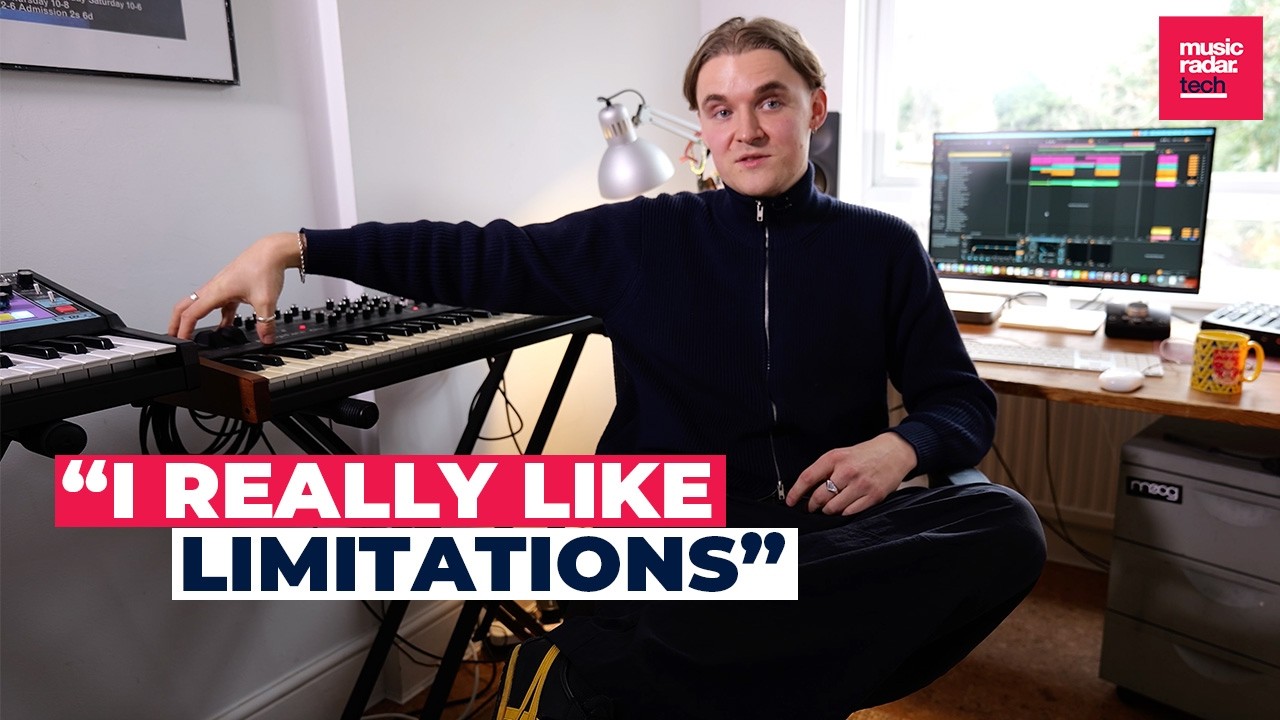
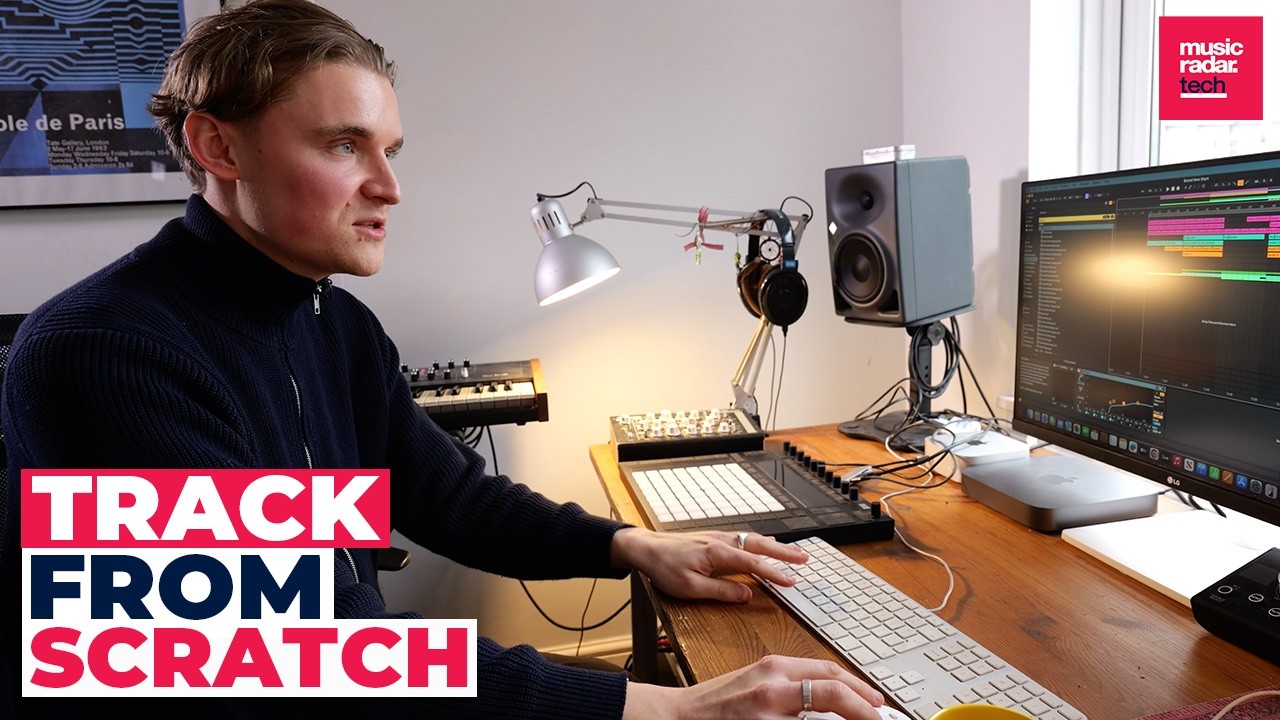
We visited Tygner in his South London home studio to find out more about his journey into music production, his penchant for hardware synths, and the making of Blue.
How did you get into electronic music-making?
“I started making music when I was about 17 or 18, and I just had a basic MacBook Pro. I was using Logic at the time, a lot of the ES2 synthesizer, basically. I didn't have much equipment back then, it was just really basic stuff. I went to university and I studied Music Technology at Guildhall, and then I bought my Prophet-8 when I was there and I’ve lived with it ever since.
“At the start, it was just me and the computer, and then when I bought the Prophet-8, I fell into this world of synthesizers and I loved it. The reason I bought it was because I saw a video where James Blake had one. I was like, ‘I have to have it if he's got it!’ I was looking through all these synthesizers at the time, and this felt like the right one. I didn't really know anything about it, so I kind of struck gold, I guess, with what I got. And I still use it on every record, I used it on everything I've made at university and since. I love it.
“The second synth I bought was an Arturia MiniBrute, which I loved, but I sold it to my friend because I wanted to buy the Moog Grandmother, because it was a bit simpler, I guess. And I really like synthesizers that are one-knob-per-function, I don't really want to be menu-diving.
“Even with the Grandmother, I don't care about saving patches – the whole point is that you come into the studio the next day and you can't remember what you had the day before. I really like that. I like creating everything from scratch.”
What was your creative vision for the new project?
“Honestly, right at the start, I had no idea what I wanted to do. It was just months of playing around, basically. The way I work is just to make and see what comes out, and then attach a story later. The story really started when I had a session with Duskus, and we were kind of just chatting through how we made music and stories that we wanted to tell. We both make music pretty similarly, imagining textures and small stories, rather than attaching emotion there and then.
“We wanted to make a track and we wanted it to sound like you're on a bus at 4am. It's not a city, and it's not the countryside, you're somewhere in between, and you're looking out the window and it's slightly fogged up, and you see street lights going past, and it's kind of blue outside. And then from there, I was transfixed by this 4AM blue hour; you're not in a club, it's not dance music, but it's not something that you're listening to in the day. It's some weird in-between hour.”
Tell us about a piece of gear that played a pivotal role in the album’s creation?
“This Vermona RetroVerb, I borrowed it off my musical director a few months into the project. It basically lives on my desk now. I wanted something to sound less like I was just plugging my synth directly into my computer, and just to add a little bit… you can get pretty dirty and gritty with it, but you can also be pretty subtle with it as well. There’s a spring reverb in there, so I was just messing around, just adding a tiny bit of spring reverb in, and it just elevates the sound of the Prophet or the Moog just a tiny bit.
“I just wanted them to feel more organic, I guess, and to have those more organic flavours, so it wasn't just electronics. I want to ‘humanify’ the synthesizers as much as possible, and I think putting them through a tiny bit of distortion and a tiny bit of spring reverb – especially as a spring reverb is physical – that humanizes the sound even more.”
When did you switch over to Ableton Live as your main DAW?
“I was producing for an artist called Carmody at the time, and we were going on tour supporting Tom Misch and she was like, ‘can we do this live?’ So I downloaded Ableton and just slowly figured it out. At the time, I didn't know what I was doing, so I had the Ableton Push and I was just using a Drum Rack and holding down parts of the song that I wanted to play… but if I lifted my finger, it would slowly die out. [laughs]
“I then kind of started doing other sessions and said to the people, ‘I just want to use Ableton. It's going to be slow, because I don't really know what I'm doing with it’. It’s just slowly become my DAW of choice. Especially from an audio point of view, because I commit to audio really early, it's so much more powerful and quick to just get small tasks done.”
Do you ever use any software synths?
“I’ve got a bundle of Arturia synths, but I don’t use them that much. There's some things that soft synths are good at, pads and stuff like that. But there's something about the attack on the Moog, the Grandmother or the Matriarch, it’s got this click, this little bite that you just don't get with soft synths.
“Because I come from a playing background, I like to be able to play the instruments live. There's something about being able to touch only two or three things quickly at the same time which limits you, and I really like those limitations of only being able to do a couple things at the same time. With a soft synth, you can just automate anything for however long, but there's something kind of organic about just being able to play it yourself.”

Tell us about a few of your favourite effects plugins?
“All the Soundtoys stuff is all over my production. The Devil-Loc is on pretty much all my melodies and my drums. They're so good, because you can just load one up and it's instantly nice. My workflow is quite quick, so I don't really want to be tuning things too much or going into too much detail at the start, and their stuff is just brilliant.
“Also the Valhalla reverb, the VintageVerb, the first preset that loads up, Concert Room ‘70s. I've tried a lot of the other algorithms on there and that one is my favourite. I think that ease of use with the Soundtoys and with the Valhalla is really crucial when you're creating ideas. Obviously, you go back and edit them after and play with them, but just to have that instant gratification of making something sound good so that you can get that idea down, that's my prime focus.”
Did you experiment with any new techniques on this project?
“For this project, I really focused on structure, that was the main goal: to not just have ABAB, and to take things to a slightly different place. I would often draw on a notepad how I wanted a song to be structured; there's a track called Look Back, and I just wanted the whole thing to grow the whole time, rather than having stop points. Before this album, I was very much locked into a certain structure, because that's what I thought sounded good, but in this project I wanted to slightly rip it up and structure songs differently.”
Can you tell us about the vocal processing on the track Phase?
“For the vocals in that, I put them all through this Sherman Filterbank that my musical director told me to buy. I would then copy that down and pitch that differently, especially with the Soundtoys Little AlterBoy plugin.
“I was automating a lot of the formant-shifting on AlterBoy on that track to emulate some of those ‘90s garage tracks, where they'd have pitched- down vocals that would then switch to pitched-up vocals and stuff like that. But I just wanted it to be a bit more organic and grotty and grungy, so I would send it through the Sherman and play with the filter on that and use some of the FM stuff with AlterBoy on top of it.”
There’s a real sense of space and atmosphere in your music, especially on tracks like Dawn. Tell us about how you achieve that in the studio?
“That was the first track I made after realizing what the vibe of the record was going to be. I was in the studio with this producer called Ollie Bayston, and we'd made this one track which was okay, and it was like the end of the day, and we were like, ‘should we just make one more?’ He had this Prophet-10, and he hit some notes that went through a couple of reverb pedals, and we captured that, then it all came so quickly.
“We were both just imagining that 4am dawn, and that's why we call it Dawn, because we wanted to emulate the sun coming up over the horizon. That was a really easy process making that song, because it came within three hours, and those chords were basically the first thing I played. We committed so early to audio that we then had to use effects to make that initial four-bar loop get bigger and bigger and bigger. There were a lot of effects going on on that track to kind of move things in a different way, upwards or downwards.”
Do you experiment with new gear often or do you tend to stick with what you know?
“I've been slowly, slowly building up the studio, and usually with each project, I'll buy one new thing. The Prophet is such a mainstay, because it's right next to me, I love it and I know exactly what I can use it for. But that's why, on this project, I wanted to up the game with it slightly, adding the RetroVerb and adding the Sherman just to, just to add grit, and just to, like, change how these instruments are played.
“They’re such powerful synths, and I don't know if I want to add too many more synths. I quite like having just a couple of instruments, and then what I'm doing now is finding ways to affect those instruments before they go into the computer. That’s kind of how I've approached the album – rather than buying loads more gear and then only using it for tiny things, how can I use the gear that I have and affect that in a different way?”
