


Jam Pedals and Stu Mackenzie have joined forces for an overdrive/distortion pedal that unlocks the small-amp magic of his King Gizzard and the Lizard Wizard electric guitar tone.
The Tiny Amp Destroyer is inspired by Mackenzie’s utterly unorthodox setup, in which he drives a 30-dollar pawnshop guitar amp with a boost pedal and cleans it up by rolling his volume knob back. It’s the sound you hear on albums such as Flight b741, where these poor little amplifiers – in various stages of distress – yield hot yet boxy tones that sound great on a record.
In a sense, Mackenzie’s approach is straight out of the Recording Guitar: 101, in which a small amp, typically a compact tube amp combo such as the Fender Champ, would play a starring roll. Stick a mic in front of it and your good to go. Well, Mackenzie’s amp choices are not a champ.
He got the idea for using the cheapest, nastiest, and smallest solid-state practice amps he could find when giving guitar lessons.
“I used to teach guitar. I used to teach kids and teenagers when I was a teenager myself,” he told Total Guitar in 2024. “People would always come in with these tiny amps, just the classic thirty-dollar amps you can buy at the pawnshop. It’s just the cheapest way to get started with electric guitar, and sometimes these things would sound amazing if you cranked them up loud enough.”
Mackenzie went down to the shops and got himself around eight of these little amps, paying between 20 and 30 dollars for each of them. Turning them up until they suffer is how you get them to play nice. If they break, well, that’s 30 bucks. No biggie.
“You crank them up to a place where they are not supposed to go, and they are distorting when they are on the clean channel… That is awesome to me,” he continued. “A lot of the time it’s the speaker that’s distorting, and there’s something rattling that is not supposed to be rattling, but it’s all harmonics and everything. I am hugely into that.”
The Tiny Amp Destroyer is not an amp in a box in the strictest sense, like how Peavey put the Decade into a preamp pedal to tap into the rush to nail Josh Homme’s tone. “TAD is not an amp in a box,” explains Jam Pedals. “It is the sound of the box losing the fight.”
But it combines the sounds of these transistorised budget amps with a treble booster, presenting them as two independent but stackable drive stages, with a third footswitch activating a treble booster that’s voiced after Jam Pedals’ Rooster.
“It tightens the low end, sharpens the attack and changes how both drive stages respond,” says the Greek effects brand.
There are all kinds of controls for shaping your sound. It might have been inspired by Mackenzie’s rig but it does a lot more. Think of it has two gain voicings, both unruly, one hotter than the other, with Magic and Notch controls for allowing you to dial up the instability or dial in some more conventional drive.
"It makes your massive amp sound tiny, and it's just way better," says Mackenzie.
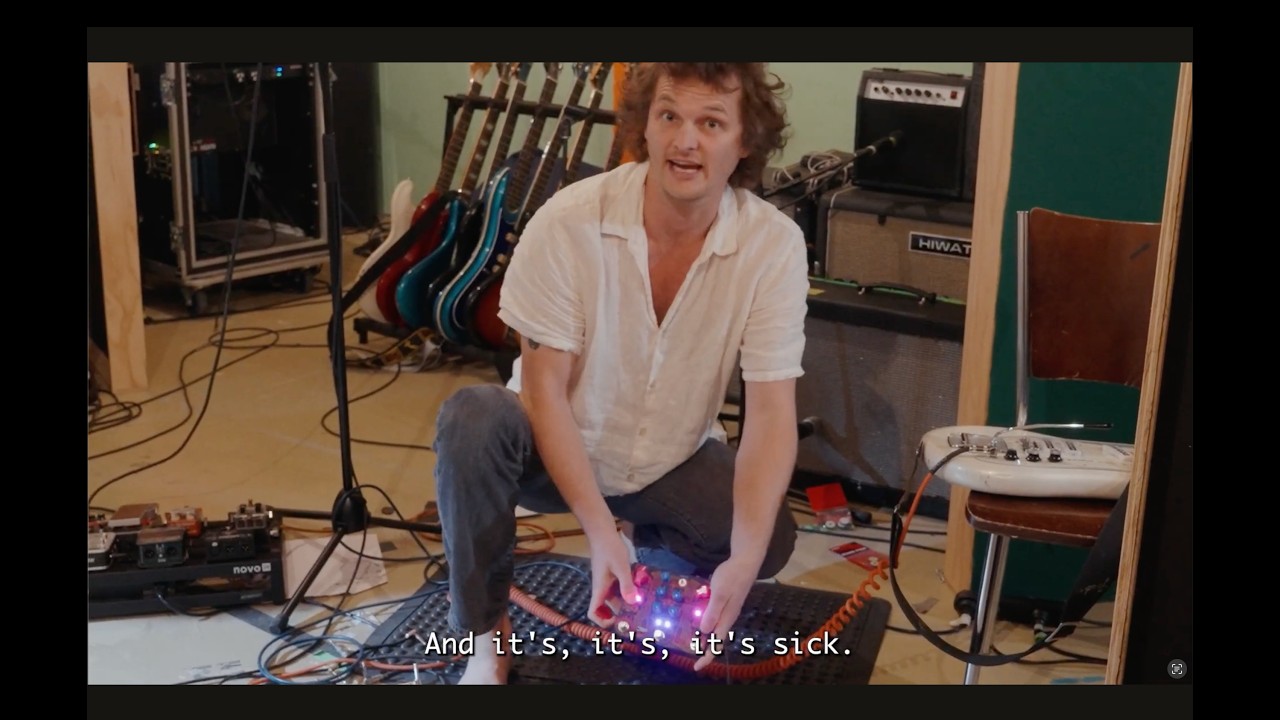
The first batch of these pedals is sold out — as is the second batch. But more will be coming in late August, early September.
Priced £319/$399, the Tiny Amp Destroyer is available now. Head over to Jam Pedals for more.
