She’s called it her favourite song on her latest album, You Seem Pretty Sad For A Girl So In Love, and now Olivia Rodrigo has been breaking down the writing and production process behind The Cure.
Speaking to the Song Exploder podcast, Rodrigo revealed that she got the confidence to write the song from a conversation she had with a friend while she was sitting next to him in his Jeep.
“I was talking to him, and I was just like, you know, I'm making this record, and I'm in love, and I love this person, and I'm just so miserable so much of the time. I'm very unhappy, and I was like, ‘I just want to write love songs,’ and I remember him expressly telling me, he's like, ‘You have to write about how you're actually feeling. You can't pretend to write a certain way. You can't write in the way that you think you're supposed to feel.”
And so the theme of the song – that you can be in love with someone yet remain unfulfilled – was set, and a few days later, Rodrigo began writing what could become The Cure on her couch with an acoustic guitar.
“I'm not great at guitar,” she admits, but her lack of skill turned out to be a benefit in this case.
“I was trying to play a chord and I played it wrong. I messed up where my fingers were, but it actually just sounded cool. And I was like, ‘Oh, that's great!’ A wonderful thing about being a novice is sometimes you make a happy accident.”
We get to hear an early Voice Memo version of the first draft of the song that Rodrigo came up with, though she refuses to play the “bad chorus” she originally wrote.
No matter, because when Rodrigo took the song to her co-writer and producer Dan Nigro, who’s also interviewed in the Song Exploder episode, the pair of them managed to figure out something better – and a bridge, too.
Getting on to the nuts and bolts of the actual recording, Nigro says that rather than recording the acoustic guitar ‘correctly’, he just used what was in front of him in his studio.
“These two microphones that are up on my piano were there,” he says. “And instead of micing the guitar properly, I literally just stood on the piano bench and played the guitar into the two piano mics. It was a really like rough take, and then [Olivia] recorded her vocals to my guitar.”
Those vocals were double-tracked – not a trick that Rodrigo and Nigro have explored much in the past – and deliberately kept as raw as possible. “There's no Auto-Tune, and there's no Melodyning or anything,” says Nigro. “They're just her vocal tracks; they kind of rub a little bit in spaces [and] that makes it feel unsettling. And I feel like as much as we have all the modern tools that we can, like, make a vocal feel perfect, it felt imperfectly perfect.”
There was just one problem, though: Nigro had recorded the guitar part that Rodrigo sung to in such haste that he’d forgotten to get his instrument in tune. “My guitar is actually about 15 to 20 cents sharp, and so I ended up having to tune every other instrument to the guitar and the vocal because I didn't want to mess with it,” he says. “When I played the piano, because the piano was actually in tune, I had to Melodyne the piano to be in tune with the guitar.”
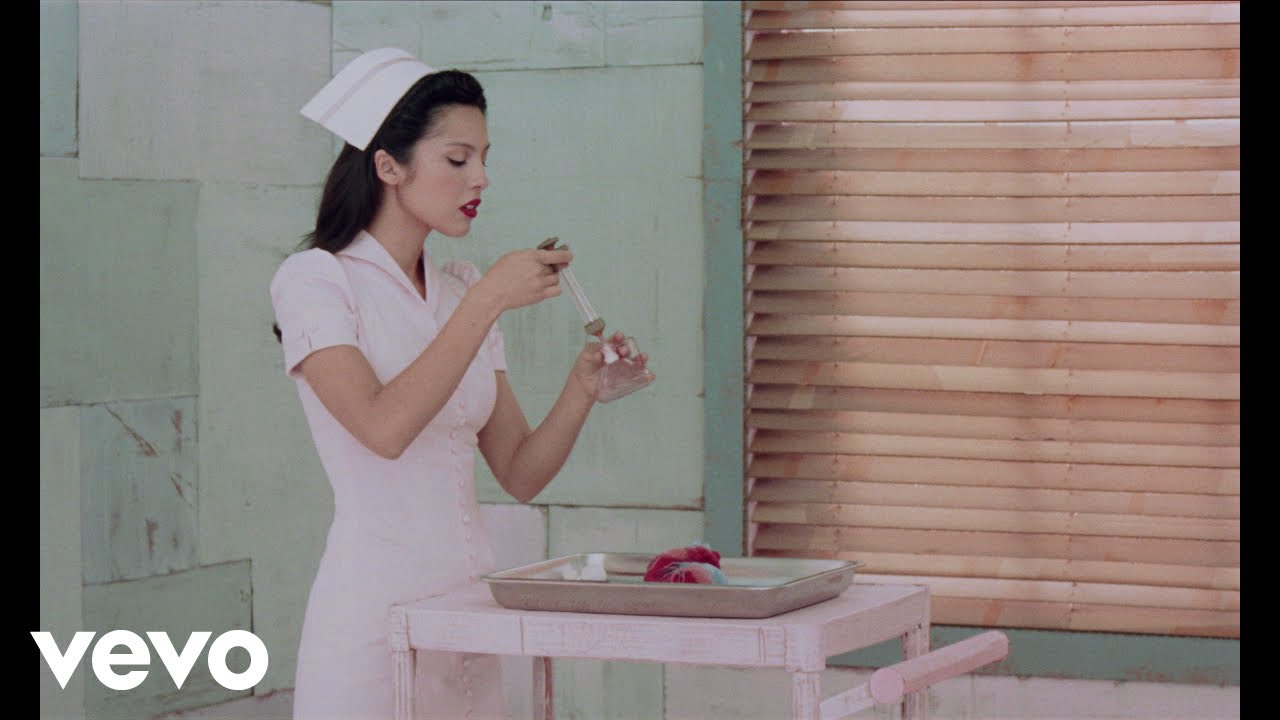
Rodrigo describes both the song and its production as “very tense”, and an intentional decision was made to keep this tension high for as long as possible. “I build up the guitar really, really intensely going into verse two,” says Nigro. “I think everyone thinks when they hear it for the first time that the drums are about to come in, but they don't.”
They do eventually, though, and Rodrigo believes that keeping you “on the edge of your seat” for as long as possible helps to make that moment of release all the more satisfying.
“One of the reasons why I love this song so much, and why I love the production so much, is it kind of feels like you really have to earn that payoff,” she says. “It doesn't give it to you right at the first chorus. You have to keep listening. It keeps you, hopefully, sort of engaged until the drums come in and the strings come in, and it feels like this like soaring huge payoff.”