


Few directors garner the same amount of awe as the late David Lynch. The visionary behind Mulholland Drive, Eraserhead, The Elephant Man, Blue Velvet and of course, a little television show called Twin Peaks, Lynch’s sprawling influence extends far beyond filmmaking. Visual artists, musicians and creatives of all stripes cite his work as a key touchstone.
While we’re all fans here at MusicRadar, someone who feels Lynch’s legacy more keenly than most is actor and musician Alicia Witt. Witt first met Lynch when she was cast as Alia Atreides in the original Dune at the young age of seven. Impressed by her precocious talents, Lynch then cast her in Twin Peaks as the younger sister of series co-lead Lara Flynn Boyle. It was there that Lynch became aware of Witt's developing aptitude as a pianist.
In the years since, Witt’s acting career has blossomed, with roles in Longlegs, Nashville, The Walking Dead, Mr. Holland's Opus, and The Sopranos amongst others. She ultimately reunited with Lynch for 2017’s mind-blowing Twin Peaks: The Return, wherein she reprised her role as Gersten Hayward.
What was actually going on in her scenes, Alicia can’t tell you, needless to say the ominous vibes were on point, and Witt delivered an intense performance.

Concurrently, Alicia’s piano-playing talents have also grown, and she now operates as a music artist in her own right, touring internationally and going on the road with an impressive roster of acts that have included Ben Folds Five, Rachel Platten and Jimmy Webb.
Witt’s latest album, Between Heaven and Earth, pays tribute to the man who kickstarted her career - and remained a close friend and confidante in the years since. Since his death last year, Witt’s commitment to transcendental meditation (something which Lynch notably espoused) has increased. And it’s during her meditations that Witt feels she can still connect with Lynch on a higher plane.
The album, produced by Joe Henry and recorded live in New York City, is imbued with Lynch’s spirit and essence. We spoke to Alicia to learn more about how her relationship with David fuelled the creation of this captivating set of songs…
MusicRadar: Let’s start with David shall we? He was of course responsible for discovering you and casting you as Alia in Dune. You were obviously very very young back then, but can you remember that initial encounter with him?
Alicia Witt: “I remember everything about it - and almost everything about filming the movie as well. It felt so significant.
“I felt immediately that I had met the most original soul I'd ever known. And it obviously had nothing to do with who he was as a filmmaker because at that age I had no awareness of him as a filmmaker, and I certainly hadn't seen The Elephant Man or Eraserhead [Lynch’s only films at that stage].
“I just loved him. Within about five minutes of meeting him, I told him about all of the dogs who lived in my neighbourhood, and he told me about this huge lightning storm that he had just flown in on, because he had come in from Austin, Texas, where he was scouting for the movie. He was describing the lightning flashing on all sides of the plane and how frightening it was. But you could tell he had a sparkle in his eye - he had loved it as well.”

“He was just a fan of life, and all the intricacies that life has to offer. All the things that make us human. He didn't lecture ever. but if I brought up meditation, his eyes would light up, and he'd say, ‘You have to do it like clockwork’.
“I didn't always understand what he meant, but I feel I do now. I think [he had] access to that place of awareness, knowing that there's multiple dimensions of reality happening at all times. I think he probably was born with that [ability], but also honed it through his lifetime of meditating twice a day. I think that's also what people pick up on in his filmmaking.
“I hear people say over and over that his work makes them feel less alone, less like they are the only one like that in the world. David had that in person, in spades, and even at age seven, I picked up on that. I loved him intensely because I felt less alone through having met him that day.
“So I met David during that casting process for Dune, I was brought in by the casting director who had asked the variety show; ‘That's Incredible!’ if they had any suggestions for a child who might have exceptional reading and speaking abilities, because that was the challenge [with that role].
“I was the only person there. It was about an hour of work on the scenes with David, and I left that appointment in New York and headed back to Massachusetts with my parents and said, ‘I think I'm going to do that movie'. My parents said; ‘Well, I'm sure a lot of little girls think they're going to do that movie, and we'll just have to wait and see.’ Years later, I told David that [story] over one of our coffees, and he burst out laughing, and he said, ‘I knew you were going to do that movie too.’”
“I think it was destiny. I'm not exaggerating when I say David Lynch changed my life in every way a life can be changed because how can I even measure not only having found my way to a life as an actor, but far more than that, I think he changed the very chemistry of who I am as a person because his influence was so strong at such a young age.”
“In the summer of 1983 is when we filmed Dune. I turned eight on the set of the movie, but piano had come right up, and I spent all of that time in Massachusetts (when I when I knew that Dune was happening, but I wasn't working on it yet) playing piano and realising that it felt like a second language to me. I won my first piano competition actually in June, a few days before I flew to Mexico City to work on the movie.
“I’ve always had this theory that when you're very little, you have a ‘knowing’ of who you are at your core, and I think nowhere in my life could that be more true than that year that I'm describing. Music was quite literally wrapped up in my first acting role. Music also helped me learn how to express myself, and all that seemed inexpressible to me. It seems effortless when I'm playing characters or when I'm playing music. I feel much more true to what I mean to say if I'm sharing it in a song.”
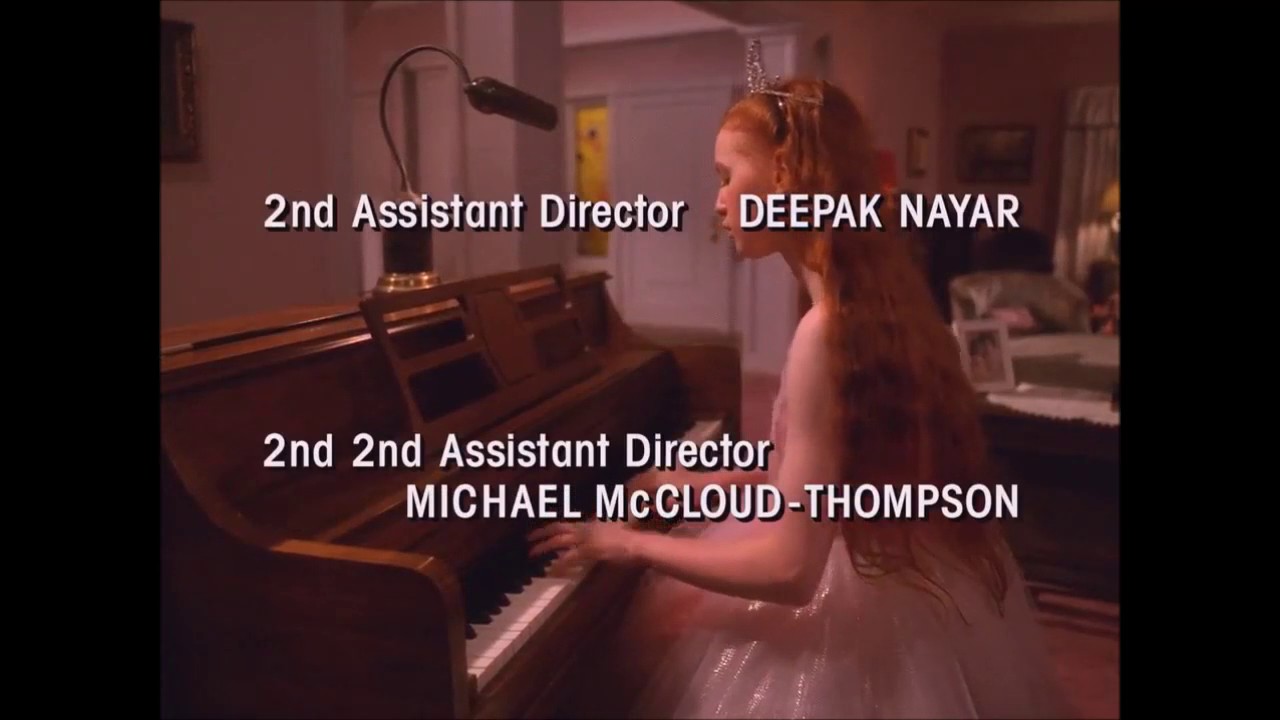
MR: Of course, for a lot of Twin Peaks nerds like us, you’re well known for playing the young Gersten Hayward in Twin Peaks as a child. David even had you playing piano over the end credits of the premiere of season 2. Can you remember much about that experience?
AW: “It [the end credits piano performance] wasn't intended and it wasn't scripted - and I didn't even realise that the camera was rolling. When there was a piano around, I tended to play…
“I was sat at the piano because we were filming the scene where I was playing the Mendelssohn piece as my sister was reading the poem, and in between setups, At that point, it was just sitting at the piano noodling on things. At that time I was already playing background music in a restaurant and in a hotel lobby in Massachusetts to earn some extra money.”
MR: So, would you say of the two sort of strands to your career, music has become the primary creative passion?
AW: “They really are equal. They're just so different. I have found that when I've been open to it, any role that I take on, any role that I'm attracted to, or that comes my way, seems to be a strange reflection of exactly what I'm going through at that moment in my own personal life.
“Through playing another character and emulating however that character manifests the the outward appearance of what's happening to them - I feel that I'm able to exercise whatever's going on inside of me that needs to come out.”
MR: Returning to David, he always seemed to be able to express those things that were very hard to verbalise or describe in his filmmaking. On your new record, Between Heaven and Earth, David’s presence sort of permeates its way through it. Not least in how you recorded it. Can you tell us a little about David's influence on the record, and the process of tracking it live?
AW: “Everything about this album was inspired by David Lynch, and it was David Macias - who is the founder and the head of my distribution team Thirty Tigers - who had the idea of bringing Joe Henry on to produce it, and David knew that Joe works that [live] way. He had a very strong sense that Joe Henry was the right producer for this. The concept to create the record came from a sense that I was supposed to bring this record into the world. [I felt that] David's spirit truly was helping to bring it forward as well, he was very present to me in meditations. We would speak for about a year after he passed on - he was very, very present.
“He was very present while we were making the album. I shared this idea with David Macias, and then David thought of Joe Henry having just worked with him on something else, and then I had several long calls with Joe, sharing the concept and what it was that was meant by a tribute to David. Not where every song is about him per se, but it's about his influence, his approach to life.
“Joe understood what it was we were trying to create. And Joe, I think, only records live, so that was all a synchronistic thing. I feel like there couldn't have been any other way to hopefully channel some of David’s otherworldliness. We all created it in that moment, and I didn't know this band before. They were musicians that Joe had brought together specifically for creating this album.”

MR: So how much of the album was mapped out beforehand, did you have any ideas going into the studio with Joe or did it all happen there?
AW: “They had the demos - which was just me on my piano and vocal, just to demonstrate what the song sounded like. And before that, I had sent Joe like 20 or so songs that I thought would fit with the theme of the album. I wanted Joe to select the songs that he felt were most in alignment with that.
“Aside from that, they [the musicians] only had those demos and the lyric sheets, and each of them did their own work and wrote their own ideas and chords and did some brainstorming.
“We met for the first time as a band, all six of us in that studio, the night before we started recording. But we didn't even play anything through that night before - we just did checks on the microphones and set everything up. On Monday morning we started with [first track] Love Anyway. Joe had said, ‘I feel like this sounds like a beginning to something.’
“I found Joe to be very David Lynch-like in so many ways, which was also magical. I think he just is. He just has this magic energy about him that makes him the perfect producer for this project. I can't imagine how it would have existed otherwise.”
MR: Your piano is obviously central to the album, but there’s some really intriguing arrangements. The title track has an almost fairground waltz-type vibe, wheres Build Me a Dream has quite an Eastern flavour. Did these stylistic decisions just kind of happen spontaneously?
AW: “Yeah, and what a thrill, and what a similar experience to working with David Lynch on a set to discover these songs in the moment with the recording happening. There's this sense I had over and over again as we recorded these songs, that I was discovering the meaning of the song for the very first time. What I thought it meant was nothing compared to what I was discovering it meant as I was right there.”

MR: Going back to what you were saying in terms of the record being a celebration of David's ideas, the song Thank You feels like it works as both a melancholy, post-love song, but also ties into that kind of broader theme of gratitude and optimism that David had. At what point did that did that song present itself to you?
AW: “When the idea came and I knew that I was going to make this album - we didn't know that Joe was going to produce it yet, I don't think - but I knew that this album was going to be created, and so every song I wrote from that point on had David's energy around it.
“As I drove to Alabama to write with [songwriting collaborator] John Paul White, I was thinking about the idea of gratitude. It’s easy to have gratitude for situations where you can see something beautiful came of it. It's easy for me to have intense gratitude for David Lynch because all the gifts he's given me are impossible to measure.
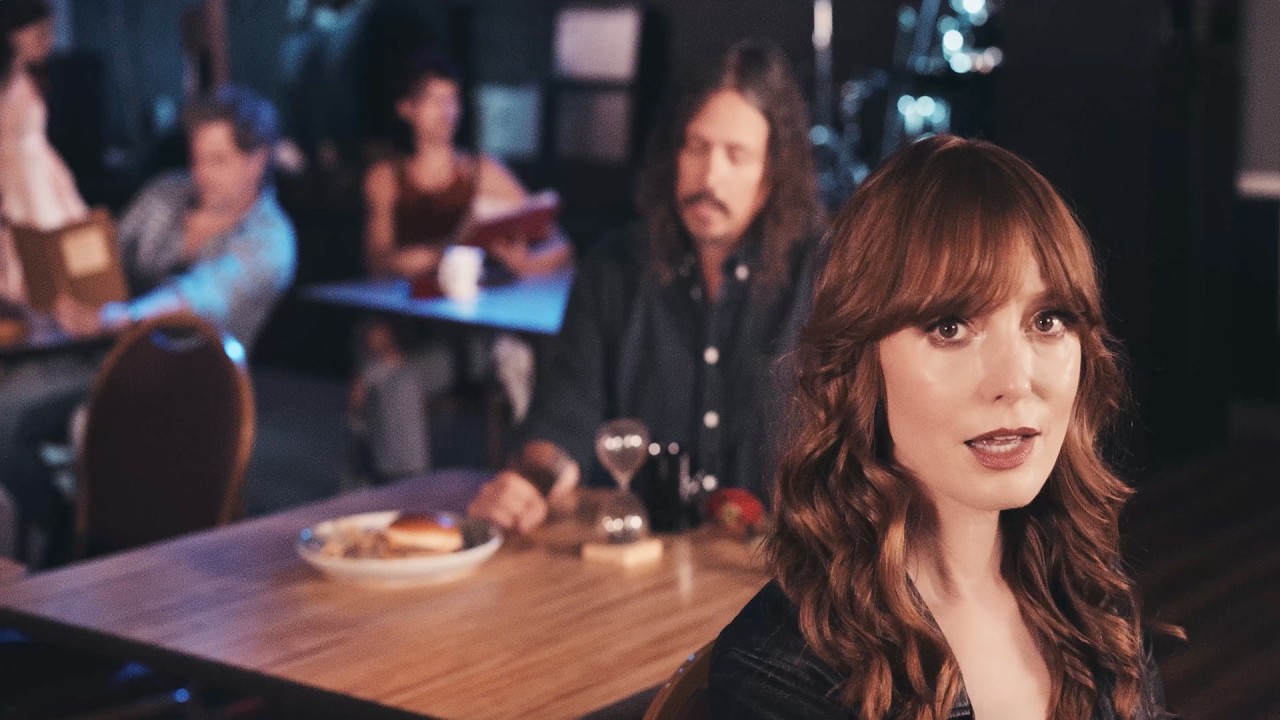
“But then I started thinking that he had some disappointments in his life - and I've certainly had some disappointments. And people who you think at a certain point are going to be in your life forever make their exit in a way that blindsides you. If you're willing, though, you can almost always look at when they when they broke your heart, and you can see how their absence directly led you to the life that you have now, and the friends you have now, and the they sort of send you on your way.
“I think David was an expert in that mind frame - going with the flow you might say. You can recognise when you're meant to drift a different direction.
“So when I showed up at John Paul's door, my head was full of this idea, and I shared it with him, and he was very receptive to it. That was an example of a song where I certainly had some lyrical concepts in my head, but not much else. It was a brand new idea. And John Paul knew that we were paying tribute to David Lynch as well.
“We created that, and John Paul did a beautiful demo of it with just his voice and the guitar. It was written on guitar, so it’s the one song on the album that isn't piano-driven. I stood up in the room with the band and recorded it. Also that's the one song where there's a significant overdub because John Paul wasn't in New York when we were recording - he sent in his vocals after the fact.
“It was important to us in the creation of the song that it would apply if somebody was thinking of a breakup when they listened to it, but we wrote it specifically to not be a breakup song. It's a song about any situation where there was a disappointment - whether it's a professional disappointment, or a friend, or a work colleague.”
MR: The song Freeze Frame has quite a different vibe, a much more free-flowing, jazzy energy. It has a great Lynchian line in there, that refers to the ‘Fine line between delusion and dreamy’
AW: “I think David made me feel this sense of, or helped encourage, I should say, this this sense of that line between delusion and dreamy. Before I met him, I probably thought there was something not right about me, but after meeting David, I thought ‘No, this is not only right, but it's my superpower!’
“Seeing this beautiful, indescribable grown man who was of the same place or seemed to be, I felt my own power and that my weirdness was a good thing and not a liability. On Freeze Frame I was thinking of another older friend. Sometimes you feel like you could possibly jump onto a different timeline, and if you had been born a little earlier or a little later, things could have been different. You could have a very different connection to somebody who's alive right now.
“Freeze Frame was written in about an hour and a half. It all poured out of me so quickly. And when we recorded it was, I would say, one of the most effortless songs to record. I felt like I was flashing back to what Tom Waits might have felt like in the studio, I don't know why, but Tom Waits occurred to me.
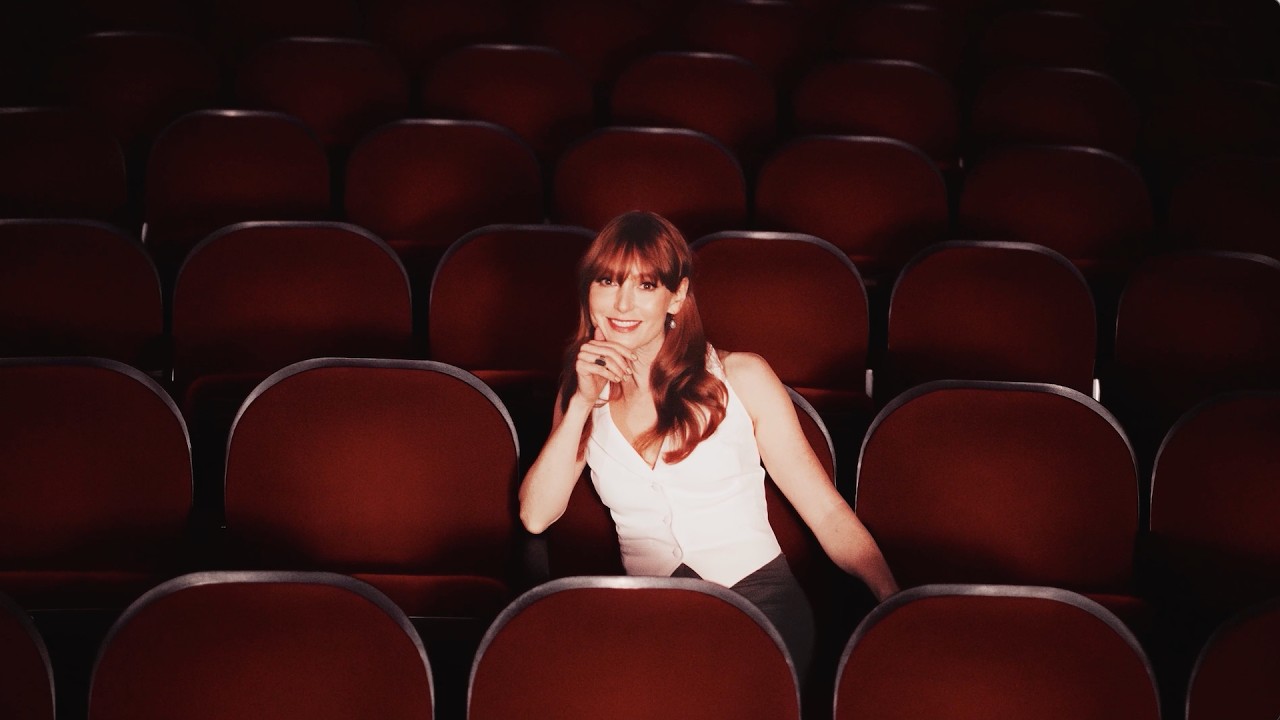
“I felt like the band and I were one, and I had such a blast recording that song. I did ask the distribution team and various other people for advice on which songs to do videos for, which songs to have as focus tracks ahead of the release of the album, and I was so surprised and thrilled that Freeze Frame was picked because, to me, it was it was so easy. It was great fun to record, it put a great big smile on my face.”
MR: The final track, The Director, feels particularly Lynch-inspired. There’s a really striking lyric in there that was quite moving; ‘The ending of the dream, the beginning of the wide awake’…
AW: “Every line in The Director I believe came to me directly from David in meditation since he passed away. That song is a collection of things that I heard him say to me in meditation.
“It's not even in my vernacular. It's advice, guidance, reassurance. When you're in transcendental meditation you're not supposed to wake up and like write down thoughts, insights or ideas, but if there’s something you're meant to remember it will be there when you emerge from the meditation, which takes 20 minutes.
“We recorded it at lunch-break on our last day, I’d asked the engineer to keep the microphone on the vocal and the piano going, so that I could slip in there and just play the song and record it. I think I did it three times, and I knew the third one was the right one. I took off the headphones and just tried my best to channel what I was feeling. And those lyrics kept on changing over that week that we were in the studio. More ideas kept coming for several of the verses. I have a long list of alternative lyrics that didn't make it into the song, but the chorus was always very specific.
“‘The ending of the dream, the beginning of the wide awake’ was very specific in his voice that came to me. It’s the concept that he was showing to me - that it's all about being present and leaning into being awake.”

MR: It sounds like making this record was a pretty cathartic way of channeling the grief for your friend and mentor, but it also must have been emotional, and sad at times?
AW: “I was definitely holding back tears when I recorded The Director. I was sad I suppose that I wouldn't have another chance to sit and have coffee with him, and talk about life. We never talked about work, except I did share with him the last time I saw him a year before he died, that that my role in Longlegs was a direct result of the role I played in Twin Peaks: The Return. [Lynch’s long-awaited 18-episode third season of Twin Peaks, wherein Alicia reprised her role of Gersten Hayward].
“It was important to me that he knew that his trusting me and bringing that performance out of me for that scene in Twin Peaks: The Return had helped me. I had no idea what was happening [on Twin Peaks: The Return], and it was magic. I had zero context or explanation. In fact, when I came to set the day before we were to film when he was filming something else, I gave him a hug and said hello. Then, he saw me kind of tilt my head like I was about to ask him, and he said, ‘You're probably going to ask me what's going on in these scenes, and I'm not going to tell you…’
“So, as I recorded The Director and also some of these other songs, I was also shedding tears of such gratitude. Like I was finally understanding the extent to which David was - and still is - a part of every aspect of how my brain works and how I think about life.
“[Feeling his presence in the studio] took away the sadness of knowing that in human form I could never send him an email to share this, but I feel that not only has he heard the album, but he truly helped create the album, and that he was right there with us.”

MR: Do you think the journey of making this album has changed the way you write songs now going forward?
AW: “In a way, I think yes, because. It's helped me have even more confidence in the sense that when something comes out, it might be more complete than I give it credit for in the moment.
“Thinking on how some songs like Freeze Frame or Kindred were written so quickly - it was just this outpouring. Kindred was written at the end of a very magical, strange and very David Lynchian sort of a day that happened last year, but I was in a hotel room without my piano so I wrote it on Garage Band.
“Those words and those chords would never have come to me had I been sitting at my piano, thinking consciously ‘Oh, let me write a song.’ It was a real example of something needing to come out to describe the magic of the day that had just happened
“I think I sent Joe that song almost thinking I'll throw this into the mix, but he's never gonna pick it. And I remembered the sensation of being in the album, recording it, thinking this song had to be on that record.”

MR: Are you planning on getting out on the road and doing some performances of Between Heaven and Earth?
AW: “Yes, the tour dates are up on my website. My US tour kicks off on September 10th in Philadelphia. I think I’m playing 12 cities. And what I'll be doing in most of these cities - hopefully all of them - is performing the album with a band from that city. So I'm trying to do this thing to hark back to the method that we used to make the album…
“It’s going to be challenging, but also I have no doubt, given who we are paying tribute to, I think it's going to also be effortless and magical.
“You can hear on the record there's a few moments where like a horn trails off unexpectedly, or an electric guitar picks up at a place that maybe we wouldn't have had it pick up if if we'd rehearsed it specifically. But those moments are magical. There's a couple of little piano flubs that we left in that make it clear we were recording it live.
“I’ll be playing Americanafest in Nashville, and for that performance, it will be six of us, the same instruments, and probably will be the closest to what the album sounds like. But we won't have time to rehearse. That's also the fun of it. I'll be on tour, so it's not like I can come into the city a day before and do a full rehearsal. But we didn't do a rehearsal for the record either, and I'm finding those incredible musicians in each city that are so experienced and so up for the challenge. Whatever happens is going to be perfect - and for one night only!
MR: That sounds like a hell of a self-imposed challenge. But the sort of self-imposed challenge that David Lynch would definitely applaud…
AW: “I think so. It helps keep it immediate. I thought it sounded like much more fun, and just the right vibe for this one to have a new band in each city. We can discover the songs all together, and I can discover them for the first time too.”
Alicia Witt’s Between Heaven and Earth is out August 28th on Thirty Tigers. For live dates check out Alicia’s official website
