
Music is time travel, a way of freezing and revisiting moments from your life. All those formative feelings and anxieties, those wrong turns - and the decisions that would lead to shaping you into who you are today, somehow become encoded into every note, every beat and - in Pulp’s case - every breathy word of Jarvis Cocker’s continually adroit lyrics.
This neat idea of music as a form of time travel is expressed by Cocker near the conclusion of Garth Jennings’ incredible new film, Pulp: What Do You Do for an Encore?
Part-live concert film and part-Jarvis-narrated documentary about the band’s origins and journey to date, the archive material-heavy documentary segment of the film explores the band’s ramshackle early years forming in Sheffield back in 1978 (yes, that long ago…really) and the young Cocker’s obsessive notebook-manifestos and scribbled ideals of what his perfect band should ultimately represent. And, most importantly, how they should dress.
Jarvis recounts the veritable conveyer-belt of members across the long years prior to Pulp's perseverance paying off, with their most famous line-up of Steve Mackey, Candida Doyle, Nick Banks, Mark Webber and, in the centre of it all, Cocker, locking together to take Britain by storm in the mid '90s.
Of course, it covers Pulp’s ascension to fame with their 1995 monster hit (and, in this writer’s opinion, the single best song of the Britpop-era) Common People, the resulting pressures of success - their intermittent hiatuses and, eventually, Pulp’s return to the stage in ’23.
The success of this comeback led the expanded group to record last year’s sublime James Ford-produced eighth studio album, More.
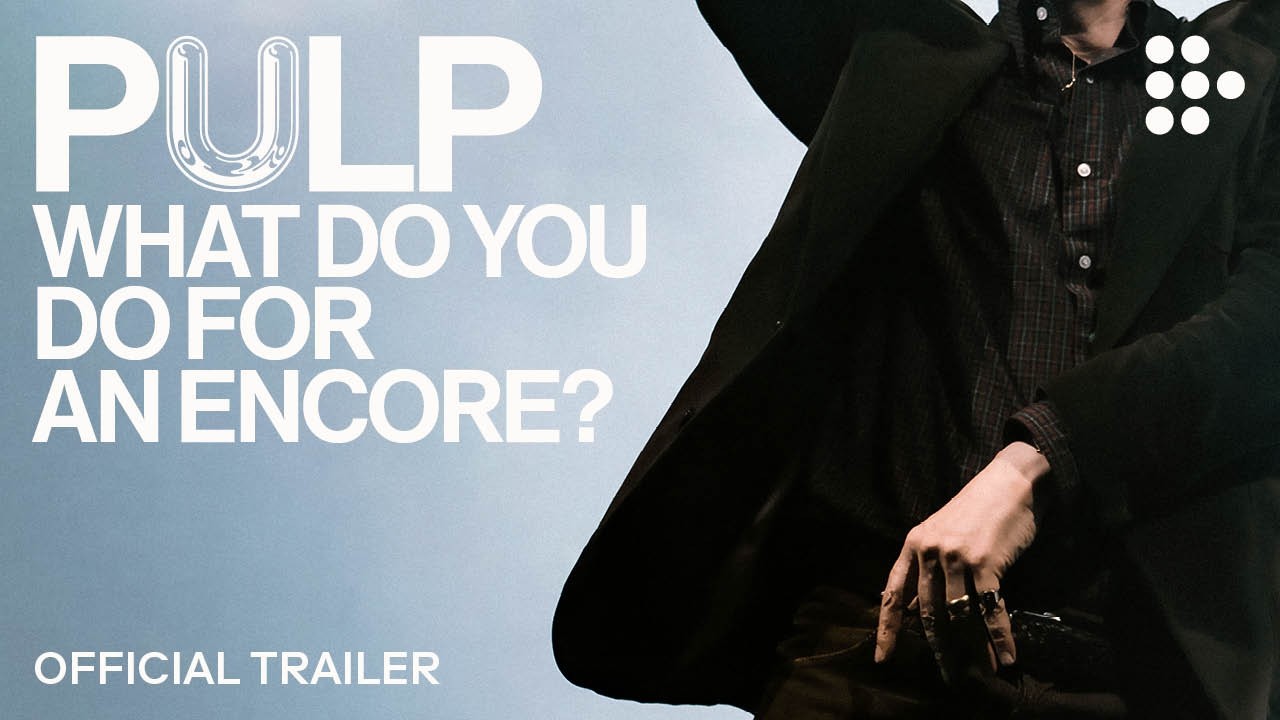
Aside from his feature film career (Sing, The Hitchhiker's Guide to the Galaxy), Garth Jennings is something of a music video-directing legend. Blur, Fatboy Slim, Radiohead and R.E.M have all relied on him to deliver particularly iconic results for some of their most celebrated videos.
Garth was hired initially to direct the staging for the reconvened Pulp's live dates in 2023 after previously directing the music videos for Help the Aged and A Little Soul back in the late '90s.
For the film, Garth captured Pulp performing a triumphant set at London’s O2 on the very week that More ascended to the top of the British album charts.
Even if you’re not a Pulp fan, the film is a riveting watch; a tale of determination and belief in the power of music (and Cocker’s astute lyricism) to connect with the emotions of fans the world over.
We spoke to Garth after watching the film recently to find out more about how he made the movie, and his own views on some of the film’s core themes…
MusicRadar: Can you tell us a little bit about your relationship with Pulp, Garth, how far does that go back?
Garth Jennings: “I had just left art school and set up a production company with two of my friends. We planned to make (super-low budget) music videos. We were just getting started, and Pulp were one of the first bands that gave us a sort of a shot at doing something.
“I had pitched an idea to Jarvis for [1997 single] Help the Aged, which, in a nutshell, was a stair-lift to heaven. He just got stuck on that, and then contacted us, and we met with him. That's where it started. We then did another video for their song A Little Soul. Since then, we just remained in contact over the years.
“Little things would crop up. I helped on a little shoot with him and Chilly Gonzales once [during Cocker’s solo years, for the song Tearjerker], and he would send me playlists and things. So I’m living in France because I’m working on animated films over here, and he was living in France for a while. So we would just sort of bump into each other a bit. So it started way back, but it's been sort of bubbling away for years.”
MR: When did the idea to fully unite with Pulp and make this particular film start?
GJ: “It was all a bit of an accident. In 2022, I'd heard a rumour that they were going to tour, and I texted [Jarvis] and said, ‘Oh, this is great if this is true - could I film it if you ever do it?” And he said, ‘I'll talk to you when I get back from holiday.’
“He came back, came to my office, and basically said, ‘Would you direct the live shows, and help me build some sort of set for it all?’ So I ended up designing sets and curtains and stuff - pitching it to him and the band. But, at the same time I was thinking, ‘Okay, we're going to film this - how are we going to film it?’
“Then I realised that it needed to actually have a documentary element to it [the film] for it to really work. So the film was supposed to be shot in 2023, but financing fell through like two weeks before we got to the [mooted show of recording] Hammersmith Apollo.
“I thought that was the end of it - and it was a disaster. I thought it was all for nothing, although the shows had been great and I loved working on them.
“Then the financing producer Octavia found more financing. [Simultaneously] the band had written a whole new album, and they were planning an even bigger tour. So really it all worked out for the best.”
“Working on a film where you're not filming people for the interviews - and you're doing it all with archive stuff, means you're very much opening yourself up to random chance. Like, well, we just have to find the story within these things. So it's less control and more like optimistic enthusiasm.”

MR: It all aligned really well, as the film certainly captures Pulp at a moment of triumph. So structurally, the film is half-concert film and half Jarvis-narrated documentary. Did Jarvis always want to be the narrator of that side of the film?
GJ: “No, in fact, I don't think he was sure if he should even be the narrator. It was something we had to sort of prove out. The one thing we did all agree on was that we didn't want to do a talking heads-style [interview] format, or a narrator saying ‘in 1993, the band did x…’ etc. It was more like the only thing that we were going to film was the concert and everything else we were going to find via archive material.
“The sort of template for the first half of the narrative of the film [came from] the book that Jarvis wrote [Good Pop, Bad Pop]. And we decided to use that as our guide. From there on, we thought, we'll write stuff - but hopefully in the tone of the book, so we feel like it's one voice.
“But once you get Jarvis in front of a microphone and you hear that voice coming through. You're like, ‘OK, this was the right decision. It's just delightful. It does make everything sound like he's chatting to you.”
MR: There's so many moments that underline how central Jarvis is to Pulp. In a lot of ways, Jarvis really is Pulp - as much as the other guys are very important too - Jarvis is so central creatively. How did you two co-write that script?
GJ: “It was a bit of a collaboration. As I say, the first half he'd already written in the book. The second half, what I would tend to do is write like [instructions]. Stuff like, ‘We need to talk about this here’ - these kinds of things.
“It's actually how I'd often write a script, when I put together a first draft, I go, ‘This kind of thing here’ etc, or ‘Funny line goes here about thing that went wrong’, you know. Jarvis would then take that and obviously not just make it his own, but tell the story [as it was].

MR: Did you make the film in two separate strands then, or did you write the documentary chapters in responsive chunks, so ‘this bit follows this song from the concert’?
GJ: “We knew it would break down to a 90 minute film, so I wouldn’t have all the songs in there, and I knew the story pieces had to be succinct - but not rushed. Once we had the show footage we were just working on each chapter separately. So we slowly put it together and whittling it down.
“But again, it wasn’t done to a script. We were following [organic ideas]. For instance, things came in late. We realised we really needed to show the timeline of how many people came into the band and went out of the band, because that is an important way of showing just how long Pulp have been around and how long it's been going for - and how many people touch these projects.
“And so a late entry was [the idea of] animating Jarvis’s notebook. Through that process we asked Jarvis about certain people, he said, ‘Oh, there's this one guy, Captain Sleep, who basically used to sleep the whole time so we had to get rid of him;. I was like, ‘Well, that's that is a vital piece of colour and texture'. These kinds of things, although they’re little, they actually sort of speak volumes.”
MR: One of the film’s most compelling ideas is Jarvis’s notion of Pulp as representing a sort of ‘second-hand band’; a band that learned about the world through what it left behind in charity and junk shops. I assume that - and other core themes of the film - came from Jarvis?
GJ: “Yeah, and it’s why all the stuff that tells the story has come from archive or television commercials. It all had to feel like it was 'found' and discovered from the jumble sale.”
MR: Pulp obviously had a huge moment back in the mid-1990s. I think one of the things that the film really underlines was just how kind of weird and unexpected Pulp’s success was - considering how quirky they were. They were almost like an odd Sheffield-based art project throughout the’ 80s, and suddenly, this strange collision occurs when mainstream British culture just aligns perfectly with what Jarvis is doing…
GJ: “You’re so right - and yes, that’s exactly what happened. I don’t know how one can explain that. But over time they were just going, and going and going until finally ‘bingo’!
“Like any great story, at some point if you’ve hung in there, the universe sort of says ‘Ok - bang!’
“You wanted success, well, here it comes, baby. I loved that period of their career, but I love it even more now, looking back and seeing him on stage now with as much joy as ever.”
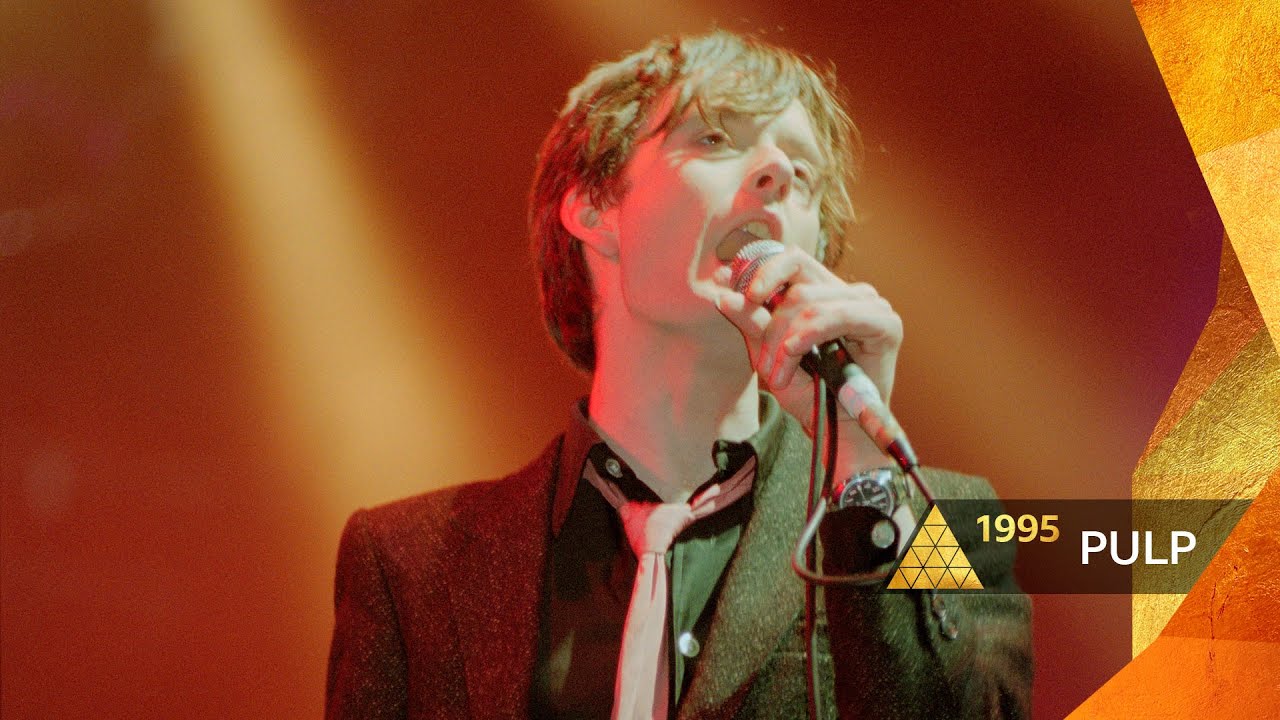
MR: What’s great as well is that the new songs from More sound just as strong as the old songs. Did you toy with having a few more songs in there? How did you choose what to include and what not to include?
GJ: “I didn’t want to go over 90 minutes - I wanted to stay around that number. But yeah, there’s so many, like Got to Have Love - we did have that in for a bit but we had to cut it. We didn’t cut it because we didn’t like it - we loved it! But I wanted people that have never seen them before to watch this documentary and love Pulp by the end of it.
“If it’s too long, I’ll lose them. So, I thought I'm much better off making something they want more of - and then leads them to discover more - than it being something they have to endure or get fatigued by.”
MR: You mentioned that obviously you directed Pulp's live shows, starting from 2023. The live show is such a visual spectacle - how much fun was it to work on the staging with them at that point?
GJ: “Honestly, it was one of the greatest joys of my life. When you’ve got Jarvis coming up on a riser in front of the moon - that is my dream! And the fact that you can say ‘Can we have a big curtain please, so we can make this really theatrical?’
“I hate it when shows finish and you can just see the stage all lit up and people coming in to take it apart. It’s like ‘Oh, dream’s over’. I want people to not ever see that. That thrill of sitting with the lighting team as they say ‘Go for show’ and then the lights go to 50% and the crowd goes wild. It’s electric.
“And you’ve got a leading man who just eats up the scenery. It was just a gift from the gods. I don’t think I’ll ever have an experience like it again. It was a real one-off. I’m so grateful.”

MR: The audience response is also a big part of a Pulp show, I liked how you dialled in crowd noise at various moments during the live performance footage…
GJ: “Oh my god, the crowd - you couldn’t dial them out! The amount of singing along on those two nights was unbelievable. It was very moving - it was really moving to be with people singing.”

MR: One of my favourite moments in the film was the intimate rendition of Something Changed when the four core band members come forward in front of the curtain. You intercut that performance with clips of the late (bassist) Steve Mackey. It’s really powerful and a big reminder of Steve’s importance. Do you think the reunion would have been different if Steve were still with us?
GJ: “I have no idea how it’d be different but it would certainly still be a show I’d want to see and be a part of. It’s hard to say isn’t it - it’s an abstract idea and I didn’t know Steve well beyond working with him on those music videos. But I do know that he was an integral part of the band, so I would imagine it would have been different in some way.”

MR: You first worked with Pulp during the This is Hardcore-era, very much the bleaker ‘morning after the party’ kind of record, which reflected their experiences with the darker side of fame. Do you remember that being a tangible element at the time you were working with them?
GJ: “Yes I came in when things started to turn dark and cinematic. I love that album too, I love every track. But [working with them] I didn’t see any of it coming. At the time, it just felt like being around a group of people, this creative enterprise that were just on top of their game.
“Their songs were so brilliant. I could never have imagined a song like This Is Hardcore - everything about it was brilliant and not expected. Yet, there he [Jarvis] is in the middle of it all - this sort of extraordinary guy pulling all together. As soon as that song starts, I'm like, ‘Oh, here we go - it's going to get good.’”
MR: I love how you re-used the circling eye of dancers from the video of that song as a key part of the staging when they perform it…
GJ: “Yeah, again, reusing stuff from the video, but recycling it in a way that will just set him off. You don't want the screen to be something you feel you should be watching instead of him. It [just turns] in the background, so you can go back to [focusing] on him, and then at the end, I can get him up in front of it, so he is sort of framed by it.”
MR: How different is Jarvis now to the one you worked with back in the late ‘90s? Has distance from the band changed him at all?
GJ: “One of the reasons I did it is that I only work with people I really like. There are bands whose music I love, but there would be no way I'd go near them because it wouldn't be would be a joy. Jarvis is just a joy to be around. I don't know how much he's changed for other people who know him better than I do. But for me, he's just always been that person I look forward to talking about things with, or sharing things with, or hearing what the ideas are going to be.”

MR: A lot of young kids are now discovering Pulp, but in today's modern streaming age the band will appear in these sort of generic Britpop playlists. There's not really much that binds them with the acts they might be lumped with, like Oasis and Blur. Did you see a bit of your role making this film to kind of explain to a new generation just how singular Pulp were?
GJ: “It’s a good point - I think my role is to share, try and capture how much I love this band and hope that that would be infectious. It's the same when you do a music video. You’re trying to say ‘I love this song, and I'm going to try and make visuals that will help it to find other people who will hear the song and love it too.’
“I suppose if I could do anything with this film it would be to obviously appeal to fans like us, but also to scoop up all sorts of new people that wouldn't have known them before, and see that it was made with love by somebody really loves them - but also wants you to love them too.
“By putting Jarvis's voice right in the middle of it all, and having him talk to you, I feel like he just has a way to connect with people that is magic. He’s a star, that’s what stars can do. They just kind of connect.”
MR: And the film really emphasises just what an eccentric live performer he is too, all the moves and the spasms and jerks…
GJ: “Sometimes it’s just the odd little kick. I'd be watching on the monitors. I'd be in hysterics because he'd just like nail something. Who the hell hits a kettle drum like he does and owns it? No one else could pull that off with any degree of pizazz or panache. He is super great at that stuff.
“Who can come up on a riser with a bunch of cardboard cutouts and style that out?”
MR: There’s a great moment in the film where Jarvis remember his, what I guess you could call his ‘superhero origin-story’ moment. As a youth, he falls from a window and breaks his leg trying to impress a girl. Jarvis refers to that potentially fatal moment as both 'big and small' simultaneously, and it’s during his recovery from that incident he really thought about what it meant to be a performer…
GJ: “I can relate to it as some of the most profound changes in my own life have come when I've been absolutely smashed to pieces. I haven't fallen out of any windows, but when, you know, when you're robbed of your health. I remember in my mid-20s, I was bedridden with glandular fever for like eight weeks. I couldn't move, and I was just absolutely screwed. But it completely made me reflect.
“You’re kind of forced. It sounds like such a cheeseball thing to say, but you realise it can be a gift. I don't mean that we all need to get ill to get to find our way, but it's incredible how adversity will often create an opportunity for an adventure. Jarvis was already on his path, but there was something not quite there. So the fact he fell out of a window is important.
“He was in there for a while mending bones and things. It could have been a lot worse. But he thought about [stagecraft] and his formula, and random things like listening to Barry White [during his recovery phase].”
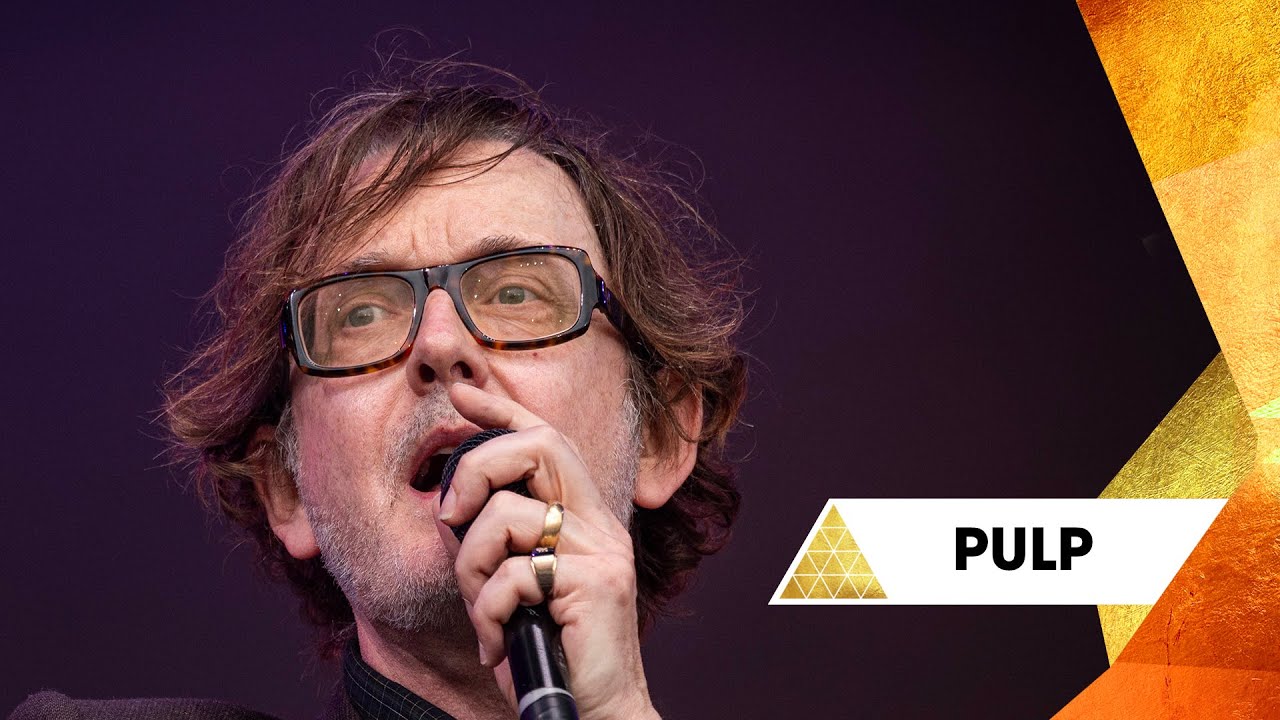
MR: And this part is followed up by a live version of F.E.E.L.I.N.G.C.A.L.L.E.D.L.O.V.E. which really emphasises Cocker’s now established performance style. Was the set manoeuvred around a little bit from its original running order to better fit that point in the narrative?
GJ: “Yeah, a little bit. We were quite quickly identifying what songs come out which [documentary section] parts and ‘Oh, this song will be set up by this.’ The setlist was almost like having a script, although we didn’t stick to it, it gave us a map.”
MR: What’s your favourite moment in the film, Garth?
GJ: “I just I really love it. I genuinely love it. I don't take that for granted. Sometimes you can work on things, and when you finish you can feel a bit flat or like exhausted by it, but I genuinely love the film, so I love it all. What’s really important for me is how I feel at the very end.”
“I love how the film wraps up - the question of ‘Why are we doing this?’ And the payoff being ‘Well, why wouldn’t you?’ The minute he says that I’m like ’That’s it.’”
“With the footage of the various crowds throughout the years, I wanted it to be emotional. It shouldn't just be some like, ‘Oh yeah, this happened and this happened’. You should really feel it. By the end, you go ‘Oh my god, I love this guy, and I love this journey they've been on. So I suppose my favourite part is, when it comes to its end, I feel everything I want to feel.”
MR: It’s a great way to present a film about music. Pulp fans want the performance but those who might not know the band’s story will be absorbed by the human drama in the documentary side. You get to see how they grew, and grew into what they are now…
GJ: “I hope that's the experience people get and that enjoy it, and of course there's so much more archive footage and live footage, but this feels like a nice distillation of this moment when they've come back with all this creative energy. I love what we were able to catch. We're so lucky that we caught this little moment in time. It broke two years before, but it all came back here.”
Pulp: What Do You Do for an Encore? has special preview screenings on September 18th in the UK and One-night-only screenings in Canada and the US/Mexico on September 23rd and 24th respectively. The film will have a limited theatrical release before streaming on MUBI after that.

