


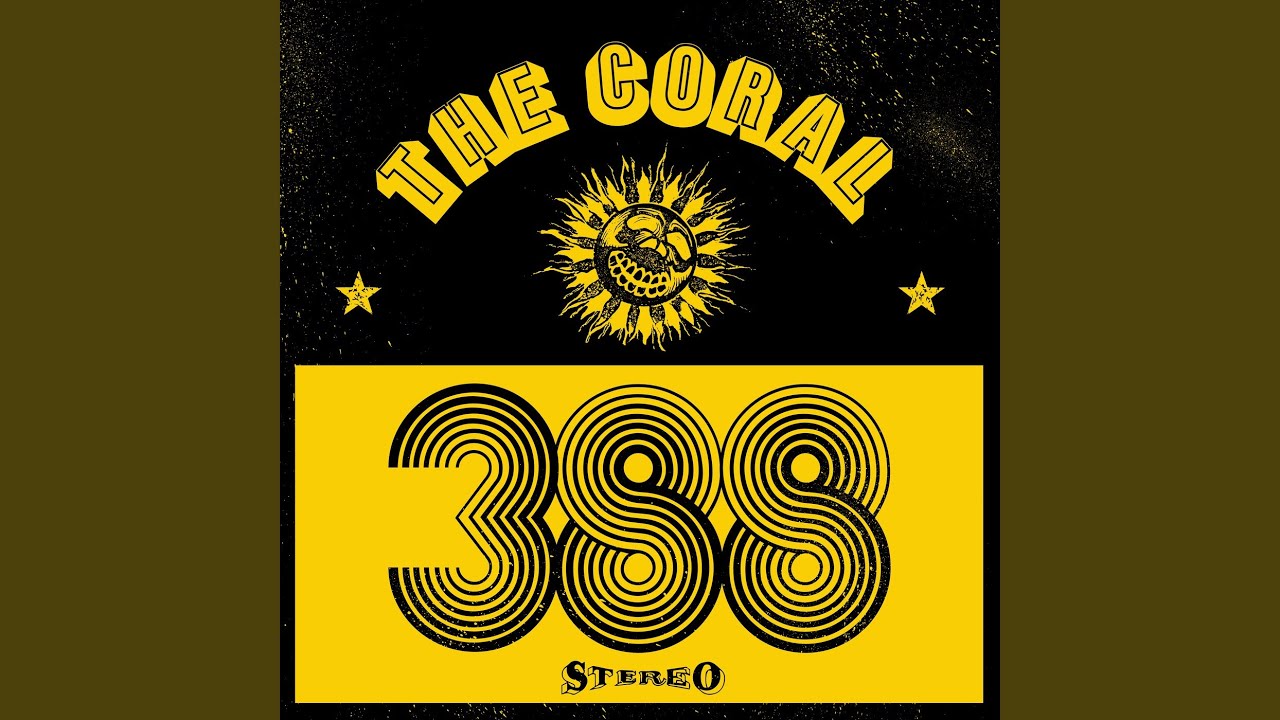
The latest album by The Coral arrived out of nowhere, dropping as a vinyl-only release in early May of this year. Its mysterious appearance in independent record shops across the UK preceded wider distribution across streaming platforms a couple of weeks later.
The album, 388, is the thirteenth studio record by the mystical Merseyside five-piece, who first shot to fame in 2002 when their jaunty indie-pop classic Dreaming of You caught the post-Britpop zeitgeist. Their self-titled debut long-player was subsequently nominated for the Mercury Prize.
Since those heady days, the Coral have remained busy.
388 is The Coral’s fourth album in five years. In 2021 they released the ambitious double concept album, Coral Island, set in a faded English seaside resort, and followed it with 2023’s Sea of Mirrors - a soundtrack to an imaginary Spaghetti Western movie. On the same day, they put out Holy Joe’s Coral Island Medicine Show, which was themed around a late-night pirate radio show, playing murder ballads and death discs. It's clear that big, conceptual ideas have guided the Coral's latest tranche of releases.
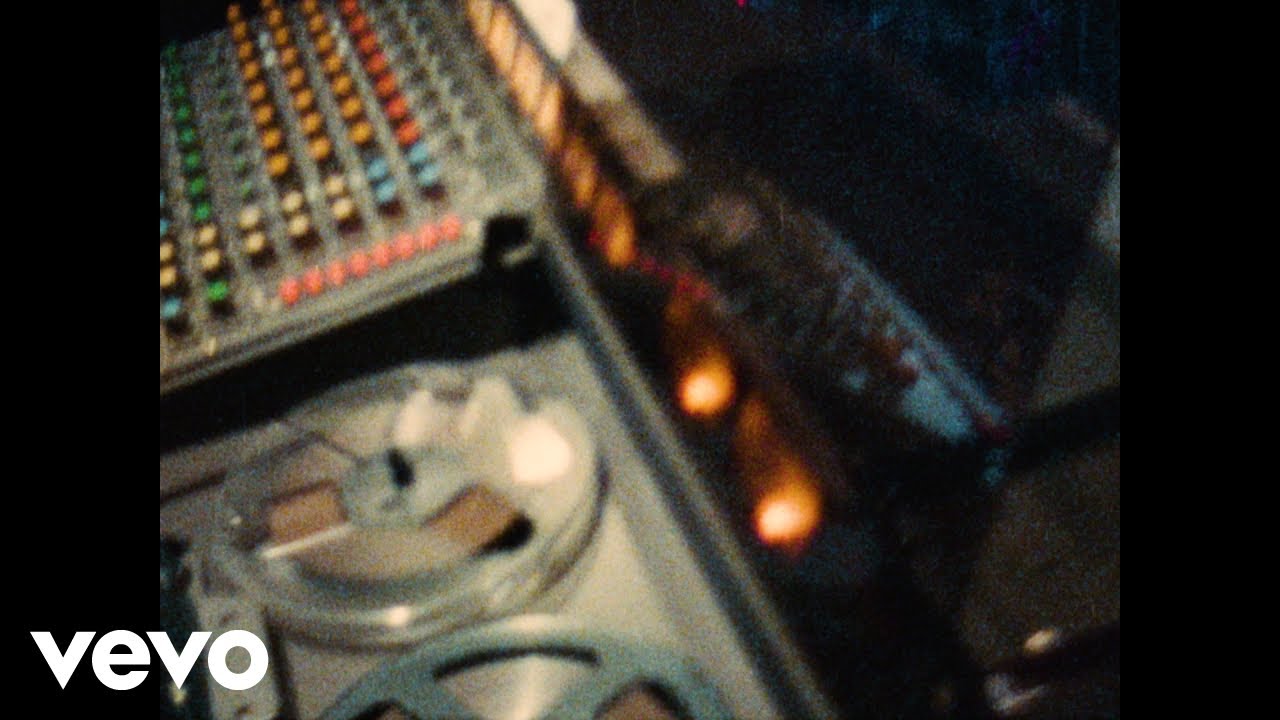
For 388, the artistic drive was to rip it all apart and go back to basics. Recorded live in two weeks at Kempston Street Studios in Liverpool, 388 (which is named after the vintage Tascam 8-track, quarter-inch tape machine and mixing desk that was used to record the songs) is an energetic, raw, rough and ready album with an eclectic range of influences from ska, dub, reggae and rocksteady to doo-wop, ‘60s soul and girl groups.
Inspirations are subsequently varied, with Éthiopiques compilations, Curtis Mayfield, Bob Marley, Lee “Scratch” Perry, Jamaican bands like The Congos and The Paragons, Bo Diddley, Georgie Fame and Martha and the Vandellas among the cited influences.

Frontman James Skelly was struck by the idea of going into the studio and recording rhythm tracks as opposed to backing tracks, and recording and mixing a song in the same day, It’s an approach that Studio One reggae artists used to adopt (as did Lee 'Scratch' Perry at his Black Ark studio) - the idea of capturing a moment, and capturing an energy and an attitude with minimal tweaking. What goes on the tape stays on the tape, and there are only two or three takes of each song.
“It makes perfect sense - I think with AI music and everything that entails, all you can do is record a moment - it’s the only thing you can’t fake,” Skelly explains.
We spoke to Skelly himself to find out more about the making of the album, working with vintage gear, as well as his production work for other artists, like Brooke Combe and The Mary Wallopers, and his earliest memories of listening to music…
MusicRadar: Coral Island, Sea of Mirrors and Holy Joe’s Coral Island Medicine Show were big concept albums. With 388, did you deliberately set out to make a less complicated record?
James Skelly: “Yeah. It was the complete opposite - to make the most direct and economical record; the sound, the lyrics, everything.
“We didn’t wrap it up in anything, it’s a different kind of poetry I suppose. It took maybe three weeks to write this album, ten days to rehearse it, and then about 13 days [to record it]. The whole thing took six or seven weeks, from writing it to finishing it and mixing it and mastering it. Before we made this record, I was writing with Brooke Combe and Liam Bailey, and I think how direct they were with their lyrics influenced me a bit.”
MR: You recorded 388 in Kempston Street Studios in Liverpool, co-producing it with Chris Taylor. What’s your relationship with him like?
JS: “Chris does a lot of stuff for me - he’s our live engineer - and he’s our mate. He’s one of us. We have our own language, and he knows what I'm talking about, so that makes it easier - we’re quick and he’s fast, and he’s good with all the analogue gear. He’s an essential cog.
“We’d have conversations about it [the album] while were gigging - how we were going to do it. We demoed onto a phone with one mic - you’d have to balance into the mic and make your parts work. If it didn’t work on the phone, it didn’t work - you had to sit in the right place to make it work sonically.
“There was something about our phone demos where there was just one mic in the room. A lot of the sound is coming from one mic, and the idea was to mix everything else into that mic if we needed to.
“Here Come The Tears is just one microphone - about 80% of the whole backing track - and then we’d feed something else in if it needed to be a bit meatier or louder. That song is the purest sound, I would say.”
MR: What were the studio sessions like?
JS: “We worked 9 to 5, which is why I liked it. As I get older, the more I listen to music that was made for ‘the people’ - the collective. Motown, rock and roll - which was made for people who were working, to lift them out of it. It was that attitude when the Animals were recording, or the first Beatles album, or doo-wop, Bo Diddley or ska, it was a three-hour session. Bang - that’s the take…
“You capture a mood - there’s a working energy for working people. It’s like [Springsteen’s] Nebraska compared to Hungry Heart.
“Motown’s probably the best example where you can hear the factories grinding in the music. We wanted that working element. Lockdown led to it [recording] being more bedroom and insular, which was good, but I’ve had enough of it now - I’m looking for more of a collective experience.”
MR: In 2024, you went on a UK book tour to support the publication of The Coral - The Making of the Debut Album. Did that prompt you to revisit the music you were influenced by in the early days of the band, which then led to the sound of the new album?
JS: “In a way, yeah, but it was more about the attitude - there was something in the attitude that I connected to. I was looking back at The Bandwagon [club] days, and [bands like] The Hokum Clones, The Bandits and Tramp Attack - the feeling of that. That was pre our first album, it was our world, with all the Merseyside bands in that scene.
“It was something about that which really inspired me - it took me back to capturing a rawness, raw emotions, when there was even a distrust of production, and there were two mics on the drums and we’d all record on 8-track Tascam cassette players. In my production, I’ve always tried to capture that.”

MR: The new record takes its name from the vintage Tascam 388 recording console/tape machine that you recorded the album on…
JS: “It’s my tape machine, I’m not sure when it’s from - it might be the ‘80s. It’s basically a quarter-inch tape version of the cassette one we used to record on. When I was a kid, I can remember saying, ‘Oh, if we had a bigger version of this one’… And then I found out one existed, so I bought it and got it fixed up. Chris was good on it.
“With all the records we were referencing, like early Lee Perry stuff, like Return of Django [by The Upsetters], we found out that he’d had to bounce it on a 4-track down to one track, so we would bounce the whole track to one track when it was mixed.
“We had eight tracks - four for vocals, which we did on a Roger Mayer tape simulator. We mixed on Pro Tools and then bounced it all to one track in mastering, and we were EQing the whole track on the 8-track. It was a cheating way of doing what they [older artists and producers] had to commit to.
“I’ll use a Tascam and then, if I have to, I’ll use Pro Tools to cut it up. I don't really care how you get it done… but I have an overall attitude to music that I've committed to now, where I try and get as much done as you can live, together, and then after that, it’s whatever it takes to make that sound as good as it does, whether it's a plug-in or a real delay.”
MR: Are you a gear head? Do you collect vintage equipment?
JS: “Yeah, I do, but I’m more at a level where if I see something and I like the sound of it. I bought a retro STA compressor recently, which is a good - it’s got a warm distortion to it that I like. The Tascam isn’t the best tape machine - you can get ones for 20 grand that are unbelievable - but it’s the f***ed sound of it; I’m looking for character.
“I mastered How Can I Tell You? (To Love Me More) by Brooke Combe on a reel-to-reel that was run by elastic bands. The wow and flutter on it was so f***cked… you can even hear it in the last chorus. Then it broke and we put proper things on it, but it wasn’t the same.
“It could be new [gear]. My daughter’s little amp is 50 quid, and it’s a bit s**t, but I like the character of it. There’s a little keyboard that my daughter practices on. Me and Nick [Power - keyboard player in The Coral] wrote Crossing The Sands [from 388] on it. It was the character of it that brought the melody out when Nick was writing it.”

MR: When you’re recording to tape in the studio, does that put more pressure on you to get things right first time? I guess it gives you an edge as a band…
JS: “Yeah - it’s the attitude and the pressure that you need… It gives it an energy in the room. It’s also that friendship, you’re pulling together. It’s more than just a part. We’d do a few takes, there would be a good one and then we’d try and beat it. Then we’d realise we’d peaked - we’d got too good at it. It was like, ‘You’re not good enough at it’… then it got to where it could all fall apart, but it had an emotion. Then we got it correct, but, by that point, we’d gone past it, so we’d go back to take one or two.”
MR: After recording separately during lockdown, was it nice to be back together in the studio?
JS: “Yeah. It felt great. A lot of Sea of Mirrors was done in a room that may as well have been a bedroom. There was a heavy metal band playing next door, so we had to wait for them to finish before we could put our quiet acoustic parts down, and the album was sort of put together.
“388 is one of my favourite albums that we’ve ever done - it’s up there with Coral Island and the first album. Everyone had their game face on and were focused on the task - everyone was ready; it was like, ‘Let’s do this!’ We wanted to make something that we could be proud of, and we pulled together and we did it, which is my favourite thing about the album.”
MR: In the age of AI, it must feel great doing something that’s raw and authentic…
JS: “I’m not stupid enough [to think] that AI couldn’t map out something that was almost the same, but it can’t recreate a feeling - it’s not the same.”
MR: Let The Music Play, which opens 388, feels like it’s a song about the joy of music - a celebration. It was inspired by the sound of cassette tapes by The Wailers and Lee ‘Scratch’ Perry that you used to buy as a kid from second-hand shops, pound shops and car boot sales…
JS: “Yeah. We lived in a pub in Moreton [on Merseyside] and behind it was a massive Poundland. I can remember there were tapes of The Doors and Bob Marley, but it wasn’t Bob Marley’s famous songs… It was Soul Rebel and There She Goes, and even the earlier stuff he did with Johnny Nash. There’s something ‘junk shop’ that comes across in the sound of a cassette - it sounds like the dust as you’re rooting through all the junk.
“[On Let The Music Play] I was trying to cross early Wailers with the Impressions - a Gypsy Woman-type thing - with The Paragons. A lot of it was me and Nick, the first lines [Play that song again / You know the one / The one we used to smoke to / When we were young] are sort of a joke at my expense. I can never remember song titles . I just remember the feeling - but Nick usually remembers them.”
MR: What are your earliest memories of hearing music?
JS: “When I was a kid, my dad had a Temptations CD and a Van Morrison CD, and my grandad had CDs by Robert Johnson, Howlin’ Wolf and Bo Diddley - there was a blues collection that came with a magazine - and he had a Burt Bacharach CD. This was before I’d heard the Beatles or knew that I liked music, if you know what I mean. You’d just put on whatever CDs were there. Later, I discovered techno and The Prodigy, which was the first thing that me and Ian [Skelly - brother and drummer in The Coral] got into.
“Before that, it was mostly stuff that my dad or grandad would have on CD, so it was pot luck really. I can remember that I used to love Brown Eyed Girl and Sweet Thing by Van Morrison, and Ain’t Too Proud To Beg and My Girl by The Temptations. Those songs have always stuck with me. I must’ve been about eight.”
MR: Leave It In The Past, from 388, has almost a calypso feel…
JS: Yeah. I was inspired by Georgie Fame, with the organ and a mod feel, the song Yeh, Yeh by him. That Caribbean thing… there was a connection between [Caribbean] music and the white working class: the mods, skinheads, Northern Soul. For the whole album, there was some kind of revival sentiment that we were trying to bring back. I feel like I’m missing it in [modern] guitar music - maybe it’s now more connected to grime - but there was always a connection with soul or Caribbean music to music like Dr. Feelgood, Dexys, The Specials, Madness, even the Stone Roses, when they took influences from hip-hop and the Jackson Five.
“We were conscious of making that connection obvious within the music. There doesn’t seem to be that same connection with northern guitar music [now] that there used to be with black music, but maybe I’m wrong and I’m missing something.”
MR: You mentioned Here Come The Tears earlier. That’s one of our favourite songs on the album - it has a melancholy feel and a ‘60s soul vibe. Sad Girl is also melancholy, but with a gorgeous, lush arrangement and some great harmonies…
JS: “Yeah. I’m really bored of music that sounds like privileged melancholy. Motown would have the saddest songs but there was a real resistance and a fight within the music and the melody - a resilience. At the end of Sad Girl, the sun’s coming up - it says 'The sun comes up on another day’ - so what are you going to do? It’s going to go on without you anyway. I don’t think any of those songs [Here Come The Tears and Sad Girl] are resigned to that [melancholy] - there’s a resilience.
“That’s not to say I haven’t done that in the past, but I’m against it now. At this moment in time, in society, I don’t have time for it - everyone has pain. Within the songwriting and what I’m doing, I need some kind of resistance and resilience for me to feel like it’s worth offering to anyone.”

MR: Spirit Catcher is a great song. It’s one of the more upbeat tracks on 388 and it has horns on it. It’s got a ghostly feel - it’s almost voodoo-psych-dub…
JS: “We were sort of trying to cross the Congos’ Heart of the Congos with the Temptations’ Papa Was A Rolling Stone and a bit of Wade in the Water by the Ramsey Lewis Trio. It’s [also] got a Chess Northern Soul feel. Spirit Catcher is the only old song on the album, we had it around Distance Inbetween [The Coral’s 2016 album]. Nick said we should bring it back and make it have a sort of dubby feel.”
MR: You used Shack’s horn section, Andy Frizell and Martin Smith, on Spirit Catcher and Let The Music Play, right?
JS: “Yeah - when they played in the studio, it was perfectly in tune, but I made it sound more out of tune by wobbling it on the tape machine a bit. They played on Magic and Medicine [2003 album] too. We’ve known them for over 20 years.”
MR: The initial release of 388 was deliberately low-key - you sent vinyl copies to independent record shops, unannounced, and then suddenly people discovered there was a new record by The Coral out and shared their pictures of it on social media. What was the thinking behind that?
JS: “It was a good way to get it as a [complete] piece of music and to keep the fans engaged and to reward them for how loyal they are to us. I thought it was cool and interesting to do. It felt like the right thing to do for this album.”
MR: Have you been pleased with the reaction to 388?
JS: “It couldn’t have gone any better - we couldn’t have asked for more.”
MR: You’ve been playing some of the new songs at gigs this summer and you’re touring the UK this autumn…
JS: “We’ve been a year without playing, so we were getting back into it, but it’s clicked now. As you get older, it’s harder with your voice. You’ve got to look after it a bit more, but that’s what you’re getting paid for, isn’t it?”
“I’m looking forward to the tour - it’s our first proper one for a while. I’m focused on live and getting my voice at its best. I can’t drink between the gigs, which isn’t the easiest thing, but I’m drinking a lot of tea with honey. I can get addicted to that instead. I need to find some new addictions.”

MR: You’ve recently produced acts including Scottish singer-songwriter, Brooke Combe, and Irish band, The Mary Wallopers - how do you see your role as a producer?
JS: “I need to see what’s going on in their rehearsal rooms and capture that, but with Brooke it’s more like I’m in the thick of it, whereas with the Mary Wallopers I was learning a lot about traditional [Irish] music. I’d never recorded uillean pipes [the national bagpipe of Ireland] or a penny whistle, so that was fun.
“[In the Coral] I’ve worked with Ian Broudie, Geoff Barrow and Adrian Utley, Craig Silvey and John Leckie, so I’ve learned all different things, but my approach is situational - it depends on what it is. I’m an old-school producer - I see a song as a mini ‘psycho-opera.’ It’s like Be My Baby or Stop! In the Name of Love - those are like ‘psycho-opera’ moments.
“I see music as three-minute symphonies or soap operas, so that’s what I lean towards. It’s not a technical thing. You get it in Phil Spector songs, like He’s a Rebel, or a lot of Springsteen stuff - blue collar music. In We Gotta Get Out Of This Place by the Animals there’s a real mini-psychodrama. That will always be my favourite thing about music."
The Coral’s 388 is out now on Run On Records and the band will tour the UK this October.
