


Some bands might let the fact they’ve got no label, no manager and no money get them down, but in 2001, when Jimmy Eat World were putting together the album that would change their lives, they just rolled with it and got down to work.
The Bleed American sessions of 2000 could be described as an exercise in financial brinksmanship and artistic freedom. Producer Mark Trombino, without whom there would have been no album, deferred payment. He believed so much in the band and their material that he could wait.
Frontman/guitarist Jim Adkins wasn’t sweating the money too much either.
“I think everyone is kind of flat on their ass in their early 20s,” he laughs, joining MusicRadar over Zoom alongside Jimmy Eat World drummer Zach Lind. “You’re in the gathering stage of everything. You’re not really concerned about retirement money. Most of your paycheque is going toward your cost of living and having fun.
“I felt like… It was lean. That’s for sure! But the amount of adventure in it all cancelled out any real stress, I feel. I dunno, I might have been the only one who felt that.”
On this Zoom call, Adkins really is the only one who felt that. Lind was the guy in the band who had just got married. He had the very real fear that the bottom was falling out of his bottom line.
“My wife and I had been married since the fall of ’99, and she was bringing home the bacon. She had a college degree, and she worked in finance, and we had enough money to buy a little house,” he says. “Right before Bleed American, we decided she quit her job, and then we decided to put our house up for rent, and we moved in with my sister-in-law.”

The fact that both are speaking to us now, on the 25th anniversary of Bleed American, with the album to be played in its entirety in the biggest shows the Arizona rockers have ever played in the UK, tells us that it all worked out. DreamWorks ultimately picked up the album, and that first cheque from the label kept the Lind household in the black.
“We were totally broke,” admits Lind. “When we got a cheque from DreamWorks after we signed, it was just in the nick of time. If that hadn’t happened, we would have been trying to figure something out, like maybe sell the house, or Holly going back to work.”
They had seen peers fall by the wayside in similar circumstances, bands whose paycheque did not come in. Life got in the way and they did other things. “For us, it was literally by a hair that we made it through and God for that,” says Lind.
It was strange that Jimmy Eat World should find themselves in this situation. They had been on Capitol, and while there had been tensions with the label, the release of 1999’s Clarity had created a buzz around the band.
The critics liked them. They were punk but melodic. They were alternative. They got lumped in with the emo scene but they never displayed emo’s appetite for overheated pop melodrama. There were just Jimmy Eat World.
Was that the problem at Capitol? That they label just didn’t know what to do with them?
“I don’t know about that. I think it was just a situation where we got signed to Capitol, we were really young, and we were also really stubborn,” says Lind. “So any sort of marketing ideas they had, we didn’t wanna do any of it. And granted, they would come up with dumb ideas but—”
“—to be fair, most of them were lame as fuck,” interjects Adkin.
This stubborn streak might have cost them their deal with Capitol but it was the bedrock for more long-term success. Lind says the label was never really all that invested in the first place – certainly not financially.
He says their deal would have covered “the budget of a marketing meeting catering spread” and little else. When DreamWorks picked them up, they had a label that was all in. It was life-changing.
But in the meantime, Jimmy Eat World needed to put together a record.
They had the songs. When the Bleed American sessions began in October 2000, it was all written, all demoed. Sweetness had been written for Clarity, but with the uncertainty surrounding their Capitol deal, to the point where they were not even sure that they were going to release the album at all, the band held the song back.
“Most of the material we had been performing live,” says Akdins. “Leading up to recording, and during recording, we took a break between recording the drums and everything else to tour to raise money, to finish making it. So a lot of it was road tested, explored somewhat. The heavy lifting with the songs – the arrangement, lyrics, general idea, approach – all of that, I feel, there was a great, rough plan for it all. I feel like we went into recording pretty confident that we had the songs – the songs were ready. It was just about exploring the concepts to make it better.”
They had to use their studio time wisely, choose their moment. Even so, some of these concepts they explored were pretty ambitious for a band without a label or management. Cautioners was one of those tracks.
“On Cautioners, we had an idea to get different drum sounds so that every hit of the beat that would be there is just some extra form of ear candy as it’s going by,” says Adkins. “Like, you can perform it as a piece, but the idea was we wanted to get unique sounds for every hit, and just cut and paste and slam them next to each other so it becomes even more jarring that these are individual and unique.”
“We didn’t have a lot of time to block out, ‘Oh, hey, we’re just gonna spend a month and figure it out.’ We wouldn’t have been able to afford that,” adds Lind. “But, to Jim’s point, there was just the right amount of wiggle room in the time that we had based on what we booked to explore some things, some targeted [sounds].
A song like Praise Chorus was pretty much like, if you listen to the demo and you listen to the song, it’s just a newer, better version of that. My Sundown, Your House, and Cautioners were three songs that we really spent a little bit of extra wiggle room to invest in those songs.”

It helped that Lind tracked his drums with some time to spare. That freed up a few days. Whenever they reached an impasse there was always another idea that made the song better. That was the case on Praise Chorus when Adkins had written a bridge that was too long to be instrumental, too good to be cut, and he couldn’t think of any lyrics that would work for it. He knew someone who would.
“We decided to just send that song off to Davey von Bohlen, who played it in a band called The Promise Ring, just to see what he would do,” says Adkins. “He came back with what you hear on the record, which is basically I sing something, ‘Come on, Davey, sing me something that I know…’ And he just basically used that as a jumping off point to reference a bunch of lyrics that he thought I might know. [Laughs] Literally, he just went with that.”
I don’t think you can really let yourself think about, ‘Oh, this is gonna have this reach…’ when you don’t even know what that reach is gonna be. You don’t even know what out what label is coming out on
Zach Lind
Von Bohlen went on a tear, referencing Madness, Bad Company, the Promise Wrong of course, Mötley Crüe, even Tommy James and the Shondells’ Crimson And Clover, and sent in his vocal from Milwaukee. It was like a patched-denim vest featuring of all the kinds of songs Adkins would have been listening to.
“Well sure, everything he references, if you’re our age and were interested in music at all, all those lyric quotes are stuff that’s just there in your mind whether you own those albums or not,” says Adkins. “Maybe the They Might Be Giants one is a little stretch, but, for me, like, yeah! [Laughs]”
No one had the time or money to be messing around with gear. They had just enough options. Adkins would lean heavily on his American Standard Telecaster. It was this through a Fender Champ that you hear on the solo to The Middle.
Now, there’s a track. Every classic album needs a hit and The Middle was it. It has had a Sasquatch-sized pop-cultural footprint, having been covered by Prince and Taylor Swift, the band performing it with the latter. But it was just another song that they liked at the time. They never saw that coming.
Bleed American is definitely an album in our musical development that, coming from the more chaotic punk kind of playing, we were just being inspired by simplicity
Jim Adkins
“No! Are you kidding me? No!” laughs Adkins.
“When I played it for people, like my friends, it got an immediate reaction,” says Lind. “There’s a little bit of a dysmorphia that I think every band has about their own music.
“Sometimes, there are some songs that we think are bangers. ‘Oh, this is gonna be a single!’ and, ‘The label is gonna fucking love this one!’ Then when they hear it, it’s like, ‘No.’ But with that song, when I played it for friends of mine, just the demo, it got a big response.”
It has a killer guitar solo, too. Inspired by Doug Gillard’s playing on Guided By Voices’ I Am A Tree, it finds Adkins chasing down a theme and a form – “Theme, repeat, theme, repeat, escalation, closing with more intensity!” – and playing around until he found the right modulation of hammer-ons and pull-offs, and he kept at it until it landed perfectly, the power-up the song needed.
Rolling Stone duly gave Adkins his flowers, placing The Middle 76th in the greatest guitar solos of all time.

Adkins was once a student of jazz and classical guitar but admits those booksmarts were not brought to bear on The Middle.
“Yeah, for guitar solos in general, I’m not the kind of player – like John Mayer – that just instantly can connect the dots without even thinking of where I’m taking something over what scale,” says Adkins. “I stopped studying jazz before all that really clicked.”
But something had clicked. Bleed American was the sound of a different Jimmy Eat World. They still had the energy and forward motion of punk rock, only these songs were bringing more of those heartland influences to the fore and the appreciation that simplicity in songwriting can yield some surprising results.
“Bleed American is definitely an album in our musical development that, coming from the more chaotic punk kind of playing, we were just being inspired by simplicity. Tom Petty, Bruce Springsteen to some degree. I don’t know if that was totally conscious. There’s definitely a little bit of [Tom Petty’s] You Wreck Me on the beat for The Middle but it just seemed like it fit.”
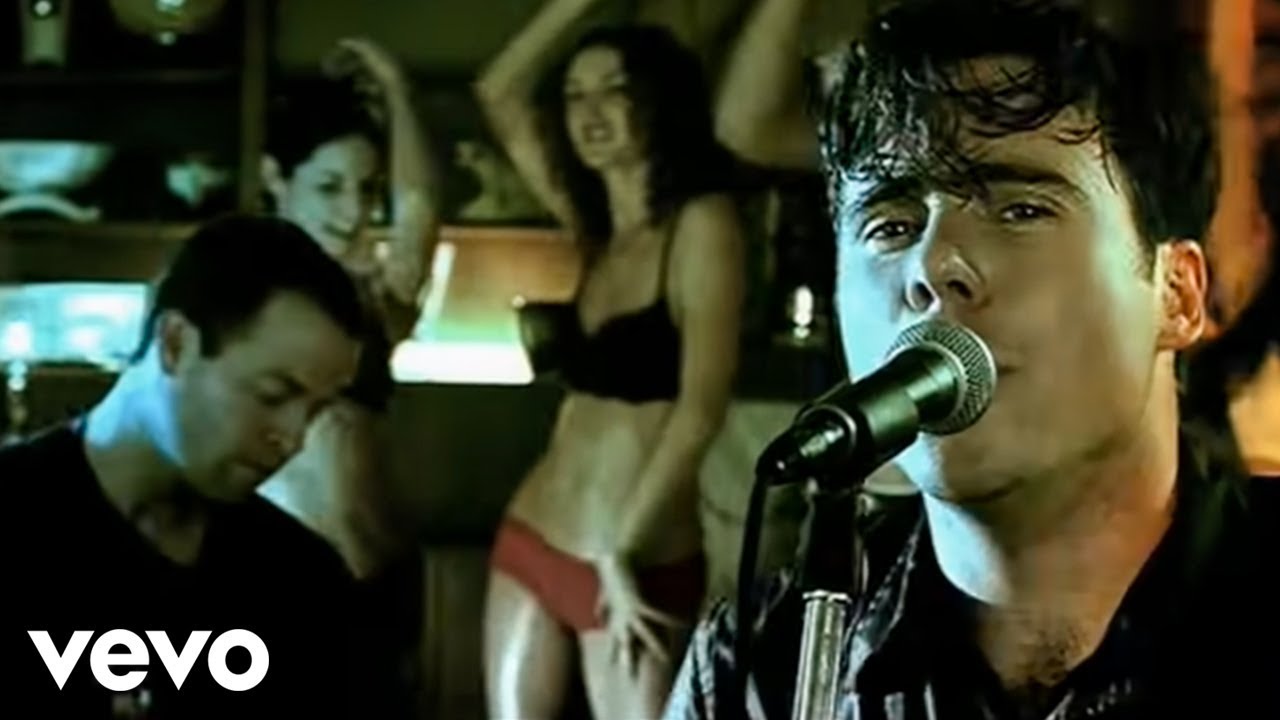
The Middle is just one example out of many where Bleed American has instances of repeated lyrics, verses repeated because Adkins felt it was the “ultimate subversive thing” to do at the time.
Zach’s always been a big Tom Petty fan, but for me, too, Wildflowers was really clicking in a way that maybe hadn’t before going in
Jim Adkins
They all learned you can subvert songwriting orthodoxy when the songs are strong – and they were. Adkins learned he could play the most simple guitar part or hook and it will work, because under it you've got Rick Burch's bass guitar and Tom Linton's rhythm guitar there too. It all adds up
“There’s something really powerful in making something very simple,” says Adkins. “There’s a feeling, an almost slightly demented feeling, of how far you can push a very simple set of restrictions on yourself, like how far between these boundaries can you take it?
“Repetition is definitely a sort of hook. I don’t necessarily know if it was a conscious decision at the time. Sometimes you can’t even quantify with words what is inspiring; you just instantly turn it around and do your version of it. If something that is like, ‘Oh yeah, this is awesome!’ now that’s part of the menu. Tom Petty was definitely one of those. Zach’s always been a big Tom Petty fan, but for me, too, Wildflowers was really clicking in a way that maybe hadn’t before going in.”

This was a weird time for the world and its popular culture. How we listened to music was about to change. Peer-to-peer file sharing was coming online, paving the way for the streaming revolution to follow. Jimmy Eat World used P2P platforms to their advantage, sharing rough mixes over Napster to prime the pump.
It worked. When they would play those songs live the crowd’s reaction told them that they had downloaded it. They had to think like this. They didn’t have the “formal infrastructure” to support them.
How could they have foreseen The Middle becoming such a hit when they had no one to lobby radio DJs to play it?
“Luckily, we ended up hiring the best rock manager in the world, and signing a deal with DreamWorks, a label that really believed in us, and that solved that problem,” says Lind. “But at the time, when we were making the record, I don’t think you can really let yourself think about, ‘Oh, this is gonna have this reach…’ when you don’t even know what that reach is gonna be. You don’t even know what label it's coming out on – even if it’s gonna come out on a label.”
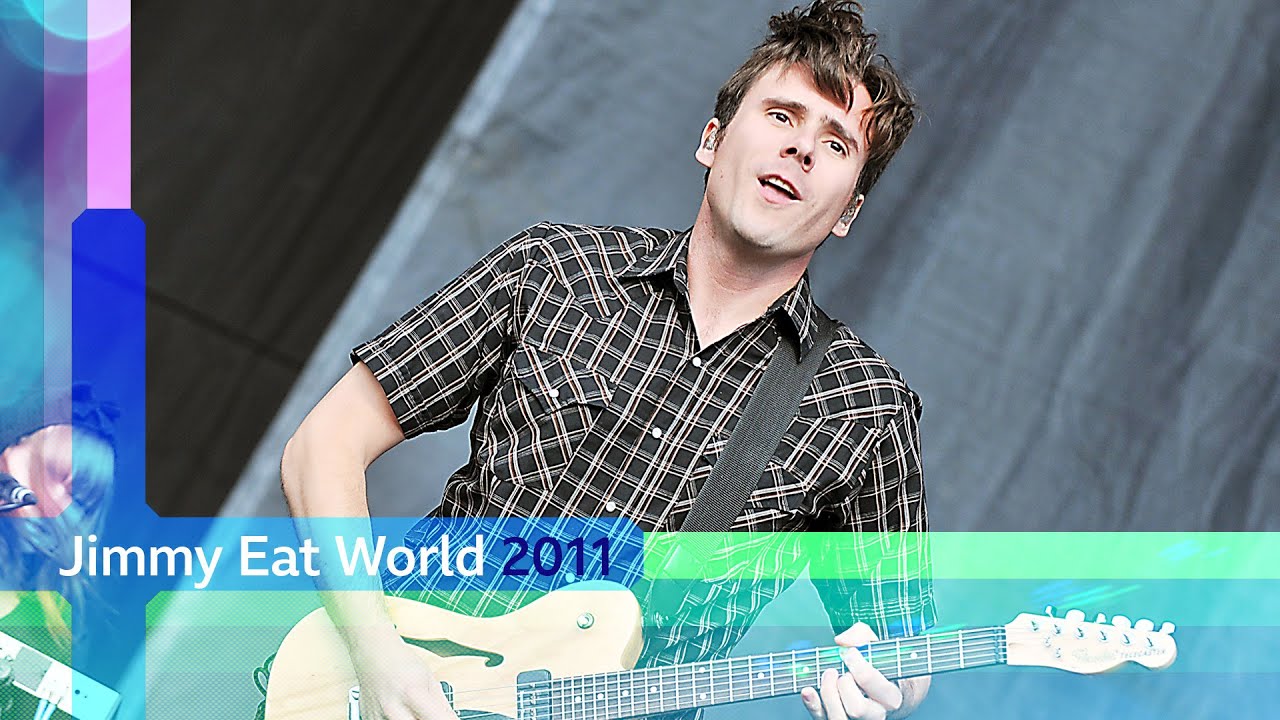
Finishing the record, hiring John Silva as manager, and shopping the record around labels remains Lind’s favourite memory of the whole Bleed American cycle. Like anything in life, the hard times feel too real, and the good times take on a surreal air, like it's all just too good to be true. Silva had put together meetings in New York City with various labels – Elektra, RCA, Atlantic, and Lind could – finally – see the light, a sign their lives were never going to be the same again.
“I remember just flying into New York City, seeing the Manhattan skyline, the sun setting, and thinking, ‘Holy shit, this is crazy! It’s wild that we’re being flown to a place just to talk to people who are all wanting to put out our album,’” he says. “It was just a wild thought. It was a moment of whiplash, and that moment always sticks out to me for some reason.”
“Doing our own headlining show at Brixton Academy was definitely a highlight,” says Adkins. “Going from playing the Garage to Brixton Academy within a year was a pretty wild ride.”
- The Bleed American 25th Anniversary Tour is underway. See Jimmy Eat World for dates and ticket details.
