


On 26 September 1969, The Beatles released their eleventh studio album Abbey Road. It was the last album the band recorded together and is widely regarded as a masterpiece.
Abbey Road was a triumphal swan song for The Beatles’ astonishing recording career. It also captured them still in their prime, capable of creating music that left most of their contemporaries standing.
Across its 47:03 running time, Abbey Road spans a dizzying array of styles, yet it is a stunningly cohesive work. It is also bold and innovative, as demonstrated by the song that opens the album, Come Together.
Come Together is a strikingly raw and direct song, written by John Lennon. It opens with one of the most iconic bass lines in rock and melds surreal stream-of-consciousness lyrics with a mean and gritty swamp-infused groove.
57 years since it was recorded, Come Together stands as one of the most distinctive songs in The Beatles’ peerless back catalogue.
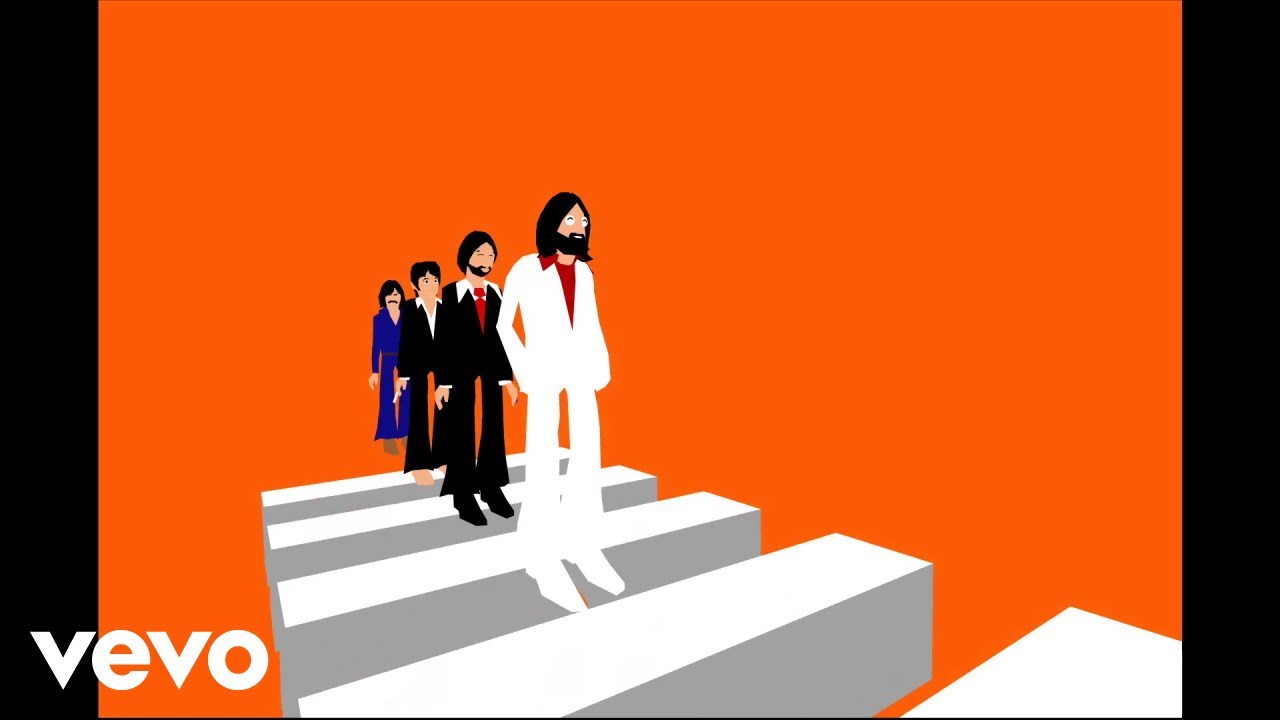
The initial idea for Come Together was reportedly sparked when American psychologist, writer and early advocate for psychedelic drugs, Dr Timothy Leary, asked John Lennon to write a song. This was to be used for Leary’s campaign to become Governor of California in 1969.
Leary already had the campaign slogan ‘Come together – Join the party’, and Lennon attempted to create a track for Leary’s political bid.
“‘Come together’ was an expression that Leary had come up with for his attempt at being president or whatever he wanted to be, and he asked me to write a campaign song,” Lennon told author David Sheff in a 1980 interview, published a year later as All We Are Saying: The Last Major Interview With John Lennon And Yoko Ono.
“I tried and tried, but I couldn’t come up with one. But I came up with this, Come Together, which would’ve been no good to him – you couldn’t have a campaign song like that, right?”
Lennon took the phrase ‘come together’ and created a heavily modified new song, which he brought along to the Abbey Road sessions. This was an upbeat blues composition, which allegedly took its musical cue from the 1956 song You Can’t Catch Me by Chuck Berry.
When Lennon played the song to the band in the summer of 1969, Paul McCartney instantly spotted the reference. “He originally brought it over as a very perky little song, and I pointed out to him that it was very similar to Chuck Berry’s You Can’t Catch Me,” said McCartney in Barry Miles’ 1997 book Paul McCartney: Many Years From Now.
“John acknowledged it was rather close to it so I said, ‘Well, anything you can do to get away from that’. I suggested that we tried it swampy – ‘swampy’ was the word I used – so we did, we took it right down.”
Slowing the pace gave the song its power. But it was McCartney’s iconic bassline, with its long, undulating slides, that really stood out.
“I laid that bass line down, which very much makes the mood,” said McCartney in Barry Miles’ 1997 biography.
In late 1973, Lennon was sued by music mogul Morris Levy, who claimed that Come Together infringed the copyright on Berry’s You Can’t Catch Me, owned by Levy’s publishing company, Big Seven Music.
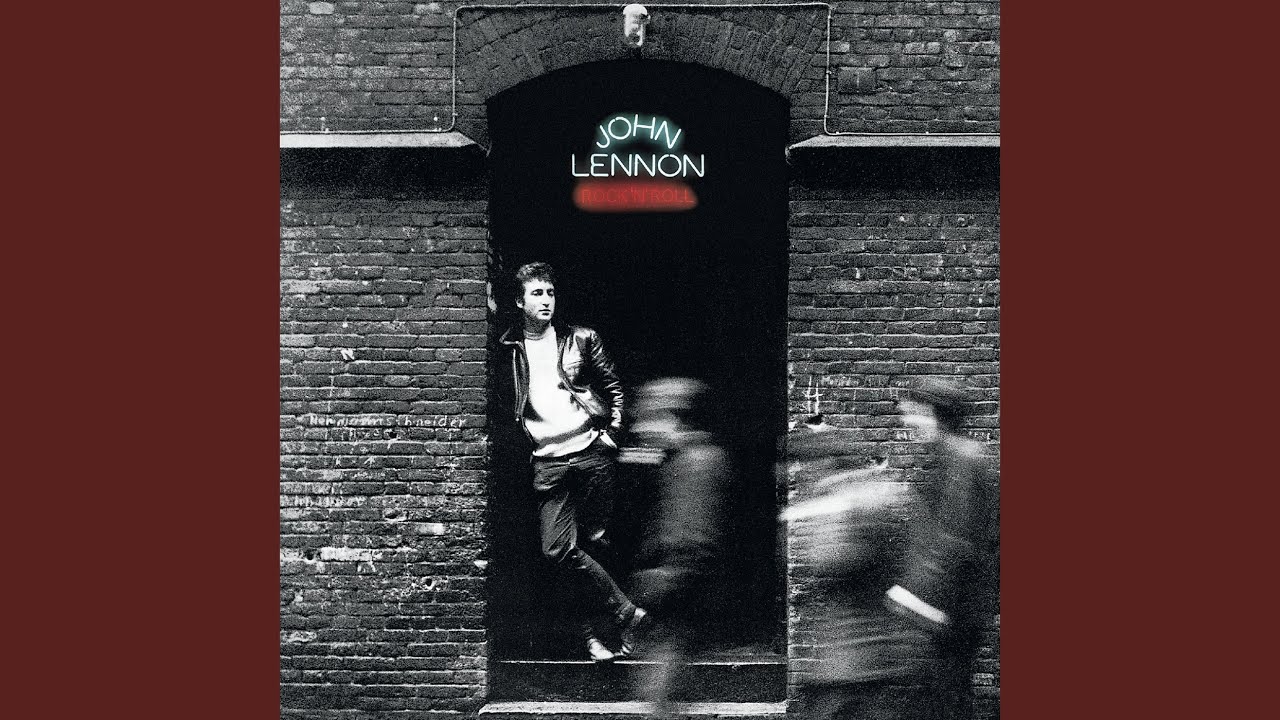
They settled out of court, with Lennon agreeing to record three songs from Levy’s Big Seven publishing catalogue for his next project. This ultimately led to Lennon’s 1975 cover album Rock ‘N’ Roll.
At McCartney’s request, engineer Geoff Emerick returned for the Abbey Road album, and Come Together was the first Beatles session he had worked on since he walked out of sessions for The White Album in 1968, exhausted by the arguments within the band.
Emerick helped create the dark, heavy sound of Come Together and captured its deep groove with extraordinary warmth and weight.
On the Revolver album, Emerick had pioneered close-micing and it’s a technique he used on Come Together to give Ringo’s kick and toms a real heavy physicality and presence
By the recording of Abbey Road, Ringo was regularly draping tea towels over his snare and toms in the studio to deaden the sound. “A terrific effect,” Emerick told Joe Bosso of MusicRadar. “Loud drums would have destroyed the song's spooky mood.”
Emerick also helped create the beautiful clarity and weight of McCartney’s bass sound, a crucial element in the song’s dark, swampy feel.
Abbey Road was the first Beatles album to be recorded on a transistorised mixing console, rather than the valve consoles used on previous Beatles’ albums.
“It delivered a bit of a softer sound,” Emerick told MusicRadar. “The guitars, the bass, the snare and the bass drum were all a bit softer and warmer. It took a little bit of time for the guys to get used to it.”
The Beatles recorded Come Together over six days – 21, 22, 23, 25, 19 and 30 July 1969. The sessions took place in Studio Three at EMI Recording Studios in Abbey Road – now known as Abbey Road Studios – and were produced by George Martin and engineered by Emerick and Phil McDonald.
On 21 July 1969, The Beatles recorded eight takes of Come Together. Take six was marked “best” and selected as the basis of the album and single version of the song, although the edit of the single version fades earlier and has different stereo balance and mastering on some releases.
Confusingly, take six was then designated as take nine. It was recorded on four-track and transferred over to eight-track tape in Studio Two at Abbey Road, ready for overdubbing and manipulation of EQ.
On 22 July 1969, Lennon re-recorded his vocal and added handclaps, with Emerick adding tape delay to both.
At one point in the song, Lennon adds “shoot me”, a phrase allegedly alluding to heroin, although as Emerick noted in the book The Complete Beatles Recording Sessions by Mark Lewisohn, “On the finished record you can really only hear the word ‘shoot’. The bass guitar note falls where the ‘me’ is.”
In his 1980 interview with David Sheff, Lennon described his lyrics for Come Together as “gobbledygook” but they reflect his liking for the nonsensical and surreal. For all their seeming randomness, there’s an exhilarating sense of liberation to Lennon’s scattergun word association.
“He wear no shoeshine, he got toe-jam football/He got monkey finger, he shoot Coca-Cola/He say, ‘I know you, you know me’/ ‘One thing I can tell you is you got to be free’.”
The overdubs on the recording included an electric piano solo but to this day, opinions vary about whether it was Paul McCartney or John Lennon who played the funky and percussive solo.
In a 1984 interview with Playboy magazine, McCartney said that he played the part.
“With Come Together, for instance, [John] wanted a piano lick to be very swampy and smoky, and I played it that way and he liked that a lot. I was quite pleased with that.”
But in his 2014 interview with MusicRadar, Geoff Emerick recalled that it was Lennon who played the electric piano solo used on Come Together.
“Initially, Paul played the electric piano part, but John kind of looked over his shoulder and studied what he was playing. When it came time to record it, John played the electric piano instead of Paul. Paul might have been miffed, but I think he was more upset about not singing on the choruses – John did his own backing vocals.”

Listening to Come Together almost six decades on, it’s striking how fresh and timeless it sounds.
Lennon’s flat, staccato-style vocal sounds compelling and intense, set against the dark, spacious murk of the backing track.
McCartney’s undulating bass predominates and he leaves heaps of space, moving between deep root notes and higher melodic motifs.
Unsurprisingly, it is Starr and McCartney that give the song its swagger.
As ever, Starr’s drumming is impeccably judged and understated. There are some inspired tom fills and his cymbal work helps keep the sound dark and spacious.
Ringo sits slightly behind the beat on Come Together. His drumming is loose and as always, he knows exactly when not to play.
George Harrison’s rhythm guitar is raw and gritty when it comes in on the chorus, and he provides some inspired lead guitar flourishes, such as the slide guitar after the keyboard solo at 2:15. Harrison also contributes some beautifully melodic lead playing on the outro, from 3:12 onwards, which is woven between Lennon’s ad-libbed vocal and the soulful keyboard vamps on the Fender Rhodes.
But what really stands out here is the strength of the band’s live performance in the studio. The tensions within the band still prevailed but this is the sound of The Beatles at the top of their game – raw, strident, assured and with an innate energy and feel.
It was a point highlighted by George Martin in the liner notes to the compilation album Love. Martin described Come Together as a simple song but one that “stands out because of the sheer brilliance of the performers”.
Come Together was released on a double A-side single with George Harrison’s Something on 6 October 1969. It reached No 4 in the UK and No 1 in the Billboard Hot 100 in the US.
Critics such as the New Musical Express concluded that Come Together was one of the funkiest songs The Beatles had ever recorded.
In 2006, MOJO placed Come Together at No 13 in its list of 101 best Beatles songs while four years later Rolling Stone voted it No 9 on their list of the band’s 100 greatest songs.
The listening public later rated it higher. When the Beatles catalogue became available on major streaming services on Christmas Eve 2015, Come Together almost instantly became the most streamed Beatles song. 11 years on, it is the second most popular Beatles song on Spotify, after Here Comes The Sun.
Numerous artists would cover the song, including Ike & Tina Turner a month after its release. Their soul/funk treatment became a highlight of their live set and they released it as a single in December 1969.
Other artists who covered the song include The Supremes, Joe Cocker, Aerosmith, Michael Jackson, Soundgarden, Arctic Monkeys, Eurythmics and Prince.
For John Lennon, Come Together remained a highlight of his work with The Beatles.
“It was a funky record,” Lennon told writer David Sheff in 1980. “It’s one of my favourite Beatle tracks, or, one of my favourite Lennon tracks, let’s say that. It’s funky, it’s bluesy, and I’m singing it pretty well. I like the sound of the record. You can dance to it. I’d buy it!”
