


For one of the best hard rock bands to come out of Los Angeles in the ’80s, there was always a problem.
No matter how high they flew, selling millions of albums and playing on the world’s biggest stages, there was something rotten at the core of Dokken – a bitter feud between the singer who gave the band its name, and the guitar hero who never liked the singer in the first place and grew to dislike him even more as fame, money, ego and drugs took hold.
Don Dokken and George Lynch made some great music together. In a decade when fellow LA bands such as Mötley Crüe and Ratt were at their commercial peak, Dokken delivered some of the finest albums of the era in Breaking The Chains, Tooth And Nail, Under Lock And Key, Back For The Attack and the double live set Beast From The East.
But the friction between singer and guitarist was the band’s undoing, and although there have been brief reunions over the years, the animosity between them has remained.
Don Dokken gave his side of the story in an interview with Rock Candy magazine.
He began by confessing: “I’m not a great singer. In my early bands I became the singer by default, because we had singers who quit. When I went to Venice High School in LA, I started playing drums, then guitar. But I never thought about being a famous rock star.”
In the late ’70s his first serious band was Airborn, who gigged regularly at Hollywood clubs such as the Whiskey A Go Go and the Starwood.
“We played with Van Halen all the time,” he said. “The dream was to headline at the Whiskey on a Friday night for 300 people. Man, if we did that we’d made it.
He continued: “Airborn was getting kind of popular, but we had to change our name because some other band called Airborne [featuring future Ratt producer Beau Hill] got a record deal. So that’s why the band became Dokken, not out of ego.
“One of the first times we played as Dokken was with Van Halen and Quiet Riot – Randy Rhoads’ last shows with Quiet Riot before he joined Ozzy’s band. I still have the flyer from that show.

“But this was a weird phase in LA: rock was in, and then it was out. It was all new wave, The Knack, and the punk scene was bubbling, with bands like Black Flag. So I went to Germany, and Gaby Hauke, the manager of [German metal band] Accept, took my demo to Carrere Records and got me a deal.”
It was at this point that George Lynch and drummer ‘Wild’ Mick Brown entered the picture.
“I needed a band,” Don said, “but honestly, I didn’t want George. I said from day one, ‘This is not gonna work.’ I was a lead guitarist and a lead singer, and I wanted a three-piece. So I got Mick and [bassist] Juan Croucier. Mick kept pushing me to get George in the band, and he was certainly a great guitar player.
“When I got George and Mick in the band, they were working as truck drivers, delivering wine to liquor stores. They said, ‘Hey, we’ll go to Germany and make this record if you give us two thousand dollars each.’”
The first Dokken album was recorded at Dierks Studios in the village of Stommeln near Cologne. While Dokken worked in a basement room, upstairs in the main room the famous producer Dieter Dierks was working with the Scorpions on their album Blackout.
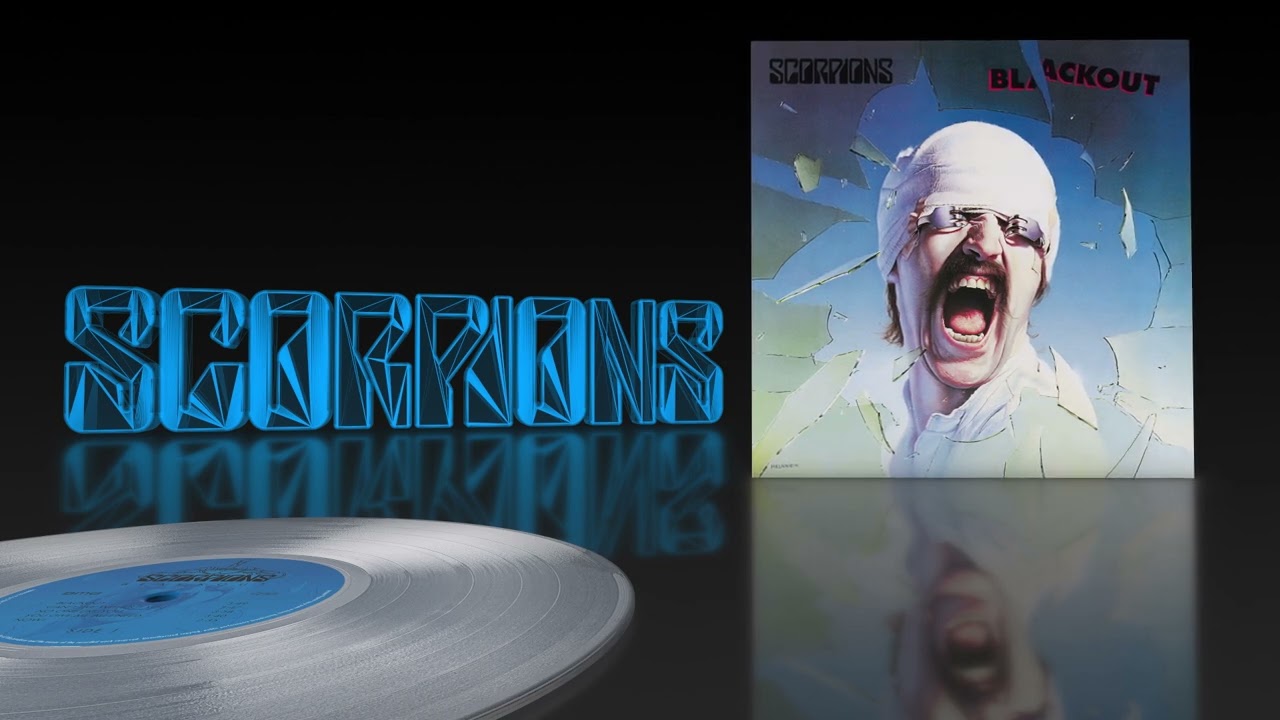
At that time, Scorpions singer Klaus Meine was recovering from surgery on his vocal cords, so Don helped out by tracking guide vocals for the entire Blackout album.
As he recalled: “I was into the Scorpions back in the day, when they had Uli Jon Roth on guitar. I loved Fly To The Rainbow and Virgin Killer. Their breakout record was Blackout and I did the background vocals.
“Klaus Meine had problems with his voice. They wanted me to do the groundwork – those big-ass high harmonies – to save Klaus’s voice, because he’d had surgery.
“Truth is, I can hear myself on that record, but they buried my vocals. I have a tape – the entire Blackout album with me singing lead vocals and harmonies. For years they denied this. They made me look like a bullshitter. Then years later we became good friends.”
During their time in Germany, Don and George Lynch clashed on a regular basis. Soon after the band returned to LA, Juan Croucier jumped ship to join Ratt.
As Don remembered it: “Juan said to me, ‘I can’t be in a band where there’s constant turmoil – arguing, fighting. I don’t need this in my life.’ So he left. I don’t blame him.”
The band’s debut album (originally titled Breakin’ The Chains, minus the ‘g’) was released in Germany in 1981 and marketed as a solo project, credited to Don Dokken. The cover photo featured the singer alone. The title track picked up radio airplay in the US and caught the ear of a highly influential figure in the music business – Cliff Burnstein, who co-managed Def Leppard alongside Peter Mensch.
“Cliff Burnstein found the record in an import store, called me and said he wanted to meet me,” Don said. “I was expecting a guy in a suit and tie and a big cigar, and Cliff looked like a homeless person – scruffy beard, curly hair, a faded t-shirt with spaghetti sauce stains on it.
“He took me to see Metallica at The Troubadour. He said, ‘I’m gonna sign these guys, they’re gonna be huge.’ I said, ‘Really? I mean, really?’ I didn’t get it. At the time it was all Journey and Foreigner and all these commercial rock bands. After Cliff said he wanted to manage me, he said, ‘Keep George in the band.’ I called George, but he wasn’t interested.”
Lynch auditioned for Ozzy Osbourne following the death of Randy Rhoads in March 1982, but lost out to Jake E. Lee.
Don said of Lynch’s missed opportunity: “George was ‘The Guy’ – it was down to him and Jakey. And George probably would have got the gig, but Jakey bonded with Ozzy.”
He added: “Years later, Ozzy and I were in a bathroom peeing together, and he said to me, ‘You still got that guy George in your band? That motherfucker’s crazier than I am!’ I said, ‘Well, I don’t know what to say about that…’”
When Cliff Burnstein secured a contract with Elektra Records, the classic Dokken line-up came together.
“Elektra wanted George in the band,” Don said. “So did Burnstein. So it ended up with me and George and Mick, and then I found Jeff Pilson in a bar, playing in a top 40 covers band, doing Little Red Corvette with a chick singing. Jeff was out of his mind when I met him. We went back to his shitty apartment to talk about him joining Dokken and he whipped out some coke and started chopping it out. I said, ‘No thanks.’ But I liked him, liked the way he played. So that was the band.”
Elektra re-released the debut album in 1983 under the Dokken band name with the ‘g’ added to the title Breaking The Chains. A year later the second album Tooth And Nail reached the top 40 on the Billboard 200.

George Lynch was hailed as a new guitar hero, but as Don told Rock Candy: “People thought George wrote the music and I wrote the lyrics. Not true. I’m a guitar player. Half the songs on Tooth And Nail were mine.
“The poppiest songs always got made the singles, but we had songs that were totally heavy. I was into Saxon and all the European bands, so we had that heavy edge, which helped when we toured with Judas Priest.
“I could hit those big screams like [Priest frontman] Rob Halford but I couldn’t do the heavy metal type singing. I’m a more melodic singer. I didn’t have that high, popular sound.
“The record company was pushing me to be a David Lee Roth-type frontman, running around and doing the splits. But that’s not my gig at all, and when Cliff Burnstein said that to Elektra, it changed their minds. By that time, Def Leppard had sold six million albums. That was his power.”
Don said that drugs created a division within his band. “If somebody invites you over for a three-day Jack Daniel’s and cocaine binge, and you don’t go, you’re the odd man out. Cocaine, everybody was doing it but me. Alcoholics and drug addicts hang out together. The problem was, the three of them would get an ounce of cocaine and go off someplace, and I’d go off to my apartment and write my songs.”
Dokken’s 1985 album Under Lock And Key and 1987 album Back For The Attack were both million sellers.
But as Don saw it, there was no pleasing George Lynch.
He stated: “I believed that if we had success, if we had money, then George would be happy. But as I said to Mick: ‘It seems like the more famous we get, the more unhappy George is.’ It was the oddest thing I’ve ever seen in my life.
“When I met George he had a Ford Pinto station wagon and he was sleeping in the back of it with his girlfriend. That’s how far down he was. He had nowhere to go but up. But even when we sold a million records, he still wasn’t happy. And in that moment, I realised this had nothing to do with me. I couldn’t take it personally.”
In early 1988, when Dokken toured the UK as the opening act for AC/DC, thew tension between Don Dokken and George Lynch came to a head.
“Touring with AC/DC was a thrill for me,” Don said. "But when we got to London, I got into a fight with George. We were arguing in the back of a limo, and I said, ‘Let’s get out to the parking lot and just get this over with. And one of us is gonna go to the hospital.’
“George was pretty buff, strong, a big guy, but I’d been doing martial arts since I was 12. I told him, ‘If you hit me, you’re probably gonna knock me out. But if I get up, you better run.’ We went at it, but the manager then came out and said, ‘Guys, you’re on in ten minutes!’ So we just stopped and went, ‘Okay!’ It’s kind of funny, looking back at it.”
In the summer of 1988 Dokken performed in US stadiums as part of the Monsters Of Rock tour. It proved disastrous. Instead of raising Dokken to the next level, that tour ended with Don quitting his own band.
“It was such a great bill,” he said. “Van Halen, Scorpions, Dokken, Metallica and Kingdom Come. My dream had come true. We had 100,000 people in a stadium and my name’s behind me on a forty-foot banner. I thought I’d won the lottery.
“But on that tour, the drug thing had gotten way out of hand. I’ve never done coke in my life, and I said, ‘Somebody’s gonna die.’ On that tour we should have been going out there and kicking it, but the bottom line was: we sucked. After a couple of shows, going on after Metallica, we dropped every hit we had. I was like, ‘Let’s just do all our heavy shit, man, cos we’re getting our butts kicked.’ It’s the truth. No point clouding it.
“Monsters Of Rock should have been the pinnacle of our career, but George was doing everything in his power to throw the band under the bus. I don’t know why. I’m not a psychiatrist. I was so distraught, I started drinking heavily, and I was taking Valium because I was having anxiety attacks.
“I couldn’t figure out what I could do to make the other guys see the folly of being self-destructive. Everybody was getting high and thinking no matter how much they misbehave I would never leave because that would be crazy. But that’s when I left the band, after that tour. At the last Monsters Of Rock, I said, ‘I can’t play with you any more, George. Not for any price.’”
The story did not end there. In the early ’90s Dokken reunited – with all four members of the classic line-up. There have been various albums and tours since then, with and without George Lynch. But for Don Dokken, the Monsters Of Rock tour was where the band really died.
“We had a lot of success,” he said. “But really, we could have been huge.”
