


The young American guitarist had no idea what he was getting into when he went to audition for an Irish rock band. But he was desperate – and this gig was offering decent money.
It was 1974, and Scott Gorham, from Glendale, California, was in London trying to make it as a pro musician.
It was hard going. With his band Fast Buck he was playing in tiny venues and earning next to nothing. So when a friend tipped him off about this Irish band looking for a guitarist, he jumped at the chance.
As Gorham recalled in a previously unpublished interview from 2010: “I was broke. Playing in the pubs I was making £11 a week. And then this guy told me about the audition and said, ‘I think they’re gonna pay £30 a week.’ I said, ‘I’m in!’”
This was all the information he had when he walked into the band’s rehearsal space.
“I was thinking, ‘Irish rock?! What the hell is that?’ I wasn’t even really aware of Irish music at that point. I’m half Irish, my mother’s full Irish, but we never had any of that playing in the house.
“So I’m expecting a red-haired white guy, and I get a tap on the shoulder from this big black guy with a massive afro and a little moustache and an Irish accent. ‘Hey, I’m Phil!’ I thought, ‘Shit, this is gonna be interesting…’”
Phil Lynott was the charismatic bassist, lead vocalist and primary songwriter in Thin Lizzy.
The band had previously been a trio with Lynott alongside drummer Brian Downey and guitarist Eric Bell. When Gorham and a young Scottish guitarist named Brian Robertson both impressed at audition, Lynott chose to expand the band’s line-up to a quartet – and as a result, a new signature twin lead guitar sound was created.
In 1972, as a trio, Thin Lizzy had scored a hit in with their version of the traditional Irish song Whiskey In The Jar.
But they had failed to build on that success, and by 1974 the situation was dire.
Gorham explained: “The band was seriously in debt, which I didn’t know. I was blissfully naïve about the whole thing. I was just thinking, ‘Isn’t it great to be in a band?’
“Unknown to me, when we played at [London club] the Marquee the feeling was, ‘We’d better get a record deal from that show or it’s done.’ So thank God we did.”
Thin Lizzy’s first album with Gorham and Robertson was Nightlife, released on 8 November 1974. The album’s opening track, She Knows, was co-written by Gorham and Lynott. On the following album, 1975’s Fighting, Gorham had two co-writes with Lynott (King’s Vengeance and Freedom Song) and one solo credit for Ballad Of A Hard Man.
Looking back in 2010, Gorham remained highly critical of those albums. “We didn’t have a clue,” he said. “We were so fucking green we didn’t have a hope in hell.”
But with the album that followed, everything changed. That album was Jailbreak, released in 1976. Gorham co-wrote two tracks on the album, Warriors and Emerald. But it was Lynott alone who wrote the game-changer track. The Boys Are Back In Town was Thin Lizzy’s breakthrough hit, No 1 in Ireland, No 8 in the UK and No 12 in the US. It lives on as a classic rock anthem.
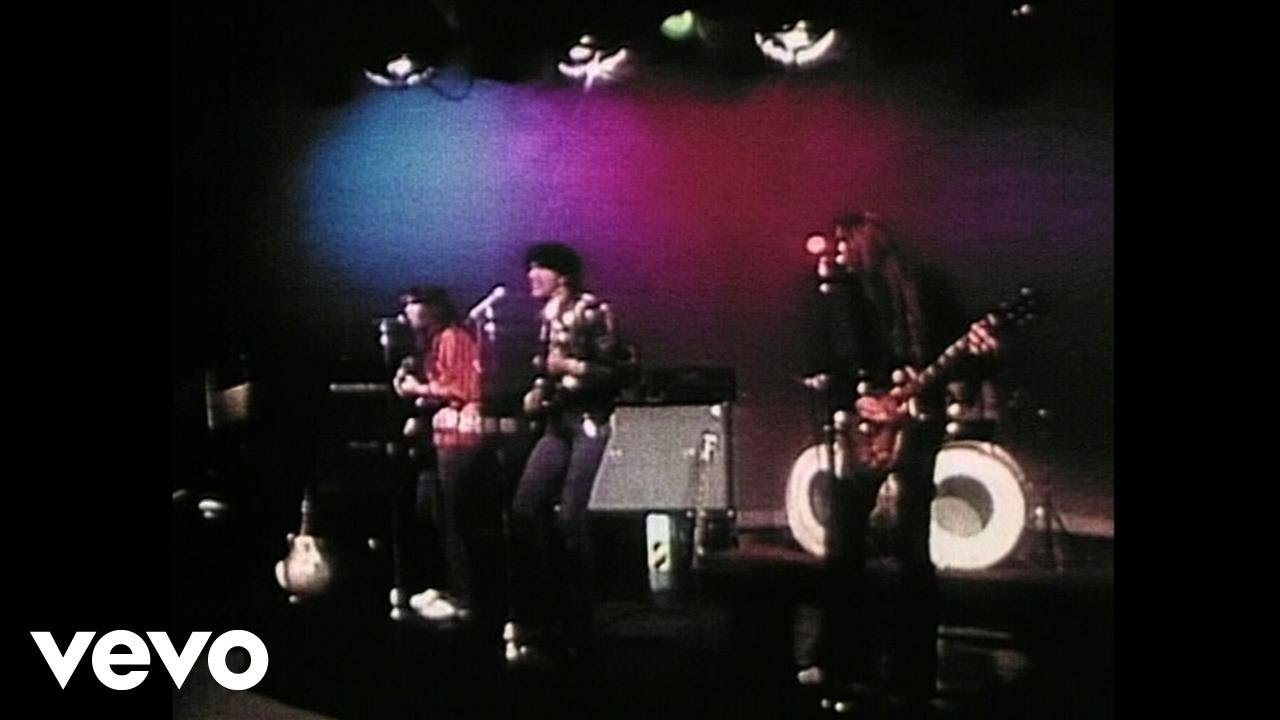
“The crazy thing is, that song wasn’t even planned to be on the album,” Gorham said. “Before it was a single the album was doing nothing in England at this point – or the same amount as the last two. But one day the manager said, ’It looks like we’re starting to get big radio play on The Boys Are Back In Town.’ We got this domino effect, a ton of radio stations picked it up, and then it just took off like a rocket.”
As Thin Lizzy’s profile rose, there were various benefits.
“The hotels got better,” Gorham said. “You got your own room. I didn’t have to look at Phil’s naked ass any more! Every so often I’d say to him, ‘I want you to take this party down the road, to somebody else’s room.’ He was the original 24-hour guy.
“And we actually started to see women at the shows! We’d written love songs. It wasn’t all thrash and leather and heavy riffs and all that. We went out of our way to write love songs and more lyrical, medium-tempo kind of things. We started to see a lot of women at the shows, which was nice. It had its perks.
“And Phil was in his element. He had a real charming thing about him. He loved women, absolutely loved them. And he really respected them, so he treated them well.”
There was, however, a tougher side to Phil Lynott.
“We were that kind of band that didn’t go out looking for trouble but we always got it,” Gorham shrugged. “And it would always end up in a huge fucking mess, fighting like you wouldn’t believe.
“If you fucked with Phil, he’d go for you. He wouldn’t back down. There were a fair few occasions when somebody would be fucking with me and Phil would go, ‘Let me take care of this guy for you.’ Boom! ‘Thanks, Phil!’
“Being around a guy like Phil, you toughen up real quick. I never hung around with someone like that before. Back home all my buddies were like surf guys, stoned on weed, just, ‘Cool, man!’
“But not Phil – not even if he was stoned. He could be real aggressive if you fucked with him, especially if you fucked with his country – he was so nationalistic – or if you fucked with his women. And if you fucked with Thin Lizzy, he was really gonna go for you!”
Ultimately, drugs were Phil Lynott’s undoing, and it was on the Jailbreak tour that the first signs of trouble became evident. Lynott was hospitalised with hepatitis, forcing the cancellation of shows in the US.
The band had another album out by the end of 1976 – Johnny The Fox, featuring the classic track Don’t Believe A Word.
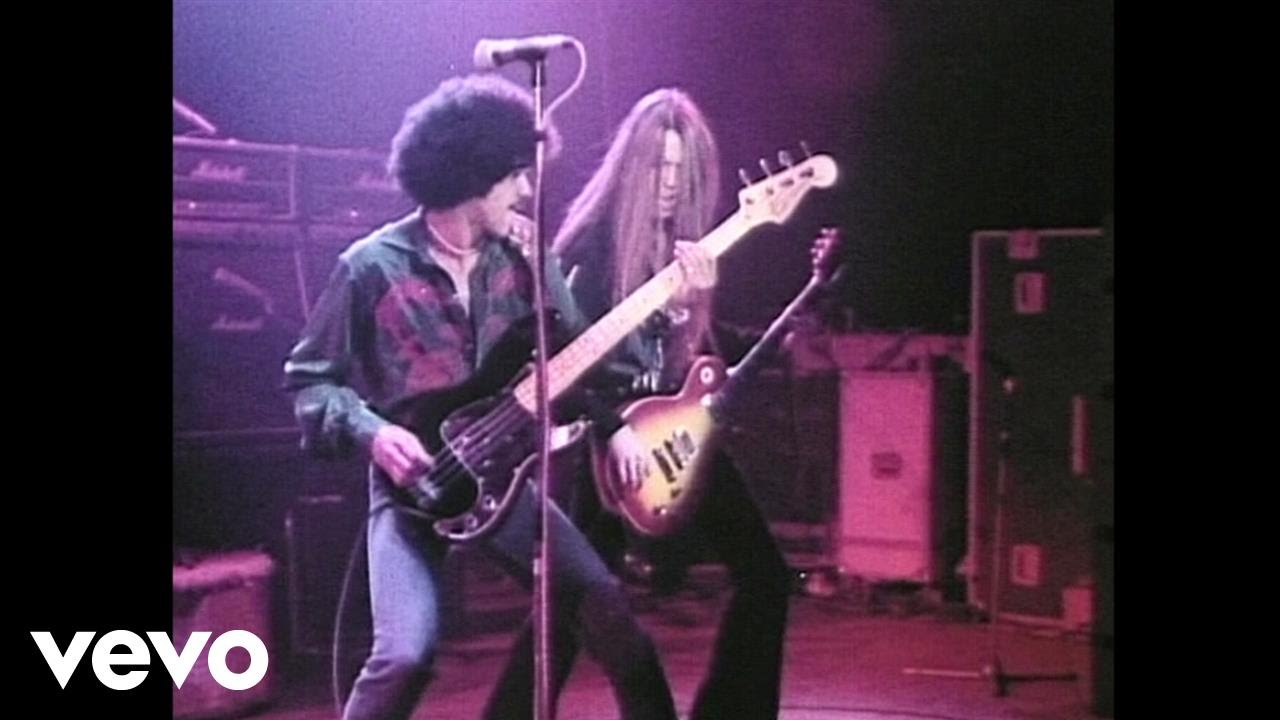
But on the 1977 album Bad Reputation, Brian Robertson played on only three tracks and was not featured in the band photo on the cover. Robertson had missed a US tour after sustaining an injury to his hand in a brawl in a London club. His replacement on that tour was Gary Moore.
Robertson was reinstated for the Bad Reputation tour, and in 1978 the band’s live album Live And Dangerous reached No 2 in the UK chart, held off the top spot by the Grease movie soundtrack.
Live And Dangerous is widely acclaimed as one of the greatest live albums of all time.
Robertson quit Thin Lizzy during the 1978 tour, with Gary Moore again stepping in to replace him. Moore remained as a full band member for the recording of the 1979 album Black Rose. But it was during the sessions for that album in Paris that Lynott and Gorham fell into the heroin addiction that would eventually contribute to Lynott’s death.
As Gorham recalled in 2010: “In the beginning it was booze and weed. The class A stuff started to come in after a few years. Whether it was mental inspiration or physical inspiration, you were looking for help. It was a sign of the times. You wanted to get loaded.
“But going to Paris to make Black Rose was a big mistake. At that point, we’d done morphine in New York City. No big deal. But in Paris – and I’m still not sure to this day why or how it happened – all of a sudden we were just inundated with dealers.
“It was like an open door. You’d get to the studio and every other night there’d be a new dealer chopping out a line of smack or whatever.
“The first night I remember it happening, Phil gave me a call at my hotel room. ‘Hey, why don’t you come down to my room, I got something I wanna show you.’ I had no idea what he was talking about. I go in, he whips open some packets and says, ‘Hey, man, you ever seen any of that?’ I knew exactly what it was. I’d already tried it out in LA. He says, ‘You wanna try some?’ ‘Uh, yeah!’ And that was me and him gone for the next six years.”
On the Black Rose album, one song was sung by Lynott as a kind of confessional. Its title: Got To Give It Up.
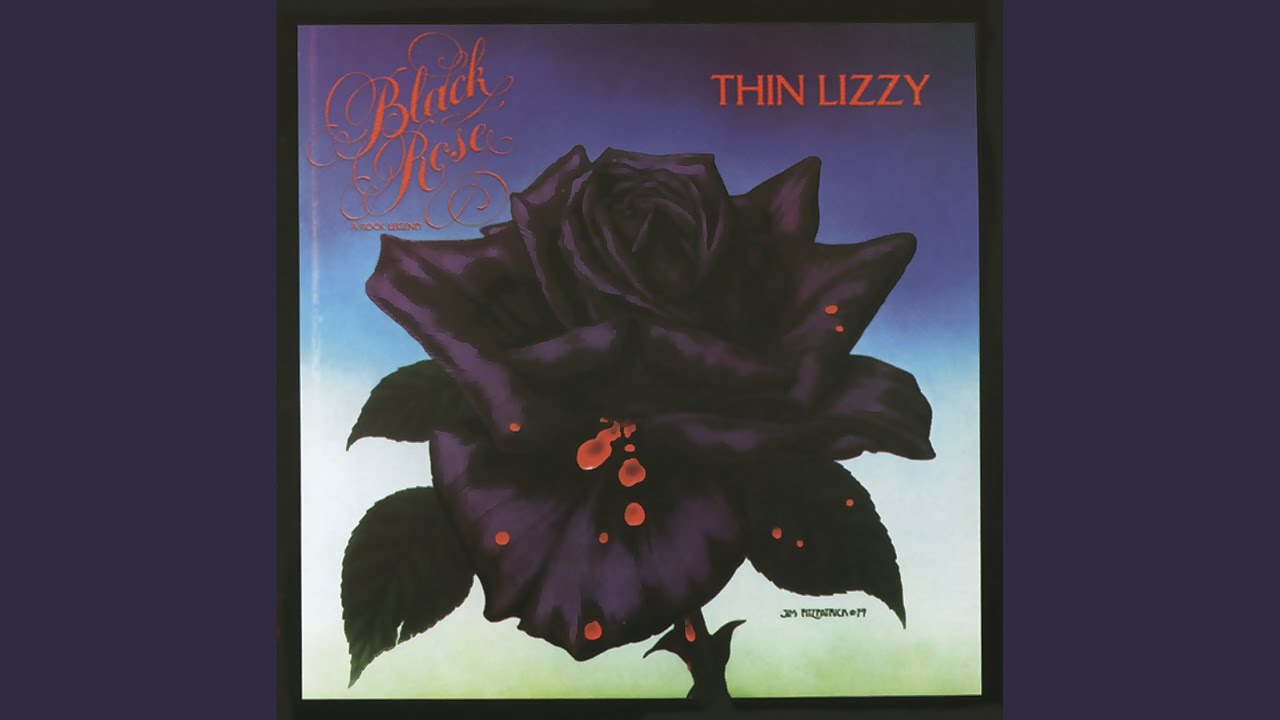
As Scott Gorham sadly recalled: “Nobody thought we were gonna get strung out. This was not gonna last forever. You are going to give it up after a while – we will come to our senses. But of course we never did.”
