
Mr. Tambourine Man by The Byrds is one of very few cover versions to have arrived less than a month after the original.
The song was penned by Bob Dylan and released towards the end of March 1965 as the second single from his fifth studio album Bringing It All Back Home, with The Byrds’ version landing just three weeks later.
The Byrds used the song as the lead single and title track from their debut full-length, which was made of folk covers – mostly composed by Dylan – and originals either written or co-written by The Byrds’ principal writer Gene Clark.
There are some key differences between the original and the cover, however.
The Bob Dylan cut is notably sparse, with just an acoustic guitar and clean electric underneath his signature vocals.
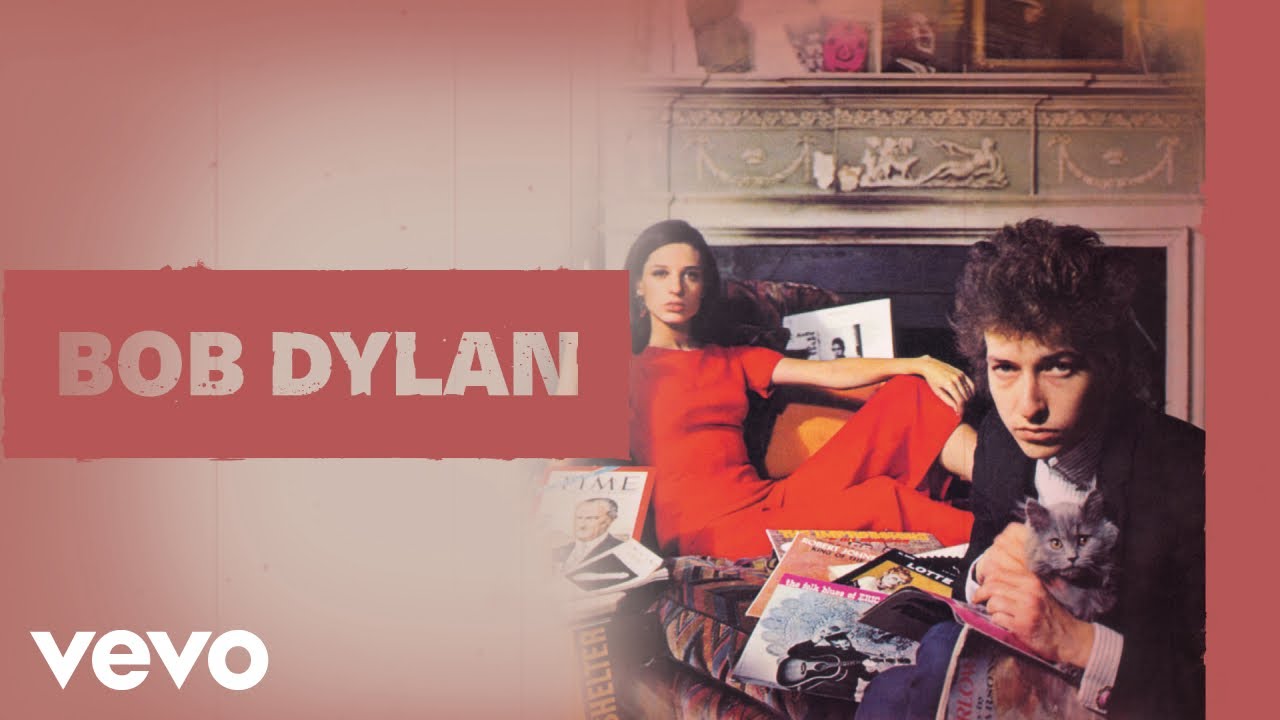
The Byrds’ version is comparably thicker and wider-sounding, with a lot more going on in terms of instrumentation, and performed in a different key and tempo. It’s also a great deal shorter than Dylan’s version, clocking in at 2:18, which is less than half the length of the Dylan recording.
Unusually, The Byrds could only base their version on a demo made in 1964 during the Another Side Of Bob Dylan sessions, as Dylan’s final version had not been recorded when they started working on it.
The Byrds’ line-up featured Gene Clark (vocals, rhythm guitar), Roger McGuinn (vocals, lead guitar), David Crosby (vocals, rhythm guitar), Chris Hillman (bass) and Michael Clarke (drums).
It was the group’s manager Jim Dickson who brought the demo in and suggested they give it a try – though to begin with the band weren’t convinced.
“Kudos to Roger McGuinn for taking on Tambourine Man, which didn’t knock us out when we first heard it,” Chris Hillman admitted. “Bob Dylan had written it in a very countrified groove, a straight 2/4 time signature, and Roger takes the song home and works with it, puts it in 4/4 time, so you could dance to it.”
When the writer of the song heard what The Byrds had done with it, he gave it his own seal of approval. Hillman revealed that “Bob heard us do it and said, ‘Man, you could dance to this!’ – noting how their cover “really knocked him over and he loved it”.
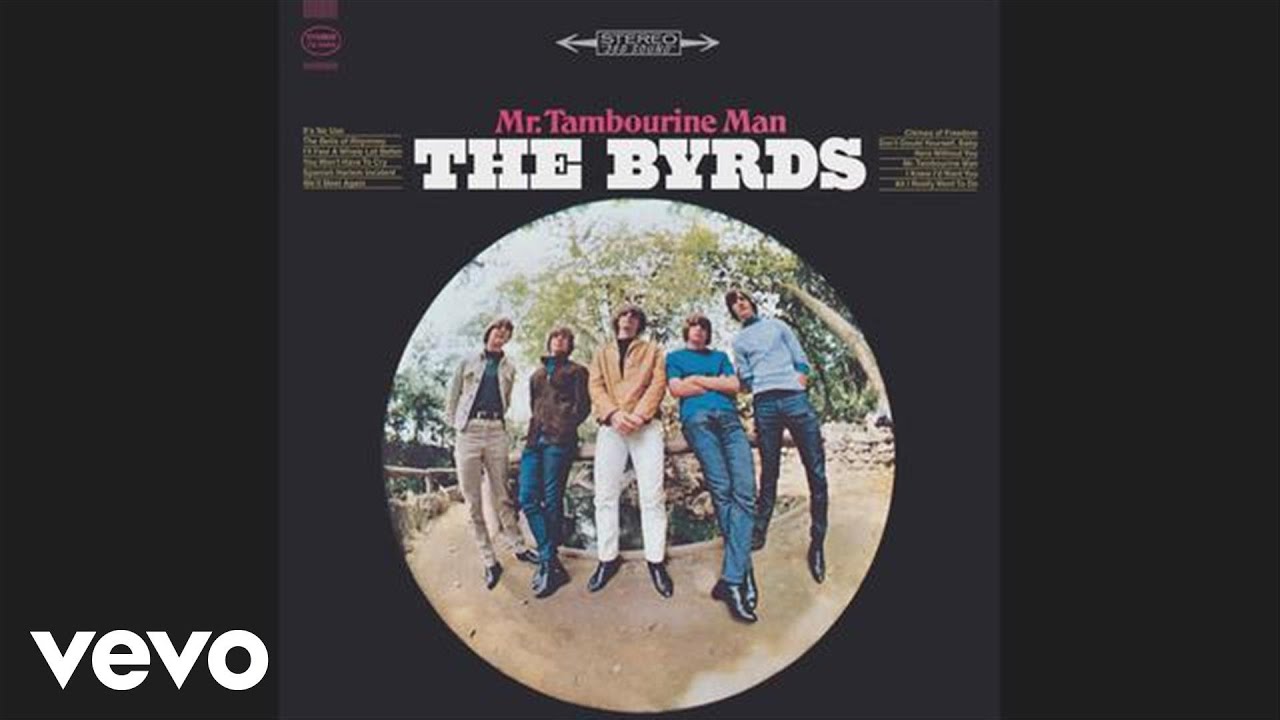
Hillman himself did not appear on the recording, however, as only three of the group’s five members ended up performing, with session musicians being hired for drums and bass. This was mainly due to it being very early on in the band’s career.
The Byrds’ version of Mr. Tambourine Man begins with the jangly sound of Roger McGuinn’s Rickenbacker 360/12. He was the third person in the world to own one of the guitars, with George Harrison owning the second model ever made.
Larry Knechtel’s bass guitar comes in after one cycle of the opening riff, soon followed by Hal Blaine’s drums and McGuinn’s lead vocals, with Gene Clark and David Crosby responsible for the harmonies.
McGuinn once admitted that he was “shooting for a vocal that was very calculated between John Lennon and Bob Dylan” and “trying to cut some middle ground between those two voices”.
Jerry Cole contributed some electric guitar to the recording, adding in the staccato chords played on the ‘one’ and ‘two and’ beats of every bar. The triads were played higher up the neck and not allowed to ring, giving the guitars more of a keyboard feel.
In a 1975 interview with Let It Rock, a whole decade after Mr. Tambourine Man was released, McGuinn explained how changes in technology facilitated the group in achieving its highly influential production quality.
He noted: “To get that sound, that hit sound, that Mr. Tambourine Man sound, we just ran it through the electronics which were available to us at that time, which were mainly compression devices and tape delay, tape-sustain. That’s how we got it, by equalizing it properly and aiming at a specific frequency.”
McGuinn later confirmed to Guitar World that “the technique was to run one compressor into another – piggyback them – just to get as much compression as possible to get as much sustain as possible”. This was done “because the Rickenbacker is a very short-sustain instrument that’s good for rhythm, but not good for lead”.
The Byrds’ cover ended up topping the Billboard Hot 100 as well as the UK Singles Chart, making it the first Bob Dylan track to land at No 1 despite him not playing on it.
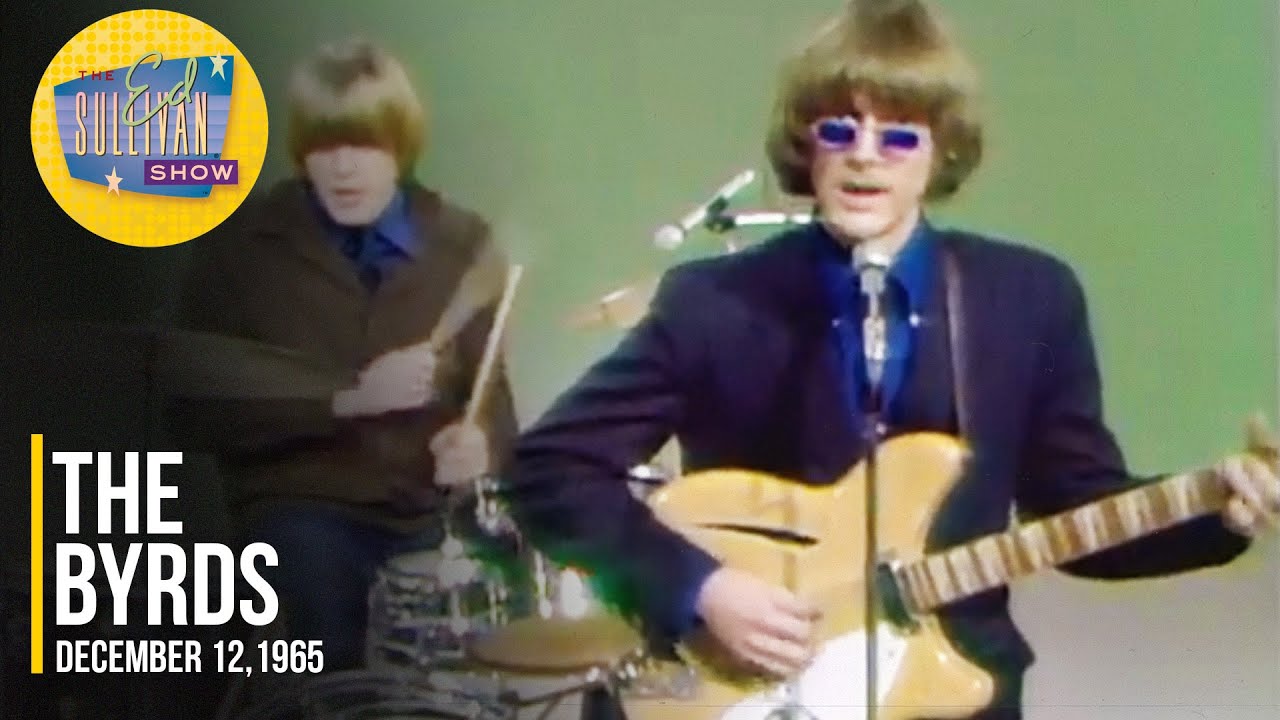
It would mark the beginning of the folk rock boom of the mid-’60s, with a wave of British and American acts using its template of jangly rock and contemplative lyrics as their recipe for commercial success.
Some have gone as far as saying it’s The Byrds’ version of the song that changed the face of rock music, giving birth to a whole movement of electrified and melody-driven musical introspection. It even convinced Dylan himself to “go electric” – as confirmed by David Crosby.
Crosby said of Dylan: “He came to hear us in the studio when we were building The Byrds. After the word got out that we were gonna do Mr. Tambourine Man, and we were probably gonna be good, he came there and he heard us playing his song electric.”
Crosby added: “You could see the gears grinding in his head. It was plain as day. It was like watching a slow-motion lightning bolt.”
