
On 5 December 1980, three of the most gifted guitar players of all time performed together at the Warfield Theatre, a 2500-capacity venue in San Francisco.
The recording from that night turned into what is arguably the most famous and influential acoustic guitar album ever released. Its title: Friday Night In San Francisco. Its creators: Al Di Meola, John McLaughlin and Paco de Lucía.
Friday Night In San Francisco was released in 1981. Now, 45 years on, Al Di Meola tells MusicRadar how this legendary collaboration was conceived and perfectly executed.
“The funny thing about Friday Night In San Francisco is that nobody could have planned what that record would become,” Di Meola says. “Nobody was sitting there saying, ‘We’re going to make one of the biggest acoustic guitar records ever.’”
He explains how he first encountered Paco de Lucía, a master of Spanish flamenco guitar. This was in 1973, when Di Meola was a member of groundbreaking jazz fusion group Return To Forever alongside pianist Chick Corea, bassist Stanley Clarke and drummer Lenny White.
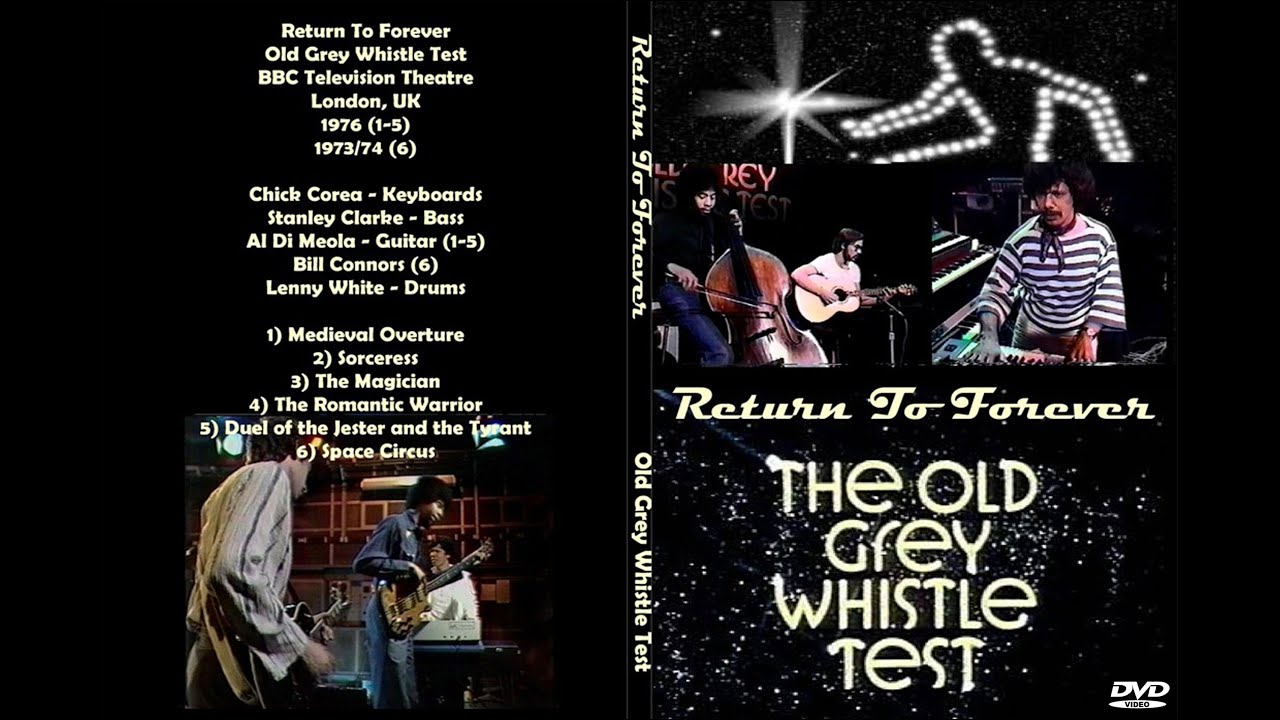
“My connection with Paco actually goes back several years before the trio,” Di Meola says. “I was 19 years old, touring Europe with Return To Forever, and when we were in Spain, I started hearing about this guy Paco de Lucía.
“Then I heard him. The rhythm was the first thing that got me. I already had this huge attraction to Latin music and rhythm, but Paco had something I’d never heard before. The articulation, the right hand, the rhythmic power. It was unbelievable. I remember thinking, ‘I’ve got to play with this guy.’”
Di Meola’s wish came true when he was recording his second solo album, Elegant Gypsy, which also featured appearances from Jan Hammer on keyboards and Steve Gadd on drums. The album was recorded at Electric Lady Studios in New York, and de Lucía played on the landmark track Mediterranean Sundance.

Before the trio of Di Meola, de Lucía and McLaughlin came together, the latter pair had performed in a different trio with Larry Coryell, the guitarist hailed as ‘godfather of fusion’.
As Di Meola recalls: “John had already been playing with Paco and Larry Coryell before John, Paco and I became the trio. Larry, by the way, had been very important to me when I was young. I followed him around and took some lessons with him when I was about 15. So, there were all these connections already there.”
He continues: “When I came into the trio, you suddenly had three guys from completely different musical worlds. Paco came from pure flamenco. John had Miles Davis, Tony Williams, Mahavishnu Orchestra, jazz, Indian music, and all of those rhythmic concepts. I had Chick and Return To Forever, Latin music, rock, The Beatles, and my own compositional thing.
“What connected the three of us was rhythm. And there was competition. Absolutely. We wanted to impress each other. If Paco played something unbelievable, believe me, John and I heard it. If John did something, I heard it. And if I played something, they heard it.
“There was a healthy competition every night where you wanted to make the other two guys turn their heads. People sometimes have this romantic idea that we just walked onstage and magically played this incredibly complicated music. No. We worked our asses off.”
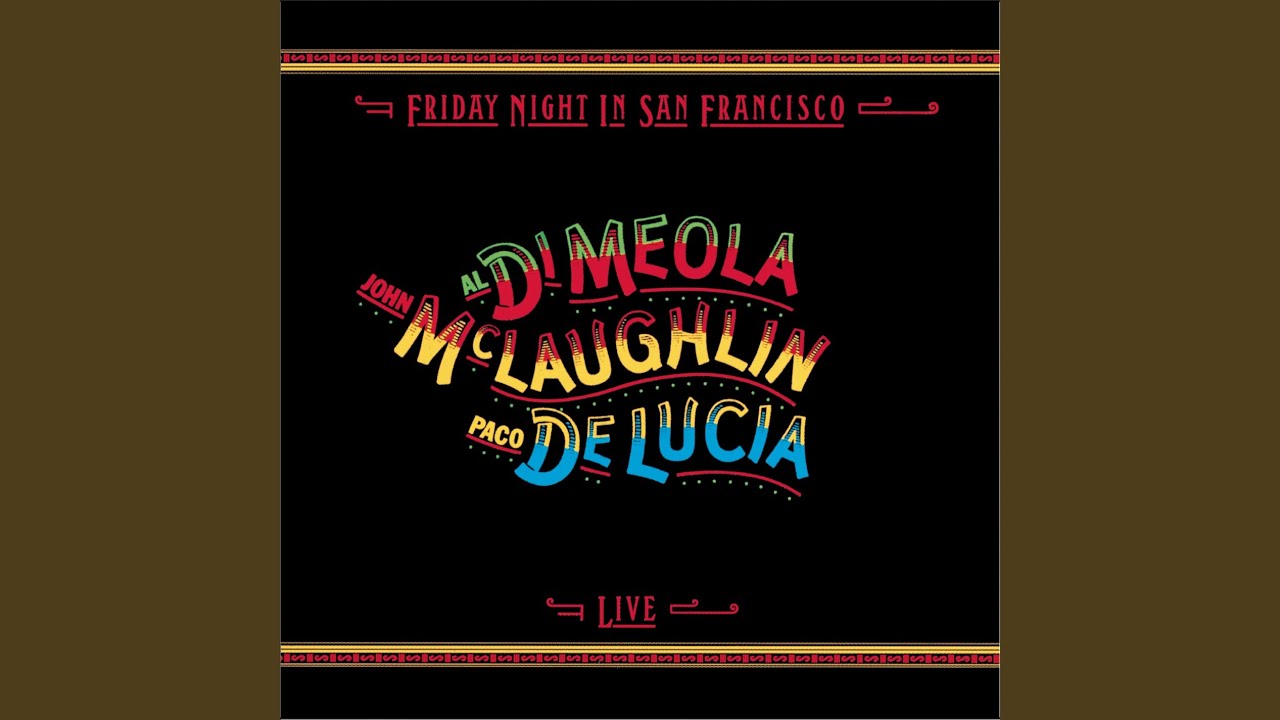
He recalls how they worked together in the build-up to the San Francisco show.
“That first tour was roughly two months. There were no cell phones. No computers. Nobody was sitting in a hotel room for five hours looking at Instagram. We played. We rehearsed in the hotel rooms. We’d do the concert. We’d play some more.
“So, by the time we reached the Warfield Theatre in San Francisco on 5 December 1980, we had developed something you couldn’t have created by putting three guitarists into a recording studio for a couple of days. We knew each other. When we got to San Francisco, the three of us were playing at an incredibly high level because we had been living with that music every night.
“The arrangements were very tight because they had to be. At those tempos and with those rhythmic figures, three acoustic guitars can become a train wreck very quickly. But once we were inside that structure, there was tremendous freedom. That’s where the excitement came from.
“And there was nowhere to hide. No drummer. No bass player. No keyboard player. Nothing underneath us holding it together. Just six hands.”
Di Meola says that the three players took great care in their choice of guitars for this project.
“The guitars themselves were important because the three of us didn’t sound alike,” he notes. “I was playing my Ovation steel-string. Paco had his Conde Hermanos flamenco guitar. John was playing an Ovation nylon-string.
“On the recording, you can actually locate us. Paco is on the left, John is in the centre when all three of us are playing, and I’m on the right.”
He adds: “The material reflected our different personalities too. Mediterranean Sundance was mine and Rio Ancho was Paco’s, and putting those two together became this incredible vehicle for Paco and me.
“Short Tales Of The Black Forest was Chick’s composition, which John and I played as a duo. John and Paco played Egberto Gismonti’s Frevo Rasgado. Fantasia Suite was mine and became the big three-guitar piece. And then there was John’s Guardian Angel.
“One thing people don't always realise is that Guardian Angel on the original album wasn't recorded at the Warfield that Friday night. We recorded that later at Minot Sound in White Plains, New York.”
For Al Di Meola, a part of the magic in the Friday Night In San Francisco album is the audience’s reaction.
He advises: “Listen to the record with headphones. They’re going crazy. It sounds like a rock concert. Think about that. Three guys sitting in chairs with acoustic guitars in 1980, and the audience is reacting like they’re watching a rock band.”
As for the stature of this album in the canon of guitar music and jazz, Di Meola says cautiously: “That's difficult for me to answer because I’m on the record. I’m not going to sit here and tell you where my own record belongs in history. But I can tell you what happened. It became far bigger than anybody thought an acoustic guitar album like that could become.
“Suddenly, guitar players all over the world were wearing out the record trying to figure out those parts and who was playing what. And what I’m proudest of isn’t the speed. Everybody talks about the speed. It’s the interaction.
“You had these completely different musical cultures colliding – flamenco, jazz, rock, Latin music, Indian rhythmic concepts, composition, improvisation – and somehow we found a common language. And 45 years later, people are still talking about that night. That’s pretty amazing to me.”
