
Although it’s taken decades, video games are now not only a widely respected artistic medium, but also more than bring home the bacon financially. The global video game industry makes approximately five to six times more money than the accumulated box office returns of cinema. The geeks it seemed, have inherited the Earth.
This writer certainly counts himself amongst that number, and with the advancement in graphics, storytelling and drama that some of the best modern games exhibit, what the future of gaming holds is a thrilling prospect.
Amongst our personal favourite games of the last few years are those created by Remedy Entertainment. The Finnish team that first found attention with its iconic Max Payne series went on to helm a pair of interconnected gaming franchises that have perfected interactive storytelling like few others.
Key to the absorbing, mind-bending appeal of both Remedy’s Alan Wake and Control franchises is the incredibly effective music and its interplay with the games’ sound design and immersive gameplay.
At times emotion-stirring and at times pulse-pounding, Petri Alanko - the man behind the music of Remedy - crafts carefully considered sonic reflections of the respective series’ reality-twisting narratives.

A triple BAFTA-nominated composer, we’ve previously spoken to Petri when he created the unnerving soundtrack to 2023’s modern horror/drama classic Alan Wake 2. So, when we heard Alanko has just completed a new expansive and quite extraordinary score for the newly released Control Resonant, we were extremely eager to hit him up once again and find out just what he’d been up to.
Before we dug into Petri’s current working approach - and his unique methods of harnessing and processing found sounds - we wanted to know when the new score for this long-awaited sequel to 2019’s action-packed original Control began…
MusicRadar: Hi Petri, how did the composition process for Control Resonant begin - is there a ‘typical’ way you always start creating for these types of projects?
Petri Alanko: “Like other Remedy projects, this one started with one hell of a presentation, actually. When they have an idea of something and they have pulled together some kind of a skeleton, they usually present the brainstormed entity to a selected crowd of individuals, and later on to the whole company, so that transparency is there right from the start.
“I usually take in every single detail, and quite often I start thinking about sounds, feelings, harmonies and melodies as I watch the proof-of-concept or story idea presentation, it just is that natural, really. Sometimes I get some PDF package, maybe video clips even.
“I notice the project has started when a massive amount of Post-its appear all over my studio… don’t get me wrong: I know Control has a playful entity that litters office spaces with Post-its, this is not the same thing. At least I won’t admit a thing…
“After these ideas have appeared, I think of the best possible way to achieve what I hear in my head, and start putting together a template for ‘basic use’: virtual instruments, plugin chains… sometimes dusting off a few synths here and there.
“I went through a massive electronic/electric studio renovation throughout the Control Resonant development, little by little, and while that was being done, I patched in quite a few things I had kept in a storage room. I made about 50-60 patches on them and turned them into Logic Sampler or NI Kontakt instruments. Other esoteric plugins were also used, but it began there.
“A lot of stuff was first rather simple, [I] played in some really simplistic sounding things with an old Rhodes MK1 Stage 3 that’s no longer with me anymore (the guy who renovated it bought it).
“I recorded a lot of stuff with that, usually just very, very lightly pressing down the keys, so that the resulting signal was more or less like ‘puff…hmmmmm’, just a tiny transient followed by something resembling a sine wave. In the beginning, it was almost all just sine waves, but it evolved to this almost uncontrollable monster quite quickly”.
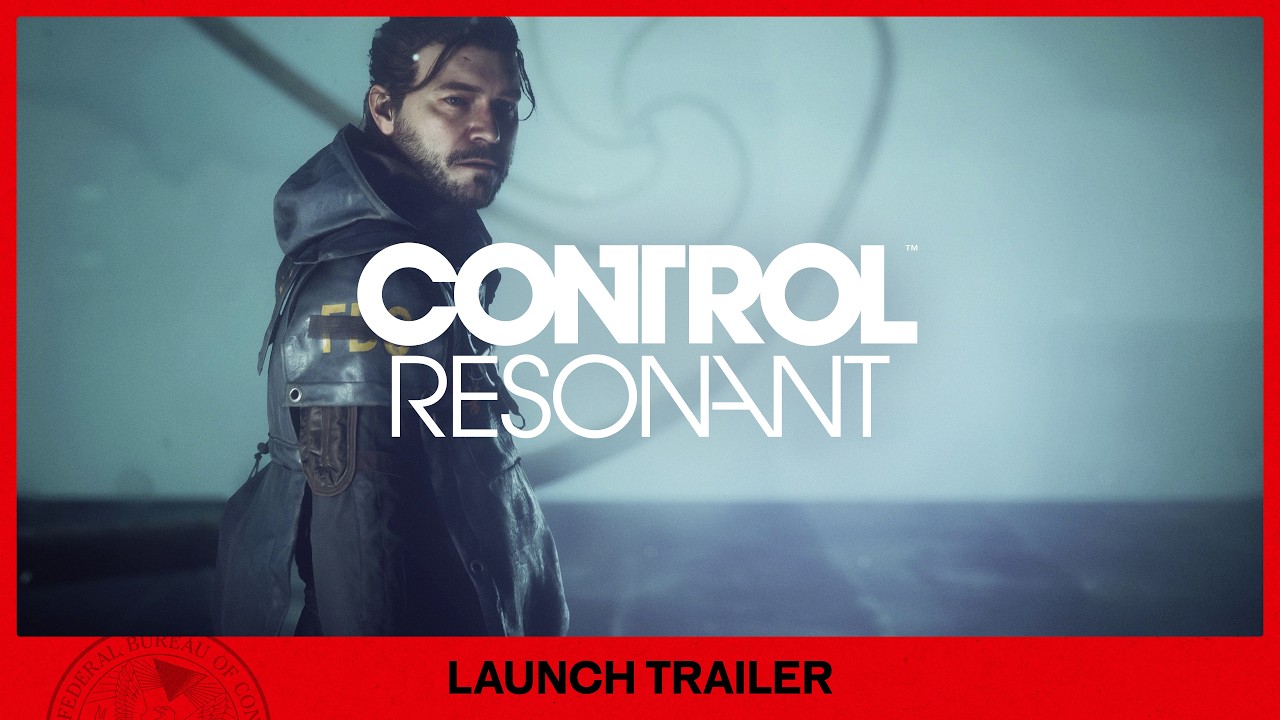
MR: There’s some really sublime stuff on the new soundtrack. I particularly like the variations of Sibling Theme – there’s some eerie, emotive piano in there which works really well. Then there’s more unnerving stuff like Tabula Rasa and the gorgeous Into The Sunshine. The musical universe of Control definitely seems to have evolved whilst keeping that familiar slightly liminal/emotive feeling of the first game. Can you talk us through how you expanded the Control universe sonically with this new soundtrack?
PA: “It all comes down to [main playable character] Dylan’s character - that, and the actor behind the whole thing, Sean Durrie.
“I usually started pulling it all together through a few very early cinematics, where Sean’s facial capture material was placed next to the almost white-boxed scene - not too many textures, no proper lighting, quite simplistic - and envisioned the outcome through those.
“Knowing how disturbed Dylan’s history had been, it gave me a good story arc start; he was, in the beginning, just a white board - almost a factory reset human being. He had to rebuild himself again. He had to learn how to be human, again, so to speak.
“When Jesse, the protagonist of the first Control, entered the [bizarre, ever-expanding government building] Oldest House in the beginning of that game, she was already on a mission. Here, Dylan begins from zero. He has no confidence, he has no purpose, he barely lives, has no strength or… anything. He just is, the bare minimum of survival.
“Seeing Sean’s face whilst going through all that… damn, I really cried with all that emotion, to be honest. There were moments where all that lack of hope and strength just grabbed me and washed over and…well, I had to take a break. This went under my skin quite often, thanks to his acting. He added a lot of range to the whole experience. Emotional and physical range, to be exact, and that gives a composer a vast ballpark to delve into. Of course, the action went over the top, too, when I saw the gameplay captures, but I had expected that.
“In the first Control, Jesse was on a mission. In Control Resonant, Dylan, too, has a mission, but this time it’s baked in with his anxiety and worry for his missing sister - Jesse. What makes Control Resonant tick is how ingeniously the IP scale was extended, not only up, but towards us mere mortals: in the heart was a childhood story of the siblings.
“The Sibling Theme was originally a whole track, which is now heard in the end credits, called The One I Once Knew, sung by Amelia Jones - and what a performance, damn. The Sibling theme is purposely what one might call a ‘subset’ of that track, we’re dealing with delicate matters and childhood feelings, traumas, consequences and the whole outcome.”

MR: I know that you’re always keen to explore new instruments and sounds - and back on the original Control you did a lot of practical sound design - Did you revisit that approach here? And was there anything new that you brought to the table instrument (hardware or software) wise?
PA: “Well, quite a surprising amount of percussion is formed from plastic buckets, with various sizes, from your average 30 litre to 120 litre and maybe even more. But the key is to not hit them with wooden drum sticks, but with a piece of silicone water pipe - that slightly sticky feeling one where the thickness varies. I noticed the most usable one was 30 millimetres in diameter, the pipe material being something like 3 millimetres thick. It stays straight when hitting, but is elastic when needed. It was impossible to play fast rhythms with those but simpler patterns and single hits sounded awesome. It’s a bit like having different taiko drums that are processed with a disperser, almost, but more natural.
“In terms of ‘other strange stuff’, I put together a vast library of my recordings from the original Control and Alan Wake 2 sessions, and honed the massive multiple hour sessions into a more usable form, using Kontakt, Reaktor, Novum, PhasePlant, Alchemy – whatever came to mind.
“It was really nice to have all the wonderful engines in my plugin library, as they rarely do the exact same things. I’m still missing the iZotope Iris2, I’ve sort of given up using it as I think it might cause a few problems, they’ve discontinued it - but it had two very powerful tools I really loved: the spectral selection and the retrigger playback, which could be turned off, so if you held one note, the next one would pick up its starting point from where the first note is playing. [It was] a marvellous sound design device, and they discontinued THAT? Anyone who comes up with a similar feature set… contact me right now.
“So, the found sound library got into a much more coherent and prepared use, and now that I had enough time to sift and sieve through whatever was on my RAID, a certain ruleset begun forming in my head. There has always been a certain ‘sound’ to the Remedy Connected Universe [the Alan Wake and Control series narratively occur in the same fictional universe, Ed]. Only now have we got its instrumentation sorted out, more or less. I’m not planning any commercial use for it, it’s reserved for Remedy projects only, but something similar could possibly be useful for others, too.
“I also resurrected two 4-track cassette portastudios and reused some really bad tapes I found from my garage, in addition to a few unused TDK SA-X cassettes, as well. Sometimes the tape just added some details to the otherwise bland and simplistic sound that felt lifeless without that. Some material got re-recorded from the old Fostex X-18 4-tracker (I have two, one is a spare, the other is working) through a decades-old Sony multimedia speaker set just to have that delusional and demented brittle sound. I know, I know, it’s ‘music for dolphins’ department really, but I love to go deep into it and play with slightly altering playback speed.
“Some might say ‘It’s easier to use plugins’, but if I can go for an extra mile, I’ll f****ng do it, just because I love this job so much. I love every detail, every second.”

MR: And in terms of how you process those sounds, what are you relying on at the moment plugin/software chain-wise to edit and mould your recordings?
PA: “It’s all based on multiple sets of Universal Audio Apollo X8s at the moment, four of them, each with a separate external lightpipe preamp A/D/A converter, which I have quite a few of in my garage. Most of the time I squeeze out everything from the FabFilter and Zynaptiq stuff, some iZotope in there, too.
“What I still love is abusing all possible impulse response plugins with a vengeance. What amazes me is there still isn’t a tempo-syncable IR processor that could use, for example, rhythmic noise pulses as IR - or if there is, I haven’t found it. I’ve gotten some ‘Hey test this’ pitches every now and then, but the results haven’t been exactly what I was after.
“I don’t exactly long for the massive racks around me, I have given up the hardware processors long ago, but that’s my style, my way of production. I suffered from gear lust back in the early days of my career, and when I eventually realised how little use some gear got, I eventually just dumped them. Some preamps and antique compressors I’ve rented out for those who praise their usability, even some synths, too, but I need recall-ability, fast project file load times, fast everything.
“I even sold most of my modular synth ages ago already, and kept my favourite modules, now living in perfect harmony with the rest of the gear. I tested every possible way to recreate something I had done with modulars, but they’re one-timers, really.
“When you have plenty of fun with them, record it right there, right then, because when they or their knobs and components cool down, it rarely comes back identical.
“Having said that, yep, quite a lot of stuff gets dirtied by the small modular, based on a handful of stuff, living inside a Waldorf KB37 and a little external rack. ARP 2600 however, is in heavy use, mine’s a clone actually, a TTSH (Two Thousand Six Hundred, hence the name) with the raw filter in it, and I’m praising its ability to make [physical hybrid instruments] the Mega Marvin or Apprehension Engine literally sing. Or roar, actually.

MR: How involved do the rest of the Remedy creative team get with discussing their wants for the soundtrack from you? Or do they just entirely trust you to deliver your own response?
PA: “I actually get the ideas only, and then free hands to do whatever I dig out of the ideas given. It’s an idyllic state, actually, and they know I’ll go to extremes to find a suitable solution for everything. Surprisingly I rarely get any iteration or redo suggestions - can’t actually remember, really - but for instance with the aforementioned Sibling Theme, all four parts went through many orchestration rounds, and we luckily found the quietest, delicate and fragile minimal thing working best. I did try everything else as well, but it never felt right.
“There’s a psychological thing with an orchestra: if the sections are large, you envision in your head a posse of people in their black suits and dresses on stage, being rather classy and finessed, and the sound sort of lacks the scars and the tears - because they blend in with each other’s scars and tears, so the intimacy is distorted. We really needed that with Jesse and Dylan and their home origins, so… the less perfect it was, the more perfect it became.
“Less was definitely so much more here. So, in a sense, they just give me ‘We want this by July 2026, now do your worst and best, thank you’, of course with milestones, naturally, but I’m willing to think they sort of trust in what I do. I’m not taking it for granted, however, I’m not exhaling with satisfaction. I’ve noticed I perform best when I’m a little on my toes, out of my comfort zone.”

MR: How long was the overall process?
PA: “Control Resonant had already started when I was still doing Alan Wake 2, they weren’t exactly overlapping, but I had used Control Resonant as an escape whenever I needed any from the depths of AW2. They aren’t the lightest games of course, as everyone knows, but they provided enough variety for me to resurface again. The first demos were made in early 2023, around March, maybe even before that, but 2023 definitely.
“When Alan Wake 2 was towards the end of its development, I had already started exploring the musical concept of Control Resonant, and from there it escalated to full production on my side. Adding elements and sounds to the project instrument raw material library continued throughout the development, so there never was actually a ‘composing-only’ period, I kept my thinking clear by exploring whenever that was possible.
“One exploration was particularly worth it all: I was on a vacation in Mexico and found a broken seashell lying amidst a few rocks. I had my trusty field recorder (a Zoom H4n, the old one) in my backpack, so… I think a few American tourists gazed at me, questioning my hobby right there, when I just kept dragging the crumbling shell on the beach rocks. But the resulting sound became one of the main granular pad sounds, heard in the track Tabula Rasa, right from the start. Just drag it into an Omnisphere, switch it to granular mode and… thanks!”

MR: Was the [custom-built, unsettling acoustic instrument] ‘Apprehension Engine’ utilised here - or any other of your regular go-tos?
PA: “It remains my one favourite go-to tools, but since it’s not always handy, I need to rely on the sample material, usually. I’m planning to give it another go with a serious microphone set, now that I know what I want out of it.
“However I’ve used the Mega Marvin (the huge metal cowbell-lookalike) material more often due to its clangorous feeling - mostly because Hedron - the main antagonist so to speak - is circular, a continuously changing form that’s more or less mathematical - and my brain just connects that circularity with metallic overtones, especially when bowed gently.
“Another surprising go-to was my ages-old Yamaha Electone organ, it’s a D85, with three keyboards, and I used its ensemble sections with Eventide Blackhole a little too often, and in Exploring the Dying World, midway through, what sounds like a distant percussive keyboard instrument is actually D85’s very simplistic analogue piano sound through my KB37 and Blackhole. It also did some marvellous stuff with Zynaptiq’s Wormhole - their plugins are my absolute favourites there are, very creative stuff.
“Waldorf Quantum and Iridium mk2 are also very heavily present here and there, their granular engines are just beautiful, and now that Waldorf has extended their feature sets quite dramatically, they’re insanely usable, perfect for this job.”

MR: What was the most challenging aspect of making this soundtrack? And which track (or tracks) in particular were the most difficult to realise?
PA: “I think keeping the polyrhythmical nature in order and in such a fashion that someone could listen to the whole thing and still nod their head to the rhythm, was easily one of the most challenging experiences I’ve ever come across.
“I like polyrhythms a lot, they’re all over the place, even in my pop productions as well - and I always manage to baffle an occasional fellow producer with the rhythm beds, sorry guys… and, there’s a fact tied to the on-screen events: although most of what happens with the picture is in focus, there’s something happening elsewhere, outside your picture, so whenever a little something is added to the music, it’s supposed to be that something else a few blocks away is doing their worst there. The evil is everywhere all the time; there are no 100% safe sectors at all.
“I have very warm memories about Obsessive Compulsive Order, the whole concept and conceiving it. It was actually written very quickly, literally triggered by a screenshot, then fuelled by a motion capture clip - the resonant (primary boss characters) behind that track was one of the first I knew about, and was called The Dancer.
“Clearly, that entity had been a performing arts dancer, and then something had altered it into what is now in the game. I even pictured a history for ‘her’: usually the best dancers used to come from Eastern Europe, so I decided to add some ethnic samples here and there from a library I had purchased eons before - thanks to Strezov Sampling, good job, guys!
“It was meant to be a placeholder, just give Remedy some kinda ‘something like this here’, and they got back to me saying ‘Do not change anything’. I had struggled well enough with the mathematical percussion already, almost lost my sanity trying to make it click and feel the right way, and as a last resort just Melodyne-d the shit out of the samples and added them here and there, turned some bits and pieces to choirs and… “Don’t change this, thank you’.
“They do know when something resonates, that’s clear, and they don’t actually ever back down from their decisions, so as clients, they’re the best one can hope for. I say ‘clients’ as I’m not an employee, I’ve just been on a longer gig for 22+ years now.”
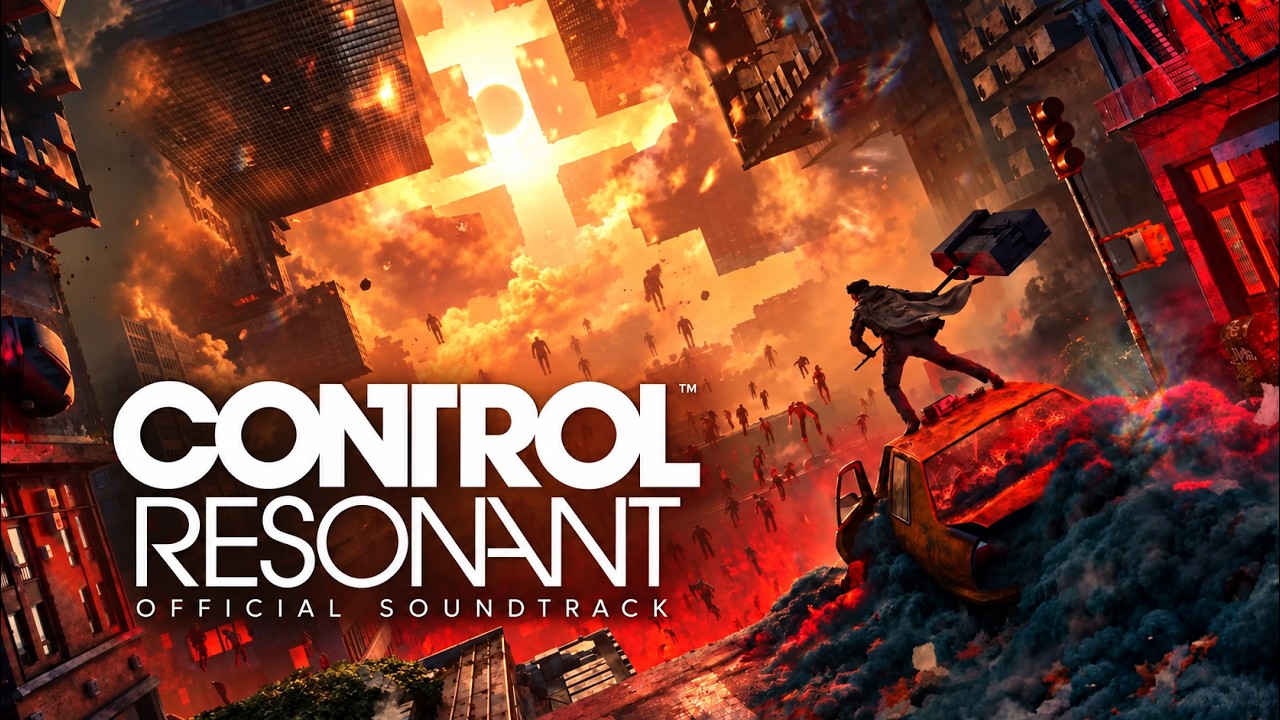
MR: How has the process developed for composing the in-game music (i.e. during action sequences)? and has the underlying technology that you use for incorporating your soundtrack evolved since Control and Alan Wake 2?
PA: “In essence, it’s luckily the same as it has always been, but with a few pleasant tweaks here and there. I’m hoping (video game sound organisation and playback software) WWise would one day be like Ableton Live or Logic, that would be my dream, and I’d love to create music inside the final playback engine, but, maybe one day these worlds will meet.
“As a process, I just did a long concept track consisting of introduction, exploration, preparing, suspense, combat and absolute sheer hell blasting at you. A few good examples are on the soundtrack - the longest tracks are ‘concept tracks’ that have every single detail in them. I like working that way, using the screen capture videos to maintain the vibe. The downside is their long duration, and when dissecting each to stems takes a huge amount of disk space (and time), but it is what it is.
“Then the brilliant in-house music crew do their magic - I do check stuff regularly, but so far I have had no redo comments, never. So, Lucas Pierrot, Clément Duquesne, Koca Kastavarac and my friend Kilian Oser (and many more) - thank you guys! You’re magicians. Mentalists, even.
“It’s lovely when you don’t have to explain what you’re after. Of course, I always bounce the demo play-through clip with the music, so they have a reference there, but it’s as easy as it can be. I don’t like overly complicated processes, they’re usually just badly thought, planned and executed methods that could use a heavy hand of simplifying.
“Sometimes game studios waste time and emotions with too many middle men involving the development, and they don’t really take into account the personality difference; the director may feel subject A is 90%, he wants it to 100%, and explains it in a review where a henchman is listening to the feedback, and the henchman will deliver the message to the next henchman, who contacts the composer.
“But, as the henchmen are of different personality compared to the director and especially the composer, they deliver the message diluted and filtered. This cycle repeats and wastes time and money. The shortest and the clearest path from point zero to the final asset is usually between the director and the composer.
“I emphasise here: the henchmen/director example has nothing to do with Remedy, they like it straight and simple, too. I wouldn’t have spent 22+ years with them if they were clumsy.”
MR: Of course, both the Control and Alan Wake series exist within the shared ‘Remedyverse’. Did you include allusions to your score for Alan Wake 2 within Control Resonant? Are you consciously keeping in mind the wider Remedyverse when composing these days?
PA: “There are common elements, although the games have different DNAs. However, that DNA has originated from the same universe, so certain things are common: if something is evil, it affects reality, and for instance some rhythmic meters or tonal tuning tables may get some beating. Also, non-harmonic interval choices are very common with both. Okay, everything can be turned into a chord when you theorise enough, but… does it matter, really?
“Odd meters are deliciously brain-f**ing, so we use them a lot. A good example in Control Resonant is Obsessive Compulsive Order, with polyrhythms in the beginning and just very un-pop, off-meters towards the action part in the end.
“All Remedyverse events and entities [on a musical level] share also a surprising amount of instrumental raw material of acoustic origin - found sounds even. With synths there’s always an impossible amount of saturation, overdrive and rectified distortion.
“It is a very rare occasion that a synth sound would be ‘clean’ as such, usually they relate to rare specific events on screen. Contrast, on the other hand, is exaggerated, both harmonically and dynamically, and since the threats in Remedyverse are what they are in nature - paranatural, otherworldly - the use of ambience and reverb in general is, well, rather generous, so to speak.
“I think I said in one workshop: ‘With Remedy, if in doubt, add reverb. And if no doubt, add reverb anyway.’ Not too far from truth, as I love the feeling of air moving on your skin when listening to some reverb tails (greetings to ValhallaDSP, you rock.)
“Imagine Manhattan bending all over you when the whooshes happen, when nothing’s the way it used to be, when the rooftops of the other side of the street touch with the opposite side roofs - by bending the world.
“I think the Remedyverse is woven and knitted into the soundtracks subliminally. I don’t think too much think of it, I just step into the world and do some music and it sort of reaches the IP. It doesn’t happen with pop productions or other projects. It’s almost like a costume I wear, with pride. Or scuba gear, and astronaut space suit - at the same time it puts me into a mood, but it also protects me from what I might catch from the depths.
“Some actors have mentioned it’s really hard to get rid of the character after a good day in front of the camera, and I think I use the same methods to escape the blackest events I’ve faced the whole day - but some things follow me into the dreams, too. Luckily, they usually are technical or music related things, slight problems or whatever, but a few years ago a scene from Alan Wake 2 followed me a little too tight, the one where Sam [Lake, Remedy’s creative director and occasional in-game actor] character gets shot in the back alley. It was really hard to grasp and deal with. It landed on my desk quite a few times and I never got used to it.”

MR: You’re also of course an artist in your own right, performing as Lowland. Last time we spoke about your classic ‘trance-lations’ of beloved dance tunes re-interpreted by an orchestra. They have been hugely popular. Are you intending to continue with any more of these types of projects in the near future?
PA: “Well, January 8th 2027 we’ll have a concert in Helsinki Music House (Helsingin Musiikkitalo) where we sort of flip the whole thing around and instead of reimagining the club classics into orchestral arrangements, we’re doing it the other way around: using the DNA of diehard classics and reimagining them in the same way.
“Not turning anything into EDM or trance, no, but instead using the essence of their core, the basic building blocks, the means of their survival as sources for something different. We finished the arrangements and reimaginations and recompositions a while ago and I’m quite sure it’ll be beautiful.
“The world is full of beautiful music, and what’s astonishing, it never is tired of it. The reimagined tracks are our expressions of love to the original masters - from Beethoven to Sibelius and literally everything in between, and we literally have cried our eyes off with each. It’s insane how the pieces of music have survived through the centuries, but when you have a hit, you’ll have a hit, no matter what the century was. It happens with our time, too. Maybe something from the games we love will live on and will be played in 2126, who knows?”
Control Resonant is available now. For more on Petri Alanko check out his official website.

