
Todd Edwards' intricate sample-led house music laid the groundwork for UK garage and served as inspiration for Daft Punk, Burial and Disclosure, but three decades in, he's still introducing himself.
34 years into a storied career, the New Jersey-bred artist still sees himself as a producer first, with DJing a means of showcasing his distinctive sound. In fact, it would be 11 years after his first 1992 release before Edwards first performed at a club, due to crippling stage fright and poor management.
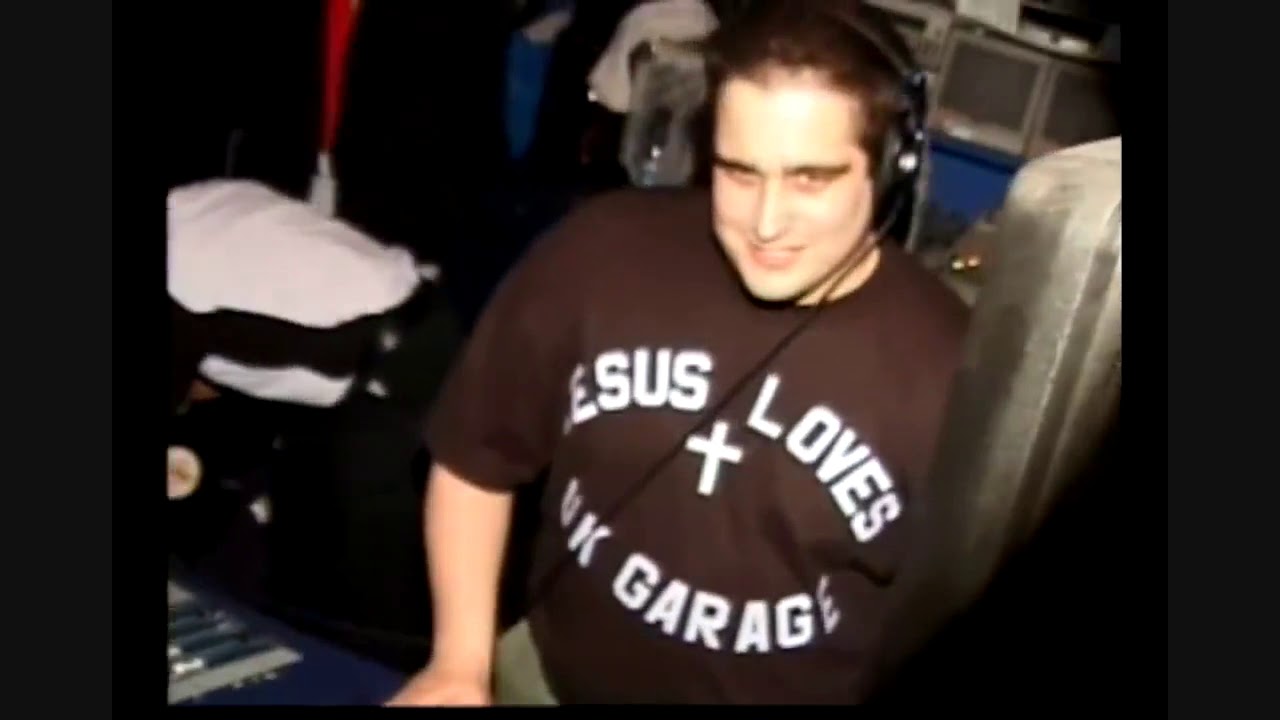
In East London on New Year's Day 2003 at garage luminary DJ EZ's 4by4 party, he finally got to experience the enthusiastic British response to his seminal recordings. "Everyone was so happy to see me. I could have done anything wrong, and they would have been fine with it. That made me feel great. I mean, you could see my expression," the producer tells us, calling in from his compact blue-and-white-lit California home studio. "[They were] very supportive. Every track I was dropping, they would cheer."
Thankfully, the legendary set was recorded, and shaky video clips regularly make the rounds on social media, keeping Edwards' historical relevance (and iconic "Jesus Loves UK garage" tee) fresh in the public consciousness. You can see both excitement and terror on his face as the crowd cheers on his every selection.
Yet even with the current resurgence of UKG and Todd the God's many wins since that night—including a Grammy for his work with Daft Punk in 2014—he still feels the need to gig regularly to self-promote and make a living in the streaming era. Despite his outsized impact, Edwards doesn't have quite the name recognition of a Todd Terry or Louie Vega, both of whom inspired him to make house music. Though this doesn’t seem to faze him, he regrets not fully capitalizing on some of the most pivotal moments in his career.
After spending 13 years in Los Angeles, Edwards now lives in Cathedral City, California ("old man’s paradise" as he puts it, just outside of Palm Springs) with his partner of 11 years, Michael, who makes music as Mystic Aytch, and their bunny Q-Tip. Edwards is open and enthusiastic, eager to discuss everything from the "genius" of Thomas Bangalter and unoriginality in contemporary dance music to his once-crippling fear of live performance.
If I was not such a fearful stage fright kid, I could have cleaned up in the '90s when my sound first hit
"I had stage fright beyond belief. If I was not such a fearful stage fright kid, I could have cleaned up in the '90s when my sound first hit. Mike Weiss from Nervous would be like, 'There's a thing called Sunday Jam [in the UK] based on your stuff on Nervous Records. You could go and tour,' and I was like, 'I ain't gonna do that.' I needed therapy at the time. Success hit me a little too soon. When people say 'Youth is wasted on the young,' it just comes down to the older you get, the less you give a shit, and the more you can handle life," Edwards recalls.
Among the gigs he kicks himself for missing is a Parisian party with St Germain and Daft Punk in their pre-helmet era. The beloved French duo had reached out to him for a collaboration prior to the release of their 1997 debut album Homework, but didn't follow up after their initial meeting. Edwards was delighted when he heard his name roll-called among underground legends on Teachers. "I presumptuously listened to Teachers to see if I was mentioned. They still liked me!" he recalls. Luckily, his opportunities to work with Daft Punk didn't end there.
Edwards was a self-proclaimed late adopter of the internet, so it took a while for news of his music-making waves in the UK and beyond to come back to him, as well his work on Daft Punk's 2001 epic Discovery. "I didn't realize how big Face to Face was", he tells us.
"The timing of my success has always been off. In 2014 after the Daft Punk tour, I was going through relationship growing pains. It was my first major relationship, and I didn't come to terms with who I was. Instead of wanting to be in the studio, I was with Michael a lot. I didn't maximize the Grammy.”
From the outside, it's easy to look at his many accolades and assume the producer has maintained a steady and rewarding career in dance music. But Edwards' story is one of many stops and starts, missed opportunities and acute personal struggle.

Born in musically-rich New Jersey in 1972, Edwards was first exposed to house music at local teen clubs, unwittingly dancing to Todd Terry's music. Soon after, his friend Rich Criso educated him on the emergent genre. Edwards started DJing while still in high school, but decided to focus on production not long afterwards. He began religiously studying Tony Humphries' KISS FM mixes, taping them to listen on repeat on his Walkman at school. Rather serendipitously, the New York legend was the first DJ to recognise Edwards’ talents.
"It's funny. Tony Humphries was the first person to ever play any of my music. The first release I ever made was on 111 East Records, a track called Get Carried Away. I was listening [to his show] on a Friday night, and I heard it come on, I'm like, 'Holy shit!' It's crazy to have had that experience before I developed my style or even established myself as an artist," Edwards says.
Despite laying the groundwork for garage, inspiring and collaborating with Daft Punk twice and gaining early support from Humphries, Edwards' journey to success (and out of his parents' basement) was a long and frustrating one. Get Carried Away—a classic vocal house tune—never took off, and he was forced to move back in with his parents not long after his celebratory 2003 London gig, as garage went back underground and his work fizzled out.
It's very rare that your first track is gonna blow up, and it's probably better that it doesn't
"There are no real overnight successes. There's usually a 10-year story. I can't even say that for myself, it was a couple years. It's very rare that your first track is gonna blow up, and it's probably better that it doesn't. You're not established with a style, and then you're screwed because you have to have the pressure of trying to follow it up," he says.
In 2007, Edwards quit music completely and worked in customer service for two years. Stepping away reaffirmed his love of making music more deeply than before.
"I was making good money at Verizon but dying inside each day. I hated the work. They were strict about being late and the hours were all over the place, unstable. I was running late on the highway one Saturday and something snapped inside. I couldn't go in, I called in sick. I was done," Edwards reflects.
"I had a vision soon after; I pictured myself at the end of my life in a coffin. What would be a more regrettable choice: Giving up music to be able to have a wife and children, or giving up the family to follow the music, even if it meant being poor? I chose music. At the height of the American recession, I quit Verizon. Up to that point, I had a love-hate relationship with music because of the instability. After I left Verizon, it was nothing but gratitude. I also came out of my shell as a DJ. I started to become more animated, not the head-down DJ [anymore]."

Face to Face, Again and Again
Edwards was one of 43 artists—including Lil Louis, Jeff Mills, DJ Sneak, Brian Wilson and Dr. Dre—Daft Punk paid homage to on 1997's Teachers. Beleaguered by low self-confidence, being named on the song "made me feel safe," he says. While Thomas Bangalter is just two years younger than Edwards, he exuded a worldly maturity and self-assurance that stayed with the Jersey producer. "That amount of confidence at age 20 was so impressive," Edwards notes.
After name-checking the sample master, Daft Punk tapped him to work on their highly anticipated sophomore album, resulting in the triumphant penultimate track Face to Face. On it, both Edwards’ singing voice and precise, technical sampling style—lovingly co-opted by Bangalter—take center stage.
"I wrote the lyrics on the plane to Paris. I wanted to make sure they fit three situations: a person dissolving a conflict with someone else, a person speaking to themselves, and a person speaking to God," he explains.
"When I got to Paris, I sang the song for them to show what the lyrics sounded like. They liked my voice. I was singing kind of nasally, and Thomas asked me if I could sing it a little raspier, like the band Foreigner. I only sang it twice; those are the two takes you hear on the final cut, no AutoTune, just sidechain."
The trio created much of the track in Edwards’ humble studio in his parents' basement, the same one where he first developed his signature, wildly influential style. To finish it, Daft Punk flew him out twice to Paris via business class to work: "They treated me like a king." As he hadn't taken up any offers to DJ in the UK or Europe yet, these trips were some of his first outside of the country.
We produced 90 percent of the track at my studio in my parents' house. I put 70 samples together and they put 70 samples together
"We produced 90 percent of the track at my studio in my parents' house. I put 70 samples together and they put 70 samples together, though people don't usually credit me when they speak about the samples. Most of them are from my sample banks. I was hesitant in the studio because I was always self-conscious when I was younger. Thomas did most of the playing actually, in my style," he adds.
Working with Daft Punk lifted his spirits and remains a defining career moment, yet Edwards surprisingly didn't see an uptick in work or recognition in its immediate aftermath. In fact, many people didn't realize he sang it—while he's credited on the album, his name wasn't included alongside the track on the CD, nor is it currently on Spotify.
Over a decade later, the French robots reached out to him to collaborate once again on their Grammy-winning final project Random Access Memories.
"Fragments Of Time brought things back full circle. I was the only collaborator from Discovery [on RAM]. I was honored to be asked back. Daft came in at crucial times in my life. I was in a low place and Face to Face brought me up. Working on Fragments inspired me to pack a U-Haul and move to L.A., where I became my true self," Edwards reflects. "I am forever grateful for the way they touched my life."

Throughout their two weeks together in Los Angeles working on Fragments, Edwards kept lamenting that he didn't want the experience to end, so Bangalter encouraged him to write lyrics about it. The song became a time capsule of RAM’s creation, a dreamy meta-narrative of the creative process and of memory-making itself: "Keep building these random memories / Turning our days into melodies / But since I can't stay / I'll just keep playing back / These fragments of time."
This time around, Edwards employed his famed vocal cuts on the track, per Bangalter’s request, earning him a production credit. (On the tenth anniversary edition of RAM, you can hear this process in action, as well as get a sense of Edwards' jubilant, playful energy.)
"The audience was enamored by their process, and I was enamored by the process," he says of his enviable place in the studio with Daft Punk. "Thomas is a friend, but he’s the musical Jesus. It’s like when they describe the apostles hanging out with Jesus."
Rewind the Track!
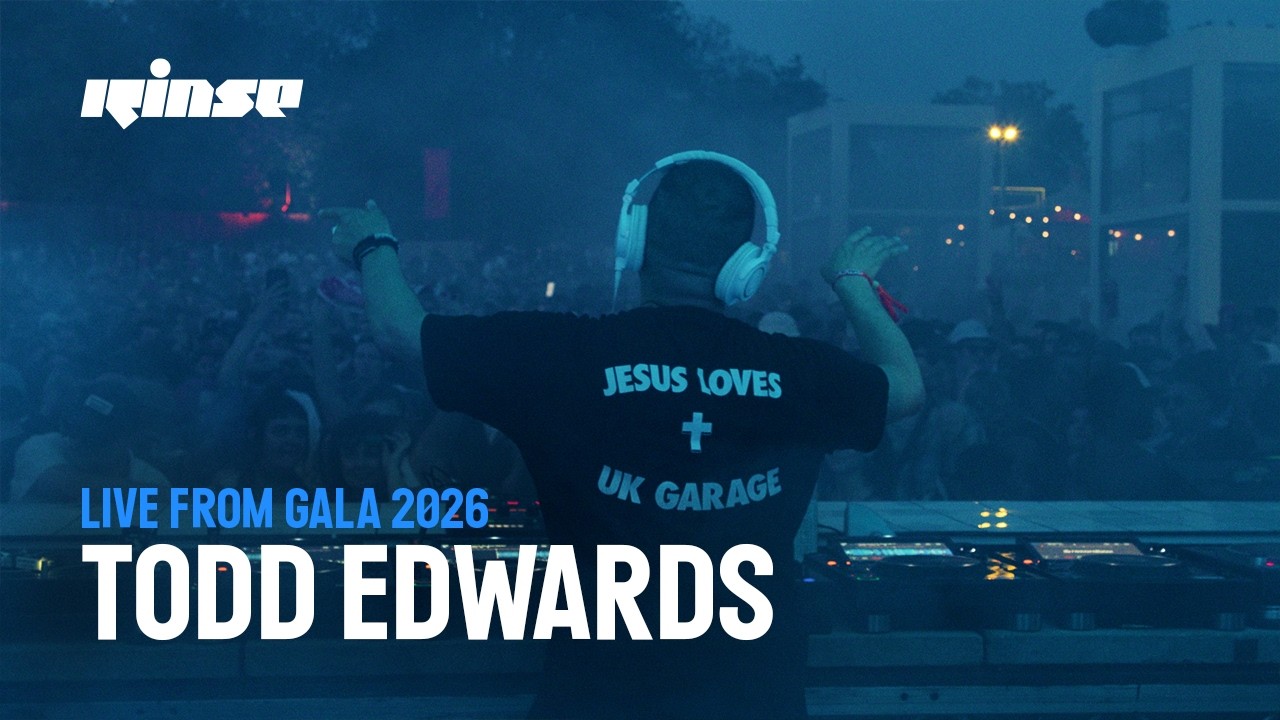
These days, Edwards maintains an active DJ gig schedule, traversing North America and Europe, with London, New York, L.A. and Ibiza being his most frequented cities.
He's been on a festival run this summer, including a stop at Northern Nights x Dirtybird Campout in Northern California shortly before our first chat. Wherever you catch him playing, you’ll be getting a signature Todd Edwards experience, as he approaches club and festival sets the same—although he always enjoys the opportunity to play for longer.
"I want to be into what I'm playing. I'm not gonna play a festival set that just caters to the festival crowd and download the Top 50 Beatport tracks or whatever. I go into both the same way. And being an artist, I'm still promoting myself. As much as I still have a following, my following is still [built] on a producer-slash-DJ respect thing more than most. I'm still trying to spread my music so people get it. I will try to get away with playing as much of my own stuff as possible, to be quite honest," he explains.
If you're going to listen to Derrick Carter or Tony Humphries, you're going because they have a style of DJing. I don't know if you can say that about the huge DJs anymore
"Obviously, with festivals and even with clubs, you can feel empathetically the way the crowd's responding, in subtle changes in movement or non-movement. I don't just sit there stubbornly like, ‘Fuck it, I'm gonna just play my own shit and not change it up.’ I make edits with other people's music and put a little touch of myself in there, so it feels like it's still part of me and what I represent, whether it's in the tech house field or something a little darker than what you'd normally hear in a pure Todd set."
While Edwards is warm, funny and enthusiastic, there are plenty of things in dance music that piss him off. Among them are the reliance on the drum-roll-and-drop among the current wave of young garage producers, the prevalence of overpolished drums, and DJ worship. For Edwards, the best DJs are ones that have a distinctive sound in their sets.
"I would go to Sound Factory Bar to listen to Little Louie [Vega] spin; I loved his style. He played a lot of Masters at Work stuff. When you go to listen to a DJ, if you're going to listen to Derrick Carter or Tony Humphries, you're going because they have a style of DJing. I don't know if you can say that about the huge DJs anymore—I'm not saying all of them," he posits.
"I look at someone like Oppidan, she's amazing at what she does. I've done back-to-backs with her. I played with Conducta, and he's got a style. But the ones that play big crowds, they're playing mainstream shit. I don't think people are going [to see them] for a style, I think they're going for the experience."
Garage Ain't Dead
While Edwards was late to the '90s garage party as a DJ, he's now been an active participant through multiple waves of it. He admires Disclosure's fresh reimaging of garage, and sees the current wave of young producers with their polished, sidechained sound more as predecessors of the British brothers than of the first wave.
"I've been through multiple cycles of [garage]... It was in the pop charts and then it went underground for a while. After my hiatus from music, there were dubstep producers out there that were giving me props for inspiration. That was a telltale sign that I did the right thing by getting back into music,” Edwards notes.
"To me, Disclosure brought on the next wave. They have their own sound and brought their own vibe to it, which is what you should do as an artist. Now you have this generation 10 years later, the Sammy Virgis and the Oppidans and all that. I think there is a lot of Disclosure inspiration in their tracks, because garage right now is a lot more polished than in the '90s."
At the end of the day, Edwards hopes that producers will step outside of nostalgia traps and try something new to make dance music fresh and exciting again. "There needs to be a new genre called rehashed house because everyone is just taking old ideas, of course they're going to get responses. No one is taking any risk to try to do something new. It's all edits," Edwards laments.
"There are some great edits out there; MPH does amazing edits. But Jesus, who's contributing to the new music out there? No one wants to take chances, and that's part of the social media thing, that everyone's fucking afraid to fail. You have to take risks to move forward, to have longevity. You have to be willing to put something out there that might not be successful. That's my grumpy old producer's last note on that shit!"
Looking Back, Moving Forward
Edwards first connected with house powerhouse Defected to play their Croatia festival in 2018, and recently helped close out the final one. He'd been sitting on his back catalogue for years after buying the masters back and needed a home to reissue them. He signed with Defected in 2020, who acquired his catalog.
The timing was ideal; the advance helped him get through the gig-less lockdown, and a new era of ravers were introduced to his music online. Edwards appreciates how the partnership has introduced him to a younger audience—he "instantaneously noticed the age bracket of [his shows] go down."
He was honored when Defected put out the House Masters – Todd Edwards compilation album in 2024, celebrating his legacy with a treasure trove of remixes of his house classics from the likes of Skepta, Soul Clap, Harry Romero, A-Trak, LP Giobbi and many more. The double album also includes 27 originals from his catalog, many of which were released digitally for the first time. "Being a house master gives you a certain reverence," he states.
At the end of the day, it takes time for artists to grow and for music to become classic—even Daft Punk’s sonic adventures weren’t universally loved upon release. "People have talked shit about every Daft Punk album after Homework. Give it a little time and they’re all put on a pedestal," Edwards says.
It's the tapestry of what you do in life—put the music out, put the art out. If it affects one person, 100 or 1000, you're planting a seed
"So many popular DJs were talking smack about RAM when it came out. Either you're doing it just to troll so you can get some attention, or you're just not open to the journey of the artist, because not every artist is doing everything just for the fans. You have to be willing to go along the journey with the artist as well… Artists evolve and change, and that's part of the process."
Today, the many evolutions of Todd Edwards are audible across his extensive and celebrated catalogue, a colorful sonic quilt woven from thousands of samples and many hours of exploration in the studio, one that changed the sound of house and has gone on to inspire multiple generations of producers.
His advice is to release your art out into the world, as you can never predict who it might touch, or where it will end up. Who would've suspected music by a closeted gay Italian-American kid from Jersey—who had barely even left the Tri-State area—would make British ravers go mad?
"I didn't learn this until I worked on RAM, but it was that Saint Germain remix that put me on [Daft Punk's] radar,” Edwards recalls. "It's the tapestry of what you do in life—put the music out, put the art out. If it affects one person, 100 or 1000, you're planting a seed. If the music, the art, is genuine, it finds its audience."
