


Some songs stop you dead in your tracks the second you hear them. They seem to change the molecules in the air.
The Sound Of Silence, the breakout hit that announced Paul Simon and Art Garfunkel as a powerhouse songwriting duo, is one of them. But it took its time to work its magic on a wider audience.
When it did, Simon & Garfunkel were on opposite sides of the Atlantic. Their 1964 debut album, Wednesday Morning, 3AM, had flopped and they were doing what twenty-somethings did in the mid ‘60s. Simon headed across the pond and was living in England, working on his debut solo album, The Paul Simon Songbook, working the local folk circuit. Garfunkel was still at Columbia University where he was studying art history.
At Columbia Records, the phone was ringing off the hook. There was a song off Wednesday Morning, 3AM that radio audiences across the Eastern Seaboard couldn’t get enough of.
“From a radio contact business in Cocoa Beach, Florida, it became a call-in favourite,” said Garfunkel, speaking to MusicRadar in 2012. “It made the promotion man call the home office in New York and say, ‘It’s been a year now, and they won’t quit over this one folky song from a group called Simon & Garfunkel. The album isn’t selling, but this one tune just won’t quit with its appeal.’”
It wasn’t just Florida. Audiences in Boston were entranced by it, too. The Sounds Of Silence, as it was originally titled, was speaking to the youth of America, haunting the airwaves with its minimalist folk presentation, just two voices and an acoustic guitar. This song had potential.
Columbia had recognised this when Simon & Garfunkel first auditioned for them. As did Garfunkel when Simon first showed it to him.
“It was the sixth song Paul ever wrote,” said Garfunkel. “He would come to my apartment on Amsterdam Avenue, where the roaches were in the kitchen, and he’d play me his songs. When he got to this one, I said, ‘Best one yet! If that’s not a commercial hit record, I don’t know what is.’”
The Sound Of Silence was such a good song that Simon was initially going to give it away. He was exploring his post-college options once his degree in English at Queens College was finished, and took a job in music publishing.
“I had either graduated from college, or I was in my last year, and I was working part-time for a publisher in New York, trying to get songs from their catalogue recorded by other recording artists,” said Simon, speaking to NPR in 2003. “A job that I was completely unqualified to do.”
But the job paid in other ways. It was there Simon met Tom Wilson of Columbia Records, the producer who had worked with Sun Ra and had just been picked up to work with folk’s new superstar, Bob Dylan. Wilson could have used a song like this.
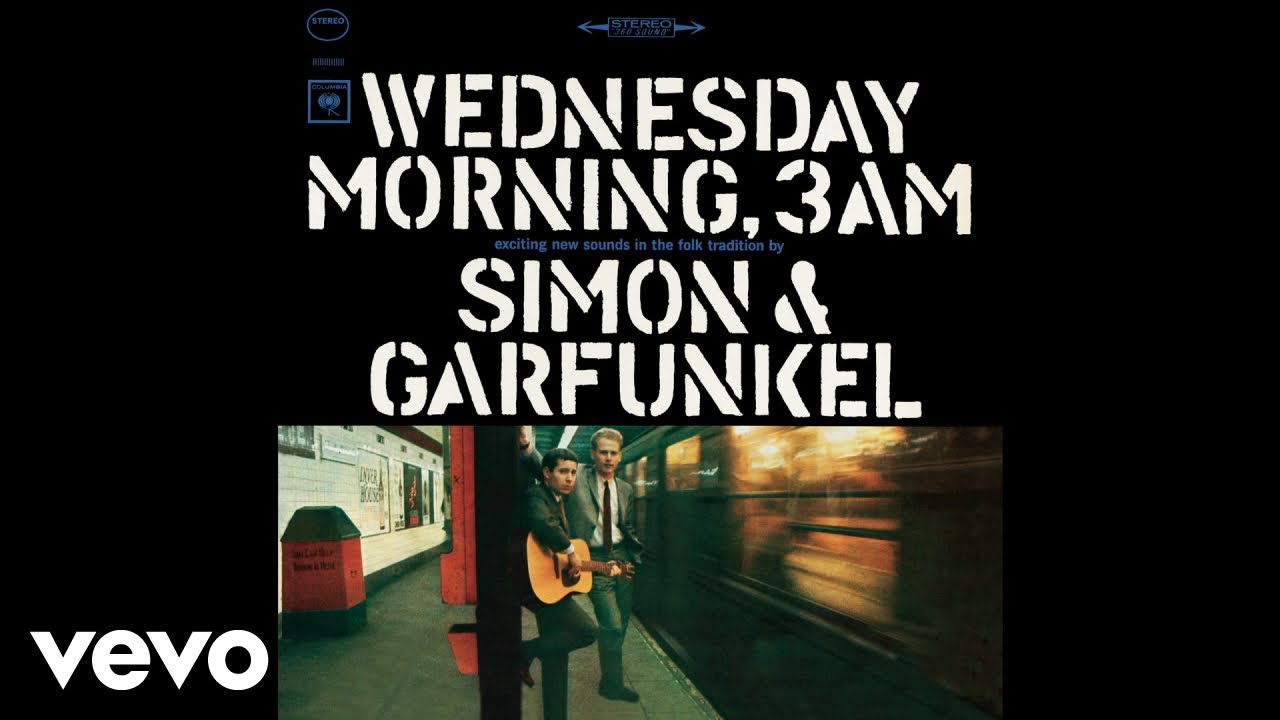
“He had a group that he was recording called The Pilgrims. The only great artist that he had was Bob Dylan,” continued Simon. “I said to him, 'Well, I have a song that I wrote that I think might be good for The Pilgrims', and I played the song, The Sound Of Silence.
I said to him, 'Well, I have a song that I wrote that I think might be good for The Pilgrims', and I played the song, The Sound Of Silence
Paul Simon
And he said, ‘Oh, yeah, I’d like to record that with them.’ And then I said, ‘Well, you know, I sing. I sing with a friend. Could we come and sing this for you?’ So, he said yes, and he arranged an audition for us.”
Wilson had Dylan. He had the Pilgrims. After Columbia president Goddard Lieberson liked what he heard, Wilson now had Simon & Garfunkel. Although there was still some disagreement over what they should call themselves.
The duo had been operating under the name Tom & Jerry back when they were high-school kids signed to Big Records, scoring a hit with Hey, Schoolgirl and appearing on Dick Clark’s American Bandstand.
That was a real-life American Graffiti scene, and the name would never have worked with this new folk direction. And the record companies back then discouraged to Jewish artists from using their own names.

“There was a duo called Art and Paul, a folk duo, so that was out,” said Simon. “So then, they were tossing out different names that they might come up with to give to us. And it was never a consideration to call the group Simon and Garfunkel, because it was ‘too ethnic.’ It was just nobody did that. Nobody did that then.
“Bob Dylan was called Bob Dylan; he wasn’t called Bob Zimmerman. So, when they came to a stalemate and couldn't find the name, it was Goddard Lieberson, who said, ‘Call the group Simon and Garfunkel.’”
Wilson handled production duties for Wednesday Morning, 3AM. The engineer Roy Halee, who had recorded the audition tapes, was in the studio to work his magic. He had a burgeoning reputation as a genius in the studio and would be a regular collaborator of the duo’s, with arguably his greatest production feat coming in 1986 when he produced Simon’s Graceland.
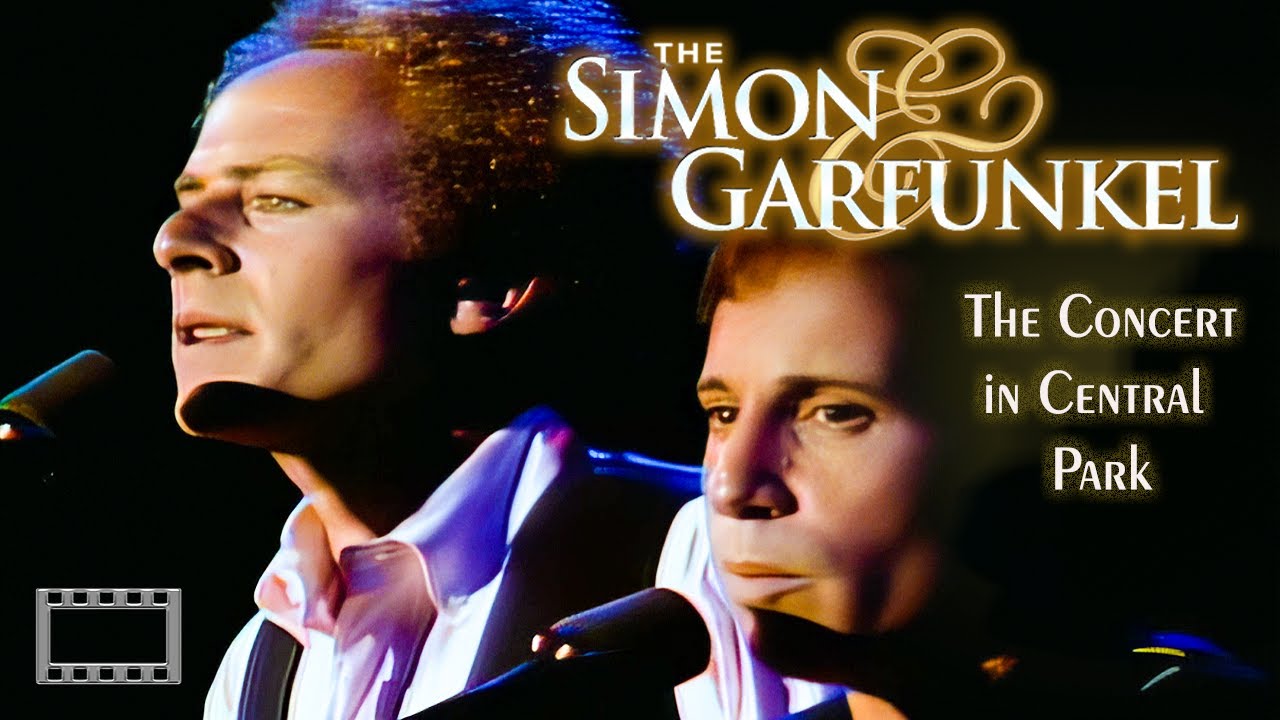
The album was recorded in spring ‘64, released in fall, forgotten by winter, and by the summer of ’65 Garfunkel considered himself “a veteran of failure”. At least that’s how he remembered it when speaking to NPR.
He had gone out to visit Simon during his summer vacation and upon returning to the States, he discovered The Sound Of Silence had been remixed by Wilson for a new single release scheduled for September 12. Wilson played it for him.
“I was just, you know, amused,” said Garfunkel. “I was not so invested in whether it’ll be successful or not. I was feeling like a veteran of failure at that point. So I was just amused – and then I watched my life change over the ensuing months.”
Wilson had an ear for the zeitgeist and the electric 12-string guitar was becoming the sound of the mid ‘60s. Roger McGuinn’s playing on the Byrds’ Mr Tambourine man transformed the sound of ‘60s guitar. That jangle and chime was in. So too was reverb, and Halee applied it generously to this remix.
I had no power, no creative leg to stand on, so by definition I was just a bemused listener: ‘Whatever the label is going to do, OK, cross your fingers…’
Art Garfunkel
Wilson had just finished up recording Like A Rolling Stone with Bob Dylan and rehired guitarist Al Gorgoni and drummer Bobby Gregg, adding Vincent Bell on guitar and Bob Bushnell on bass guitar. They were going to give it the Byrds treatment.
Garfunkel told MusicRadar that he had no bargaining power to persuade the label to think twice about it.
“The home office overdubbed electric bass, drums and the electric 12-string guitar, which was the sound of the era if you know The Byrds and Mr Tambourine Man,” he said. “We were using electric 12-strings that season. They did this while we were away in Europe. I had no power, no creative leg to stand on, so by definition I was just a bemused listener: ‘Whatever the label is going to do, OK, cross your fingers…’ It’s not like I could have a point-of-view like, ‘How dare you! You ruined my record’ – I could never go down that path.”
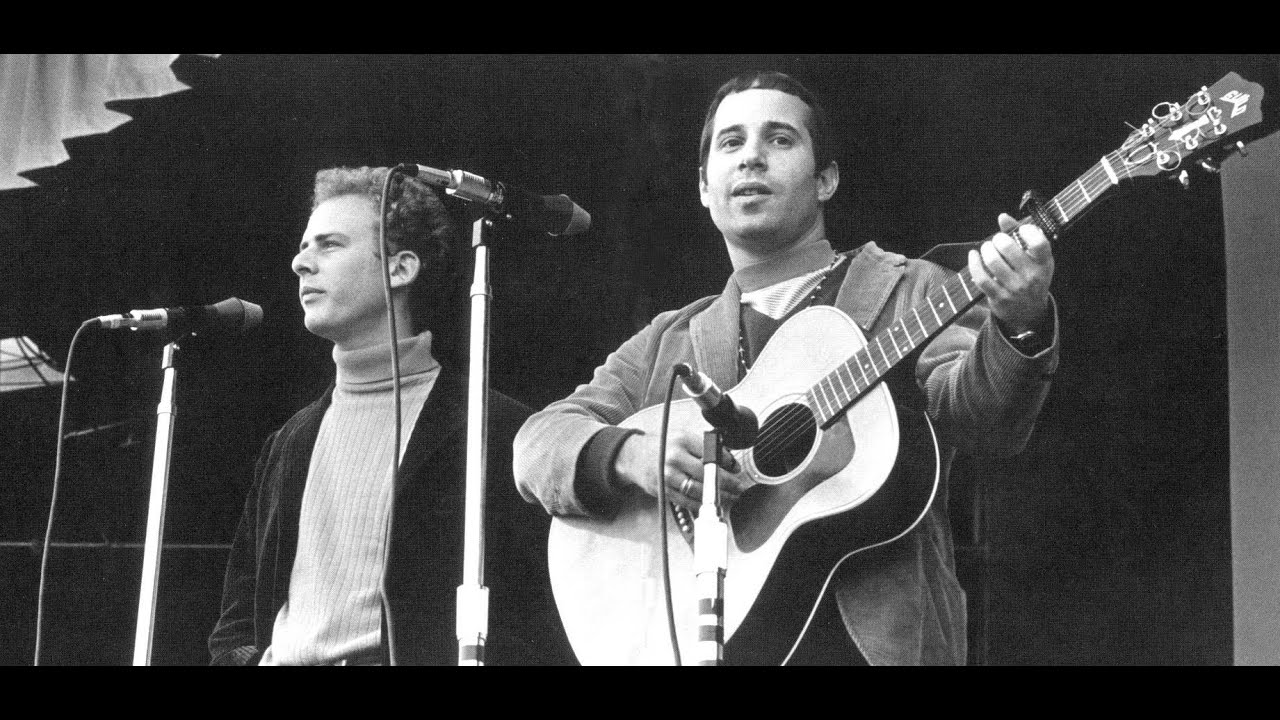
We can look back and say this proto-psychedelic treatment of this folk arrangement was just what it needed, Messrs Simon and Garfunkel’s vocals hanging disembodied in the mix, ethereal, godly. The problem was the original was just two voices and the guitar and naturally the rhythm did not sit on the grid. They did the best they could but there’s no question, it sounds a little off.
“I heard it and thought, ‘OK, the rhythm slips a bit between the fourth and fifth verses, the overdubs aren’t exactly in sync, but the sound is commercial. Who knows?’ You can’t figure out the market,” said Garfunkel. “Now it becomes a giant world-wide hit. What can I say? I knew the song within.”
Great songs are rugged. They can be remarkably resilient to reinterpretation. Even so, Garfunkel thought that the 12-string guitar stepped on the vocal a bit.
It is a feeling that informs how he performs it to this day, almost as though he is singing it for an audience who is hearing those lyrics clearly for the first time, even if the truth is those lyrics could well have accompanied them during the most significant, maybe the toughest, moments in their lives.

But it matters little; the emotional temperature of the remix is little different to the original recording, and the chord changes still effectively betray Simon’s prodigious genius. He was just 21 when he wrote it.
The fact that Halee cloaked it in reverb, this great splash of ambient melancholy, is more than appropriate – not only was it consonant with contemporary production styles, it was just as Simon had originally written the song.
In his NPR interview, Simon explained the kind of at-home setup he would put together to get him in the zone, and it is quite funny to picture, maybe a little melodramatic, but just ask any guitar player who has played acoustic in the bathroom. There’s a natural reverb there that makes for an echo room that some studios would pay thousands to install in their facility.
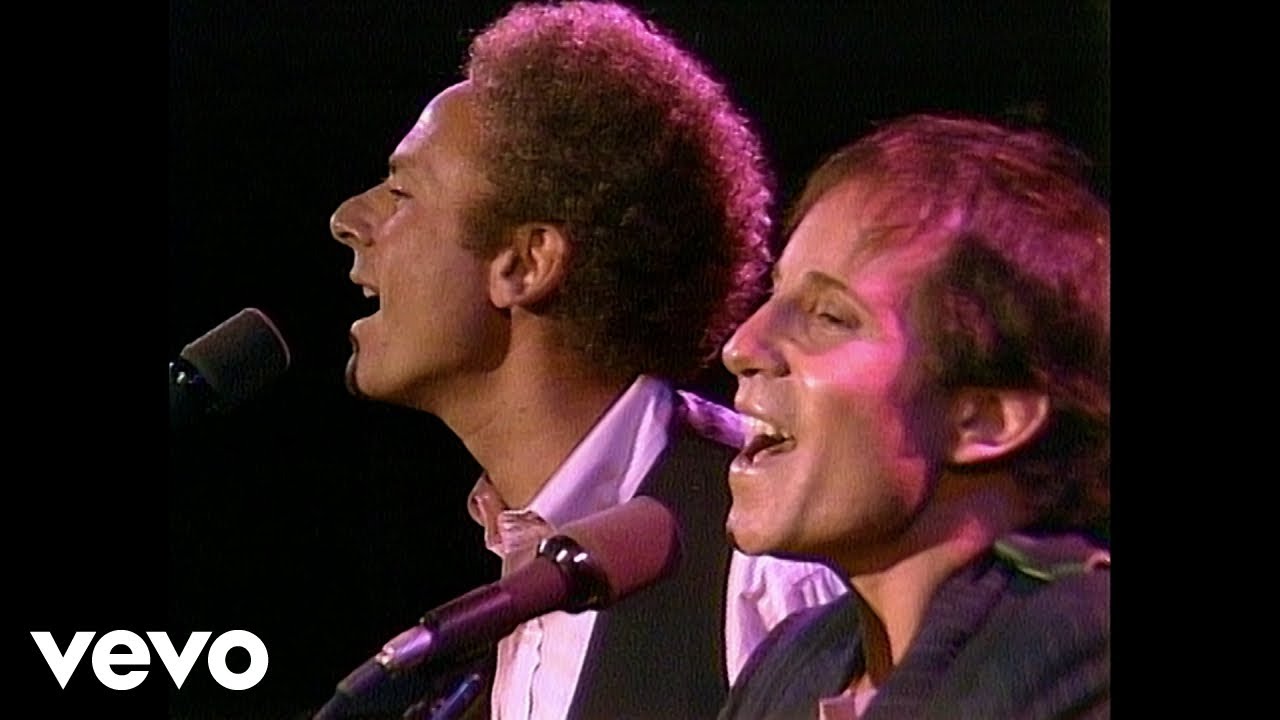
“I wrote it in the bathroom of our house in Queens, with the lights off and the water running,” said Simon. “That was the atmosphere that I liked. If you put a candle in there, then, you’ll immediately understand what it’s like.”
We can’t say for sure what guitar Simon used to write it. Likely it could have been one of the big-bodied Guild acoustics that were favoured by that generation of folkies, and later when he came to perform it live he would typically rely on his Martin D-18. Those are guitars of considerable boom, but Simon tamed that, capoing his at the sixth fret for the recording.
What makes the chord progression so genius is how it sits in conversation with the lyrics. It opens with an Asus2 shape, neither major nor minor, then an open G major then back to A minor on “again” – and in just two lines, three chords, and the audience is right where they want them, and the whole song unspools as some gentle, dark night of the soul.

Even after all this time, it still hits Art Garfunkel hard. He says his appreciation of it has only increased as the decades rolled by.
“Ahhh, what a tune! Sound Of Silence has more melodic genius, and simple power than I ever realised,” he said. “As the years go by, there’s something extraordinarily hooky about that simple melody – I didn’t know that. I knew it was a good-sounding record when it emerged.”
Well the passing of four decades has given the lyrics an extraordinary power
Paul Simon
“Well the passing of four decades has given the lyrics an extraordinary power simply because they have endured for such a long time,” Simon told NPR. “Again, for me, I am always aware of the fact that I was 21 years old when I wrote it, so I am kind of amazed that I wrote that. Although at the time I just thought that I was writing better. But now when I look at it I think, ‘Well, that was really something extraordinary that I wasn’t aware of at the time.’”
The Sound Of Silence is a “serious song” but what is it about? Simon is coy. It’s about “many things”. To explain it would be to rob it of its magic. We can assign our own meaning to them. That’s what makes them endure between the melody sticking in our head.
What The Sound Of Silence meant to nu-metal band Disturbed when they covered it will have been different to the kinds of things that were percolating in Simon’s mind when he wrote it in late ’63, early ’64, when the US was roiling after the assassination of a sitting president and the civil rights movement was working for a better union, an end to segregation.
Simon, for what it’s worth, had rerecorded it in the UK for The Paul Simon Songbook but that always sounded incomplete, like a demo. Art Garfunkel’s vocal makes it transcendent.
Purists might cite the original 1964 recording as the definitive take, others Wilson’s remix. We don’t have to choose. But in remixing it and rereleasing it in ’65 Wilson helped Simon and Garfunkel on their way to their first number one – and there was more where that came from.
