


Matt Heafy is feeling good. Trivium have their new album, Crown In The Grave, in the can and all ready to drop. They made it at an aircraft hangar that they converted into their own dedicated rehearsal and recording space. They have a massive tour booked with In Flames.
Everything is in order. And last but not least, making the switch to Jackson Guitars has Heafy feeling like he can play anything right now.
“I feel like since playing those guitars, I’ve been like, ‘Wow, I’m playing better all of a sudden,’” he says, joining MusicRadar over Zoom as he heads to rehearsal at the Hangar. “Or ‘Holy shit, I’m a better guitar player than I realised.’”
This is the older and wiser Matt Heafy. Trivium’s debut LP, Ember to Inferno, came out in 2003. He’s been doing this a while now, and has learned a lot about making music in that time. Heafy turned 40 this year, and he’d have you believe that it is true what they say: that’s when life begins.
“I feel like this is the first time I’ve really, truly lived,” he says. “I feel like I’ve been – for lack of a better term, and I don’t mean this religiously whatsoever – I feel like I’ve been born again into life. I mean, I’ve talked about this downturn that I had physically and mentally falling apart, but putting the pieces back together, coming out of that and realising that it was bits of my mind, only myself holding myself back… I can sing better, scream better, play better.”
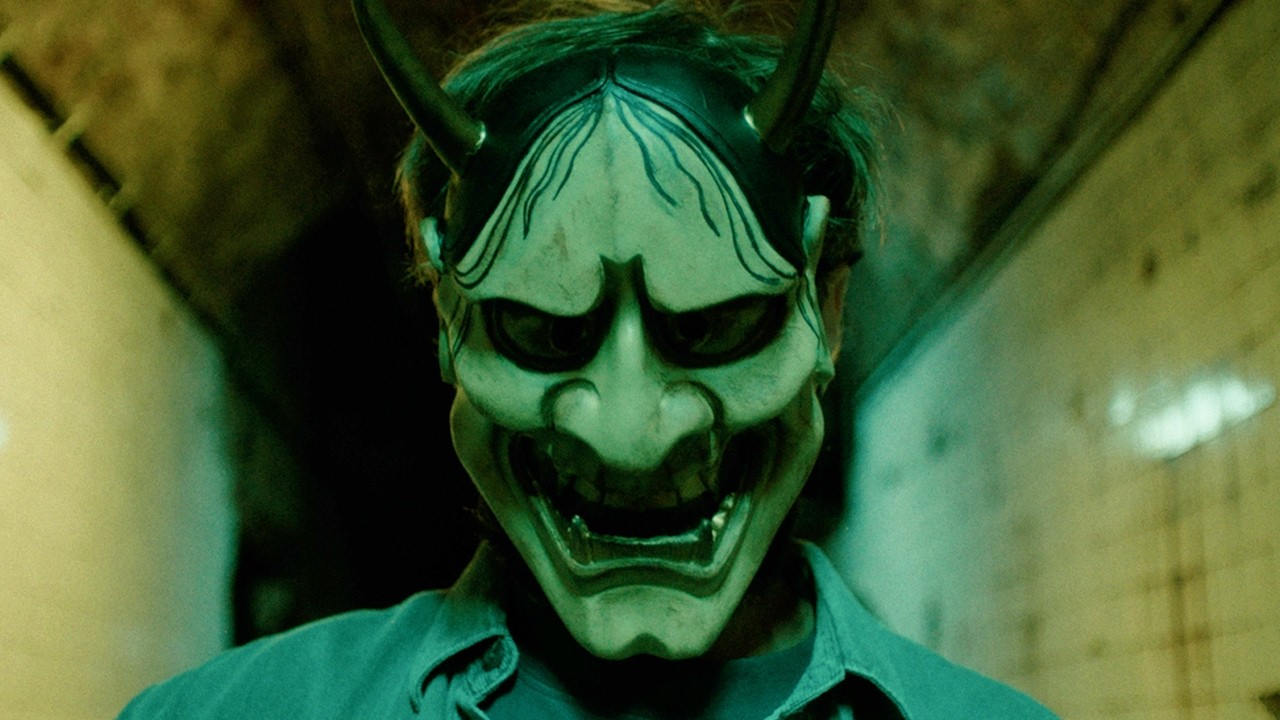
When making Crown In The Grave, Trivium had a rule. They all had to write and play it the Hangar together. If Heafy couldn’t play the riff and sing at the same time then they would work on it until he could. The Terror came together just like that. It has a riff pattern that is super tricksy. It hurts the brain to even think about playing it.
“Yeah, The Terror is super interesting. So when I first wrote that riff, I had this riff to pre-prepared that I came into the studio with,” he says. “And I’m glad you asked about that because I forgot about that story. Originally, the riff went [hums riff], so the end part came first. When I played it for everybody in the studio was like, ‘Matt, where is the downbeat?’ I’m like, ‘Oh, right.’ It did not make sense to me for hours. Then finally, it clicked… It is wild that I could play and sing that.”
Heafy admits that, in the past, he sometimes found himself writing guitar parts that were so complicated he would struggle to play them live. There are tracks on The Crusade, Vengeance Falls, and Silence Of The Snow that kill him when if they’re in the set.
“We’ve had some producers that go, ‘Wow! I don’t care if you can play it and sing it. It's more important that the record sounds good. Just do it’ And then I’m left, live, going, ‘I cannot play and sing this,’” he says, with a wry chuckle. “The Crusade, Vengeance Falls, and Silence In The Snow, those were ones – the latter two, Vengeance and Silence – the producers were being like, ‘Don’t worry about it. We’ll write the vocals when we get to recording vocals.’”
Heafy has learned from his mistakes, and he wants to share his advice with young bands – and especially to anyone whose job is to play guitar and sing at the same time.
It’s a lot easier to write something you can sing when you are writing vocals alongside the guitar parts. You might even be able to come up with something that was far more complicated than you thought possible.
“Yes. Yes, yes, yes. Write them together,” says Heafy. “And that shows the importance, again, of why, in our opinion, it is so important for a band to write and play as a band. Be a band in the room together.”

Vocalists have a tough job. It is physically demanding to do take after take in the rehearsal space. But Heafy says it is worth the effort, especially when you’re songwriting, or working on preproduction for an album.
“Singers, stop being lazy,” he says. “Sing when your drummer’s playing. Sing when your guitarist is playing, and write as a band. Because when you do the stuff like recording on your computers, making MIDI-drums, sending them around to everybody and just kind of writing vocals on top of it with your notebook while you’re listening to riffs, if you’re just a singer, it’ll work – it’s fine. But if you are a guitar player singing, you got to make sure you can play it and sing it before you record it.”
If you want to make Heafy sweat, put Villainy Thrives in the Trivium setlist. That 2013 cut from Vengeance Falls is as hard as it gets, and it’s an example of what happens when you put together a guitar rhythm that treats the beat differently than the vocal. This is why it can be especially difficult for a guitarist/vocalist to perform a song that was written by a band in which the singer sings and the guitarist plays guitar. Pantera springs to mind here.

“Villainy Thrives, off Vengeance Falls, that’s one of the absolute damn-hardest songs to play and sing because the guitar part and the vocal parts were written separately,” he says. “If I would have been in the room [hums riff] and written a vocal part that fit the guitar part, it would have made sense.
That’s how we wrote all the early stuff. It’d be us in the warehouse, me playing the riff and shouting gibberish over things that I was playing
“I’ve said that Master Of Puppets is actually easier to play and sing than Walk by Pantera, which some people are like, ‘How the hell is that possible? But [hums Walk riff]. Can’t you see / I’m easily / Bothered by persistence…’ There are two rhythms that don’t fit, versus ‘End of passion play…’ It fits inside the riff. So that’s why that works, but I only know what’s going to work when we’re making sure we can play and sing it.”
This was why they made Crown In The Grave old-school. Trivium worked on the new material in the rehearsal space and hammered the songs into shape until they made sense. This was just how they did it back in 2003, when they used to rehearse in one of those red-doored storage spaces that their old-school Florida death metal heroes in Morbid Angel, Cannibal Corpse and Death used to practise in.
“We did have that exact same storage place for all the beginning years!” says Heafy. “When when I was basically 14 is when we got when we moved out of my bedroom at my parents' house. We got this place called Fairview Mini Storage. We were next to a bunch of chop shops, an illegal jerk chicken restaurant. There were always like stolen cars and busted cars, and we would just go there and it was disgusting. There was no AC.”
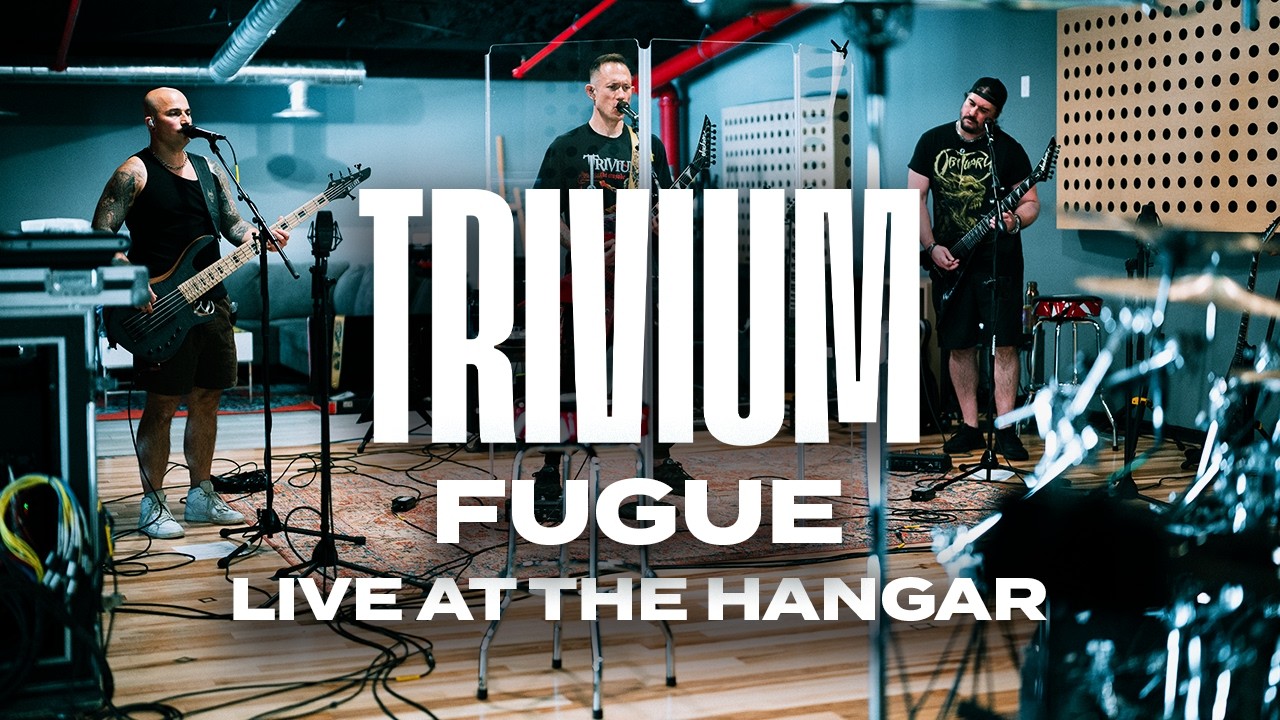
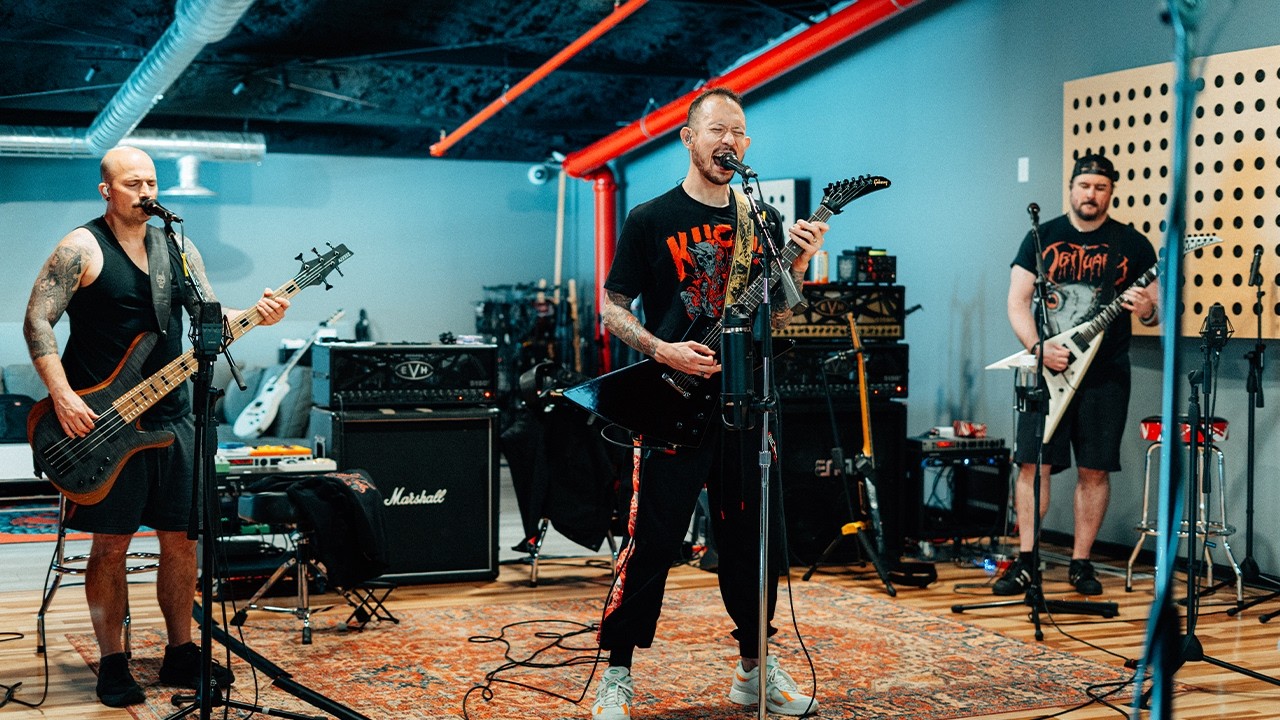
But in its own way, it was a kind of heaven, because this is the platonic ideal, just playing in a room with your bandmates, making a record from the ground up. It was just the same for Crown In The Grave except this time they had AC.
“When I was playing The Terror in the room with everybody, once everyone was playing the riff with me, it’s when I just started shouting on the mic,” says Heafy. “That’s how we wrote all the early stuff from Ember To Inferno, and all our early stuff from Ascendancy. It’d be us in the warehouse, me playing the riff to Like Light To The Flies and shouting gibberish over things that I was playing.
“I know that, when I’m playing something, if the vocal patterns that come out naturally – ‘Behold, our beloved/Revels in tragedy…’ that I’m able to play at that most basic pattern because it fits within the riff, then that’s gonna be okay, and it’s gonna work if fits inside of the guitar part.”
This leaves the question of what the late, great Chuck Schuldiner was doing with Death. Earlier in our conversation, we were discussing Schuldiner’s influence on Trivium, how he approached songwriting, and how he would somehow be able to play unorthodox rhythms on guitar while his vocal patterns seemingly headed off in another different direction, rhythmically speaking.
Heafy had been listening to Death’s final album, 1998’s The Sound Of Perseverance, earlier in the day, and what Schuldiner did still blows his mind.
“That turns the whole concept of Sound Of Perseverance on its head,” says Heafy. “Like, how the how on Earth did he play those things? The vocal part doesn’t fit in the guitar part a lot of times. Same thing with Mustaine. Some of the early Megadeth stuff, he would write vocal parts that just do not fit in the guitar part. I don’t know how those guys did it.”
There is always someone who has the left-brain/right-brain coordination to do it. But Heafy’s point is not to leave it to chance. If you are in a band and you have the chance to do preproduction on your record, take it. You cannot over-prepare for the studio.
“I feel like, every band, if I can give you advice, write the stuff well, well, well before you ever set foot in the studio,” says Heafy. “I get why some people say to not do that. There’s a thing, a fake term called demo-itis, where someone becomes so attached to the demo of the song that any changes to it, they just can’t accept it, but it’s really important to make sure you can do it.
“Because we’re a live band. We gotta make sure we can play and sing it. I’ve got to play guitar while I sing, so I’ve got to make sure I do those two things together. I think for the most part, we learned our lesson on those other records. We always have to be able to do this for real.”
You can catch Heafy and Trivium doing this for real as they tour the US with In Flames. They tour hits the UK in spring 2027. See here for full dates and ticket details. Crown In The Grave is available to preorder, out November 20 via Roadrunner.
