


At around 5pm on Wednesday 28 August, 1968, The Beatles arrived at Trident Studios in the heart of Soho, London, to begin work on the song Dear Prudence, a John Lennon composition written during their time in Rishikesh in India while studying Transcendental Meditation with the Maharishi Mahesh Yogi.
There was one noticeable absence that day. Ringo Starr had walked out, tired of the relentless tensions and arguments within the band and feeling increasingly undervalued and isolated within it.
Starr took his family for a holiday in Sardinia where they sailed on a yacht owned by his actor friend Peter Sellers. By the time The Beatles arrived at Trident to record Dear Prudence, the most famous four-piece in the world were, for the time being at least, a trio.
Over the next three days, with Paul McCartney on drums, the remaining band worked on Lennon’s new composition. The result was a shimmering and bucolic track with a powerful hypnotic edge. Almost six decades on, Dear Prudence stands as one of John Lennon’s finest songs.
Of the 30 songs that appeared on The White Album, 19 of them were written in Rishikesh and 10 of them were written by Lennon.
The Beatles weren’t the only celebrities at the Maharishi’s ashram. Donovan was there, as was Mike Love of The Beach Boys and the actress Mia Farrow, who had just completed filming for the hugely successful 1968 psychological horror Rosemary’s Baby.
Like The Beatles, Farrow had travelled to the ashram seeking spiritual enlightenment and a retreat from Western materialism. Accompanying Farrow was her 19-year-old sister, who would become the subject of the song Dear Prudence.
Prudence Farrow arrived in Rishikesh against the backdrop of an extremely disturbing experience with LSD. According to Kenneth Womack’s 2014 book The Beatles Encyclopedia: Everything Fab Four, she became intensely serious about meditating, refusing to venture out of her bungalow for days on end.
The Maharishi reportedly assigned John Lennon and George Harrison as Prudence’s ‘team buddies’. They were asked to try and coax Prudence out of her seclusion to socialise with other students on the course.
In a 1980 interview with author David Sheff, Lennon spoke of the song Dear Prudence and the person who inspired it.
Prudence Farrow seemed to “go slightly barmy,” recalled Lennon bluntly, “meditating too long, and couldn't come out of the little hut that we were living in. They selected me and George to try and bring her out because she would trust us. If she’d been in the West, they would have put her away ... She’d been locked in for three weeks and was trying to reach God quicker than anybody else. That was the competition in Maharishi’s camp: who was going to get cosmic first. What I didn’t know was that I was already cosmic.”
In many ways, the accepted narrative of events at the ashram has always seemingly cast Prudence Farrow as a victim, but the reality seems to be that Farrow was also simply more dedicated to Transcendental Meditation.
“They were trying to be cheerful, but I wished they’d go away,” Farrow told MOJO magazine in 2008. “I don’t think they realised what the training was all about.”
Farrow elaborated on events in Kenneth Womack’s 2014 book. “I knew that I must have stuck out because I would always rush straight back to my room after lectures and meals so I could meditate. John, George and Paul would all want to sit around jamming and having a good time and I'd be flying into my room. They were all serious about what they were doing, but they just weren’t as fanatical as me.”
Lyrically, there is a blissful simplicity and innocence to Dear Prudence, which reflects the purity and slow pace of their environment at the ashram, amid lush riverbank forest overlooking the sacred River Ganges. The tone is childlike as Lennon peppers his lyrics with references to nature.
“Dear Prudence, open up your eyes/Dear Prudence, see the sunny skies/The wind is low, the birds will sing/That you are part of everything.”
But as is the case with many Lennon songs, the simplicity and beguiling innocence of the lyric can take on a wider meaning, particularly within the context of the song’s trippy and ethereal sound
In his 1996 book A Day In The Life: The Music And Artistry Of The Beatles, journalist Mark Hertsgaard suggests that the lyrics to Dear Prudence are a continuation of an idea first espoused by Lennon in Nowhere Man in 1965, namely the notion of not hiding from life, of recognising that you have a reason to smile and to “wake up and play your part in the grand scheme of things”.
Lennon wrote Dear Prudence using a finger-picking technique he reportedly learned from Donovan in Rishikesh. Written in D major and played with a dropped D, the song opens with a drone-like arpeggio from Lennon and much of its enigmatic melodic power comes from the descending D-C-B-Bb bass line.
There’s a distinct groove to Lennon’s guitar motif, a flowing interwoven pattern which swings and flows with a syncopated bounce and builds a continuous rolling momentum that gives the song its hypnotic feel.
The Beatles demoed the song after their return from India at George Harrison’s house in Esher, Surrey in late May 1968, in preparation for recording of the White Album. It was one of 27 songs they had written in Rishikesh and the demo has a beautifully wistful feel.
They then recorded Dear Prudence over three days from 28 August to 30 August at Trident Studios and completed the basic track on the first day. This included Lennon’s chiming finger-picked electric part, which he played on his Epiphone Casino through a new Fender Twin Reverb.
The eight-track recorder at Trident gave them the luxury of being able to perfect and re-record their parts as the song was being developed.
On 29 August, McCartney laid down his bass part and Lennon recorded his vocals. In his 1988 book The Complete Beatles Recording Sessions, author Mark Lewisohn states that Lennon’s voice on Dear Prudence is manually double tracked for enhanced thickness and width of sound.
Other elements added that day were backing vocals, handclaps and percussion, including tambourines from Harrison and McCartney. The Beatles were joined for these additional elements by the band’s ever-present road manager and personal assistant Mal Evans, as well as recent Apple Records signing Jackie Lomax and McCartney’s cousin John McCartney.
On the third and final day of recording, McCartney added piano on the end of the song and Harrison added lead guitar, using his 1957 Gibson Les Paul Standard. In the opinion of author Ian McDonald in his 1994 book Revolution In The Head , Harrison’s Indian-style guitar parts were the “richest ingredient” in the arrangement.

Listening to Dear Prudence today, almost 60 years since it was created, there’s a remarkably sparse and skeletal feel at the outset, beginning with the lone, quiet finger-picked guitar. The structure gradually builds into a massive multi-layered arrangement, with the rhythm section being subtly introduced as the song develops.
In some ways. McCartney’s straightforward and slightly stilted drumming in the verses is what gives the song its edge and sense of unease. You can’t help pondering what it would have sounded like with Ringo Starr behind the kit, although there are some who believe that the cacophonous 10-bar extended drum fill on the fourth verse and outro is actually Starr.
Official Beatles recording logs credit McCartney. But that hasn’t stopped musicologists and fans speculating that the complex, shuffly fills at the end of the song were re-recorded by Starr at EMI Studios, Abbey Road. It is a debate that will doubtless run and run.
Unsurprisingly, it’s on the bass part where McCartney really excels. As Lennon’s arpeggio guitar continues its hypnotic journey, McCartney’s bass swoops and slides with graceful melodic lines.
There’s a real sense of movement within McCartney’s bass line as it transforms Lennon’s delicate guitar figure into something rhythmic, flowing and dynamic.
At 2:15, after the ‘Look around, round, round…’ middle section, twisted squalls of George Harrison’s guitar enter the mix, as a sonic counterpoint to Lennon’s vocal. And from there it just builds to a driving psychedelic rock crescendo becoming ever more dense, with high tinkling vamps of piano, handclaps and overdriven guitar motifs.
At 3:20, the descending bass becomes more direct and strident as the whole track thrusts towards a close and Lennon sings the final lines: “The sun is up, the sky is blue/It’s beautiful and so are you/Dear Prudence, won’t you come out to play?”
The song then segues into slow, gentle smatterings of the core guitar arpeggio, before gently and gracefully fading away.
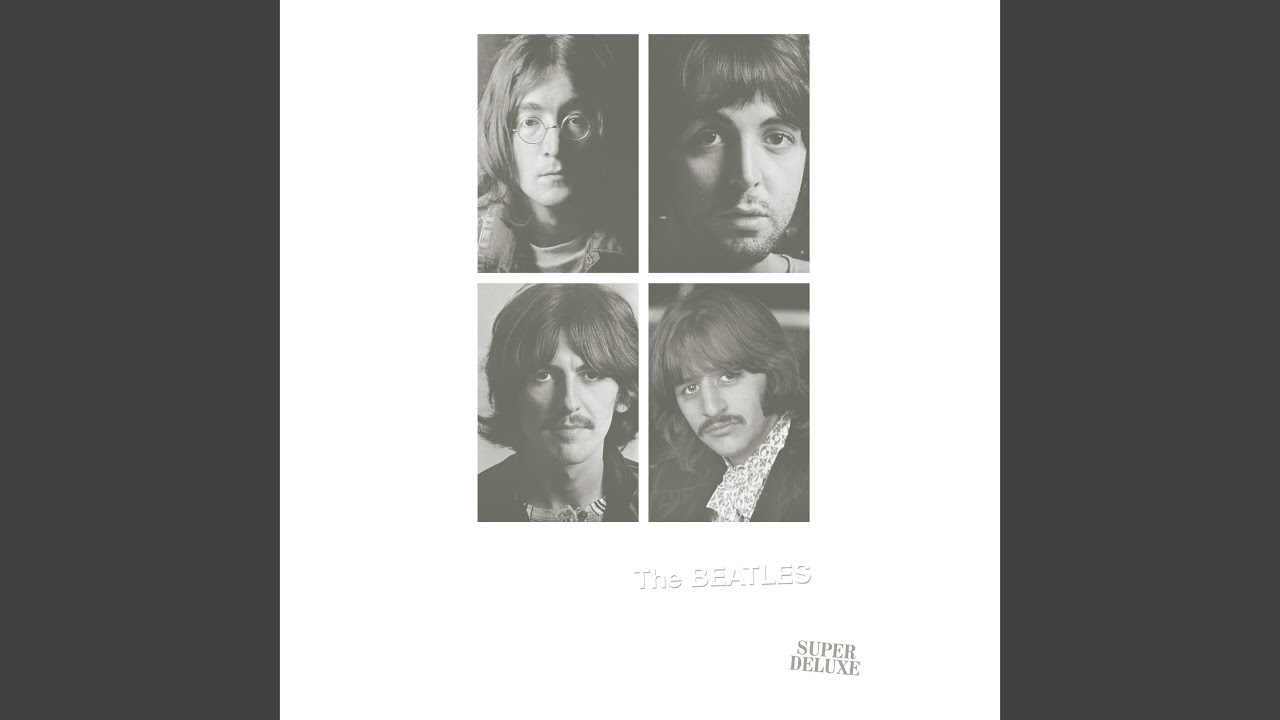
Dear Prudence was released on The White Album on 22 November 1968 but was not released as a single. Its lush and hypnotic tones are largely regarded as one of the high points of that album. In a ten-star retrospective review of the album in 2009 Mark Richardson of Pitchfork praised the “spectral, floating mood” of the song, adding that it is one of the album’s songs “that will stay with you”.
Dear Prudence has been covered a number of times, but by far the most high profile cover version came in 1983 when Siouxsie and the Banshees added their own take on The Beatles’ simple original arrangement. Their cover reached No 3 in the UK in October 1983 and became their biggest hit.

Prudence Farrow would go on to become a film producer, a college professor, a writer, scholar and global traveller, but her true passion reportedly came from becoming a certified teacher of Transcendental Meditation. This was precisely why she had attended the course with her sister Mia at the Maharishi’s ashram back in 1968. “Being on that course was more important to me than anything in the world,” she told writer Steve Turner in his 1998 book A Hard Day’s Write.
It was George Harrison who first told her about the song Dear Prudence.
“At the end of the course, just as they were leaving, George mentioned that they had written a song about me but I didn’t hear it until it came out on the album,” recalled Farrow. “I was flattered. It was a beautiful thing to have done.”
