


It was Fat Monday, the eve of Mardi Gras, and the streets of New Orleans were a riot of colour and noise, and full of music. It poured out of bars and into the street, where its frequencies and rhythms co-mingled with costumed musicians on parade and partygoers.
Music was everywhere. In the Faubourg Marigny District, Queens Of The Stone Age were holed up in Rick G Nelson’s famous Marigny Studio, trying to capture some of the energy from the streets and make some music of their own. “The city was just exploding with intense energy and revelry in the streets. I mean, the place was alive,” says drummer Jon Theodore.
QOTSA were in New Orleans to work on their ninth studio album, Perfecth, but this is a town where business and pleasure can coexist. They would breakfast together, walk down to the studio together, go visit friends. They were just two blocks from Frenchmen Street, and all that jazz, and they lapped up everything Lundi Gras had to offer.
“We thrive on the vibe in our surroundings. We need to be inspired, too, especially in the recording process,” says Theodore. “The studio itself, Marigny, it has so much character. It’s been around for a century. It used to be an old jazz club, and a speakeasy, and a punk rock club. The city was so inspiring for us – it really invigorated us. I like to say that the city became the sixth member of the band. And it created just so much passion and inspiration for us that I can hear it in those songs.”
They did some tracking at Sound City in Los Angeles, but the idea was to get out of town; a change of scenery would do them good. It was guitarist Troy Van Leeuwen’s first time in New Orleans at Mardi Gras.
“We would be recording, and then you step outside and there’s a parade,” says Van Leeuwen. “Every amazing musician that’s in the town is marching down the street, and they’re playing. It’s just amazing.”
Theodore and Van Leeuwen are joining us on a bright summer’s morning in London, and it is a very different vibe. We’re in the Mirror Room at the Rosewood Hotel, where high-rollers are devouring eggs Benedict and chia pudding.
Sunlight is streaming through the window. Theodore and Van Leeuwen are wearing sunglasses, nursing their coffee. A stadium show with System Of A Down awaits in the evening. This story – and this setting – reminds us that rock ’n’ roll is a night-time activity. “My coffee’s starting to kick in,” Van Leeuwen assures us.
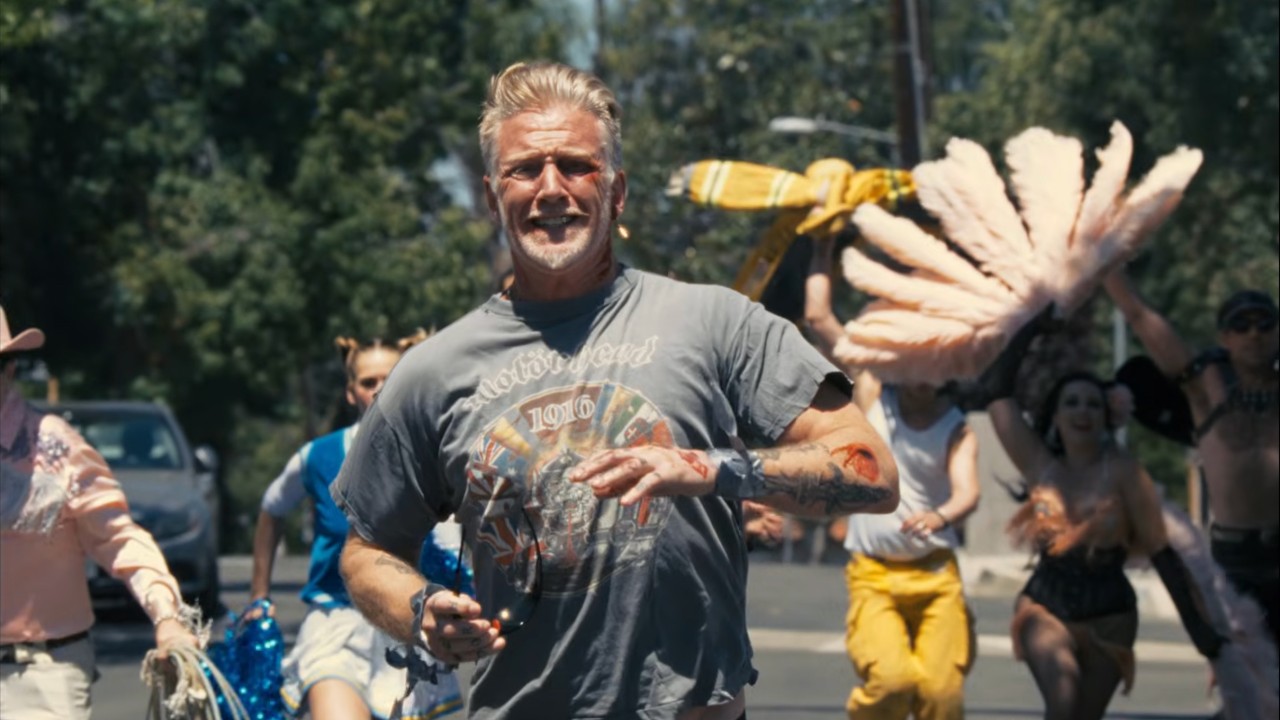
The last time we spoke with Van Leeuwen, he was getting readjusted to the light above ground after Queens Of The Stone Age climbed out from the Catacombs in Paris where they had just reimagined their catalogue acoustically to perform for the remains of approximately six million people and a small film crew.
This was a very different kind of location. Playing down there is an experience that leaves its mark. By all accounts, it nearly claimed frontman/guitarist Josh Homme’s life.
Homme had taken ill beforehand. He was running a 40°C fever during the Catacombs performance. But this was a lifelong ambition and there was no way he was going to bail on it. The next day, he was on an emergency flight back home and in surgery just hours after landing.
The remainder of their 2024 tour dates were cancelled. Between his illness, a successful battle with cancer in 2022/23, and his much publicised divorce, Homme had been having a hellish time of it in the first half of the 2020s.

Homme recovered. QOTSA released their Alive In The Catacombs EP in 2025, and toured it. And yet when Perfecth opens up with the haunting melancholy of It’s Only Love, it’s as though there’s still some dust from the bones on them. In the Catacombs, it was so quiet. The only ambient sounds were those of water droplets echoing off skulls, and they modulated their volume accordingly.
Theodore kept time with chopsticks and wooden blocks. This was QOTSA at a whisper. Perfecth was about building their sound back up again to a shout, to rock ’n’ roll. Hence the sombre opening of It’s Only Love.
It sounds like a lost recording from the Depression-era, by a band who, like Robert Johnson, have something on their trail.
“That’s actually a great observation,” says Theodore. “We were coming out of the Catacombs, where Josh nearly died. The veil between life and death was very, very thin, so that’s where it starts… It’s like, he almost died. You know? We cancelled the tour, and so we were going away and maybe never coming back.”
Perfecth was inspired by kintsugi, the Japanese craft of repairing broken ceramics with a glaze containing powdered precious metals such as gold, silver or platinum. The fundamental idea behind it is that the repair is not designed to hide the breakage. When you think about it, that is what music does. It heals us. It puts our scars on display.
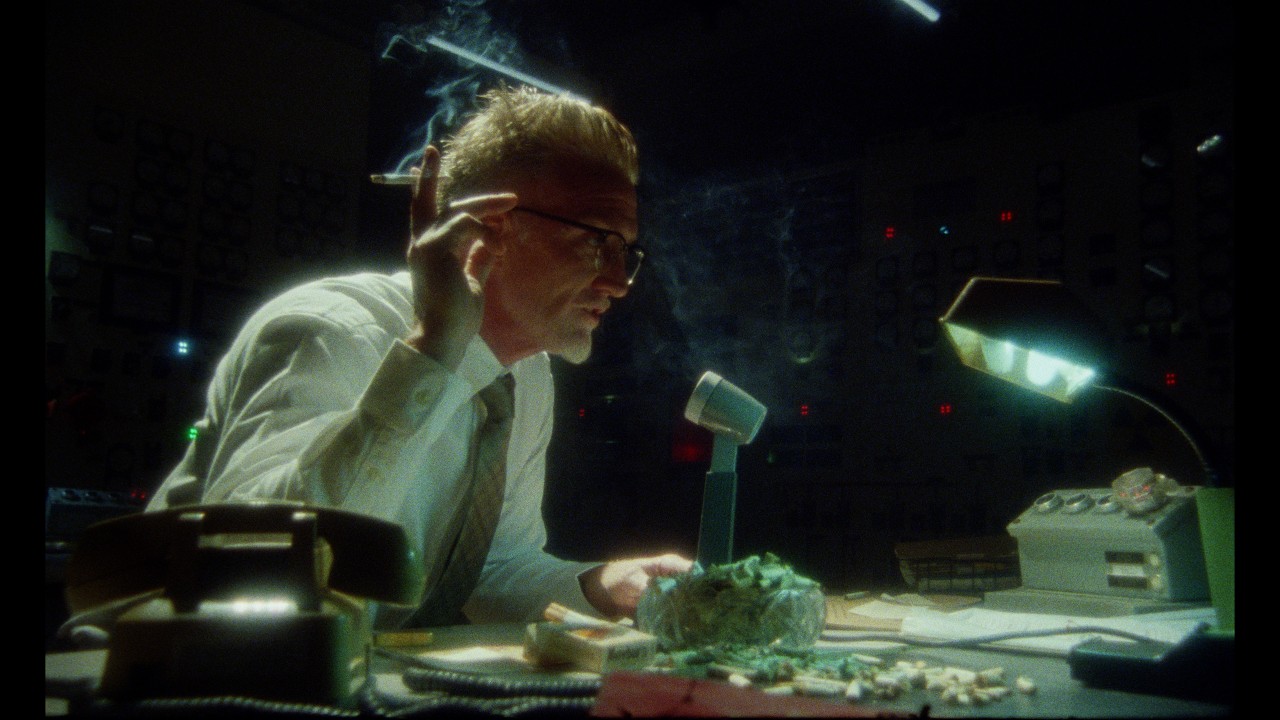
Perfecth is like pressing shuffle on a dark night of the soul. It is an album of light and shade, life and death. First you get the nocturnal wheeze of It’s Only Love, then the louche after-hours groove of Insignificant Other.

Where The Goth Girls At? follows, and Homme’s falsetto is all kinds of woozy as it floats over the theatrically simple clang of high-voltage guitar and bass, casually referencing a near-death experience from his adolescence. It is the party jam with one eye cautiously on the morning to come.
But then there are songs that surrender themselves to abandon, such as Easy Street, which finds Homme in a shambling duet with country star Nikki Lane, and Sunday, which reworks the track he wrote for Iggy Pop’s 2016 album Post Pop Depression. “Kicking into Sunday, it’s like, ‘Man, we have been dealing with all of this death,’” says Theodore. “We came of the Catacombs – this austere, reverent, kind of vigil for life – and it was like, ‘Now it’s time to party!’”

On tracks like Where The Goth Girls At?, we hear QOTSA’s maximalist instincts wrestling with their practised discipline of restraint and minimalism, opening up the space between the guitar and drums, Mutt Lange-style.
“I was thinking more of like a Steve Albini recording – with the drum sound anyways. And the bass tone to me very much sounded like The Jesus Lizard,” says Van Leeuwen. “But it ends up being Queens at the end of the day. We have a lot of influences. There are a lot of influences being shown on our sleeves this time.”
That’s especially noticeable on Insignificant Other, where QOTSA are playing around with that Miss You-era Stones vibe.
“If you know anything about the recording process for Exile On Main Street, they just let the tape roll, and that was what we did with that song,” says Van Leeuwen. “I think we went over the arrangement once, and it was late at night, and we were tracking to two-inch tape, and all five of us were in the room, and that’s the second take that you hear on the record. That’s what that is, and that feels like what the Stones might have done.”
Insignificant Other was recorded in Los Angeles at the end of a long day. They just couldn’t nail the song they were working on. It was past midnight. They had a few beers to decompress. They started messing around with a riff.
“The lights were already out in the studio,” says Theodore. “We were all ready to leave. Some people had their jackets on… After a very short amount of time, we had a couple of parts, and then it was like, ‘Oh, let’s just record this for the night before we leave.’ There’s interplay. It’s free. It’s loose. We were literally calling out the changes as we’re taping it.”
Insignificant Other ended up being the album’s centrepiece. Homme had the rough idea for the song circa In Times New Roman… but decided to let it sit a while. It was too raw to be singing about relationship breakdown so soon after the fact. When they got to New Orleans, they thought they would take another crack at it, but couldn’t improve upon the original take. That night had the magic – and you sometimes you just can’t recreate that.
“We were like, ‘Oh, this sounds great.’ But when you listen to it, it’s definitely all of us doing what we look like without any pressure, or any sense of, ‘You have to do this right, and in a particular way,’” says Theodore. “We just did what we did. And we were listening very carefully. Like, you can hear the glue between us.”
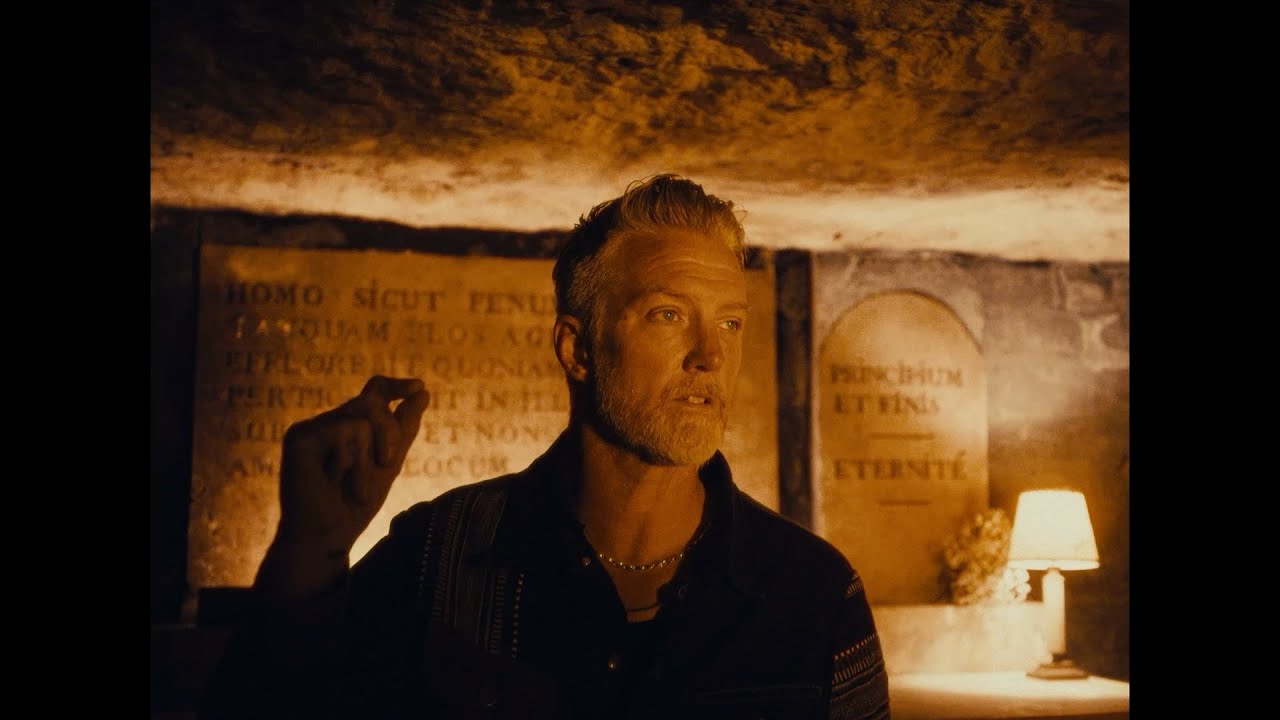
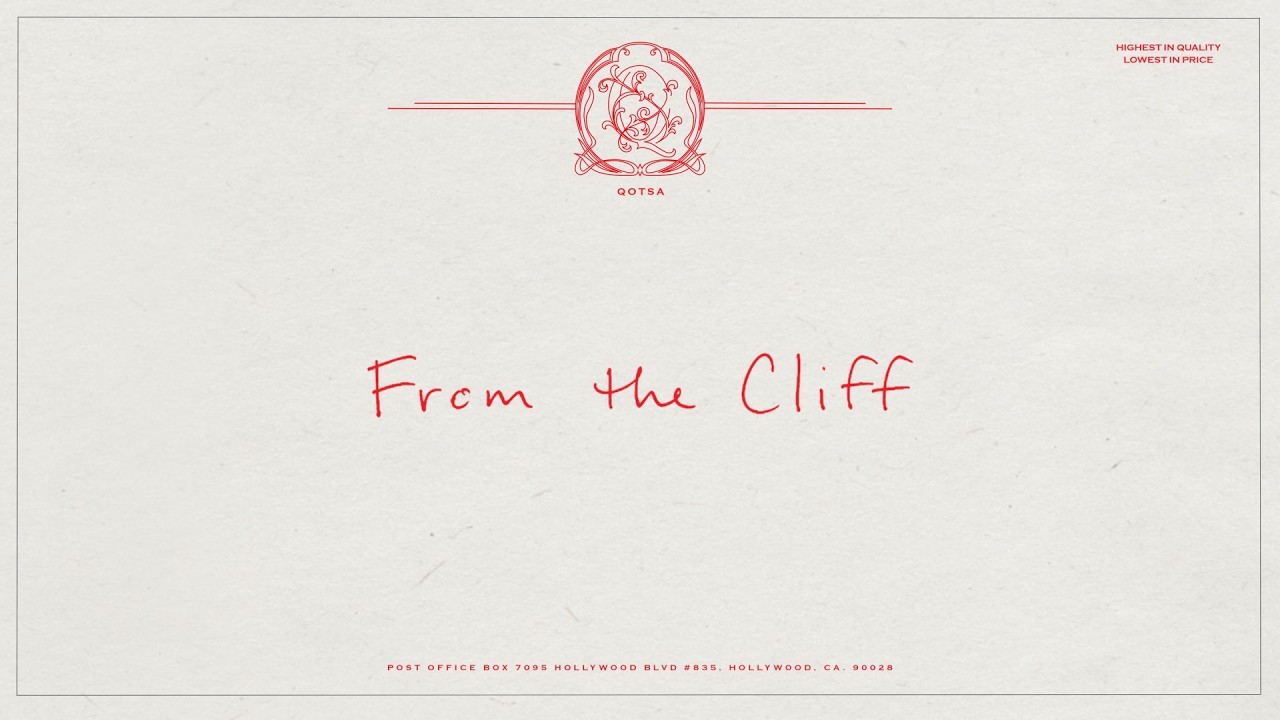
Mono is a woozy exercise in subverting the stereo spread – a queasy fever dream before QOTSA close Side A out with From The Cliff, Homme and bassist/guitarist Michael Shuman dueting on acoustic guitars for a Cat Stevens-style jam that sounds like it could have soundtracked a picaresque New Hollywood movie.
It may seem, at first listen, like a more melodic, more kind of acoustic record, but there’s depth and there’s darkness there
Troy Van Leeuwen
“It may seem, at first listen, like a more melodic, more kind of acoustic record, but there’s depth and there’s darkness there,” says Van Leeuwen. “Instead of layering instruments and guitars and synths, the layering is in the intent, in the lyrical content, and where we would normally try to fill in every gap, and make every bit of the music like something’s happening, this is very open… So that was fun too, just to sit back and let things be a little more free.”
In any given QOTSA recording session, there is no shortage of effects pedals and gizmos for augmenting electric guitar tone. They have a trove of gear at their disposal. A large corner of the internet is dedicated to deciphering the tone secrets of QOTSA.
But Van Leeuwen says this wasn’t a record for going down rabbit holes and endlessly dialling in sounds. What mattered was the intent behind their gear choices. “We always have more than enough pedals, but it just sounds like, on this record, it’s a little less complicated,” he says.

His 12-string Telecaster was used on the brassy disco-pop strut of Sunday. His signature Jazzmaster saw a lot of action. The guitars were going through Van Leeuwen’s GMI amps that were designed by his amp tech Sean Romin. GMI’s Gabe Curry also made him a guitar that’s loosely based on his 1999 Gibson ES-135. They call it ‘The Zero.’
“I have an ES-135 from 1999, and it’s one of my favourite guitars, and it’s another guitar that I don’t want to take down the road anymore because it’s been beat up a little bit more than I like,” says Van Leeuwen. “And so we made our version of our 135/Gretsch-style hollow-body. It’s got a gold-foil pickup in the neck position, and it can do coil-splitting and phasing. It’s a workhorse guitar. You can get anything out of it, and it’s really built like a brick shithouse. It’s really solid. I used that one a lot.”
But sometimes it was the oldest and cheapest guitars that did the job, like the old no-name nylon-string with the “big, giant neck” that Van Leeuwen has had since he was 13 that he and Homme both used for Phantom Limb.
“Sometimes the brightness of something that’s a really nicely built guitar gets a little annoying unless you’re playing with fingers,” he says. “There’s something about those kind of nylon-strings. When you strum them like that, they have this deadness.”

This was a record that would have been killed by finessing every tone and every take. It’s like these songs are still being explored as they are were committed to tape.
Even Homme and Shuman’s production choices appear to change horses midstream, catching the listener off-guard – catching the band off-guard too. Theodore says they sometimes spliced two takes together, but this was about capturing the song and the performance and leaving it all in there. Even the mistakes?
“Yeah, are you kidding!? There’s a million of them,” he says. “Because we don’t use clicks. We don’t edit. We go into each take knowing 60 or 70 per cent of what we’re gonna do, so there’s 30 per cent with no net. And so I look back, all through the record, there are mistakes all over the place, but as long as it doesn’t disrupt the vibe, we leave them.”
“Basically, the title of the album should be ‘Happy Accidents,’” jokes Van Leeuwen. But maybe that would have just been too perfect, and this was not the record for that.
