


Many artists with careers spanning decades will at some point in their lives have had to make major stylistic changes to adapt to shifting trends.
The ’80s in particular saw a number of artists from the ’60s and ’70s completely reimagine their sound.
Steve Winwood realigned his R&B, soul and blues roots into a sophisticated, synth-driven pop sound with polished digital production. Tina Turner also transformed her visceral R&B and soul sound into a sleek, high energy blend of pop, rock and contemporary R&B.
And then there was Elton John, who in 1983 released the album Too Low For Zero, his first album to feature synths, drum machines, electronic textures and modern production techniques alongside his classic acoustic piano sound.
The song from that album which really thrust him into the public consciousness was I’m Still Standing, a thumping, driving and exuberant rocker with defiant lyrics and infectious hooks.
I’m Still Standing introduced John to a whole new generation of fans and gave him a fresh, energetic pop identity for the ’80s. The song would go on to become a highlight of his live set for decades to come.
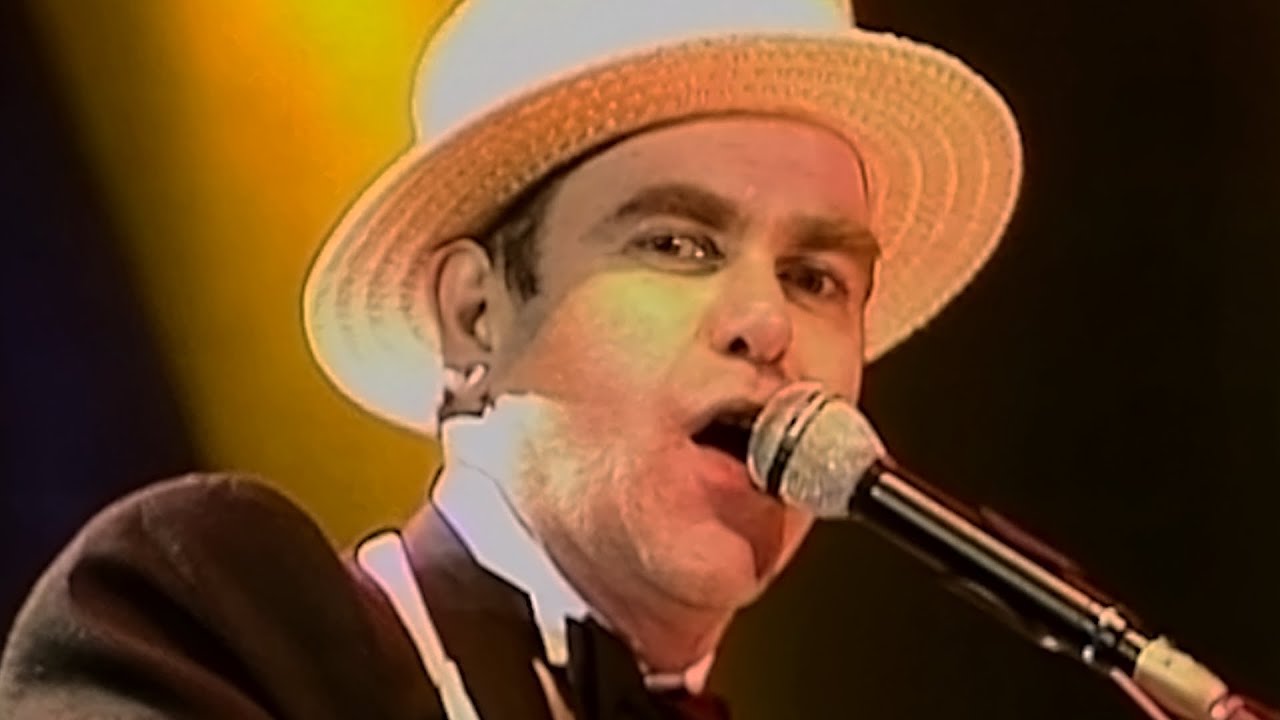
By the time Elton John started work on the Too Low For Zero album, his career had experienced a significant lull. His previous five albums had failed to yield any international hits and sales were disappointing compared to his string of hit records in the first half of the 1970s.
For the first time since the Blue Moves album in 1976, John reunited with lyricist Bernie Taupin, to work on Too Low For Zero, his 17th studio album.
“We both knew that we wanted to work together again, but we had to wait until it just fell into place,” Taupin told Music Connection magazine in 1989. “We knew that when the time was right it would just happen.”
John also reunited with his backing band from the early ’70s, featuring guitarist Davey Johnstone, drummer Nigel Olsson and bassist Dee Murray.
“It was such a great buzz playing with those guys again,” said John in an edition from the 1983 Rock Star Interviews series, entitled Elton John: Reflections On A Decade Of Hits. “And that was the most successful band that I ever had, with David, Dee and Nigel. And I just thought if we were going to do an album it would be a great idea to just do one with Bernie and go back to that formula again and record an album how we used to record it. That is to say we did the album more or less in two weeks, written and recorded. It really worked.”
George Martin’s AIR Studios in Montserrat was the studio chosen to record the album and this was where John and Taupin wrote the ten songs that made it onto the album. “It was like a little factory again down in Montserrat,” said John in the Rock Star Interviews series.
The producer selected for the album was Chris Thomas, who had worked with The Beatles, Pink Floyd, Roxy Music and the Sex Pistols among numerous others. It was Thomas who reportedly encouraged John to use synths.
“All the songs were written on synthesiser," John told Paul Gambaccini in 1984.
“My biggest hang-up has been writing rock ’n’ roll songs. I’m not very good at it, because if you’re a pianist it’s a totally different concept [compared to] playing guitar. It’s very hard to write three-chord songs on a piano. So I get this synthesizer, which sounds like a guitar on some parts, and I can write three-chord songs all of a sudden.”
While I’m Still Standing has become synonymous as a song about Elton John’s resilience and his triumph over adversity, Bernie Taupin actually wrote the lyrics as a message to a former girlfriend.
“It's perhaps one more example of the original idea being interpreted by everyone into something quite different,” Taupin told Smooth Radio. “I think people see it as an anthem based on Elton’s strong sense of survival in the face of adversity. Which, believe me, is perfectly fine by me. In fact, it’s probably infinitely more interesting, perhaps, than what it was initially written about. Which, if my memory serves me correctly, it was a sort of kiss-off to an old girlfriend. You know the sort of thing, ‘Don’t you worry about me, I’ll be perfectly fine.’ Unlike George Jones’ She Thinks I Still Care, where, in fact, he really did, I really didn’t.”
In his 2019 memoir, Me, John explained how Taupin’s title for the song took on a whole new meaning for him.
“I’m Still Standing sounded like the whole album’s calling card,” he wrote. “The lyric was about one of Bernie’s exes, but I also thought it worked as a message to my new American record company – who were, quite frankly, turning out to be a terrible pain in the arse.”
John’s label, Geffen Records, had reportedly been disappointed by the sales of his previous two albums, The Fox (1981) and Jump Up! (1982) and were allegedly extremely open with him about their level of disappointment.
“I didn’t like the look of any of it,” John wrote in his 2019 memoir Me, “and thought I’m Still Standing sounded like a warning shot across their bows. It was a big, swaggering, confident fuck-you of a song.”

From the first few bars, I’m Still Standing has a driving, infectious intensity. It’s also irrepressibly catchy. Bright, brassy staccato synths, bouncy piano and punchy slap bass predominate in the mix of this high energy pop-rock track. It’s a big, bold sound and the production is glistening and crisp.
The core refrain on the line “I’m still standing better than I ever did…” is anthemic and uplifting while the counterpoint backing vocal chants of “yeah, yeah, yeah” in the chorus provide classic singalong fare.
Structurally, there’s a real authority to the individual sections and John’s rapid-fire rhythmic phrasing bolsters the song’s breakneck 177 bpm delivery. It’s a powerful, soulful vocal performance from John, who belts out the lyrics with real conviction, backed by the flawless harmonies of guitarist Davey Johnstone, bassist Dee Murray and drummer Nigel Olsson.
It’s uncanny how Taupin’s lyrics inadvertently lend themselves to John’s own narrative of surviving against all odds, as Lindsay Planer of AllMusic observed.
“Taupin’s lyrics perfectly capture the behind-the-scenes struggle that was concurrently going on between the artist and his relatively new label Geffen Records,” wrote Palmer. “The chorus contains a perfect example of the duality within John’s defiance and insecurity.”
1:55 into the song there’s a searing rockabilly-tinged guitar solo from Davey Johnstone – with double-stop licks and sliding sixths – that cuts right through the piano- and synth-driven mix. The solo lasts just 15 seconds but it re-energises the song and sets it up perfectly for the chorus that follows.
There is an irrepressibly joyous, life-affirming feel to I’m Still Standing, which is reflected by the video.

This was shot in and around Cannes and Nice although the bulk of the shoot took place outside the Carlton Hotel in Cannes, a town well accustomed to lavish spectacle.
It’s a witty, vivacious video in which John performs alongside various body-painted dancers on the Carlton Hotel’s sun-baked private beach and along the Croisette. It is ’80s excess at its finest, but there’s a likeable tongue-in-cheek feel to the whole thing, thanks to Arlene Phillips’s inventive choreography.
The video shoot wasn’t without its drama. Things allegedly got out of hand when John happened to meet Duran Duran, who reportedly introduced him to vodka martinis.
“Depending on who you believe, I had either six or eight more of them in the space of an hour,” John wrote in his 2019 memoir Me, as reported by Ultimate Classic Rock.
Later that evening, John allegedly trashed the hotel room of his personal assistant Bob Halley. The following day, he woke and saw the damage, as he recalled in his memoir. “‘Fucking hell,’ I said. ‘What happened?’” he wrote. “Elton,” replied Halley after a long pause, “you happened.”
The drama continued when the video’s director Russell Mulcahy accidentally fell into the sea with a camera after walking backwards while filming. This meant that much of that day’s footage had to be reshot.
But despite such incidents, the song and the video enhanced each other seamlessly. The video showed that John was willing to embrace the new format, unlike some established stars at the time. And pivotally, it introduced him to a whole new, younger fanbase.
I’m Still Standing was released in April 1983 in the US and on 22 July 1983 in the UK. The song was a hit on both sides of the Atlantic, reaching No 4 in the UK and No 12 in the US. It topped the charts in Canada and Switzerland and went top five in Australia, Ireland, Israel and Luxembourg.
John had re-emerged with a thumping rocker of a song and in the process reignited his career.
“Both the lyrical content as well as the driving tempo heralded a return in spirit to John’s rock and roll icon status, which had been wavering since the late ’70s,” noted Lindsay Palmer of AllMusic,
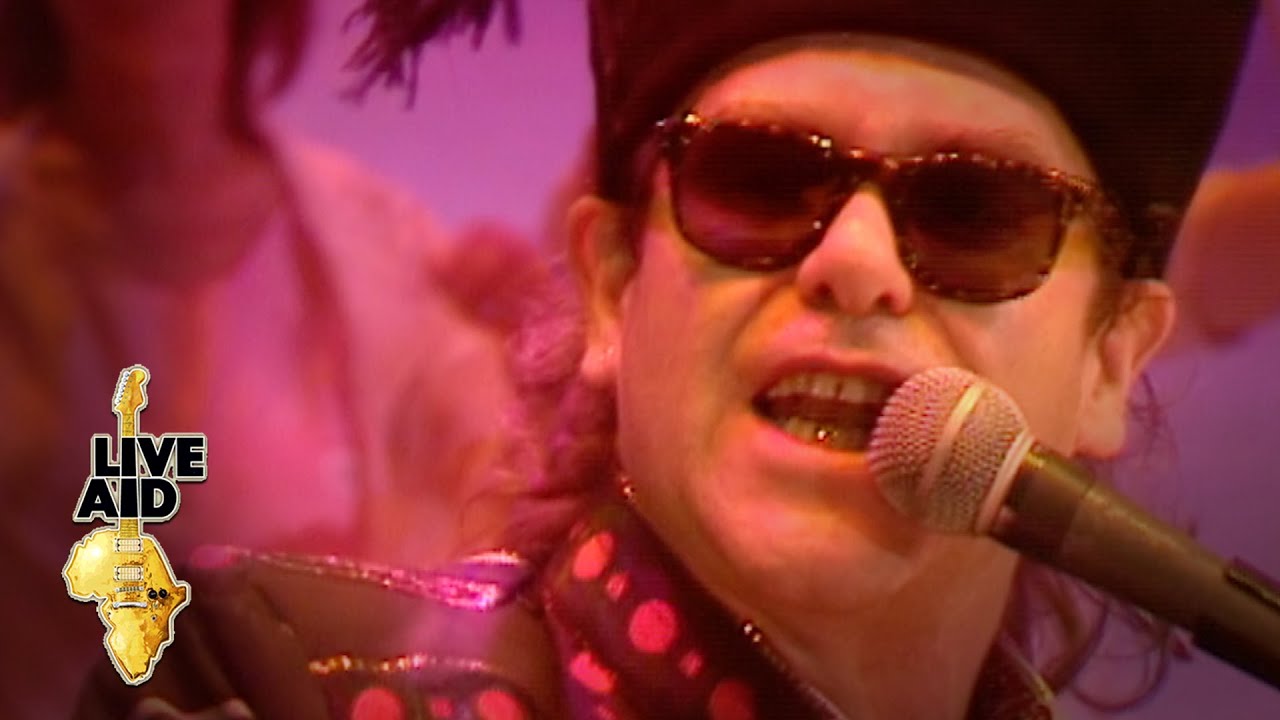
On 13 July 1985, almost exactly two years after the UK release of I’m Still Standing, Elton John strode out onto the Wembley Stadium stage at Live Aid and kicked off a killer set with I’m Still Standing. It has remained a staple of his live set for the rest of his career.
On 30 January 2018, artists such as Miley Cyrus, Ed Sheeran and Lady Gaga paid tribute to John by covering his songs at the Madison Square Garden concert, Elton John: I’m Still Standing. The show ended with John and the other artists performing the song.
In many ways, the song became a brand of sorts for Elton John, conveying his struggles, his triumphs and his endurance. Ultimately though, it remains a timeless anthem, whose empowering lyrics and infectious melody have energised and uplifted audiences across the globe.
