


On paper, the second album by 80s sensations Frankie Goes To Hollywood should have been a nailed on cert. Released 40 years ago today, Liverpool was the sequel to the triple-platinum double-album excess of Welcome to the Pleasuredome and this was a band that finally had the time and money to grow and make good on their early, rough-and-ready promise. So when and how did Frankie’s wheels fall off and why does Liverpool only now get a glimmer of the credit and love it deserves?
To find out, we’ve got to go all the way back to 1984. Circa ‘84, Frankie were riding high. Their debut single Relax had just been deliciously banned, and they were about to score a simultaneous number one and number two when its bombastic sequel, Two Tribes, dragged Relax back up for a second ‘coming’.
For fledgling record label ZTT, Frankie were the golden goose, and for label owner and soon-to-be-superproducer Trevor Horn things were only ever on the up.
Horn had learnt his trade under the cosh of '70s producer Biddu and playing second fiddle (bass, to be exact) in a string of mildly successful bands. Not least his own Buggles, whose Video Killed the Radio Star wound up soundtracking the entire MTV era.
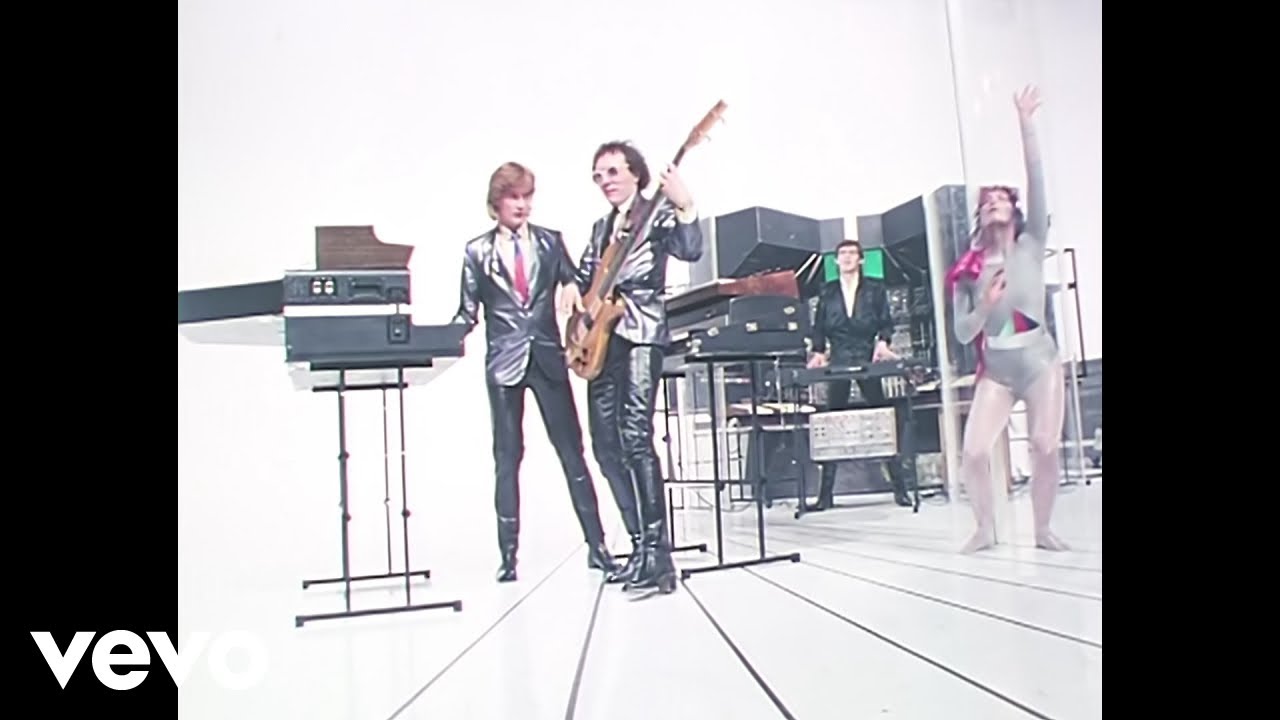
A fiercely enthusiastic proponent of new technology Horn had – part by right-time, right-place chance, part by virtue of his talent – found himself as the figurehead of a new way to make music. And as head of his own ZTT label alongside the talents of engineer Gary Langan, Fairlight operator JJ Jeczalik and keyboard player and arranger Anne Dudley, he’d found ready and willing compatriots.
Horn’s early-adopter suspicions – sharpened through his ‘fake band’ Buggles exercise – that recording studio technology was about to explode had been proved 100% right. And so, by 1984, with first-mover advantage, he’d sidestepped the naysayers, proved the old guard wrong and won the war.
However, that war wasn’t without its casualties.
Step up Frankie Goes To Hollywood. While Horn had ‘plucked them from obscurity’ following their lucky break appearance on The Tube and hits had ensued, post-Pleasuredome comedown, things weren’t as fluffy and fun as they seemed on the surface.

The Frankie we loved were a screen-hogging cultural behemoth able to top the charts non-stop for nine weeks, hold two singles in the top five and take a pricey double album to number one for their debut.
In reality, however, they were a mismatched, rag-tag, five piece funk/pop/rock/whatever gaggle of semi-friends who had inadvertently strapped themselves to a rollercoaster.
While having hits was ‘great’, and seeing the world from a first-class window was certainly an experience, the small matter of not receiving any credit or – worse – any money, had, by 1985, begun to rankle.
“We were denigrated for the fact that it was machines on the records, whereas New Order made Blue Monday and were hailed as the best thing since sliced bread,” Johnson moaned to The Times. Famously, Horn and team had feverishly worked non-stop for days on tracks for Frankie’s debut without the band in attendance because they were forced to return to Liverpool once a week en masse in order to sign on and secure their unemployment allowance.
Johnson recalled to Q: “I went to my bank, the NatWest, and I put my gold disc down and said ‘This is my collateral, now will you give me a 500 quid overdraft?’ And he said ‘Let me show this to somebody’ and he came back, and he wouldn’t let me have it.”
You’d be forgiven for thinking that with Horn as producer, studio owner, record company and band confidante, the route from cash register to the band’s back pocket would be more direct than usual. However, thanks to the unique way in which Horn’s empires were structured, the opposite was actually true.
Money for nothing
It worked a little like this:
Fledgling label ZTT (owned by Horn and his wife) was financially propped up by Island Records. And, as soon as ZTT’s first single broke – Frankie’s Relax (let’s not count experimental 12”-only EP Into Battle With The Art of Noise) – both parties were coining it in.
And flush with Frankie cash, ZTT would pay for Sarm studio time (also owned by Horn and his wife) so that Horn could make more Frankie hits. Horn could have his pick of new technology and duly spent hundreds of thousands on Fairlights and – later, and essential for Pleasuredome’s completion – a Synclavier hard disc system. Suitably tooled-up, as one of the world’s top recording studios, Sarm was – in return – able to charge ZTT a mint for recording time. And round and round the money went.
Meanwhile, as per every recording contract, a label ‘gives’ money to an artist in the form of an advance. This money is a) to keep them sweet and put some food on the table and b) cover their recording expenses, put videos on TV and designer clothes on backs. And Frankie were, of course, on the receiving end of such a deal. Never forget that on paper Frankie were a huge financial gamble, all leather and spunk and little else, and so ZTT were very much putting their money where Frankie’s mouth was.
The aim was, of course, to have a spectacular hit and if that hit happened the incoming mountain of money would pay off any and all bills and everyone would be a winner. Most specifically the band who, finally free from the debt mountain their contract had saddled them with, would finally get their share of the profits.
But work at Sarm’s coalface, cranking out the hits that would make everyone rich, was rather more laborious than usual. Instead of quickfiring singles at the chart and rinsing the band for a fast buck, Horn and ZTT had other ideas.
Free from record company pressure (Horn WAS the record company) he would painstakingly spend days fine-tuning and experimenting. Free from shackles, Horn was hellbent on pop perfection, all the while earning a fortune on a tab that would only ever be picked up by the band.
Surely a ZTT bean-counter must have been chomping at the bit for new product? Watching hundreds of thousands disappearing into a studio with only a ‘it’ll be ready when it’s ready’ promise of salable material in return doesn’t sound like a great business plan. But when the label owner, studio owner, producer and band ringmaster are the same person, things can get a little muddied.

Frankie’s impending financial dire straits were clear from the off. There had been a lengthy seven months in the studio between the release of their debut single Relax and its follow-up, Two Tribes. And with a 24 October 1983 release for Relax and a 29 October 1984 release date for the band’s debut album, the band had already unwittingly been saddled with an entire year of recording costs.
So how much were Frankie in hock? Estimates place that bill at around £760,000. Further speculation suggests that Horn ran up another £80,000 in costs for mixing alone, bringing that total to £840,000. And given the amount of second and THIRD 12” singles of each release, it's clear that Horn and ZTT LOVED a remix…
But never forget that the magic worked. Welcome to the Pleasuredome – Frankie’s overblown debut album – was a huge success. It sold a quarter of a million copies in its first week alone in the UK, reached number one and enjoyed similar success all across Europe.

And this was a double album. At a time when single (hit) albums would retail for £4.99 in the UK, ZTT were able to charge upwards of £8.99 for Frankie’s double-helping – a figure that more than paid for that gatefold sleeve and extra vinyl (but which in actuality only contained 13 songs, including one instrumental and four cover versions).
And thus debts were cleared, and the band got paid. However, by this point, much of the damage was done.
It’s safe to say that Frankie hadn’t particularly enjoyed their rocket ship to stardom. Not being allowed to play on their own records, working non-stop on endless promotional duties, being publicly perceived as Trevor Horn’s puppets AND watching their share of the profits dangled on the end of an ever lengthening piece of string had, sadly, rather taken the shine off their success. And it’s this atmosphere into which – by late 1985 – thoughts of a Pleasuredome sequel were tentatively being launched. But this was a band that had scored three number-one singles and a number two. Plus a number one debut (double) album. What could possibly go wrong?
Well, pretty much everything.
Banned in Britain
Come late 1985, thanks to the state of UK taxation (with the band potentially losing 60% of their hard-fought Pleasuredome earnings) Frankie had decamped to Borris House in County Carlow in Ireland, as many UK pop stars did. The band would hang out with a similarly exiled Def Leppard and Spandau Ballet, learning from (and drinking with) pop’s pros. Besides, time away from the limelight would be an excellent opportunity for the band to come up with a worthy successor to their (filler-laden) debut.
However, forcing the band into seclusion together would only exacerbate divisions that – during a year on the promo path and a UK and American live tour – had already begun to open.
Behind the scenes, vocalist and frontman Holly Johnson was growing rather tired of a band finding its feet and determined to prove its worth. ‘The Lads’ as they were known – drummer Peter ‘Ped’ Gill, guitarist Brian ‘Nasher’ Nash and bassist Mark O’Toole – had, thanks to their live appearances, grown in musical stature and were – second time around – determined to play on their records.
Johnson, meanwhile, had no such qualms with Horn’s grip and felt that ‘he’ was the true voice of Frankie anyway. “You’re hearing the sound of my voice and the melodies I wrote and the lyrics that I wrote – and that’s what most people listen to when they hear a record. Relax might have amazing production values, but it’s really the sound of the vocal that makes it exciting,” Johnson told The Times. Meanwhile, co-vocalist Paul Rutherford would skillfully dance the fine line between the two camps.

In short, Johnson had decided that the rest of the band and their producer were to be tolerated rather than collaborated with. “In Ireland our days of playing or jamming together were gone,” writes Nash in his Nasher Says Relax autobiography. “Holly didn’t have the patience to hang about while we kicked around arrangements and we didn’t have the patience to listen to him warbling and complaining that everything was “too loud”.”
Nevertheless, working on a four-track in the ballroom downstairs and passing tapes to an aloof Johnson upstairs, music did begin to happen. “Rage Hard was written there. Ped had been influenced by the drum feel from Ratt’s Lay It Down which was on heavy rotation during our time in America. We were suckers for a bit of metal, however cheesy it might be,” Nash explains. “Is Anybody Out There? was also written during this period… But those were the only ones that ended up included on the Liverpool album.”
Certainly, Ireland had made Frankie ‘a band’ rather than a studio experiment, but a band insistent on “developing” and “finding a new sound” for “a record that would have to be as good – if not better – than our debut”. And all the while they were falling apart from the inside.

“The elephant in the room was the fact that only Holly, Paul and Mark were actually on the records. Not putting them on the record was, I freely admit, a mistake on my part,” Horn admits in his Adventures in Modern Recording. “With a little bit more effort I could have figured out how to feature them and not doing so was a lapse of bedside manner on my part.”
Horn had spent all of 1984 under the cosh, crafting pure gold from raw musical iron. And now, at the end of 1985, with the band getting busy in County Carlow, with an increasing sense of dread, Horn realised that soon he would have to do it all again.
Or not.
Faced with a band whose passion for and confidence in Horn’s skills and business methods were tangibly on the wane, and seeing a year-long slog snaking ahead, Horn – perhaps with his successful reputation, record company and studio under his belt and with little else to prove – simply, unbelievably, instead, chose to pass.
Horn would not be producing Frankie’s follow-up. End of. And with Horn effectively the boss of everything, there was nothing that anyone – fans, band, manager – could do about it.
Wanted: Producer
But with Horn off the table, who would (could?) take his place? The answer was right under Horn’s nose. Stephen Lipson had been appointed to replace Gary Langan after Langan had departed to produce ABC’s second album (another sequel which Horn had mysteriously passed up). In a short time Lipson had proved his worth, going on to entirely produce Propaganda’s debut album for ZTT following Horn’s working and reworking of their Dr Mabuse debut single, as Horn himself became too embroiled with Frankie.
It’s Lipson that laboured with Sarm’s new Synclavier on the late stages of Two Tribes and Pleasuredome after it had sat unloved and misunderstood at the studio for weeks. Having mastered its intricacies, he would go on to construct (and deconstruct) Grace Jones’ classic Slave To The Rhythm single and something-out-of-nothing LP entirely within it. While it’s Horn’s name in capitals on the sleeve, it’s Lipson’s lower-case ‘Assisted By’ credit that follows immediately after.

So the more Horn squinted at the Frankie problem, the more simply having Lipson produce the Pleasuredome sequel looked increasingly like a formality. Sure, not stepping into the driving seat and crafting another Frankie classic might disappoint fans (and would perhaps deny the world another '80s classic), but at the end of the day he would still get paid via ZTT and Sarm exactly as before.
Besides – by perhaps over-indulging his ZTT uberlord title a little – Horn could dip in and ‘fiddle’ as much or as little as he liked. He could be ‘Executive Producer’ instead – dodge the hard stuff and still get the credit. This wasn’t a questionable about-face. This was an undeniable ‘win-win ’.
So perhaps Liverpool was doomed from the off. “We all knew it wouldn’t be as good,” admits a typically weary Lipson on the 80sography podcast. “It was a poisoned chalice. Nobody wanted to do it. I did it because the boys were happy with me. It was never going to be like the first album. It couldn’t be.”
Thus, it’s Lipson, not Horn who locked horns with a newly invigorated and educated Frankie at Amsterdam’s Wisseloord Studios in November 1985. He shipped over his Synclavier and they began building an album that had to keep everyone, from the band, to their fans, to their label, to Horn, happy.
“They’d write the backing tracks [the lads] and he’d figure what to do [Johnson]. It was very disjointed,” Lipson admits. Nevertheless, Lipson put the hours in, working alongside the increasingly studio-savvy drummer Peter Gill to craft backing tracks from fragmented recordings while Nash and O’Toole busied themselves drinking, phoning transatlantic sex lines and making countless model aircraft, purchased from a nearby shop.
“We donated our plastic masterpieces to the studio, and they hung the planes above the bar. I wonder if they’re still there?” muses Nash.
Gill, on the other hand, got busy with different hardware. "I've got an old Roland TR-808 drum machine which has a set of trigger outputs and I use these with either a Dynacord Percuter or a Roland DDR30,” Gill explained to Sound On Sound. “Once I've got a nice little groove happening along with the track we've already recorded, I use an SRC Friendchip synchroniser to lock the two together so that I can add a few electronic drum sounds to the basic three-piece foundation of guitar, bass and drums already recorded. I also use a Roland Octapad and assign the outputs to play samples on the Emulator.”
Free from tax exile, Lipson would sneak back to Sarm in the UK sporadically to employ the talents of keyboard players Peter Vettese and Pleasuredome mainstay Andy Richards to build upon the band's Wisseloord recordings under Horn’s watchful eye. Slowly but surely, the album that would become Liverpool began to take shape.
Johnson however, remained elusive and aloof throughout. And despite the band being totally at ease with Lipson at the controls, Johnson had other ideas.

“Holly was not happy with the sound of the tracks and thought they were too “heavy rock” and we were having too much influence in the direction of the music,” writes Nash. “Despite this he would never make suggestions as to how it should sound… On the other hand we would have probably ignored him anyway…
“Holly wondered why the producer wasn’t there… Trevor had told Holly that he would be producing the second album. The rest of us had been told that Steve Lipson was producing. Steve had been told that he was the producer…” Chinese whispers threatened to derail the entire project.
“Holly was – to put it politely – a little negative about the whole process,” explains Lipson. “He used to say to me “I need two days' notice if you want me to sing”. It was all just difficult. He wouldn’t participate. He wouldn’t be there with everyone. He had a new boyfriend, and they were loved up and good luck to him, but he made the album really hard for me. I was only trying to get it good. I felt like the enemy and I could never understand why.”

Confronted (and ever so slightly ambushed) by a band desperate to heal the rift, things were about to get even worse. “We just wanted answers,” Nash writes. “Like it or not, our futures were intertwined and we wanted to know what was going to happen down the line. Holly lost his rag – maybe he thought the best form of defence was attack – and he started shouting and told us to get out. We left. The crack had just got a little bit wider.”
So wide that – perhaps being a little stir crazy thanks to their Amsterdam exile – the next day the band decided that they needed a new vocalist. But who should they call? Simple: Simon Le Bon.
“The Power Station was doing its own thing and although the remaining members of Duran [Duran] had formed Arcadia there didn’t seem to be any firm plan about their collective future,” thought Nash, and soon O’Toole had tracked Le Bon down to an apartment in Paris.
“Do you fancy being the singer in Frankie Goes To Hollywood?” O’Toole probed. “I would be the perfect singer for Frankie Goes To Hollywood,” Le Bon responded, before explaining that “being the gentleman he was” he could not leave his fellow band members at such a time. “Simon’s loyalty lay with his mates. He said he was flattered, but declined our offer,” Nash writes.
And minutes later, a call to old friend Pete Wylie of Wah! drew a similar negative. “We got blanked twice in one night. We must be shite!” reasoned Nash.
Band on the run
However, the Frankie show had to go on and taking a break for their own sanity, the band collectively decamped to their next tax hideyhole on the island of Jersey. There, the band wrote Watching The Wildlife and laid down the grooves for Lunar Bay and For Heaven’s Sake.
But the tensions within the band were only getting worse. So much so that when The Lads and Paul decided to install themselves on Jersey, Johnson chose to live on Guernsey instead.
“The songwriting was laboured, bordering on the farcical. We had deteriorated into two camps writing on two separate islands off the coast of France,” admitted Nash. “We would prepare backing tracks and post them to Guernsey. We would not get to hear Holly’s input until we returned to Wisseloord weeks later.”
It’s a miracle therefore that, back at Wisseloord, Lipson had pieced together the band’s fragments and come up with eight coherent tracks – mercifully just enough for an album. Finally everyone’s nightmare was over, and a release would be a formality.
Everyone, however, was to be proved wrong.
Throughout Liverpool’s recording, Horn had been little more than a watchful eye. Voicing opinions on which of the band’s demos should make the cut and which should remain in the studio and ensuring that Lipson treated his investment with care. Now, with all the hard and painful work done, back in London, it was Horn’s cue to get busy. And that meant spending more of the band’s money.

Wisseloord had cost the band £300,000 already but in order to complete the task of putting together what would become Liverpool, Horn required another Sony 24-track digital recorder. Having two meant that he could move huge swathes of music between them, bouncing, extending and appending without any loss of quality. The price of such power? A total hire charge of £100,000. At the end of the day, poring over the bills, the band discovered that it would have been cheaper if he’d simply bought one.
Similarly, eight AMS digital delays were hired at a cost of £40 each a day. “How many do you need?” reasoned Nash. Meanwhile, a huge Marshall stack sat in the studio, hired in, but completely unused for the entire project. But the bitterest pill? The band had innocently borrowed Horn’s Roland TR-808 for a couple of days. Months later, examining an invoice, they saw that they’d been charged for it. Ouch.
The total bill for Liverpool would – just like Pleasuredome before it – come in at £800,000. This meant that, with the band earning around 80p from every album sale, they would have to sell over a million copies before any of them earned a penny.
It had better be good then. However… It wasn’t.
“Towards the end there was panic, because it wasn’t as good,” admits Lipson. “It was chaos. It was all hands on deck at this point. We knew that we didn’t have a smash like Relax or Two Tribes. It was patently obvious to me. And then they sort of pinned their hopes on Warriors of the Wasteland… But it was inevitable.”
And there was no going back. The show must go on, and Frankie’s long overdue comeback needed a suitably grandiose launch. Step up the Montreux Golden Rose Festival of May 1986.
The Montreux festival of pop excess had, by 1986, become an '80s institution. Featuring live (aka mimed) performances by the world’s biggest rock and pop acts and broadcast to a huge trans-European audience, where better to re-launch an all-new Frankie? Thus, versions of Rage Hard and Warriors of the Wasteland were rushed into service and on Saturday 10 May 1986 Europe’s Frankiephiles settled in to watch the band’s long-overdue return with their first new material since Pleasuredome 19 months earlier.
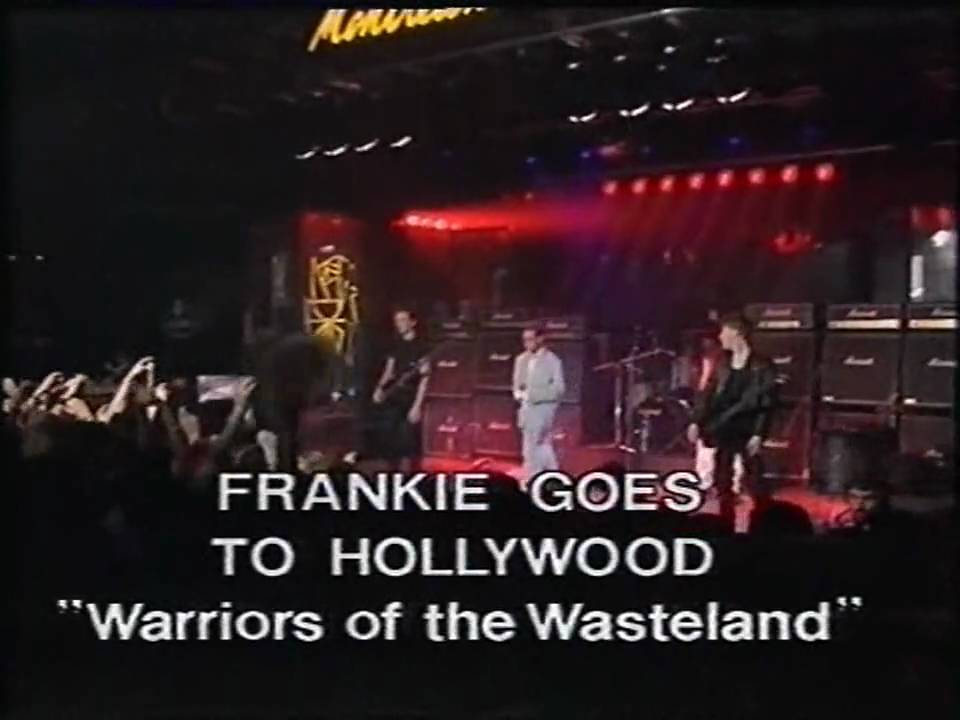
But while fans lapped up Frankie’s return, their new, more serious, ‘rockier’ sound was an unexpected party crash. Set opener Rage Hard, in its Montreux mix form, featured an extended (boring?) drum intro and so anyone expecting Relax-style dancefloor fireworks was immediately disappointed. Likewise, the early Warriors of the Wasteland traded Two Tribes’ machine-gun bassline and drum machine in favour of ‘real music’ on ‘real instruments’. The whole performance came across as ‘Def Leppard Lite’ for Frankie fans whose tastes had been finely tuned by the band's technology-fuelled excess previously.
More remarkable than the music would be the Lads’ decision – following a drunken afternoon watching Liverpool beating Everton 3-1 in the FA Cup Final – to smash up their gear at the end of their performance. Their exploits would win them some pitying tabloid coverage as they laid waste not only to the ruse that they had performed live, but also to a one-off, hand-made Levinson bass guitar, lent to O’Toole for the gig. “You f__king asshole, that was a $1,500 bass! I’ll sue you, motherfucker,” Levinson moaned as O’Toole took three attempts to crack its neck across the kick drum.
Nevertheless, with the cat now officially out of the bag, Rage Hard and Warriors single releases (and an opportunity to start earning back what they owed ZTT) would surely be a formality? But Trevor Horn, once again, had other ideas.
Back to the drawing board
Instead of trading on the Montreux hype, Rage Hard would endure months more of Horn tinkering and wouldn’t surface in stores until 25 August 1986. This meant that fans had waited 22 months for new Frankie material. Worse, in the absence of a single release, the Frankie faithful had watched their VHS recordings of the Montreux performance on endless loop for three and a half months. Even they were bored of Rage Hard by the time it was released.
Lipson and Horn did have one surprise up their sleeves, however. Rage Hard’s Young Person’s Guide To The 12” mix would go some way to explaining and making up for the delay. A pun on Benjamin Britten’s educational Young Person’s Guide To The Orchestra, in which a narrator introduces the various elements of the orchestra, Horn’s 12-minutes-plus remix of Rage Hard does likewise, with a sexy female voiceover introducing elements such as “the perky percussion”, “the sequencer” and “the godlike bass guitar” as Rage Hard (in barely recognisable form) ebbs and flows beneath them.
Originally, actress Joanna Lumley provided the voiceover from a script written by wordsmith and ZTT's antagonist-in-residence Paul Morely, and while Horn, Lipson and the band thought her performance was excellent, Lumley, subsequently thought otherwise. Having second thoughts about the sexual references she’d committed to tape she prudishly prevented them from using the recording. Instead, comedian Pamela Stephenson was commissioned to replace Lumley and lent the track her best newsreader voice.
While the mix would reward the Frankie faithful (and came in a beautiful cardboard collector's box giving fans somewhere to put all of Rage Hard’s many mixes and formats), the 7” moved only slightly from the Montreux mix months earlier. “I don’t think there were major differences between the two,” complained Nash, “apart from one costing more money than the other.” Teamed with the delay to the track's release – with rabid fans literally unable to buy it following its Montreux debut – Frankie’s big comeback only debuted at number six in the UK.

Sure, it would go to number one in Germany and reach as high as four in the UK (seven in the Netherlands, 12 in Austria, 19 in Sweden and 32 in France) but following the band’s hard work on breaking America with Pleasuredome promo, its inability to hit any kind of Billboard chart in the big money market, came as a huge disappointment.
But with lead single duly deployed, there was nothing for it but to reveal the real fruit of their labours. Liverpool, the band’s sequel to their ground-breaking debut, was released in the UK on 20 October 1986, a date almost perfectly mirroring Pleasuredome’s release two years earlier.
And, from day one, things did not go well.

While Q magazine liked the album (Q itself had only just launched and were perhaps afraid of heaping ire on such a monster so early in their tenure) everyone else wasn’t quite so sure. James Brown called it “a predictable piece of rock junk” in Sounds while David Quanitck asked “What do you do when you've made a completely excessive double album which made history as highly moderate filler?” in NME.
Liverpool was impressive, certainly, but ‘good’? Arguably and demonstrably not. Common consensus suggested that by and large, Liverpool was the band being someone else. A new Frankie that, whilst being perhaps a more true, ‘real’ Frankie, wasn’t the Frankie that everyone in the mid-80s signed up for.
The infectious, trashy glamour of singles such as Relax and Two Tribes was gone. Instead of more hedonistic dance-pop brilliance, fans were served tense, self-conscious stiff rock posturing. Perhaps, above all else, Frankie simply weren’t fun any more. Serious in being taken seriously, they’d allowed their annoyance at their perception to break the fourth wall and be visible right there on the front of the box. And like a knock on the door during lovemaking, with the band’s finger pointed at them to comply, fans proved unable to keep up their enthusiasm.
It’s unsurprising, therefore, that chart-wise Liverpool never matched its predecessor. While the album entered the chart at number five, it would spend only a single week in the top UK 10. And while it would go on to achieve Gold status in the UK, Pleasuredome’s triple Platinum rating cemented Liverpool’s standing as forever a flop.
And following Rage Hard and Liverpool’s moist squibs, it was only ever a case of diminishing returns for the rest of Liverpool’s singles. Warriors of the Wasteland (released 10 November 1986, three weeks after the Liverpool album and a full six months after its Montreux debut) only reached number 19 in the UK. While Watching The Wildlife, the third and final single release from Liverpool (and Frankie’s last ever release) only reached number 28 despite a blizzard of remixes across a cassette single and THREE different ‘fan-pleasing’ 12”s.
Special mention to Liverpool’s last stab, Wildlife’s Die Letzten Tage Der Menschheit mix (“The Last Days of Mankind”) which sets the otherwise perky and cheerful track to a stern teutonic backdrop over which the actor John Hurt dishes out doom-laden warnings about 1986’s ensuing AIDS crisis.
Johnson had wanted to call the album From The Diamond Mine To The Factory, a line from his Warriors lyric that spelt out the band’s journey, but – predictably – the rest of the band disagreed. Instead, Paul Morley suggested simply Liverpool, which met with reluctant approval. “In hindsight I would have picked Holly’s title because it was at least connected to the content of the album,” Nash would later admit.
And the final word on Liverpool? It’s perhaps best summed up by Johnson’s final words, emitted as its last track, Is Anybody Out There? – very much Liverpool’s Power of Love – melts into delicious, overblown reverb mush. At the end of it all, Johnson reflects: “I’m looking for something and I don’t know what it is.”
Buddy. You’re not the only one.
