


It’s one of the biggest hit songs of the 1980s, but it’s story begins way back in the 1890s.
In the small rural community of Elmore City in Oklahoma, a ban on public dancing had been imposed in 1898 – in an effort to curb heavy drinking. The ban remained in place until 14 high school students decided that enough was enough and that they wanted a high school prom.
In 1980, they persuaded the school’s board to overturn the antiquated legislation, so that they could dance. And when an aspiring screenwriter and songwriter named Dean Pitchford chanced upon this story in a newspaper, he knew it had all the elements of a powerful musical drama.
The screenplay Pitchford wrote would become Footloose, a film that would become box office gold when it was released in 1984, making $80 million in ticket sales and turning its star Kevin Bacon into a household name.
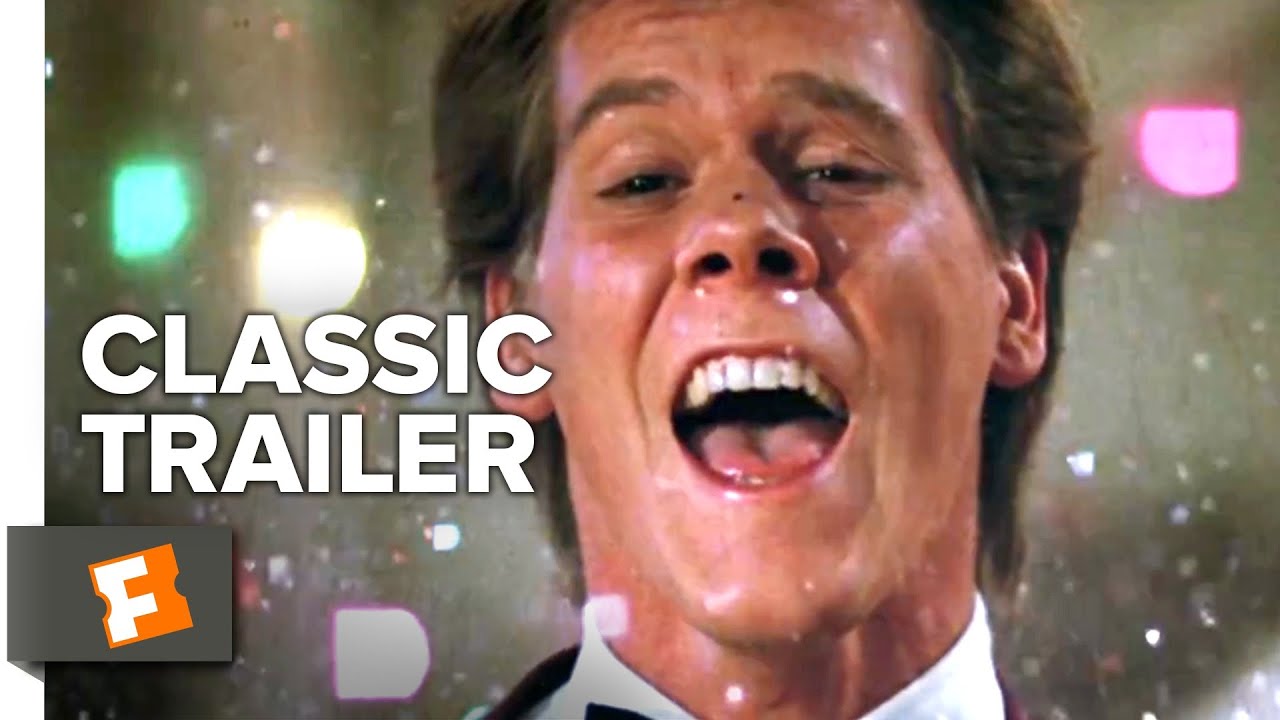
But it was the title song, released five weeks before the film, that seared itself into the public consciousness and kickstarted interest in the film.
Co-written by Pitchford and Kenny Loggins, the song rocketed to No 1 in the Billboard Hot 100 when it was released on 11 January 1984. Over four decades on, it remains a quintessential ’80s classic.
When Dean Pitchford came up with the idea for Footloose he was working as a staff songwriter for Warner Brothers Publishing. Intrigued by the newspaper story, he visited Elmore City to interview high school students and their parents.
While Pitchford had never written a screenplay before, he had worked as an actor before moving into songwriting and had an abundance of talent and an impressively diverse skillset. In 1980, he and composer Michael Gore wrote three songs for the Alan Parker-directed film Fame, including the title song, for which they won an Oscar.
Pitchford’s working title for his new screenplay was Cheek To Cheek, but he decided to change it once he had attracted interest from some major film studios. In an interview with Songwriting magazine in 2012, Pitchford said he filled page after page of a yellow legal pad with ideas for a new title.
“When I went back over the list, I think I had four that I thought might be good ideas. But Footloose was by far my favourite,” he said.
One of the studios that was interested in his screenplay was 20th Century Fox. For a meeting with Craig Melnick and Dan Zadan, two producers at Fox, Pitchford typed up four hypothetical title pages and deliberately placed Footloose on the bottom of the stack.
He recalled: “I took them into a meeting with Craig and Dan and I said, ‘Here are some ideas for the title.’ They looked at number one, they went, ‘Okay, alright.’ And they flipped it over, and number two, and they flipped it over, and number three, ‘Okay’. And then they flipped over the last one, which was ‘Footloose by Dean Pitchford’, and they lit up like a Christmas tree.
“They felt what I felt, which was it was just such an interesting looking word and it didn’t mean anything but it did. And all those ‘o’s gave it a visual kind of punch. We all just went for it. It sort of sold itself.”
In the end, Paramount was the studio that acquired Footloose. Pitchford’s plan was to create the film around a nine-song soundtrack, and he had an ace up his sleeve when it came to the person to co-write the title track with him.
Pitchford was good friends with Kenny Loggins, a major star at the time after having written the song I’m Alright (1980) for the film Caddyshack. In 1982, Pitchford had co-written the song Don’t Fight it with Loggins and Steve Perry, the singer from Journey, recorded as a duet by the latter pair.
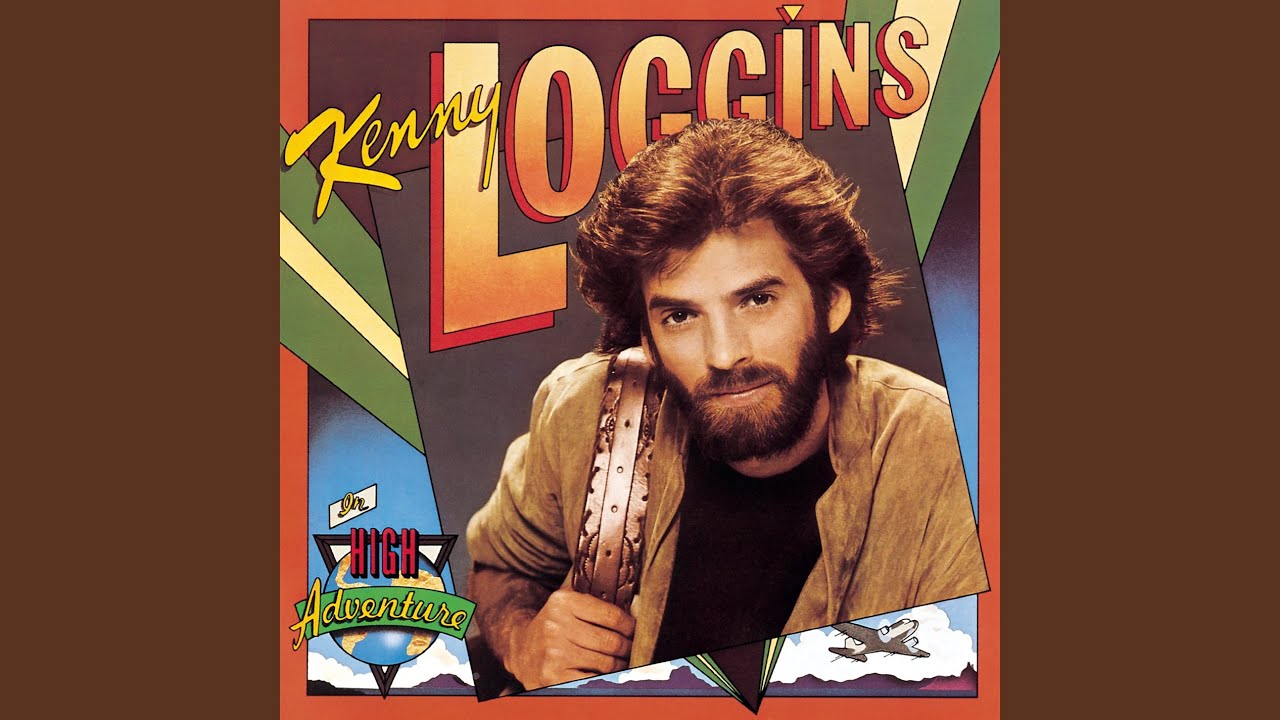
Pitchford realised that a commitment from Loggins would carry real weight when it came to Paramount moving the project forward. In an interview with US journalist Dan Rather in December 2018, Loggins recalled the moment that Pitchford approached him to ask for his help.
“My best friend, Dean Pitchford, had written a screenplay, and he said, ‘Would you read my screenplay and check it out?’. And I read it, and he says, ‘I need a couple songs for this’. And I said, ‘Well, it's not Gone With the Wind, but…’”
Loggins then went on to explain to Dan Rather just how common screenplays are in Hollywood.
“People don’t realise,” he said. “In Hollywood, the cab driver has a screenplay. It’s not unusual to have somebody hand you a screenplay and say, ‘Would you write a song for it?’ But Dean was a friend of mine, so I did. So a favour to a friend becomes a favour to me. A year later, this is the biggest movie of the summer.”
With Loggins on board, Pitchford started to arrange a writing session. Creating a title song was the priority. But Loggins had tour commitments. When he fell off stage at one show and had to take time off to recover from his injuries, the project looked under threat.
There was only one possible opportunity for them to get together to write – at Lake Tahoe, Loggins’ last US show before the Asia leg of his tour.
“Paramount was chomping at the bit,” Pitchford told Songwriter magazine. “They wanted to know that Kenny Loggins was going to be doing the title song, and if he wasn’t then we had to move on and get somebody else. So it became absolutely vital that as soon as Kenny was back on his feet, I had to go and seal the deal.”

Pitchford flew to Lake Tahoe despite having a bad case of strep throat and a high fever, which he reportedly attempted to conceal from Loggins when they sat down to write in Pitchford’s hotel room.
“I think it was two or three days we kept up this charade with him showing up on his painkillers and me on my painkillers, and us getting the gist of the song,” Pitchford told Songwriter magazine. “We wrote the verses and the chorus melodies, we wrote the first verse, and we knew what we were going to do for the chorus.”
When Loggins left for his tour of Asia, Pitchford wrote the rest of the lyrics, except for the bridge. They finished the song when Pitchford visited the returning Loggins at his home in Los Angeles.
With a running time of just 2:55 in its single format, Footloose is an impressively lean and punchy track. It’s a pacy slice of high energy pop-rock, fuelled by feelgood vibes and a sense of joyous freedom.
The song boasts a big sound, with hefty thwacks of snare, jagged synths, punchy compressed bass and stabs of overdriven guitar. It kicks off with a thumping 4/4 beat, which hurtles along at 174 bpm.
In an interview with the YouTube channel The Professor of Rock, Loggins noted that the groove on the song was based on David Bowie’s song Modern Love.
![David Bowie - Modern Love (Official Video) [HD] - YouTube](https://img.youtube.com/vi/HivQqTtiHVw/maxresdefault.jpg)
He said that he got the idea for the chorus melody from the 1966 song Devil With A Blue Dress On by Mitch Ryder and the Detroit Wheels.
Loggins also highlighted how Nathan East’s bassline in the song shared a similarity with a Little Richard classic. “Basically, he took Lucille out to the next level,” Loggins said.
There are other nods to ’50s rock ’n’ roll, such as the deep Duane Eddy-style bottom E twang that kicks in ten seconds into the song.
Loggins’ vocal on the song is gritty and powerful but it has a nice lilting cadence to it. His phrasing is impressive and he sits right in the groove with a tight, rhythmic delivery.
Structurally, the song is straightforward and mirrors the pent-up frustrations of the film’s central character Ren McCormack (Kevin Bacon), a native of Chicago who moves with his mother to a small town in Utah, where he attempts to overturn a ban on dancing enforced by a local minister (John Lithgow).
There are nifty compositional elements throughout the song, such as the second half of the pre-chorus, which builds with an ascending bassline before the stop, when the whole track shifts into the chorus.
At 2:20, guitar, bass and keys drop out, leaving drums, percussion and chants, with each instrument then gradually reentering the mix as it builds towards the climactic stop at 2:55 as Loggins unleashes the final line “Everybody, cut footloose!”
Footloose was released on 11 January 1984, five weeks before the film was released. But the official video, directed by Brian Grant, featured a montage of clips from the film and fuelled anticipation for the movie launch.
In his 2018 interview with journalist Dan Rather, Kenny Loggins highlighted the parallel promotional power of the song and the film.
“The movie thing is an interesting synergy because the movie lifts the song, the song lifts the movie, and back then that hadn’t been done,” said Loggins. “Pop music and movies were not necessarily symbiotic, and all of a sudden it was working. And MTV was a new thing, and MTV was playing the videos from the movies, and it was killing all the other videos.”
Footloose shot to No 1 in the US, Canada, Australia, New Zealand, Peru, Colombia and South Africa and reached No 6 in the UK Singles Chart. After his success with the film Caddyshack, Footloose bolstered Loggins’s growing reputation as the ‘King of the Movie Soundtrack’.
Dean Pitchford would go on to co-write all nine songs of the colossally successful Footloose soundtrack, which included other massive hits such as Let’s Hear It For The Boy by Deniece Williams and Holding Out For A Hero by Bonnie Tyler. Loggins also contributed another track, I’m Free (Heaven Helps The Man), which peaked at No 22 in the US Billboard Hot 100.
When Loggins co-wrote Footloose with Pitchford, he had no idea how prominent the song was going to be in the film. It first appears in the striking opening scene, which features a succession of people’s feet, moving to the beat.
In an interview with The Professor of Rock YouTube channel, Loggins spoke about watching the film for the first time.
“We wrote Footloose for that scene in the middle of the movie, where they go out of town and the first time they go dancing,” said Loggins. “And so when I went to the premiere of the movie and it opens with the shoes dancing and the song comes on, I turned to my wife and said, ‘Holy shit, this is a home run!’ It was so good.”
