
Clad in tatty and worn clothing, and with his eyes bulging in terror, a lone figure furtively scans the horizon; “The sound of gunfire, off in the distance, I’m getting used to it now,” he remarks to himself. Checking his new identity documents (he's had three passports and a couple of visas by this point), our skittish nomad sets off across the decaying, dangerous shell of a city that was once a music-filled utopia.
This ain’t no party - and this ain’t no post-apocalyptic spy thriller - this is in fact the imagery directly painted by Talking Heads’ blistering 1979 single Life During Wartime. An awesome collision of dystopian imagery with one of the Heads’ most seductive grooves.
Recorded back in mid-1979 during the group’s second major collaboration with Brian Eno, Fear of Music, Life During Wartime would grow from a muscular Tina Weymouth and Chris Frantz workout into one of Talking Heads’ most vital songs.
With the Cold War just one of a slate of tensions in the air at the time, Talking Heads’ central creative David Byrne could worryingly foresee how just a few relatively small dominoes falling in certain ways could lead to wholesale societal breakdown.
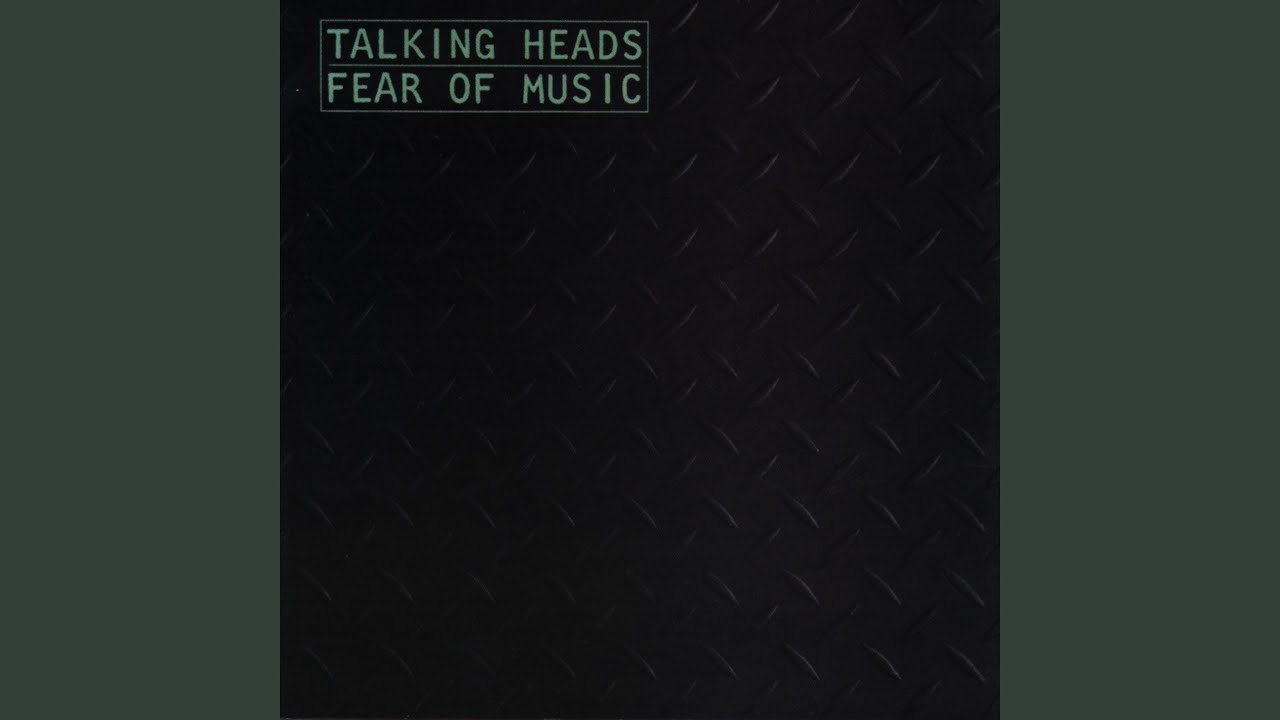
Prior to recording Fear of Music, Talking Heads were creatively on a roll. With Eno’s fascination with New York's CBGBs' darlings elevating them in the eyes of the tastemakers as being music for ‘thinking people'.
Despite recent success with their off-the-wall cover of Al Green’s Take Me to the River (and the continuing prominence of early single, Psycho Killer) the band decided to deviate from the commercial imperative to focus on singles and follow Eno’s more intuition-based lead. This would push the band out to the furthest reaches of what is perhaps best described as a form of artsy psychedelic funk.
With its title inspired by an apparently genuine (if rare) phobia that Byrne had recently become aware of, Fear of Music wasn’t just running scared of conventional melody – fear in all its forms coursed through the album.
From Mind's suspicion of Byrne's own senses, to the busy urban mania of Cities and the gnawing menace of the very guitar itself on Electric Guitar, Fear of Music was certainly a more anxious - but thematically consistent - record than Talking Heads' more scrappy earlier work.
Byrne didn’t have to be an obsessive news-watcher to have been receptive to the broader concerns of the time. The Iranian hostage crisis, the Soviet-Afghan war and the Three Mile Island accident (a pretty worrying partial nuclear meltdown) were just a trio of doom-signifying events that took place during the final year of the decade. Living in New York's poverty-stricken Alphabet City, Byrne could also imbibe the sense of how people living on the edge of society existed day-to-day. Byrne began to fear that he might just be a couple of wrong steps away from joining them on the fringes.
The continuing destructive threat of the West German communist militant group, The Red Army Faction, had been another particular concern for Byrne. In fact, founders Andreas Baader and Ulrike Meinhof were directly cited as triggers for the writing of Fear of Music’s central track;
“The guy I depict in Life During Wartime is a very rational type,” Byrne told NME in 1979. “When I wrote that, I was thinking not so much of a World War Three thing so much as a terrorist attack - a Baader-Meinhof situation, that would have escalated into pretty much civil war. And the narrator is just very logically running down a list of things - materialistic stuff that suddenly means nothing when a real state of emergency is declared.”

With references to his character tapping phone lines, and disguising himself as a student one day, and a housewife the next, it’s clear that Byrne’s lyrical protagonist is an active participant for a similarly rebellious movement. All that matters to him is the goal - and keeping on the move to avoid the ever-watchful eye of the authorities.
The modern frivolities of mass culture that had now become so central to the lives of late-seventies youth had been cast off by this steely-eyed recruit. He ‘ain’t got no speakers’ nor has he headphones. After all, he has no ‘records to play’.
He doesn't even have time for emotion. Just a focussed drive to achieve his objectives at any cost. It reminds us of Byrne’s previous inhabitation of someone who we might presume to be flat-out deranged, back on breakthrough hit Psycho Killer.
What we don’t know, of course, is the nature of the forces that Byrne’s protagonist is fighting. Is this the sinister jackboot of authoritarianism our hero is nobly facing down? or is the song's central figure waging his own war against modern society? Either way, he is on constant edge.
The rejection of the then-most important things to young people of the 1970s is frantically distilled into its intensified chorus, where Byrne eschews love and music entirely:
This ain't no party, this ain't no disco
This ain't no fooling around
No time for dancing, or lovey-dovey
I ain't got time for that now

As much as Byrne was anticipating a wave of restrictive crackdowns on freedom more broadly, he was also, simultaneously, alluding to a glut of technological innovation that made for a curious contrast:
“There will be chronic food shortages and gas shortages and people will live in hovels,” Byrne predicted in a contemporary interview with NME. “Paradoxically, they'll be surrounded by computers the size of wrist watches. Calculators will be cheap. It'll be as easy to hookup your computer with a central television bank as it is to get the week's groceries.”
"I think we'll be cushioned by amazing technological development and sitting on Salvation Army furniture,” Byrne continued. “Everything else will be crumbling. It doesn't bother me too much, but it isn't something to look forward to. Government surveillance becomes inevitable, because there's this dilemma when you have an increase in information storage. A lot of it is for your convenience - but as more information gets on file it's bound to be misused.”
On the preceding album More Songs About Buildings and Food, Talking Heads had worked with the pioneering Brian Eno to cut out some of the distance that the band felt when tracking in a typical recording studio.
Eno recorded the Heads completely live with minimal separation. “Eno even believed that the two mics he placed in the centre of the room might be all that was needed to capture the entire band,” Byrne recalled in his book, How Music Works, although that “proved not to be entirely the case.”
Alongside some more spontaneous vocal recording approaches, Brian’s goal seemed to be to get the young members of Talking Heads to just feel more comfortable and in-sync with each other in the studio, so he could successfully capture their incomparable live energy on-record.
For Fear of Music, Eno wanted to go a step further, and detach the notion of producer recording a band entirely.

Talking Heads set-up in the very same loft where they usually rehearsed (actually the loft apartment of bassist Tina Weymouth and drummer Chris Frantz) Hiring a mobile recording studio based in a van, Eno set-up outside and ran the audio output down through the building and outside to his van, with various cables trailing from the windows. There, Eno could live mix and capture the salvo of new tracks as they evolved from ideas into finished songs.
To Byrne’s ears, the new recordings were sounding much better than expected; “We were finally beginning to capture what we sounded like live!” Byrne recalled in How Music Works. “Stepping outside of the acoustically-isolated recording-studio environment wasn’t, it turned out, as catastrophic as it was made to sound. Hmmm. Maybe those rules of recording weren’t as true as we thought.”
Alongside the changes to the technical approach, the band adjusted their writing strategies for Fear of Music also. With full band recordings of new tracks already in the can before David had penned his lyrics.
In actual fact, this wasn’t so much a consequence of Eno forcing the band to try something different, but more that Tina and Chris had been pre-writing many of the record’s rhythm tracks while Byrne was engaged in other projects during the interim between recording albums.
According to Tina, Eno was first called at the point when she and Frantz had started carving out the new musical landscape of Fear of Music on their own…
“[David] was the kind of guy who wandered off for a little bit,” Weymouth told Far Out Magazine in 2022. “Brian Eno was living in town, and Chris and I started just jamming in our loft, the place where we actually wrote and recorded Fear of Music, which is in Long Island City. So we said, ‘Oh, Brian, wouldn’t you like to come and jam with us? We’re going to have some fun; we’re just going to approach it like we’re kids with toys that we’ve never experienced before. We’re all going to play each other’s instruments.’ So Brian said, ‘Yeah, sounds good.’”. With guitarist Jerry Harrison shortly joining the three to come up with new musical ideas, Byrne eagerly dashed back to the fold.
Amongst the glut of new structures that the trio birthed before David returned was a new looping groove in Am (with the only change a pivot to an ominous E major for the thundering chorus part). This infectious backdrop would form the vigorous foundation of Life During Wartime.

With this energetic piece needing a lyric, David was challenged; “I wondered, could I really create a song by singing over prerecorded riffs and chord changes? In some cases I did so quite successfully (Life During Wartime).”
Although other attempts at writing to existing music were never fully realised, that this new approach yielded such a clearly stellar cut as Life During Wartime indicated that it was worth trying again in the future.
As usual with Talking Heads, it’s Tina Weymouth’s bass that really drives the song forward - constantly pushing onwards in tight fusion with Frantz’s motoring drum groove, yet able to fluidly syncopate in its own way.
The momentum of the arrangement works as the propulsive fuel that powers the urgency of Byrne’s rootless narrative. Meanwhile, Jerry Harrison’s chopping guitar keeps consistent, mechanical traction, while the main double-stopped riff (performed by Byrne) circles endlessly around the rigid constriction of the Am chord.
The pressure was tangible, but the song also worked when detached from its lyric as a neat slice of spry funk.
Although Life During Wartime would become Fear of Music’s most popular song, the record’s other tracks were bristling with innovation. From the sonic deluge of Drugs, the glorious intertia of Heaven and the Remain in Light-predicting polyrhythms of the African-influenced I Zimbra, Fear of Music was an ambitious but grim triumph.
In the words of post-punk historian Simon Reynolds, “Fear of Music represented the Eno/Talking Heads collaboration at its most fruitful and equitable. By this point, Eno felt he and the four Heads had developed a group identity,” Reynolds reflected in his excellent Rip It Up and Start Again. “In a way, he had become the group’s George Martin. Indeed, the trilogy of records Eno and Talking Heads made together recalls the runaway evolution of The Beatles across Rubber Soul, Revolver and Sgt Pepper - notably the way each album’s most radical tracks became the starting point for the next record.”
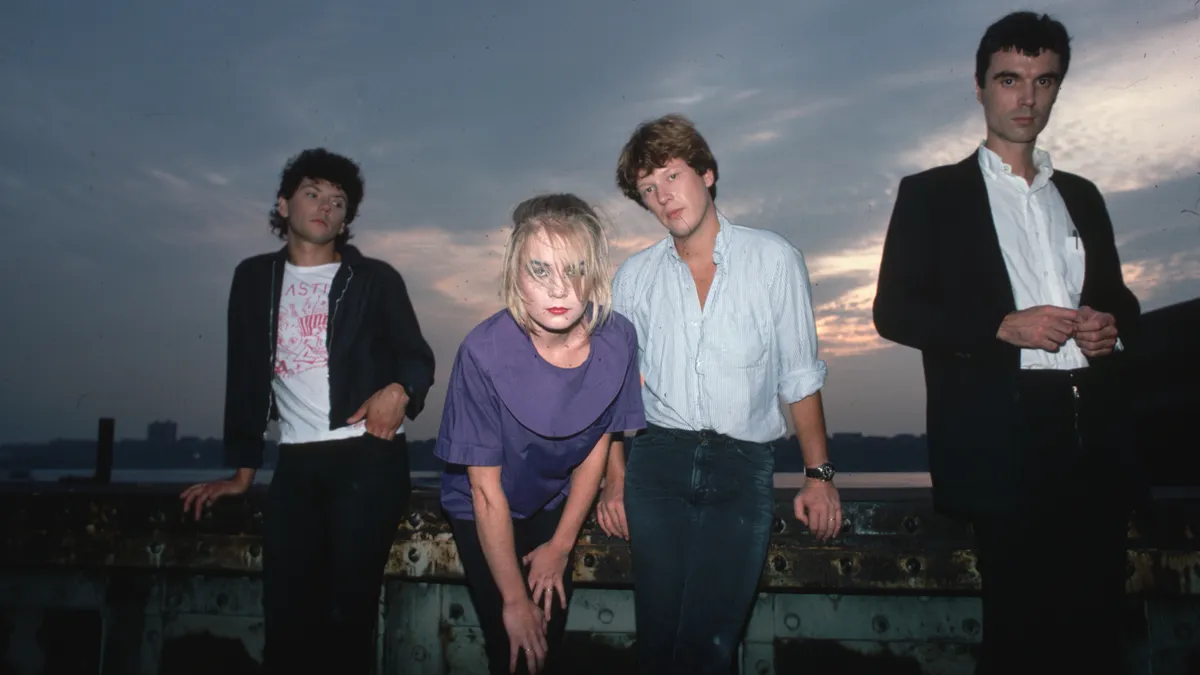
Released as Fear of Music’s lead single, the blinding song oddly barely made a dent on the Billboard Top 100, peaking at number 80.
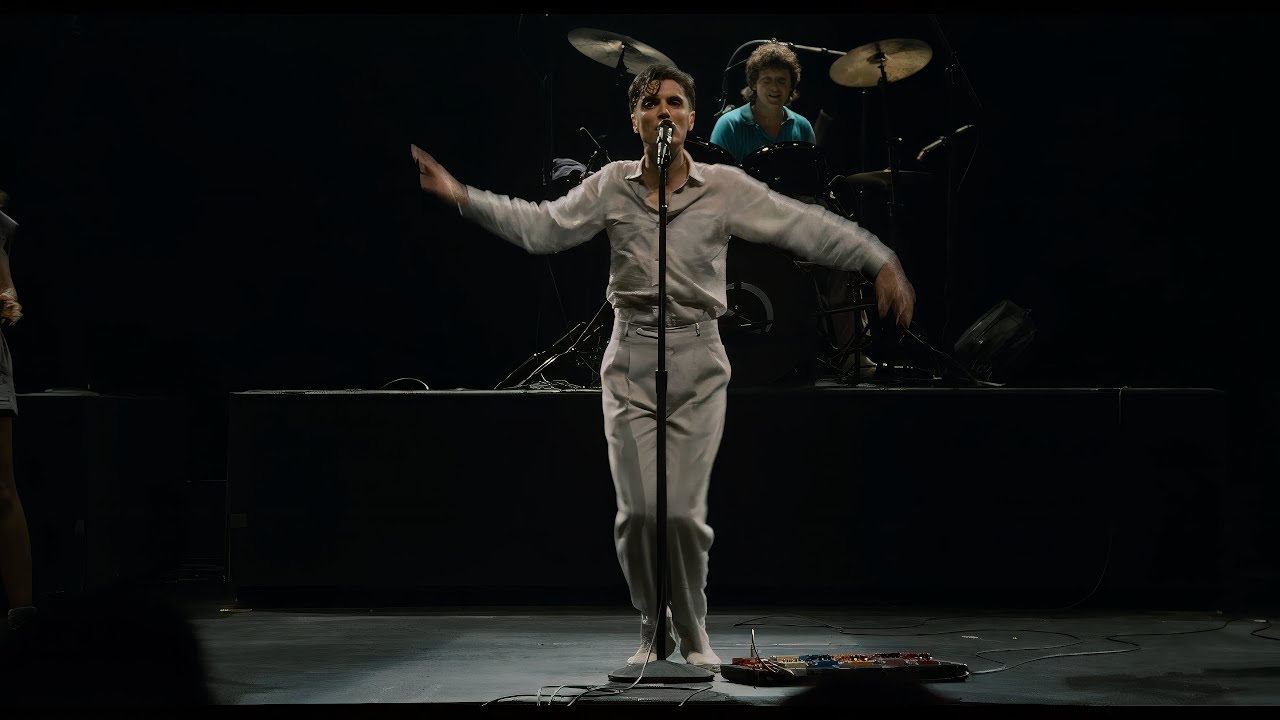
But, the song would become more widely known due to the jaw-dropping live performance captured forever in Jonathan Demme’s iconic 1984 concert film Stop Making Sense, during which the band jogged in place with varying intensity and Byrne unleashed some incredibly elastic dance moves before going for a full sprint around the ever-expanding stage. It’s perhaps one of the most spirited and committed live performances of any song ever captured on film.
Standing at the intersection between punk, funk and heavy rock (Dire Straits were certainly eyeing its double-stopped main riff when writing Money For Nothing), Life During Wartime is still regarded by some as Talking Heads’ most essential piece, a taut lesson in musical economy and a portent of survival during a time when oppression and fear dominates.
Earlier this year, Byrne took to performing the song during his Who Is the Sky? tour, backed with chilling real footage of ICE raids across the US.
“I do think the song as a whole seems in a way more relevant than ever, especially in the US, with the ICE raids and all that,” Byrne soberly explained to Stephen Colbert during an interview on his show.
The message was strikingly obvious; the song’s intimation of a life running scared from overwhelming danger had, devastatingly, come to pass.
