


Spending large parts of the 1990s operating on the fringes, 2002’s Heathen marked David Bowie’s return to popular favour. Bursting with ideas, the critically-beloved album found the former Thin White Duke pointedly pondering all things spiritual.
Despite the weighty themes of Bowie's 23rd LP, Heathen was a diverse listen musically, and its 12 songs were captivatingly produced (the album marked the return of longtime friend and production maestro Tony Visconti).
From the intense dynamic switch-up of opener Sunday to Slow Burn’s searing guitar riff, and the joyous rapture of Everyone Says ‘Hi’, Heathen was a solid and cohesive creative statement, and a far classier affair than 1999’s under-cooked Hours.
Joining Bowie in the making of Heathen, was acclaimed experimental guitarist David Torn, whom we caught up with recently for a lengthy interview ahead of the release of his new record, Now I Imagine a Place Not the Same. When talking to Torn, we couldn’t help but ask about his memories of that period of his life…
Torn told us that he first met Bowie when working on the soundtrack to the Heath Ledger-starring film, A Knight’s Tale. “They had this big score playing right into a scene with Heath Ledger and [friend] Carter Burwell called me to help find a way to transition the David Bowie song Golden Years into a very funny spot,” Torn told us.
“Later, David went into the studio and Carter called me to say that that David (B) loves David Torn, and liked what I’d done. Two weeks later, the office called and told me that David would like a meeting and would I care to have dinner with him somewhere?”

Taking David up on his offer, Torn was soon sounded-out on whether he’d possibly be up for helping Bowie build a more sonically textured album…
“I said, ‘Are you kidding?’” replied Torn, who was enlisted on the spot.
"Tony Visconti joined us a little later and David and I discovered we had all these weird connections between us,” Torn recalled. “At the end of the conversation he asked where I’d like to work. I thought, ‘Where would I like to work?’
"I lived in a land of amazing, world-class studios around Bearsville, Woodstock, New York," Torn told us. "David said, ‘Well, I hate Woodstock, but maybe it's changed’ and ended up coming upstate and loving it.”
Heading up to the isolated Allaire Studios within the estate of Glen Tonche, high up in New York’s Catskill Mountains, the jaw-dropping views of the area's natural beauty informed Bowie’s writing.
“Walking through the door, everything that my album should be about was galvanised for me into one focal point,” Bowie told Interview Magazine. “Even though I couldn't express it in words right at that second, I knew what the lyrics were already.”

In our interview, Torn told us that he remembered the jaw-dropping experience of watching Bowie lay down the vocal to the album’s extraordinary opening song, Sunday, with lyrics that had come to him when in a flow state. It was one of the most incredible moments David Torn had ever witnessed.
“Playing with David was incredibly edifying and I think I witnessed one of my peak musical moments in life, which was David Bowie standing sideways next to me in an open room while being recorded,” explained Torn.
“He had little sheets of paper all around him and was singing the first lyrics to Sunday from Heathen, but it was so physically powerful. It wasn't that he's famous or a good looking dude - it's not any of that shit, it was knowing that David was coming up with these lyrics that he'd put together in real-time and that this was part of his improv challenge.”
Torn and engineer Brandon Mason were sat together at the recording console watching Bowie work up-close; “Bowie's literally three feet away when Brandon touched me on the shoulder while he's singing. David's completely focused on the space ahead of him and I don't want to make too much of this, but the hairs on Brandon’s arm were standing straight up. Then the hairs on the back of my neck went up and I was like, this is insane - how does this happen? The yogi's would call it a Kundalini moment - all focused energy. And he wrote that [Sunday] lyric two days before 9/11.”
Often remarked at for being eerily prescient, Sunday - and further Heathen tracks Slow Burn and A Better Future - would resonate strongly with post-9/11 listeners when the album was released the following year.
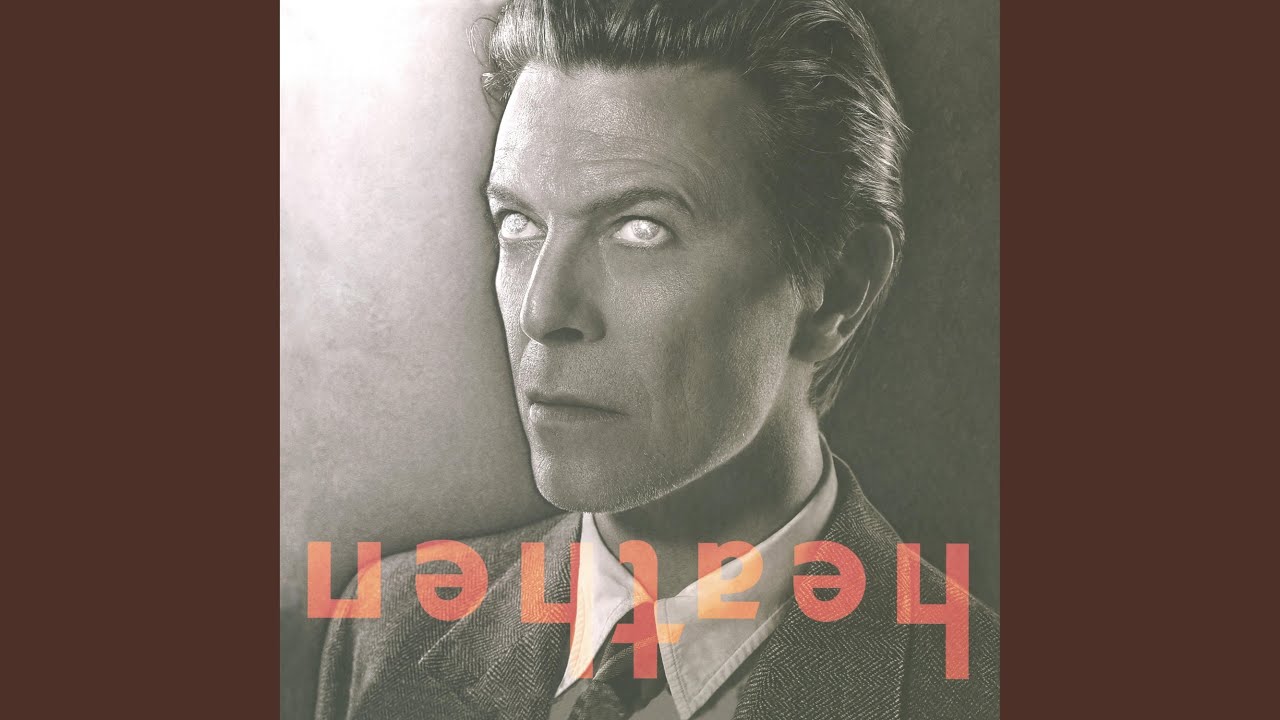
Even Bowie himself found the sombre song’s foreshadowing of the traumatic events to come to be quite chilling… “It was quite spine-tingling to realise how close those lyrics came. There are some key words in there that really just freak me out,” Bowie was cited as saying in The Complete David Bowie.
Here’s a few choice lines that are unnervingly prophetic…
Look for the cars or signs of life
Where the heat goes
Look for the shafts of light on the road
Where the heat goes
Everything has changed
Rise together through these clouds as on wings
Now the hairs on the backs of our arms are going up…
For David Torn - who would continue working with Bowie through 2003’s Reality and 2013’s glorious comeback The Next Day - Bowie became a creative confidante and close friend. He even gave Torn some solid business advice when it came to dealing with uncredited sampling. “David and I had had a number of sampling issues going on in our careers by then, so I asked if he had any advice,” Torn told us. “His reply was, ‘If they're big, go after them, but if you like them and they're little, don't bother making an enemy’.”
