


RECORDING WEEK 2026: “We’ll let you guys prophesy. We gon’ see the future first,” says Frank Ocean on Nikes, the opening track on his genre-melting musical patchwork, Blonde.
Few more prescient lyrics have been delivered by an artist who has managed to remain deliberately elusive despite the over-exposed times we’re living through.
The record, released back in 2016, is rightfully regarded as Ocean’s masterpiece – a brilliantly woozy immersive world that has yet to be followed up a decade later.
Featuring a huge cast of collaborators including Beyonce, Andre 3000, Pharrell, James Blake and many more, the starry names belie the subtle and nuanced atmosphere that surrounds the album's 17 tracks.
Blonde was the long-awaited follow-up to Ocean’s 2012’s debut Channel Orange and landed amid much speculation, following hazy rumours and intrigue behind the record’s delay. Was it writer’s block or Ocean’s bid for perfectionism that lay behind it?
“I had the time of my life making all of this,” Ocean wrote on his Tumblr in the days after Blonde’s release, in posts that led to as much online discourse around the record as it did offer clarification.
“Thank you all. Especially those of you who never let me forget I had to finish. Which is basically every one of ya’ll. Haha. Love you.”
Although born in California in 1987, it was in New Orleans when Ocean first began writing music. Real name Christopher Breaux, it was in the aftermath of the devastation wrecked by Hurricane Katrina that his life’s direction changed.
With his home and studio equipment destroyed, Ocean chose to move to LA with the little he had left and began working in a series of day jobs while writing songs for major artists.

In an interview with the New York Times Magazine in 2013, when discussing these formative experiences, Ocean said: “I had a problem listening to anybody. I had a problem listening to A&Rs telling me how a song was supposed to sound, or what this artist's vibe was.”
Despite the creative and financial challenges, these years saw him write Quickly for John Legend, Justin Bieber’s Bigger and Scared of Beautifulfor Brandy among many others under the pseudonym of Lonnie Breaux (a collection of more than 60 tracks of this music ended up online).
These songs were game-changing for Ocean, ultimately finding their way to the ears of producer Tricky Stewart who helped him sign a songwriting and artist contract with the legendary Def Jam label towards the end of 2009.
Some months later, Ocean came into contact with the left-field hip-hop collective Odd Future, including Tyler the Creator and Syd, at a live gig in the Valley near LA. It proved to be another turning point after he started to feel increasingly creatively neutered by his label.
Speaking to journalist Jeff Weiss in 2011, Ocean shared how Odd Future ignited a new fire within him.
“It’s refreshing for me to be in sessions with them. When I started working with them, it was the first time in a minute that I’d had fun in a session. If you f**k up on a take, someone’s clowning you on it, busting up at you. In normal settings, it’s not like that. It reminded me that this is supposed to be fun.”

His frustrations with Def Jam led to the unveiling of his mixtape, Nostalgia, Ultra, in February 2011 as an independent release.
The genre-splicing mix featured Ocean rapping over tracks by The Eagles and Coldplay, with the former seeing the rock band threatening legal action. But it also led to greater visibility too. Ocean was subsequently called up to work on two tracks from Jay-Z and Kanye West's Watch The Throne album.
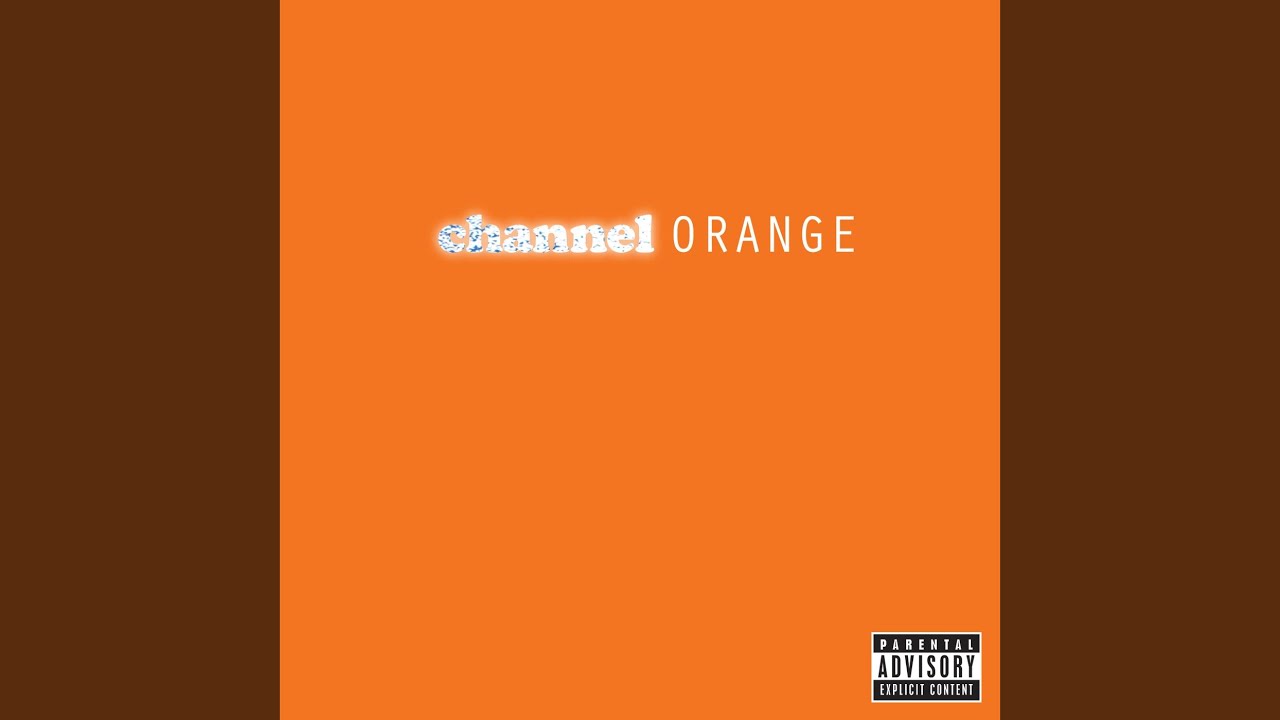
Nostalgia, Ultra attracted a cult status which, less than two years later exploded even further following Ocean’s debut album release, Channel Orange. It was a record that changed his fortunes forever.
Praised by critics, the album, in the words of Rolling Stone,displayed a, “kind of radical openness that would come to define a generation of young people who, like him, discovered their true selves with the help of the internet”, it debuted at number two on the Billboard 200 and sold more than 130,000 plus units during its first week.
At the 2013 Grammy Awards, Channel Orange was nominated for Album of the Year and won Best Urban Contemporary Album. Not only was the musical approach otherworldly, the teaser track Pyramids was ambitiously audacious - a nine minute masterpiece moving between ambience to electronic funk, it also came days after Ocean published an open letter on Tumblr detailing his first love with a man. The record marked a cultural moment, not only for shaping the innovative sound of contemporary hip-hop and R&B but also widening how artists in these genres could identify.
The record’s production was steered by Ocean alongside the likes of Om’Mas Keith, Malay and Pharrell. After three months of writing, the record was captured in the order the songs appeared on the record at a number of Hollywood studios including EastWest on Sunset Boulevard.
In an interview with Complex, Malay described how Ocean’s perfectionism saw him spend nine months on his vocals. The majority of takes were recorded using vintage microphones including a Neumann U-47 and a Telefunken 251. If a live feel was required, then a Shure SM-58 was utilised.
Keith said: “Channel Orange is one of the most incredible f*cking albums ever, and I’m just humbled to no end to have had the opportunity to participate in something so powerful and impactful.”
The record was a huge global success and one that meant Ocean was catapulted into the limelight, becoming much more in demand. He also caused intense speculation about what his next moves might be by telling the Guardian that Channel Orange could be not just his first, but also his last record.
“Storytelling's a different thing,” he said of his passions. “Like I said, it's the more interesting part about making music for me, or making albums and songs and stuff. So much so that I might not make another album. I might just write a novel next. I don't know!”
So what happened next? After the release of his debut amid its huge success, Ocean did the unthinkable for an artist of his stature at this point in the 2010s - he retreated from view.
Disillusioned with his label Def Jam and locked into a two-album deal, Ocean spent four years musically silent. Without any hints or teasers, fans and music journalists could only speculate as to what he was up to before he showed his hand in a dramatic move once again in 2016.

The first hints of what Ocean had been up to arrived via his website, which unexpectedly presented a live stream of a warehouse space. This mysterious black-and-white video loop ran for 15 straight days, and showing Frank silently building a spiral staircase in a warehouse. On the 15th day, Ocean unveiled his visual album Endless on Apple Music. Then days later, Blonde landed in what was described as one of, “the most cryptic album rollouts in music history”.
Unbeknown to the wider world, the working relationship between Ocean and Def Jam had completely deteriorated, with industry insiders telling Billboard that their final days were akin to a toxic, broken marriage where all the artist wanted was total independence.
The release of Endless in 2016 was described as the final move in what has been called "a seven-year chess game" with Def Jam Records. Having successfully fulfilled his contractual obligations, Blonde was released on his own label, Boys Don’t Cry. As a result, industry analysts believe that in its first week, Blonde saw 275,000 album sales and made Ocean more than $1m.
While the pre-release build up was unorthodox, the music on Blonde veered between elusive illusions and soul-baring emotion. It’s a blend that made the record so alluring back then and why, some ten years later, an album that explores the transience of our lives has so powerfully endured.
The records shifting title spelling alternated between Blonde and sometimes Blond, and was perceived as being a spearing of identity/masculinity and Ocean’s experiences with both men and women, recording for the album took place throughout 2013 and 2016 initially at New York's Electric Lady Studios. Then after a period of writer's block, he moved to London to work at Abbey Road Studios and in Los Angeles' Henson Recording Studios.

The themes of the 17 tracks hark back to Ocean’s past life as a teenager, reflecting on his relationships, sexuality, drugs and heartbreak. Nike is the opening track of the record, and, rather than announce Ocean’s return with huge bombast, is an all together weirder and more unexpected tune.
A stark drum beat, high-pitched vocals and synths evoke the teenage uncertainty and ambiguity surrounding how he identifies. The lack of drums on the rest of the record means it’s also aesthetically unusual within the hip-hop world.
In an exclusive statement provided to NME, producer Mysko talked about some of the Abbey Road sessions working with Ocean.
“During my time working with Frank it felt to me like we had embarked on a journey to find another world,” he said. “The path he chose was anything but linear and we travelled down routes to the furthest extremities imaginable. No rules applied and dimensions were explored that ended up bearing no relation to the eventuality. Somehow, at the end of it all, it feels to me like the planet he found is much like our own, it feels familiar and is full of beauty but contains wonders never seen or experienced by anyone before.”
Blonde’s musical palette is deceptively simple yet still tricky to pin down. The sonic landscape is built from guitar and loops with melodic highs and effects sprinkled liberally throughout from tracks Ivy to White Ferrari. At times, its psychedelia is more reminiscent of the Beach Boys than Ocean’s hip-hop peers.
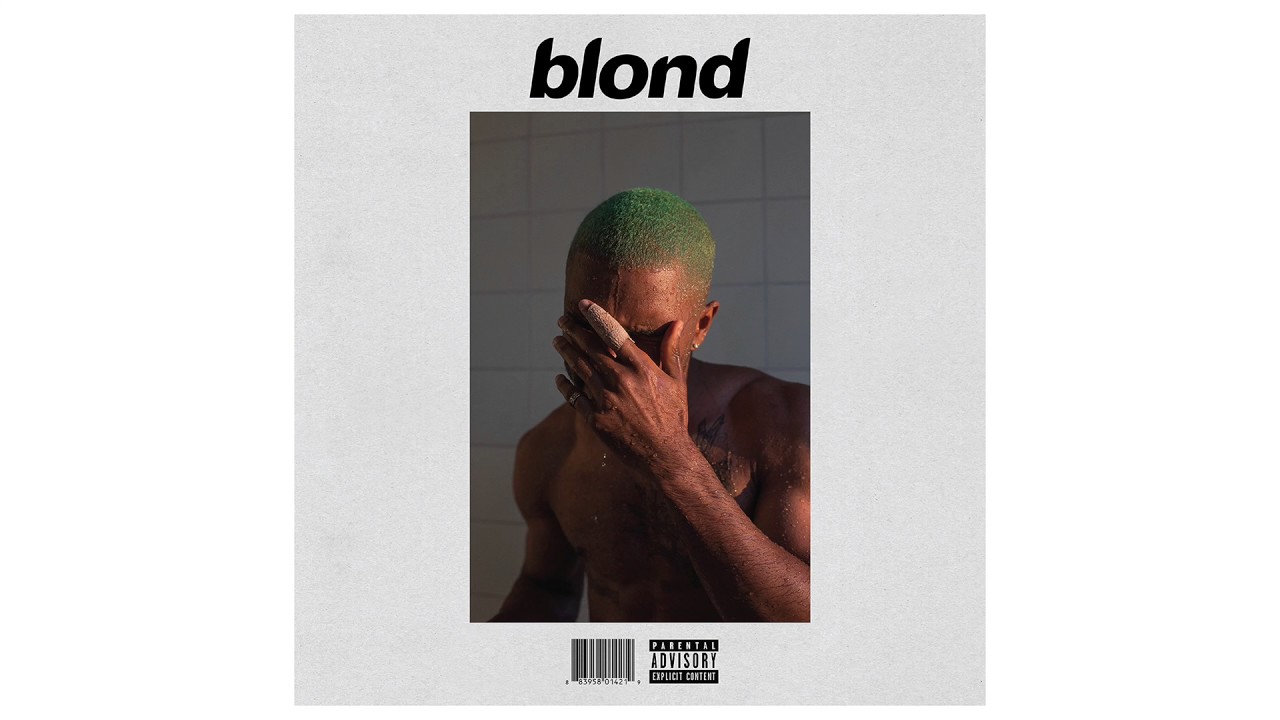
Producer Malay, who worked on a number of tracks including Ivy, Siegfried and Pretty Sweet, said that it’s Ocean’s vocals that make the whole coherent. Instead of a traditional musical artist, his is a more magpie-like approach, compiling fragments of recordings and loops before fusing them together.
In an interview with Reverb, he said, “If you were to mute and go through the instrumentals on all the Frank Ocean stuff, it's super eclectic - the music, a lot of it, it doesn't connect at all. You could really [listen and say] there's no way that this should be with this, but it's just the subject matter, the feel, the vocal…”
One of the most revealing pieces capturing the creative process behind Blonde came from the New York Times. When Blonde and Endless were in the process of being made, Ocean reportedly carried the hard drives with his music in his backpack, and the backups, too. After suffering blocks in New York, he moved to London. Here he removed the flat he stayed in of everything but the essentials. Ocean then did the same at Abbey Road too, decluttering to focus solely on the music.
Speaking to the newspaper, Ocean said: “I just wanted to be able to walk around and not run into an end table or some useless piece of furniture.”
Alongside the two albums, Ocean also released his Boys Don’t Cry fanzine where the influence of cars was shared. Memories tied to drives ranging from late-night journeys on LA freeways to mushroom trips inspired the album’s sense of unstoppable forward motion. Still, there are some ironies to be found in how the popularity of an album defined by transience has continued to grow. He depicted the influence of cars in its production via Tumblr.

He said: “I found it romantic, sometimes, editing this project. The whole time I felt as though I was in the presence of a $16m McLaren F1 armed with a disposable camera. My memories are in these pages, places close by and long ass-numbing flights away.”
Despite the veneration that only continues to grow for Blonde since it turned 10 earlier this summer, at the time, some reviews were less than complimentary claiming the record was half-finished.
The Guardian declared 2016’s two albums as a “double dose of hookless morass that Ocean finally heaved on to the world”. The Independent gave the record two stars out of five, proclaiming it to be “a trickling bubble bath of an album that ultimately runs lukewarm”. Much as in the way critics struggled to comprehend Radiohead’s Kid A when it was released in 2000, it has since been universally applauded.
In the decade that’s passed since Blonde, Ocean still hasn’t released a third record. Instead, he appears to have been more preoccupied with other creative ventures into fashion and photography. But the impact of the record lives on despite Ocean’s silence.
As United Masters said, “from Omar Apollo to Daniel Caesar to Mk.gee, Frank Ocean didn’t just make an album, he opened a door that a generation of artists walked through.”
The fact that there is so much speculation surrounding and love for Blonde underlines his impact. Now DIY recording processes, surprise releases, stepping back from the limelight are strategies adopted by many.
What Frank might do next in music is anyone’s guess, but we can be assured that it certainly won’t be boring.

