


Any emerging artist with a strong fanbase who creates beguiling and innovative music will inevitably find themselves the focus of music supervisors eager to license, or ‘sync’, their songs to film, TV, advertisements or video games.
As most musicians know, sync deals generally utilise tracks from artists’ back catalogues but in some cases, the artist has created such a stir that they may be approached directly to contribute a work-in-progress or new songs specifically for a project.
This is what happened to Lana Del Rey in 2012, when Australian film director, producer and screenwriter Baz Luhrmann approached her to contribute a song for the soundtrack of his forthcoming reimagining of F Scott Fitzgerald’s 1925 novel, The Great Gatsby, starring Leonardo DiCaprio and Carey Mulligan.
Luhrmann was one of many people who were captivated by Del Rey’s talent. He recognised that her vintage Hollywood aesthetic and melancholic glamour would align seamlessly with the role he had in mind for a song in The Great Gatsby.
The song Del Rey contributed was Young And Beautiful and it would become the signature track for the film.
It is one of the high points of her career and a composition that captures Del Rey at her most haunting and exquisite.
It is now 15 years since Lana Del Rey emerged from seemingly nowhere with the song Video Games, a baroque pop ballad that would become a viral sensation.

Her breakthrough album Born To Die, released in January 2012, cemented her reputation. Hip-hop beats and sweeping cinematic strings converged to create a spacious enigmatic sound while grainy, evocative retro footage in her uploaded home-made videos exuded a powerful mystique.
Given the cinematic nature of Del Rey’s music it was no great surprise when director, producer and screenwriter Baz Luhrmann – one of the most visually-driven, maximalist directors in modern cinema – reached out.
Seemingly, Del Rey wasn’t Luhrmann’s first choice. Speaking at BAFTA’s Life In Pictures event in September 2022, Luhrmann said he approached Prince to write the lead song for the soundtrack.
“Prince had worked on a song for six months,” said Luhrmann, “and then suddenly decided to write a new one and it wasn’t right.”
There were also reportedly some rights complications as it was a “co-owned piece”.
At this point Luhrmann and his team approached Del Rey. Luhrmann believed that her signature melancholic, glamorous, and nostalgic persona made her the perfect artist to capture the opulence of the 1920s Jazz Age and the tragic romance of the character of Daisy Buchanan (played by Mulligan).
As anyone who has read Fitzgerald’s classic novel will know, the story focuses on mysterious, enigmatic millionaire Jay Gatsby – played in Luhrmann’s film by Leonardo DiCaprio – who is obsessed about reuniting with Buchanan, his former lover.
When Luhrmann and Del Rey first spoke about the project, she was working on her third EP, Paradise, with songwriter and producer Rick Nowels, a longtime collaborator who would go on to work on eight of her albums, from Born To Die (2012) through to Blue Banisters (2021).
“Baz had heard something else that I did and he wanted to know if I could write some ‘memory cues’ for when Daisy was thinking back to how she felt about Gatsby,” said Del Rey in a June 2013 interview with Jessie Jessup on 102.1 The Edge FM.
Del Rey and Nowels had been working on a song for the Paradise EP, which ultimately didn’t make the final tracklist. When she and Luhrmann first met in 2012 she sang him the chorus of this song as an idea for the track for The Great Gatsby.
“And so I had an idea for a phrase ‘Will you still love me when I’m no longer young and beautiful?’ and it was kind of a long phrase to fit into a song,” continued Del Rey.
Luhrmann was inspired. “I was blessed with this beautiful, if you like, kind of innocent but slightly dark track that Rick Nowels and Lana Del Rey had come up with,” said Luhrmann in a trailer for the film, in which he talks about the gestation of the song.
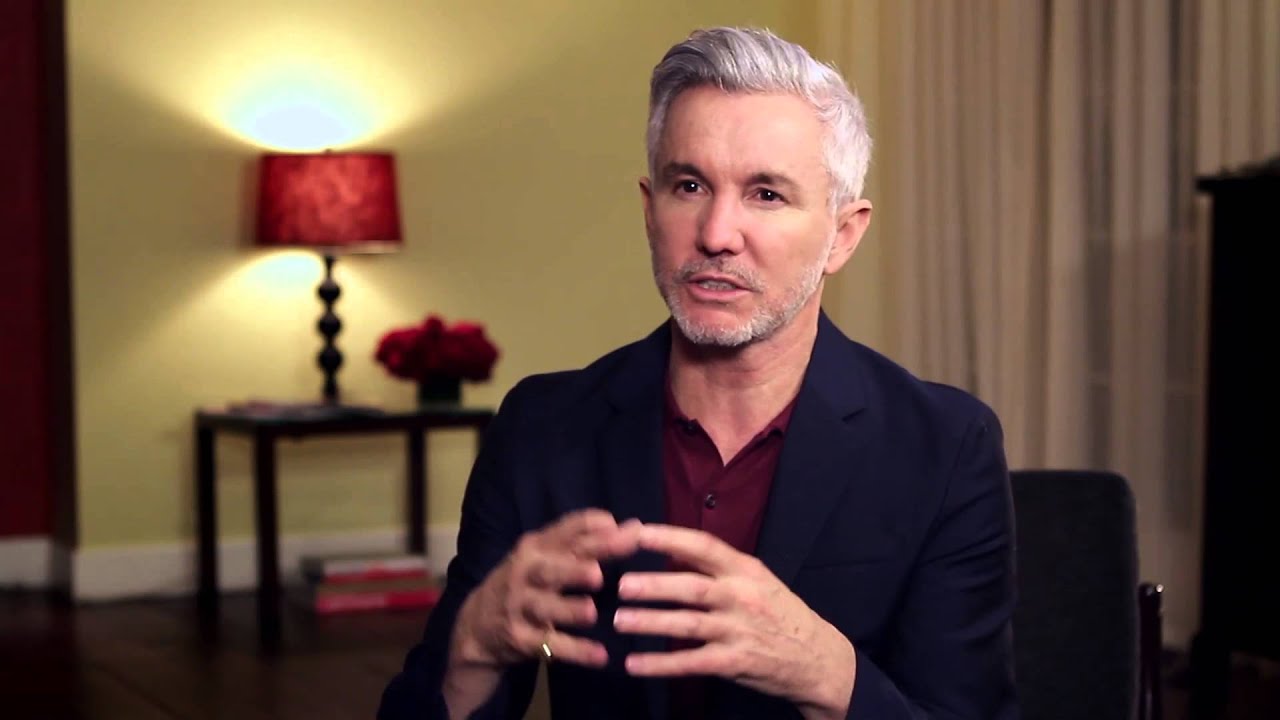
From the outset, Luhrmann was directly involved with the development of the song, which would become called simply Young And Beautiful.
Luhrmann approached the concept of the song from the internal perspective of the character of Daisy Buchanan, capturing her tragic vulnerability, glamour, and profound insecurity about whether love can survive once youth and beauty have faded.
He wanted the ‘memory cues’ for the character of Daisy to capture these tragic insecurities and her fear of losing love over time.
At first, Luhrmann intended to place the song at the point in the film where Buchanan and Gatsby first meet. But he then realised the song could have a greater impact elsewhere. “It becomes clear that it's actually the major love theme in the moment [that] Gatsby shows Daisy around the castle,” Luhrmann said.
Luhrmann then realised that he would need a different vocal treatment for the song, which involved working directly with Del Rey and Nowels in the studio.
“But I'm in Sydney mixing the movie and Lana’s in Los Angeles with Rick Nowels,” recalled Luhrmann in a trailer for the film. “Thank you for Skype. I mean, really, we were very effectively able to have a Skype session where Lana was in Rick’s studio in LA, I was in my little garret in Sydney, and I sat there looking at Lana.”
Moments from this session are captured in the interview with Luhrmann in the official trailer for the film. “We’re very lucky that this song found the film, and most importantly, that you’re singing it,” Luhrmann tells the broadly smiling Del Rey via Skype as she sits down in front of a laptop 7500 miles away in Nowels’ studio in LA.
Luhrmann recalled that working on the session remotely with Del Rey and Nowels was as intimate as actually being in the studio with her.
“She was tremendously responsive to direction and very good at finessing things,” he said. “And she was a bit nervous at first. She just sat down and she sang. I directed her. Rick was there. You know, I wanted her to improvise.”
From the outset, Luhrmann was involved in shaping and editing the direction of the song, even reportedly amending the lyrics slightly to fit the narrative of his film.
“Abstractions,” he suggests to Del Rey at one point as she prepares to lay down some additional vocals that can be utilised throughout the film, “things that people aren’t gonna get on a record, you know?”
Luhrman referred to these as vocal textures. “[She was] terrific at doing that,” he said. “And then when we go back into the past, they're kind of a bit dreamlike”

Looking back, it’s hard to imagine anyone better suited than Lana Del Rey to write and sing Young And Beautiful. The characters in Del Rey’s songs occupy the same rarefied world as those in Fitzgerald’s iconic novel.
The themes and atmosphere too are strikingly similar – glamour, opulence, nostalgia for an idealised past, romance, reinvention and the inherent flaws within the American dream. The Great Gatsby is also a novel of youth squandered, a theme reflected in Del Rey’s work.
Sonically, Young And Beautiful is a majestic, heartbreaking chamber pop ballad with lush piano, deep sweeping orchestral strings, cinematic grandeur, and vulnerable lyricism about ageing and unconditional love.
It is vast yet spacious and Del Rey’s warm, rich reverb-soaked vocals sound effortlessly warm and rich. “I’ve seen the world, done it all, had my cake now,” she croons on the first verse. “Diamonds, brilliant, and Bel Air now/Hot summer nights, mid-July/When you and I were forever wild.”
Listening to Young And Beautiful now, it sounds like classic, almost cliched Lana Del Rey. But beneath the sweeping orchestration and breathy, echoey vastness, sits a stunningly-crafted song with strong, memorable hooks.
Young And Beautiful would ultimately be reworked by an orchestra and the song returns time and again through the film as a romantic motif for DiCaprio’s and Mulligan’s characters.
Released as a single on 23 April 2013, Young And Beautiful peaked at No 23 in the UK Singles Chart and No 22 in the US Billboard Hot 100. Elsewhere it fared better. It reached Top 10 in eight countries, including No 1 in Russia. No 2 in Greece and No 8 in Italy and Australia.
While not all journalists were taken with the song, the critical response was largely positive. Writer Davis Berry in the Canadian journal National Post concluded that Young And Beautiful picks up where Video Games left off. Berry added that the song’s “obsession with decay and the fleeting nature of the good life certainly resonates”.
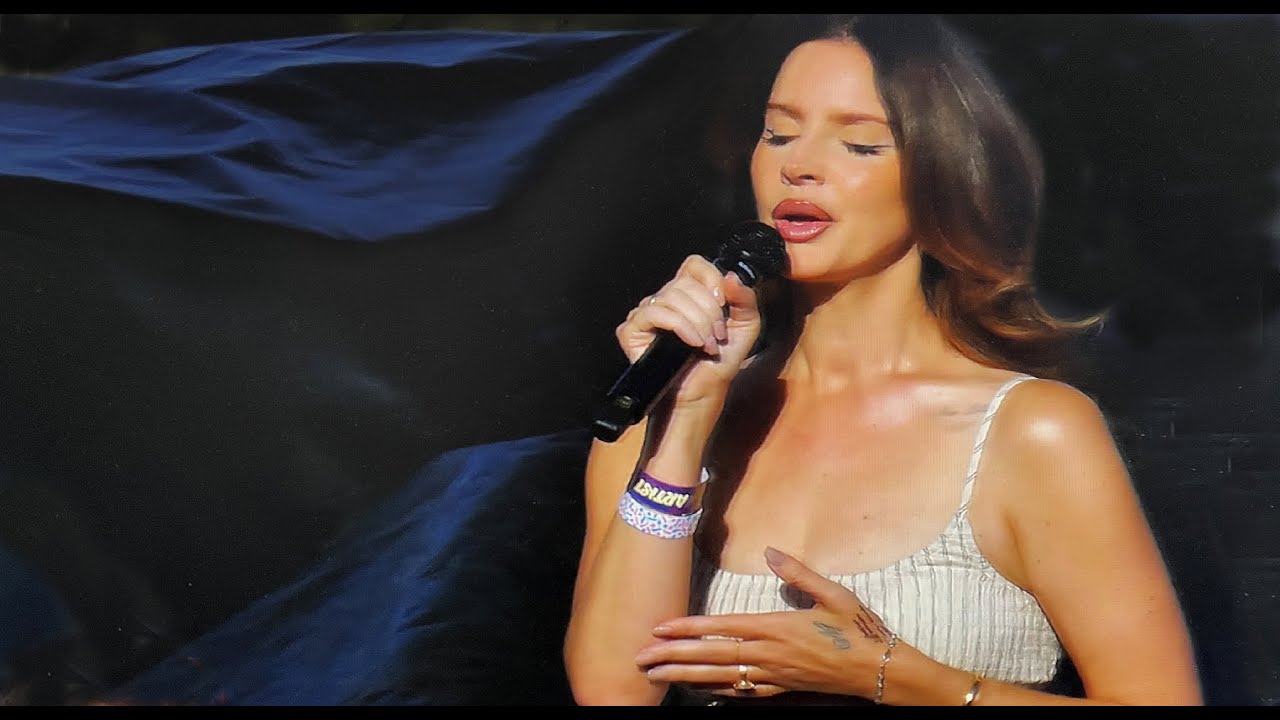
It’s worth remembering that Young And Beautiful was written in the same year that her breakthrough album Born To Die was released. For all the viral acclaim, these were very early days for Del Rey, who was still in the ascent. It’s a testament to the song that, almost 15 years on, it remains a standout track in her rich and extensive body of work.
Young And Beautiful often charts highly in retrospective polls of the best Lana Del Rey songs. In a 2022 poll in The Guardian, Young And Beautiful was ranked No 3 in a poll of 20 greatest Del Rey works.
As writer Alexis Petridis put it: “By some distance the best thing on the star-studded soundtrack to Baz Luhrmann’s The Great Gatsby, Young and Beautiful is Lana Del Rey at her most haunting. Co-opted by rather than commissioned for the film, its saga of fleeting youth and celebrity fits its story perfectly.”
