


Over a career lasting more than 40 years, Glasgow’s Primal Scream have always been masters of reinventing themselves. Their first album, 1987’s Sonic Flower Groove, was ‘60s-influenced, jangly indie-pop, but, two years later their self-titled follow-up, released on Alan McGee’s Creation Records label, showcased a harder, raw garage-rock sound.
Their third album, 1991’s groundbreaking Screamadelica, which was partly produced by maverick DJ, Andrew Weatherall, changed everything. This genre-blurring record won the inaugural Mercury Music Prize for its mix of rock, dub, acid house, rave culture and gospel.
Their next album, 1994’s Give Out but Don’t Give Up, saw the band get down and dirty with greasy and bluesy Stones-like rock ‘n’ roll, as well as soak up Memphis soul, funk and country influences.
Three years later, Primal Scream took another left turn with 1997’s Vanishing Point - co-produced by the band and Brendan Lynch, it was inspired by the cult 1971 action-thriller film of the same name, and was dark, trippy, cinematic, and often claustrophobic and paranoid, with ominous, bass-heavy grooves, krautrock, dub, psych, spacey sound effects and weird tape delays creating an unsettling atmosphere.
Primal Scream’s next album, 2000’s XTRMNTR, was even more extreme - a political and confrontational set of songs that attacked corporate greed, state corruption and authoritarian governments, and embraced punk, industrial noise, free jazz, hip-hop, techno, dark disco and motorik rhythms.

Its successor, Evil Heat, from 2002, felt like a natural progression and was heavily electronic, owing a debt to the incendiary sounds of the Prodigy, as well as early innovators like Kraftwerk and Throbbing Gristle.
The album featured a Gillespie and Kate Moss duet on an electro-clash overhaul of the Nancy Sinatra and Lee Hazlewood late ‘60s classic, Some Velvet Morning, but also found room for some Stooges-like rock ‘n’ roll and some howling blues harmonica by Robert Plant on The Lord Is My Shotgun.
This autumn, Vanishing Point, XTRMNTR and Evil Heat are being reissued as newly-mastered versions on 2LP, CD and digital - along with B-sides, extra tracks and rarities. This triumvirate has been dubbed the ‘Bunker Trilogy’, named for the band’s North London studio and rehearsal room, The Bunker, where they made those albums. This September, the band will embark on a UK tour playing the whole of the XTRMNTR album.
MusicRadar caught up with the group’s chief creative Bobby Gillespie and asked him to share some of his memories of working in The Bunker and the process of writing and recording Vanishing Point, XTRMNTR and Evil Heat…
MusicRadar: Let’s talk about your studio, The Bunker, which sadly no longer exists - it was converted into luxury flats a few years ago…
Bobby Gillespie: “There were two Bunkers, but they were in the same mews, behind Regent’s Park Road in Primrose Hill. Initially, we were at the very bottom of the mews, in what had been a dance studio. On one side, the walls had loads of mirrors on them, and I quite liked that because I had read that the New York Dolls had rehearsed in a room that had loads of mirrors - they used to check themselves out in them.
“So, in 1995, we were in that room, jamming - one of our crew, Murray Mitchell, had found that space, and it was meant to be a rehearsal room for us. At that point, two of us - myself and Robert Young [guitarist] - were living in Brighton. During the course of 1995, there were a few jams where we would get a bit wasted and then see if we could write any new songs, but nothing [came] - there were hours and hours of DAT tapes, but myself and Andrew Innes [guitarist] knew from the jamming that we were down a f***king dead-end street. It was very guitar-centric and bluesy, but it wasn’t what I or Andrew wanted to do musically. So, we stopped it for a while and then, in early 1996, I moved up to London and got a flat near the studio.
“During the summer of 1996, Andrew and I would go to The Bunker every day - he had found these Tascam machines; they had these little cassettes that were like a mini-VHS and were about two and a half inches wide and maybe an inch or an inch and a half deep. They were tiny and each of the machines had eight tracks, so we had bought two and had 16 tracks. Before that, he had 4-track facilities - some of the songs for our second album and some of the early Screamadelica demos were done on 4-track machines at his council flat on the Isle of Dogs.
“Andrew was au fait with recording in a basic way - he had the rudiments of recording and engineering, but he wasn’t trained. So, we got a few mics - one of them was a good vocal mic - a German Neumann - and we had some other mics for the drums and the guitar amps. Andrew and I would go into The Bunker four or five days a week, from 12 until 6, and we began making the music - the backing tracks - for what would become Vanishing Point.”

MR: So, Vanishing Point was made in that room - the first version of The Bunker - and then you moved into a larger studio nearby in 1998, where you made, or partly made, a lot of your albums after that, starting with XTRMNTR?
BG: “Yeah. Jon Moss from Culture Club had the studio at the top of the mews - we used to go out for coffee with him. He would be like, ‘How’s it going with the band?’ He was friendly and funny - he had a great sense of humour. He’d been in The Damned and we’d seen him play with them in 1977, when the Dead Boys opened for them at the Glasgow Apollo, so we were always asking him about The Damned and that tour with the Dead Boys.
“In 1998, he said: ‘Listen, lads, I think I’m going to move out of here [the studio] but come up and have a look and if you like it; I’ll put a word in for you with the landlords.’ So, we saw it and we thought that we could build a live room there, so, instead of having one big room, which we did in the original Bunker, we had two rooms, with a wall dividing them. We could rehearse in the live room during the day, without creating a noise, and we also record the guitars and drums loudly in there because we made it a dead room. So, that was the second Bunker.”
MR: Vanishing Point was the follow-up album to 1994’s Give Out but Don’t Give Up, which had been influenced by Stonesy rock ‘n’ roll, Memphis soul, country and funk. Mani joined on bass for Vanishing Point - how did that change the sound and the dynamics of the band?
BG: “Vanishing Point was mainly made without Mani - he didn’t join until late September/October 1996, when the majority of the album had been recorded - apart from Motörhead, and we didn’t have a bassline for Kowalski, so Mani put the bassline on that whilst we had started mixing the album.
“The bass player on Vanishing Point was a guy called Marco Nelson, who had played with The Young Disciples and on Weller’s Wild Wood - that mid- ‘90s Weller period. Some of the tracks [on Vanishing Point] didn’t have bass on them - they had keyboard bass. We borrowed something that was like a small version of the Fender Rhodes [a Fender Rhodes Piano Bass] - The Doors used it live, and we used it some of the tracks, like Out of the Void.
“We didn’t have a fixed lineup - the band was basically me and Andrew, and we’d bring in other people, like Martin Duffy, if we needed some keyboards. Andrew was already playing a lot of keyboards - all the synthesizer sounds were sourced or created by Andrew, and, in many cases, played by him, but sometimes we’d bring Martin in to play stuff. All the atmospheres and textures on Vanishing Point, XTRMNTR and Evil Heat were Andrew.”
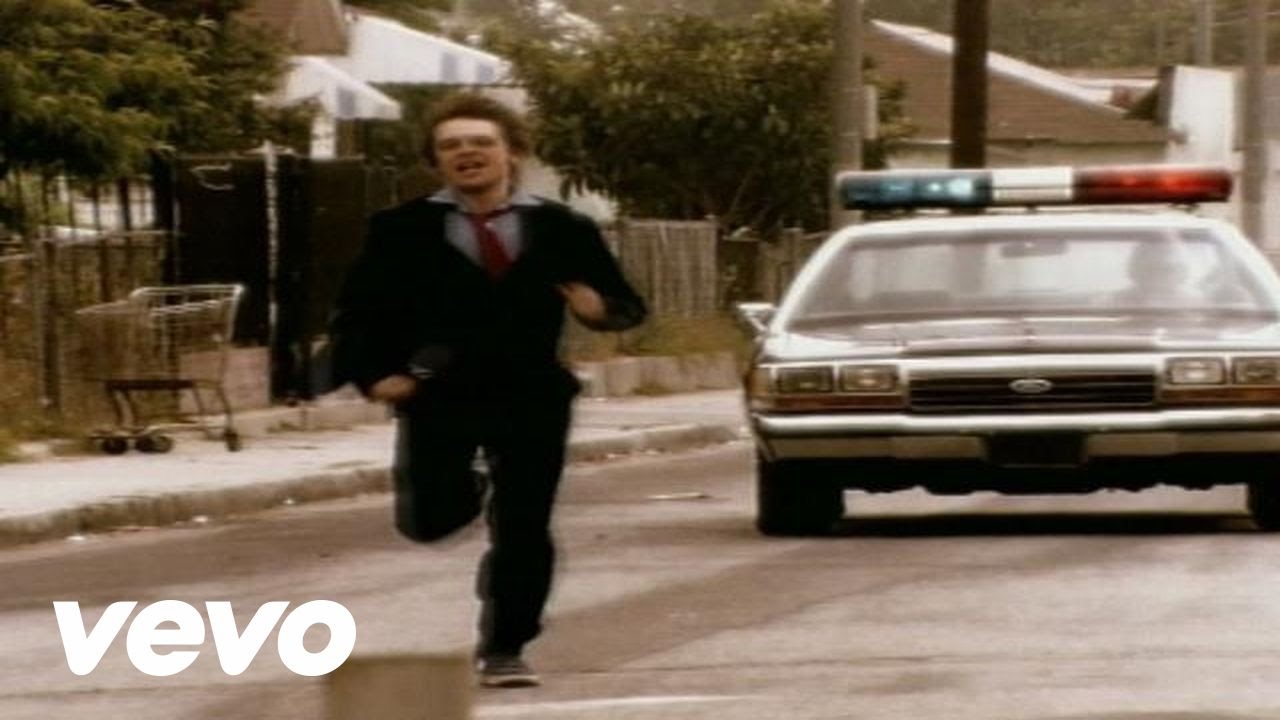
MR: The Memphis Horns, who recorded for Stax, played on the Vanishing Point track Star. Did they come to The Bunker to record their parts?
BG: “Yeah. We’d worked with them in Memphis in 1993, for Give Out but Don’t Give Up, and then, in summer 1996, Creation Records, which was in Regent’s Park Road, got a phone call. They called us and said: ‘Wayne Jackson and Andrew Love [The Memphis Horns] are in town and they wanted to know if you needed them on any new Primal Scream recordings. I said, ‘Yeah, send them down’. I then looked at Andrew and said, ‘What are we going to put them on?’ So, Andrew goes, ‘Why don’t we put them on Star?’ We’d already recorded Augustus Pablo playing melodica on it, so The Memphis Horns came round and played on Star.”
MR: What did they think of The Bunker?
BG: “Well, you’ve got to understand that Stax, where they made their name, wasn’t like a normal studio - it was in an old cinema. In Stax, they just nailed the drums to the floor, because it was on a slant. The Memphis Horns had played in all sorts of studios, so they were cool. They were funky guys and we had a funky studio.
“We also had Jaki Liebezeit from Can in our studio. When he came in, I said: ‘I’m sorry about the mess,’ and he goes, ‘No, no - it’s alive! It’s lived-in - it’s good!’ He liked the fact that it wasn’t an antiseptic studio. We even had Michael Karoli [from Can] for a jam in there one night.”

MR: Didn’t Joey Ramone turn up there, too?
BG: “Yeah - Joey came in while we were mixing When the Kingdom Comes [B-side of the Accelerator single] in the second Bunker. He’d produced a record for Ronnie Spector, and they were doing a gig that night - Alan McGee sent him round as a surprise. He said to him, ‘Go and see the Scream - they’ll love it!’
“I opened the door, and there was a chap there who looked like a big body without a head, and he goes [does a Joey Ramone impression]: ‘Hey, is Bobby in?’ I looked up and it was f**king Joey! I went, ‘Oh my God - in you come’.
“Mani was there too - everyone was there that day, and they were all gobsmacked - they couldn’t believe it. Brendan Lynch and Max Hayes were doing the mix in the control room. I said, ‘Hey, guys - we’ve got a visitor’. They looked at me as if to say, ‘So what?’ and then Joey walked in and went, ‘How’s it going, guys?’ Everyone’s jaws hit the floor.
“I said, ‘Do you want to have a listen?’ He said, ‘Sure,’ so we played him where we were in the mix and when it had finished, he said: ‘It’s great to hear people still playing real rock ‘n’ roll.’ You know what? Put that on my f**king gravestone!”
MR: Paul Weller plays guitar on When the Kingdom Comes…
BG: “Yeah - he was always badgering us to play on a Scream track. So, when we did When the Kingdom Comes, we were like, ‘Right - we want you to play Rickenbacker and we want an auto-destructive solo!’ He went [he does a Paul Weller impression]: ‘F**kin’ yeah!’ He did it and he delivered. He played the way he played on the first couple of Jam albums, which is want we wanted - it was pure Pete Townshend ’65. I think Kevin Shields is on there doing some feedback as well. It’s mainly Andrew Innes - he’s playing the riff and then Weller joins in and does the solo. It’s a great track - I love it.”
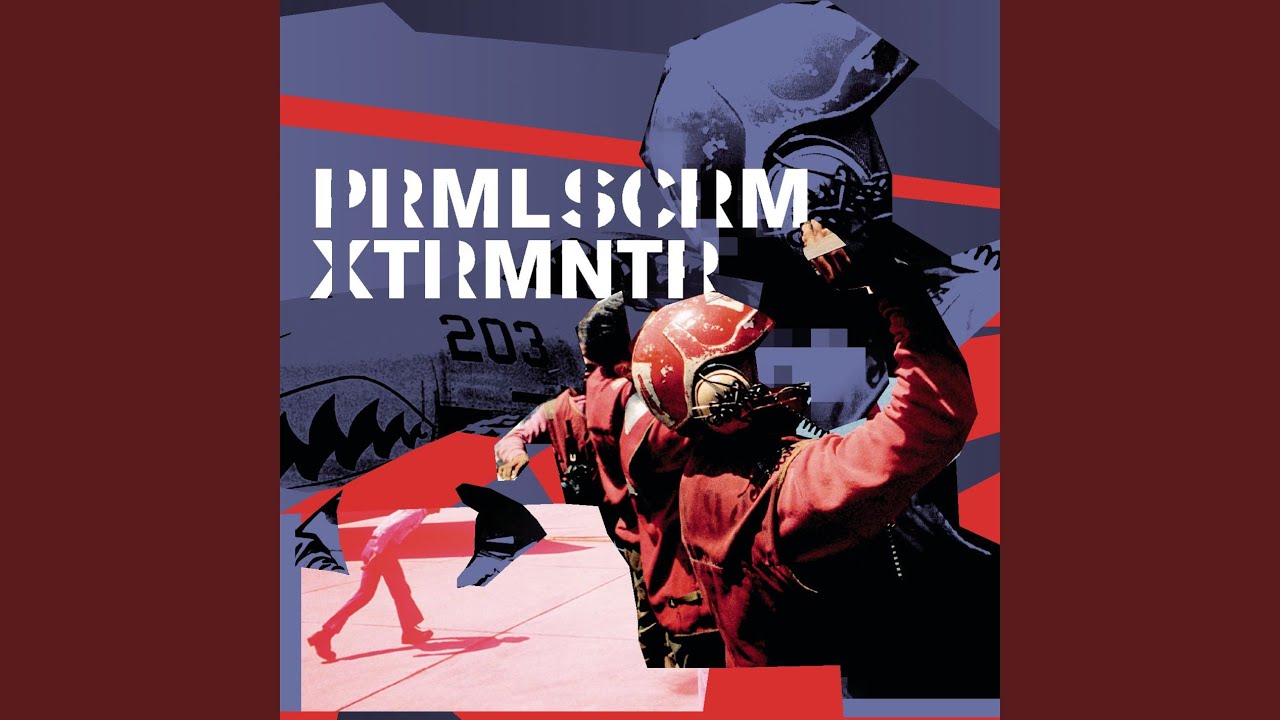
MR: You mentioned Kowalski earlier, which was the first single from Vanishing Point - it came out in May 1997. It was a brave choice as a lead single, but it went into the top ten. Did you feel out of step with a lot of the other music that was coming out of the UK at that time, like Britpop?
BG: “Since we started the band, in 1984, we’ve always felt out of sorts or we’ve felt in opposition. We were born in opposition and we’ve remained in opposition - and it’s a good place to be. I think Mark E. Smith felt that about The Fall. Vanishing Point was written and recorded in the summer of 1996, and I guess ’95 to ’97 was the Britpop heyday. We toured for most of 1994, and I think it was bubbling under before then.”
MR: Britpop exploded with the Blur vs Oasis chart battle in 1995…
BG: “Yeah - we had nothing in common with bands like Blur musically, and it was also a class thing… We’re like a punk band with our attitude and stuff. I’m not going to put any other bands down - everybody does their own thing and I’m cool with that. I thought a couple of the early Blur singles in ’91 were brilliant, There’s No Other Way was fantastic. I didn’t like the Parklife stuff - it wasn’t for me; it was for younger kids, and I understood that. I was listening to experimental British music like Tricky and people like that.
“We loved Oasis and we were friends with Noel, Liam, Bonehead and the other guys in the band - we had a good relationship with them and we were label mates. We were very proud that they were on our label [Creation Records] and that they were so big and selling so many records. It was helpful because we had no constraints. We’d spent a lot of money making Give Out but Don’t Give Up, going to Memphis and LA, hiring the Muscle Shoals Rhythm Section and Tom Dowd, and making expensive videos.
“Give Out but Don’t Give Up had great musicians on it and a great producer; it was a very sophisticated and polished production - the original one that Tom Dowd did before it got remixed. It got a bit grungier when George Drakoulias started doing mixes and stuff.
“With Vanishing Point, what Andrew and I wanted to do was something a bit more lo-fi. I liked American indie bands like Royal Trux and The Make-Up and I liked the fact that bands like the Palace Brothers - Bonnie ‘Prince’ Billy - were recording in a lo-fi way. So, Vanishing Point was kind of influenced by that. We were trying to get away from a big studio production and big rock drum sounds and stuff. We wanted to do something a bit more intimate, lo-fi and psychedelic that was also informed by dub music, cinematic soundtracks, free jazz and krautrock.
“In the years preceding it - ’94 and ’95 - I’d been reading a lot of black revolutionary literature from the 1960s, and that sent me off on a few different tangents and made me think deeper about where we currently were in the culture of the ‘90s; what was happening in youth culture, and the mass proliferation of drugs post-acid house [and] the effects of those drugs on me and my friends. So, I began writing about that stuff and documenting it; it was like reportage. What we were doing was unique for the time - in terms of the musical palette we were using and the lyrical content of the songs. It was different from what everybody else was doing.”

MR: XTRMNTR was a more extreme record than Vanishing Point - it sounds like you’d built on the harder and darker sounds that you’d used on Vanishing Point, but then took it to another level, and added influences like techno and hip-hop…
BG: “Yeah - there was a lot. We were quite clever, and I have to credit Andrew Innes with this; he worked out how the hip-hop guys were making records. He loved the production and the arrangements, and he loved the fact that it broke down traditional rock song structures. I was feeling constrained by having to write lyrics to chordal structures that were great for high-energy rock ‘n’ roll. You had to have a verse, a pre-chorus then a bridge and a chorus… It was very structured and I was yearning for something that would free me up so I could do a long-form lyric.
“I was writing these poems, and the experiments that we began on Vanishing Point were about rhythm. The important thing was to try and create an interesting rhythm, good textures and an atmosphere, and then build on that and create a song out of it.
“A song like Kowalski was built from the bottom up - it was an atmosphere and a rhythm track that became a song, whereas Out of the Void and Burning Wheel… I think I had written the chords, the melody and the lyrics to Out of the Void when I was living in Brighton in 1995, and in 1996, me and Andrew wrote Burning Wheel, which was like a ‘60s psychedelic song. Long Life came from a jam and Stuka and Kowalski came from atmospheric drums and textures.
“The tracks were kind of like one chord, so you could do anything - you could recite words if you wanted to, and that freed me up. We didn’t record the songs with a live band like we had with Give Out but Don’t Give Up or our first two albums. We would build the tracks up and then I would put the vocal on, and somebody would come in to play bass.
“Sometimes Andrew and me would write the basslines and then we’d get Marco Nelson to play them, or Marco would write a bassline - Marco is on bass for Kill All Hippies [from XTRMNTR] because Mani tried it, but he couldn’t get the bassline for it. I think Robert Young tried it, but he couldn’t do it, and Andrew tried… We got Marco to come in and he nailed it. It was the same with the track Exterminator, the very last thing we put on was the bassline.
“We would bring musicians in, run the track and see what they played - if they played something good, we would keep it, or if not, we wouldn’t use it and we would move on to something else. We started that process with Vanishing Point and then we finessed it on XTRMNTR and Evil Heat.”
MR: Evil Heat is a really varied record - there’s krautrock, punk, psychedelia, rock ‘n’ roll and electronica, but do you think it was overshadowed by Vanishing Point and XTRMNTR?
BG: “I think Evil Heat is an extension of XTRMNTR, but there are more electronics on it - it’s a lot more electro. Some of the songs on Evil Heat should have been on XTRMNTR; for example, Deep Hit of Morning Sun was written and recorded during XTRMNTR, but I never got the vocal on it for one reason or another, we had the music. It was towards the end of mixing XTRMNTR, and I remember saying to Andrew, ‘This is some f**king track,’ and he said: ‘Why don't we leave it until the next album?’ So, that became the first song on Evil Heat.
“I wrote the lyrics for City, Detroit and Rise in 1999 or 2000 - Rise was formerly called Bomb the Pentagon and I imagined it would be like Public Enemy’s Shut ‘Em Down; I wrote it in my head to the rhythm of Shut ‘Em Down.
“I wrote Space Blues #2 in 2001, on an acoustic guitar at home, and then when we recorded it, I got Martin Duffy to sing it, and then instead of playing acoustic guitar, we did it on keyboards. It was written like a country song.
“Deep Hit of Morning Sun was written and recorded in 1999, and I had the lyrics for Skull X in the summer of 2000 because of what I was going through in my life - I was having a crazy time… I think I wrote the lyrics for The Lord Is My Shotgun in 2001.”
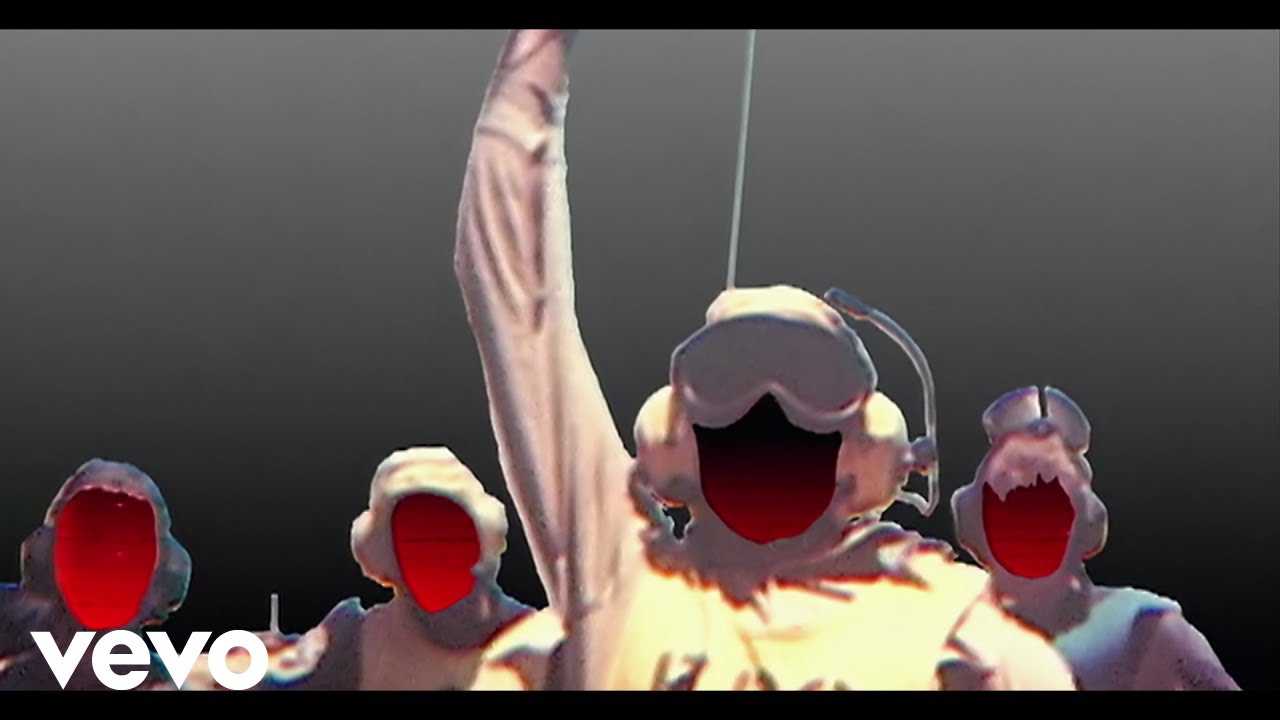
MR: Robert Plant plays harmonica on The Lord Is My Shotgun. How did that happen?
BG: “I think we were a song short for Evil Heat, and Andrew said to me: ‘Why don’t you do a duet with Kate Moss?’ I said, ‘I was thinking that…’ He said: 'Love Hurts?' and I said, ‘or Some Velvet Morning?’ So, we opted for Some Velvet Morning. So, when Kate came to the studio to sing it, we went to the pub afterwards and Robert Plant happened to be in there - he lived quite locally. I would see him around and chat to him - Alan McGee was friends with him - and we became quite friendly
“I'd had a couple of drinks, and I said to Robert: ‘We've got a song that’s a cross between Throbbing Gristle and Howlin’ Wolf. We'd love you to play harmonica on it - would you be up for it?’ He said, ‘Sure - when do you need it?’ I was like, ‘as soon as possible…’ He said, ‘I’m away tomorrow, but I’m back in nine or 10 days’ time…’ and he gave me the number of his manager or assistant and he said we’d sort it for when he was back. Then he said: ‘One more question - what key is the song in, because I’ll bring the correct harmonica.’ I was like, ‘I don’t f**king know!’ I asked Andrew and he was like, ‘I don’t know…’ So, I said we would find out, and we did, and when he came back, he came in and played harmonica, and it was brilliant.”

MR: In September, you’re going on a UK tour, playing the whole of the XTRMNTR album. Lyrically it’s provocative - anti-authoritarian and anti-corporate. With what’s currently happening in the US and the rise of the far right in the UK, it feels even more relevant now than it did when it came out in 2000…
BG: “I think it was - and is - a prescient album. It foretold things to come. I had suspicions. I had started to read left-wing intelligent literature, like Noam Chomsky, as well as critical theory. I was delving into more political writings, and I could start to see things more clearly than I had before - some of that panic is in the lyrics to that album. I can remember thinking that when British and American planes were leaving UK airfields and bombing Serbia, in the war in Kosovo, that it was a warm-up for something else… I thought there was more coming down the line - I didn’t know what it was, but something was going to happen.
“I’m not saying I predicted September 11, but all the stuff that was unleashed after that, like the Citizens Act [USA Patriot Act] in the US, which gave the government more powers to carry out surveillance on citizens, and just how everybody then became less critical of authority because they were scared.
“It [XTRMNTR] was an examination of power and a distrust of power and authority, and how it has to be held in check. You have to have checks and balances, which, as we can see in America, have been thrown off, and are a danger to democracy. And, as you say, the far right has grown. There was a fear of that and maybe it’s become more realised as the years go on. I was starting to be switched on and looking at things a lot more closely than I had before.”
The Bunker Trilogy by Primal Scream - Vanishing Point, XTRMNTR and Evil Heat - are released this autumn on 2LP, CD and digital. Vanishing Point is available now, with XTRMNTR to follow on September 4 and Evil Heat on October 30. A vinyl box set of all three albums is also available to preorder.
The XTRMNTR UK tour starts on September 3. For more info check out Primal Scream's official site.
