


On 5 October 1992, a decade after unveiling their beguiling EP Chronic Town, REM released their eighth studio album, Automatic For The People. It was a game-changer release.
With its themes of mortality, loneliness, grief and disillusionment, Automatic For The People demonstrated that a band could make a darker, slower and more introspective album that was still a massive commercial success.
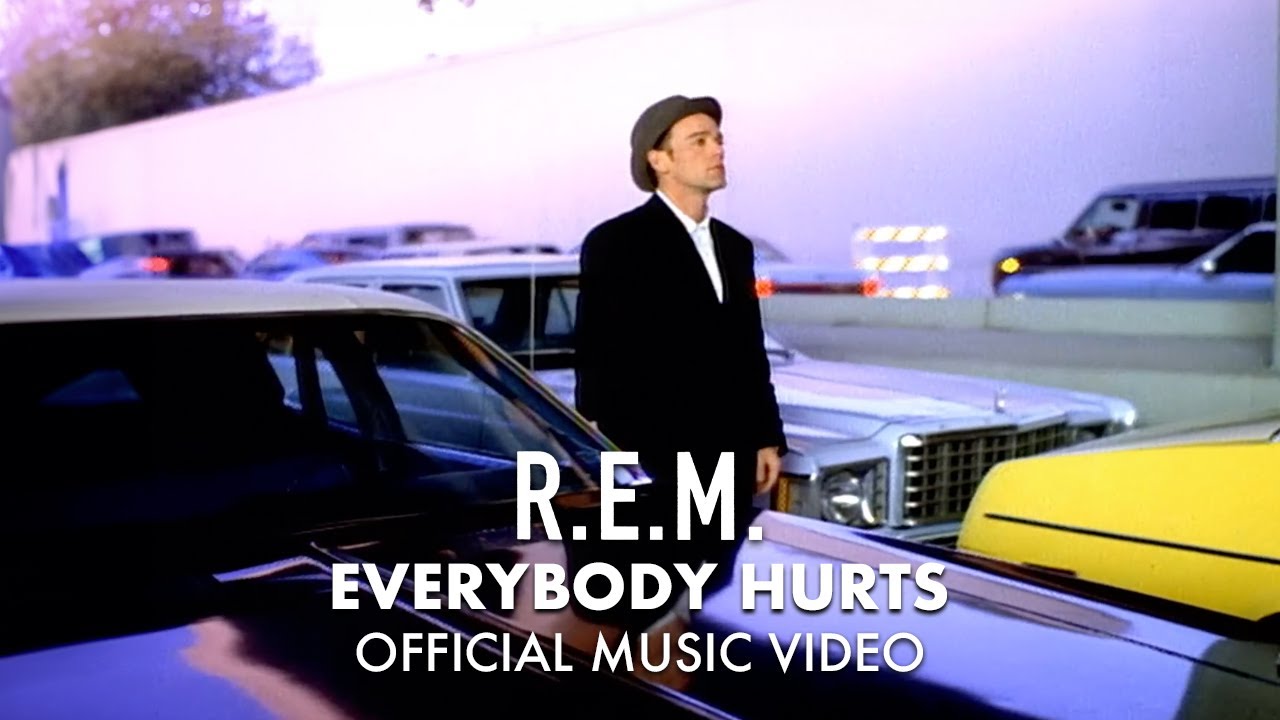
Automatic For The People spawned one of REM’s most moving and enduring songs, Everybody Hurts, a graceful, majestic and achingly moving song which lies at the emotional core of the album. It is a composition widely regarded as one of the finest and most emotive songs that REM ever recorded.
It was mid-January 1991 when three members of REM – guitarist Peter Buck, bassist Mike Mills and drummer Bill Berry – gathered at their West Clayton Street rehearsal room in Athens, Georgia to start working on ideas. They wrote without drums, often swapping instruments, with Berry on bass, Mills on organ or piano and Buck on mandolin.
One morning, Berry brought a new song into the session. He had been inspired to write it following a widely-reported rise in adolescent suicide in the US, which had become a major public-health concern by the late ’80s and early ’90s.
“Bill brought it in and it was a one-minute-long country and western song,” Peter Buck commented on the band's official site remhq.com. “It took us forever to figure out the arrangement and who was going to play what.
“It didn’t have a chorus or a bridge. It had the verse. It kind of went around and around, and he was strumming it. We went through about four different ideas and how to approach it and eventually came to that Stax, Otis Redding Pain In My Heart kind of vibe.”
In an interview for the Broken Record podcast with producer Rick Rubin in 2022, Michael Stipe said that Everybody Hurts was also influenced by Nazareth's rock cover of the classic ballad Love Hurts.
In June 1991, REM booked into John Keane’s studio in Athens to demo songs for the album. Everybody Hurts was one of 30 tracks that Buck, Mills and Berry delivered to Michael Stipe.
The plan for Automatic For The People had been to create something that was far more guitar-driven, rockier and upbeat than previous REM albums. But that wasn’t how it turned out.
“Very mid-tempo” and “pretty fucking weird” is how Stipe described the new material to Rolling Stone magazine, elaborating: “More acoustic, more organ based, less drums”.
In February 1992, the group recorded another set of demos at Daniel Lanois’ Kingsway Studio in New Orleans before relocating one month later to Bearsville Studios in Woodstock, New York, with co-producer Scott Litt.
The remoteness of Bearsville meant limited distractions and over the next 18 days, REM laid down 26 tracks, one of which was the stirring and emotive Everybody Hurts.
Bearsville Studios was where the bulk of Everybody Hurts was recorded and they reportedly worked on the song on 4, 14, 15, 18, 20 and 22 April 1992.
For the bulk of Everybody Hurts, a Univox drum machine was used, which was bought by Mike Mills for $20. The drum machine was perfect for the song’s “metronome-ish feel”, Mills told Pulse magazine in 1992.
“Mike (Stipe) and I cut it live with this dumb drum machine, which is just as wooden as you can get,” he reportedly said. “We wanted to get this flow around that: human and non-human at the same time.”
Dropping the needle on Everybody Hurts over 30 years since its release, it is striking how emotionally pure and timeless the song still sounds.
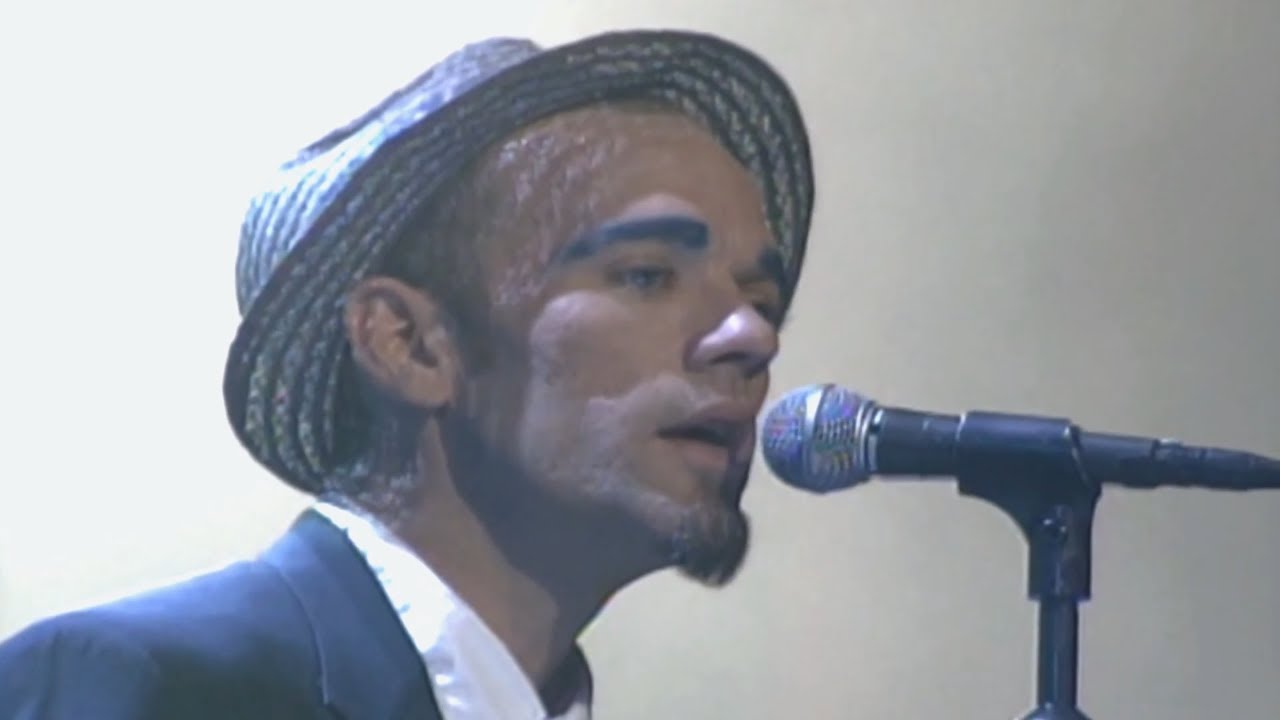
From the very first bars of the D-G chord progression, REM’s treatment of Bill Berry’s heartfelt composition is a masterclass in restraint. The lo-fi metronomic minimalism of the drum machine only amplifies the song’s powerful emotional message.
Peter Buck’s stark, arpeggio guitar propels the track along, cushioned by warm keyboards from Mike Mills. Opinions vary wildly about what keyboards Mills used but it seems likely it was either a Wurlitzer electric piano or a Fender Rhodes.
Everybody Hurts is in 6/8 time, with a tempo of around 94 bpm, which gives the song a slow, rolling hypnotic groove. It’s almost lullaby-like, with a comforting and deeply melancholic feel that really draws the listener in.
Much of the appeal of REM in their early days was Michael Stipe’s semi-discernible lyrics – blurred consonants that enticed the listener in and conjured up mysterious and enigmatic imagery. But on Everybody Hurts, the approach was far more straightforward.
Bill Berry conceived Everybody Hurts as a very direct message – to tell young people who felt overwhelmed and hopeless to have hope and to not give up.
Consequently, Stipe’s vocal when it enters is uncharacteristically clear and direct, because he didn't want the song’s core message to get lost.
“When your day is long,” begins Stipe, “And the night, the night is yours alone/When you're sure you’ve had enough/Of this life, well hang on.”
In the liner notes for the band’s 2011 greatest hits album Part Lies, Part Heart, Part Truth, Part Garbage 1982-2011, Stipe noted that he didn’t remember recording his vocal on the song.
“I still kind of can’t believe my voice is on this recording. It's very pure. This song instantly belonged to everyone except us, and that honestly means the world to me.”
It’s a beautiful vocal performance, warm, unaffected and veering seamlessly into falsetto at times. Stipe’s tone is almost conversational at first, opening up as he ascends the scale on the chorus. “Don’t let yourself go/’Cause everybody cries/Everybody hurts sometimes.”
There are some beautifully sweet vocal cadences on lines such as “When your day is night alone (hold on, hold on).”
On the first line of the second chorus, at 1:55, strings enter the mix, with a beautiful cyclical motif. REM had dabbled with strings on their 1991 album Out Of Time, with mixed results. But when Scott Litt happened to meet ex-Led Zeppelin bassist John Paul Jones, he seized on the opportunity to ask if Jones would be interested in contributing string parts for Automatic For The People.
Jones accepted and the band sent him four tracks, one of which was Everybody Hurts. By the time Jones’s plane touched down in Atlanta in June 1992, for sessions at Bobby Brown’s Bosstown studio, the former Zep bassist was armed and ready with charts for the musicians.
Over 12 hours of sessions, spread over four days, Jones led 13 members of the Atlanta Symphony Orchestra through his arrangements. By the time they had finished, they had laid down string parts on four tracks: Drive, Everybody Hurts, The Sidewinder Sleeps Tonight and Nightswimming.
Jones’ arrangements are inspired, enhancing the grandeur and emotion to the songs.
By the second half of Everybody Hurts, the band are building in intensity and the tone shifts from despair to resilience. The turning point comes at 2:18, as the strings ascend and Bill Berry’s live drums and Buck’s overdriven guitar chords kick in. It’s a strident, uplifting section, concluding with Stipe singing “No, no, no, you’re not alone.”
At 2:54 there’s a stop and the whole thing builds again, with the introduction of organ played by Mills – probably a Hammond through a Leslie speaker – introducing a religious tone.
At 4:07 Berry’s juddering drums herald the start of the outro, as Stipe sings “Hold on” over and over. The band really ramps it up, the strings ascend majestically and the whole glorious composition begins its slow, majestic fade.

Everybody Hurts was released on 5 April, 1993 as the second single from Automatic For The People. The song reached No 3 in France, No 4 in the Netherlands and Iceland, No 6 in Australia and Ireland, No 7 in the UK and No 8 in Canada. It performed less well in the US, reaching No 29.
Critics adored it. Chris Roberts from Melody Maker named it ‘Single of the Week’, stating: “This is clearly a Let It Be/Candle In The Wind of its (white rock) generation, [and] it avoids being fatally overblown by virtue of Stipe’s meticulously understated vocal.”
David Cavanagh in Select magazine was equally effusive, noting that the song is “virtually beyond words. It will have non-REM maniacs in hysterics with its delicate Spector structure and childlike message. It will make everyone else cry. It really is that straightforward.”
Over the years, the song would become a global anthem of comfort and hope for people in despair and distress.
In 2010, UK prime minister Gordon Brown asked music industry mogul Simon Cowell to arrange a charity single to help the victims of the devastating earthquake that struck Haiti on 12 January 2010. Cowell chose Everybody Hurts and assembled a massive array of A-list artists such as Robbie Williams, Mariah Carey, Kylie Minogue and Miley Cyrus to sing on it.
Brown waived the VAT (value added tax), REM waived their royalties and it became the fastest-selling charity record of the 21st century in the UK.
When REM were preparing to record the song, Michael Stipe reportedly intended for Patti Smith to be a second vocalist, but this plan came to nothing. Smith later included her own cover of the song as a bonus track on the 2007 album Twelve.
Many other artists have covered Everybody Hurts, including Joe Cocker on his album Heart & Soul in 2004 and Bonnie Tyler on her 2003 album Heart Strings. Paul Anka reimagined the song in a jazz-swing style in 2005, while soul icon Al Green released a powerful, slowed-down version in 2024.
For REM, the most fulfilling impact of the song was the significant impact it reportedly had on the prevention of suicide among teenagers.
In 2001, the Nevada Assembly passed a formal resolution officially commending the band for “encouraging the prevention of teen suicides”. Nevada had historically suffered from some of the highest youth suicide rates in the United States.
In 1995, British charity The Samaritans launched a major UK press advertising campaign aimed at young men, that consisted solely of the lyrics to Everybody Hurts, alongside the charity's crisis hotline number.
Everybody Hurts has also reportedly been cited as an example of the Papageno effect, a phenomenon where media messages of hope, healing and coping with a mental health crisis help to prevent suicide.
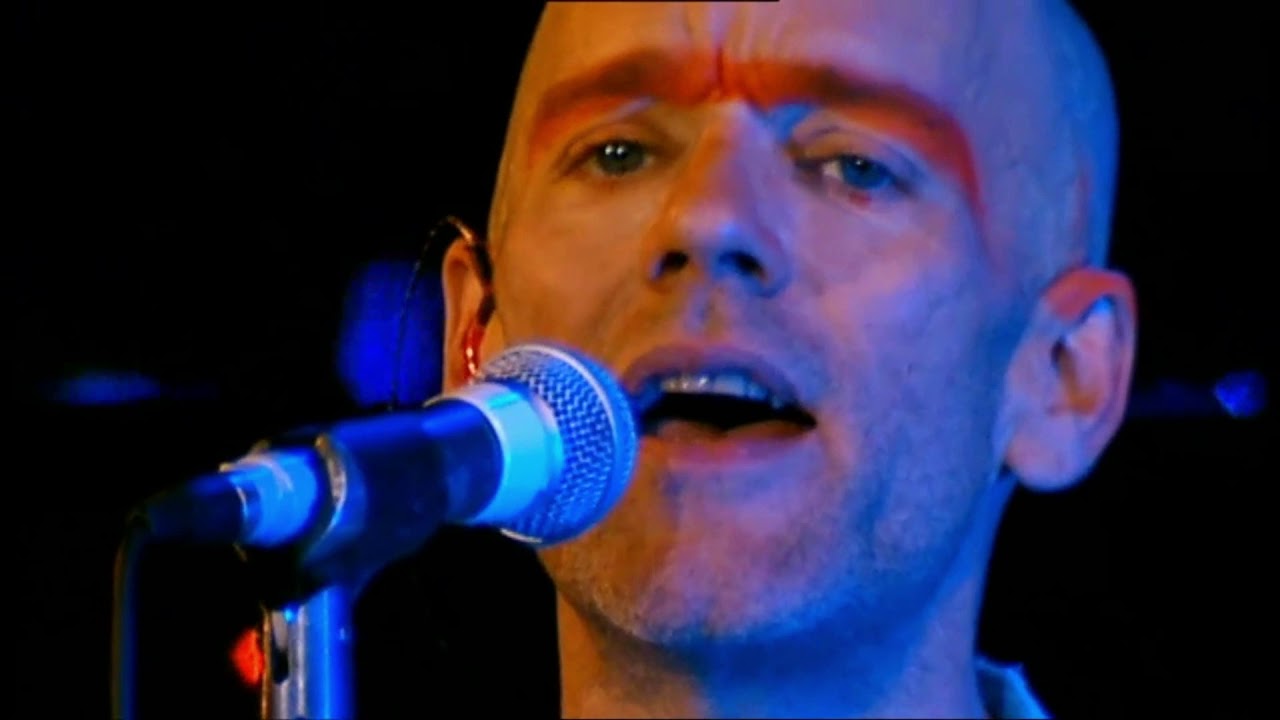
In a number of press interviews, Michael Stipe said that the most rewarding part of creating the song had been hearing how it had helped save lives and helped young people to pull through their darkest moments.
“It saved a few,” he told MOJO magazine. “People have told me. And I love hearing that. That’s my Oscar, that’s my gold on a shelf right there – that something we did impacted someone's life in such a profound way. That’s a beautiful thing.”
