


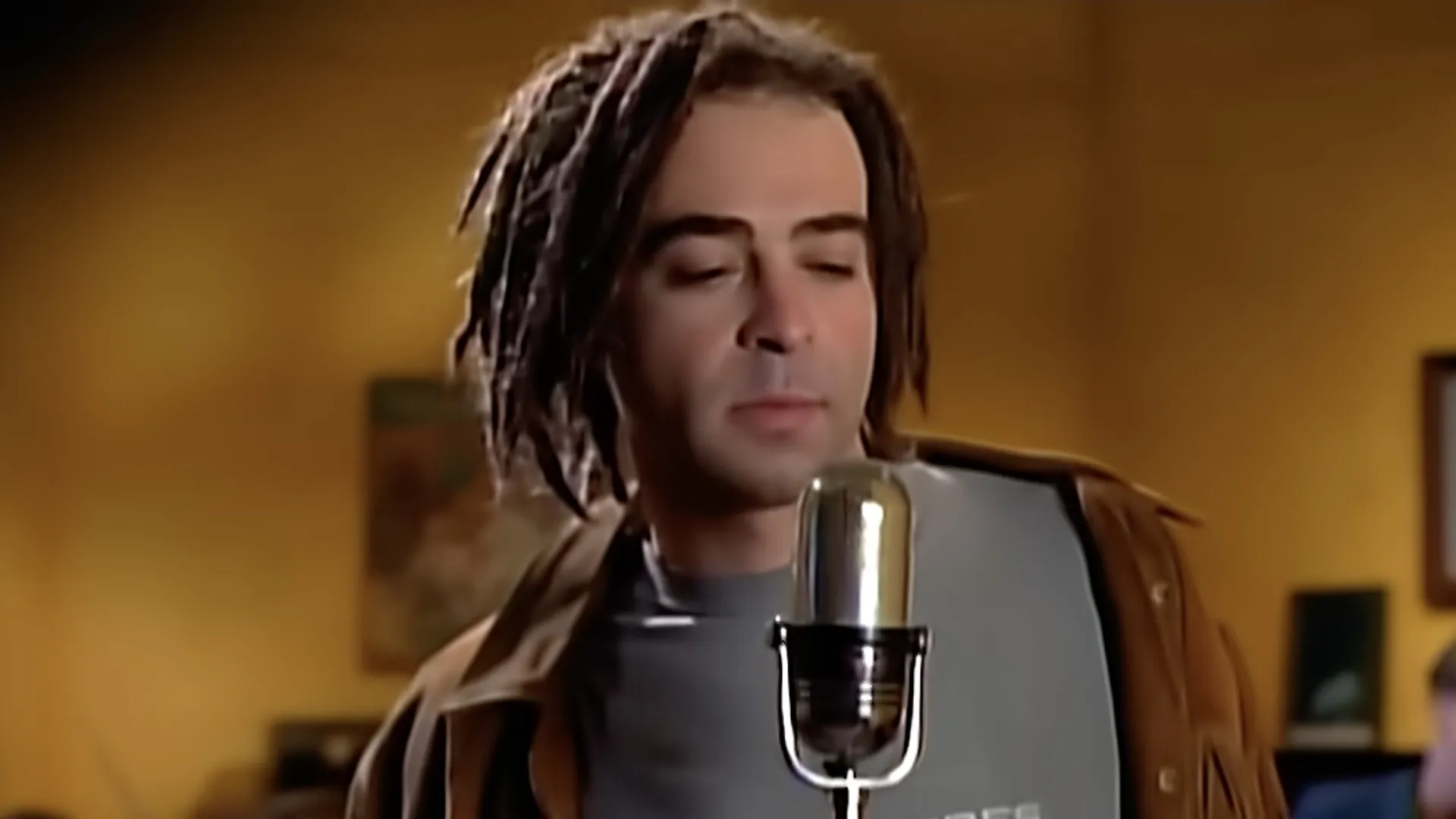
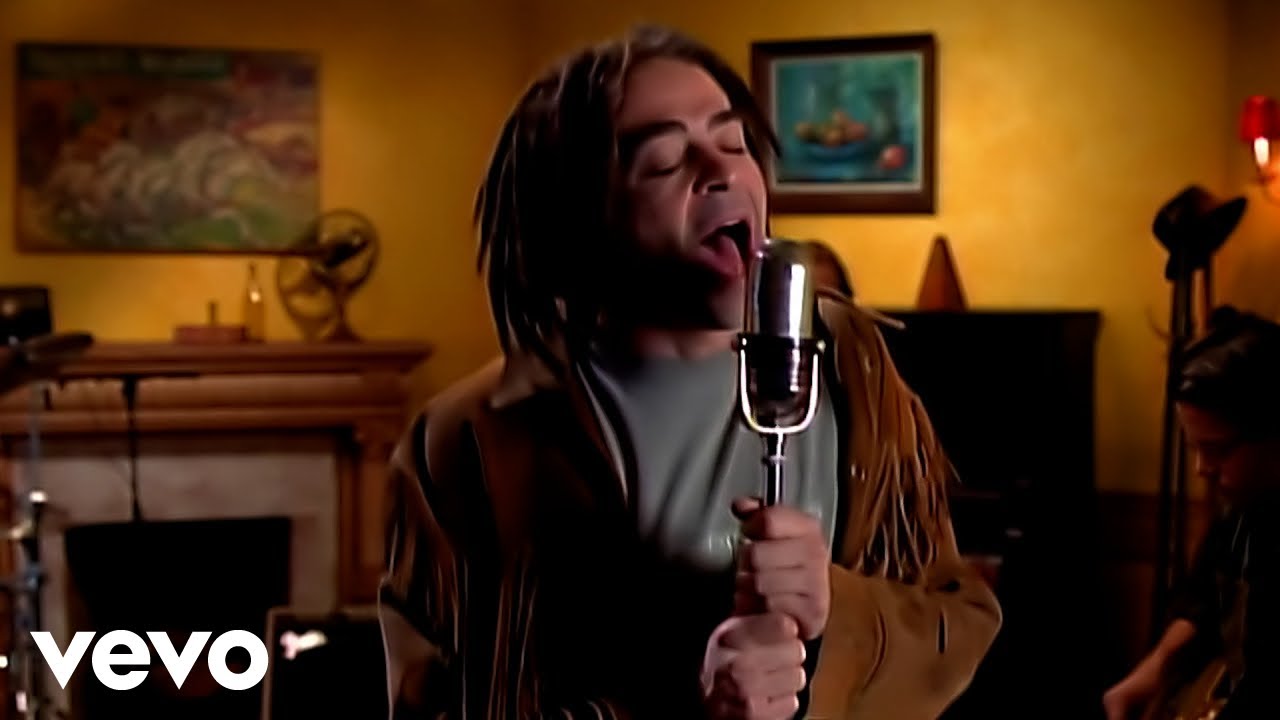
Mr. Jones is the single that turned Californian band Counting Crows into a household name following its release in December 1993.
It was written by singer Adam Duritz and guitarist David Bryson and appeared on their debut album August And Everything After, produced by T Bone Burnett.
Duritz had worked on the track for quite some time before it was recorded to his satisfaction. He once told The Guardian that “it was a very difficult song to finish” because “it’s not a slow song, but it’s not a straight ahead fast song either”.
He went on to describe it as “soul music – closer to Stax Records than it is to country” because of how it “gallops along” and requires the players to “get a real feel for it”.
The singer even admitted it must have taken him “fifty or sixty” takes to get one that everyone was happy with.
The roots of the song stretch back to his time Duritz’s time in The Himalayans, alongside bassist Marty Jones.
On an episode of VH1’s Storytellers, Duritz explained how himself and Jones went out one night to watch a gig by Jones’s father David Serva, a flamenco guitar player who lived in Spain. After seeing an “outrageous” performance, they got “completely drunk” and talked about what life would be like as “big rock stars instead of such loser, low-budget musicians”.
Duritz went home that night and decided to write a song about following your heart and living the dream – or at least attempting to – characterised by lyrics such as “we all wanna be big stars”, “I wanna be Bob Dylan” and “when I look at the television, I want to see me”.
But the song also has a darker edge, warning of how such hopes and ambitions can ultimately backfire and leave you exposed in a state of vulnerability.
Duritz continued: “It’s also kind of cautionary because it’s about how misguided you may be about some of those things and how hollow they may be too. Like the character in the song keeps saying, ‘When everybody loves me I will never be lonely,’ and you’re supposed to know that that’s not the way it’s gonna be.”
There are also theories about how the track also relates to the character referenced in the 1965 Bob Dylan song Ballad Of A Thin Man, which includes the line “because something is happening here but you don’t know what it is, do you, Mr. Jones?”

And then there’s the potential connection to The Beatles, who name-checked the very same Bob Dylan song on Yer Blues from their self-titled double album of 1968 (“I feel so suicidal, just like Dylan’s Mister Jones”).
Though both the Counting Crows and Beatles tracks explore themes of loneliness, Duritz has downplayed much of the wider associations, describing Mr. Jones as “a song that has been misinterpreted greatly, to say the least”.
He once explained: “I think people too often look for symbolism in songs when they’re simpler than they seem… I have heard everything from it being about some ancient blues man who taught me to play music, which is completely ridiculous, but like somebody’s movie fantasy. I’ve also heard it’s about my dick, which is even more ridiculous.”
The verses sections are made out of basic Amin, F, Dmin and G chords and the chorus sections are even simpler, built out of C, F and G major shapes.
Multi-instrumentalist David Immerglück can also be heard performing on the track, though was working as a session musician for the band until he became a full-time member in 1999.
Mr. Jones performed well on home soil, as well as the charts in Australia, Canada, France, Iceland and Peru – ultimately helping the group kickstart their career with a hit album.
For Adam Duritz, who has often pointed the irony of a song about ‘making it’ being his gateway into international stardom, it all came as a bit of a surprise.
“After SNL, it got pretty big on the radio,” he told Classic Rock. “By that summer, when we were playing, there was a lot of people who wanted to hear Mr. Jones. It seemed like the audience was there for Mr. Jones. But I noticed that more after the fact. I didn’t notice it blowing the record up, I just noticed that once the record blew up, Mr. Jones was really big.”
He added: “I remember being in a strip club in New Orleans and Mr. Jones comes on, and I was like: ‘No, no, this is not the vibe. Not to this song!’ I don’t mind getting a dance every now and then, but not to my song… that is not okay.”
